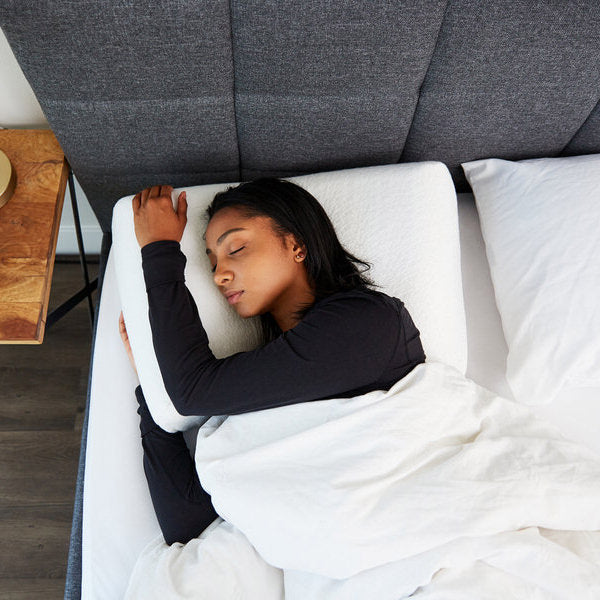
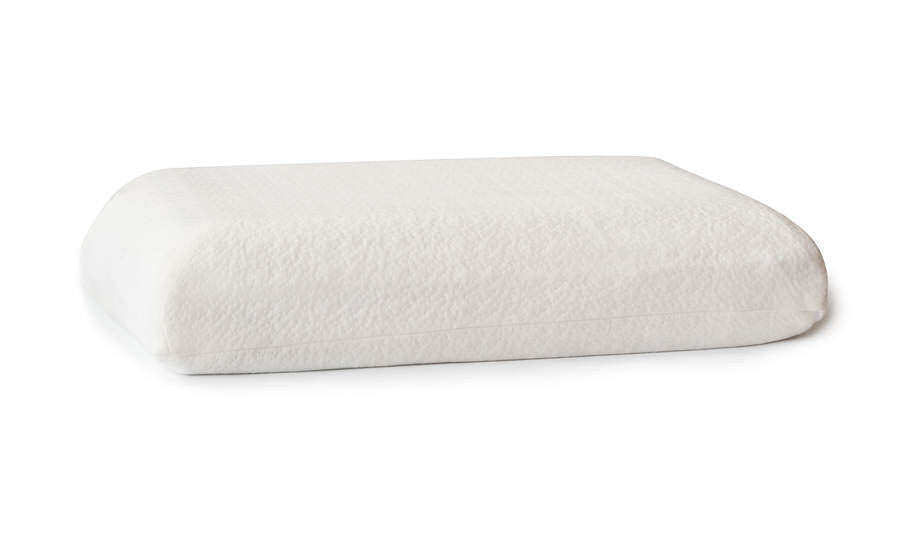
A good pillow for lower back pain when sleeping is one of the most important tools in your arsenal because it's all about maintaining proper spinal alignment. When you find the right pillow and learn how to place it correctly, you can stop your spine from twisting or flattening out overnight—a major culprit behind all that morning stiffness and pain.
Why Your Lower Back Aches Most at Night
Ever notice how your lower back pain seems to get louder the second you lie down for the night? You're definitely not alone. The very time that's meant for rest and recovery often turns into a frustrating battle with discomfort, leaving you feeling stiff and sore when the alarm goes off.
There's a simple reason for this nightly struggle: gravity and poor posture don't take a break just because you've clocked out. When your mattress isn't supportive enough or your sleeping position is off, your lumbar spine gets forced out of its natural, gentle curve. Instead of relaxing, your muscles and ligaments are stuck in a strained position for hours on end.
The Suspension Bridge Analogy
Imagine your spine is a suspension bridge, and your muscles and ligaments are the heavy-duty cables holding everything up. They work hard all day to keep you stable and upright. By the time you get to bed, they need a break.
A pillow for lower back pain when sleeping acts like an extra set of perfectly placed support towers for that bridge. It fills the gaps between your body and the mattress, holding your spine in a neutral, effortless alignment all night long.
Without that extra support, the "bridge" starts to sag. This creates tiny micro-strains that add up over the course of the night, which is exactly why you can wake up feeling even worse than when you went to bed. For a deeper look at getting your position just right, you can learn more about the best sleep positions for your back in our guide.
The Vicious Cycle of Pain and Poor Sleep
This nightly misalignment can kick off a truly frustrating cycle. Pain tanks your sleep quality, and poor sleep makes you more sensitive to pain. It’s a feedback loop from hell.
In fact, one major analysis found that a staggering 58.7% of people with low back pain report significant sleep disturbances. The study even revealed that for every one-point increase in pain intensity, the odds of sleep disruption jumped by 10%.
This lack of deep, restorative sleep makes your body more sensitive to pain signals the next day. A specialized pillow can be a total game-changer, breaking this cycle by providing the targeted support you need to finally turn your bed back into a place of healing.
Aligning Your Pillow with Your Sleep Position
Forget about buying a brand-new mattress for a second. The single biggest change you can make for your back tonight is learning how to use your pillows like a pro. A pillow for lower back pain when sleeping isn't just for your head—it's a tool you can use to support your body's natural alignment.
Where you need that support completely depends on how you sleep. Think of proper pillow placement as a scaffolding system for your spine. It stops it from twisting, sagging, or flattening out into an unnatural position for eight hours straight. Let’s walk through the simple, effective strategies for each sleep style.
For Back Sleepers
Sleeping on your back is generally great for spinal health since it distributes your body weight so evenly. The problem is, a small gap almost always forms between the curve of your lower back and the mattress. This little gap forces your back muscles to stay tense all night trying to bridge it.
Luckily, the fix is ridiculously easy:
- Lie down flat on your back like you normally would.
- Grab a small, thin pillow or just roll up a towel.
- Slide it right under your knees.
That tiny bit of elevation under your knees is just enough to maintain the natural curve of your lumbar spine, taking all the pressure off. You'll feel your lower back muscles immediately relax and settle into the mattress instead of straining.
For Side Sleepers
Most of us are side sleepers, but this position comes with a major risk: spinal twisting. When you’re on your side, your top leg has a natural tendency to slide forward and down. When it does, it pulls your pelvis and lower back right along with it, twisting your spine out of alignment.
By placing a firm pillow between your knees, you keep your hips, pelvis, and spine aligned. This simple action prevents the top leg from rotating forward, stopping the twist before it even starts.
This one small adjustment is probably the most powerful way to wake up without that familiar, nagging ache in your side and lower back. Just make sure the pillow is firm enough to keep your knees from collapsing together.
This infographic breaks down how different factors, from your posture to your mattress, can all contribute to spinal strain.
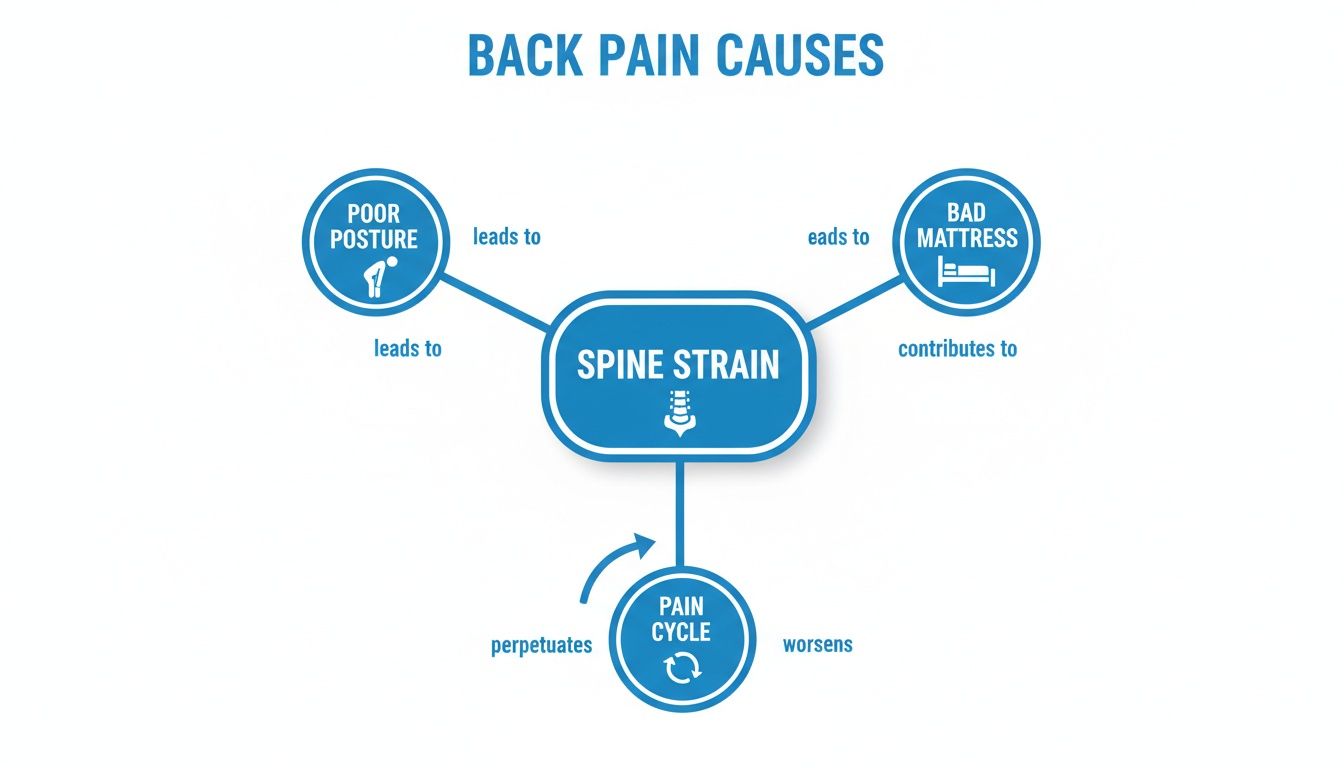
It’s a great reminder that back pain isn't usually from one single thing, but a mix of factors—which is exactly why dialing in your sleep setup is so important.
For Stomach Sleepers
Let’s be direct: sleeping on your stomach is the absolute worst position for your back. It flattens your spine’s natural curve and wrenches your neck into a sharp, twisted angle for hours on end. It’s a recipe for significant pain and stiffness.
If you just can't kick the habit, you can at least do some damage control. Try sliding a very thin, flat pillow under your pelvis and lower stomach area. This can help reduce the severe arch in your lower back, offering a little bit of support.
Honestly, though, the best long-term solution is to start training yourself to sleep on your side or back. Your spine will thank you for it.
Here’s a quick cheat sheet to pull all these strategies together.
Pillow Placement Guide for Sleep Positions
| Sleep Position | Primary Goal | Pillow Placement | Recommended Pillow Type |
|---|---|---|---|
| Back Sleeper | Maintain the natural curve of the lower spine. | Place a small pillow or rolled towel under the knees. | Small, low-loft pillow or a cervical pillow. |
| Side Sleeper | Keep hips, pelvis, and spine aligned; prevent twisting. | Place a firm pillow between the knees and ankles. | Firm, supportive pillow; a dedicated knee pillow works well. |
| Stomach Sleeper | Reduce strain and flattening of the lumbar spine. | Place a very thin pillow under the pelvis/lower abdomen. | Very thin, flat, or soft pillow to minimize arching. |
Using this guide can help you make an immediate adjustment tonight for a more comfortable, pain-free morning.
Choosing Your Pillow Material and Shape
Navigating the world of pillows can feel like trying to solve a puzzle, especially when you’re trying to find relief for a sore lower back. With so many materials and shapes out there, it's easy to get lost. But once you understand the core differences, choosing the right tool for the job gets a whole lot simpler.
The material of your support pillow dictates its feel and performance. Think of it like choosing the right shock absorber for a car—some are soft and adaptive, while others are firm and responsive. The goal is to find one that hits the sweet spot for your body's unique needs.
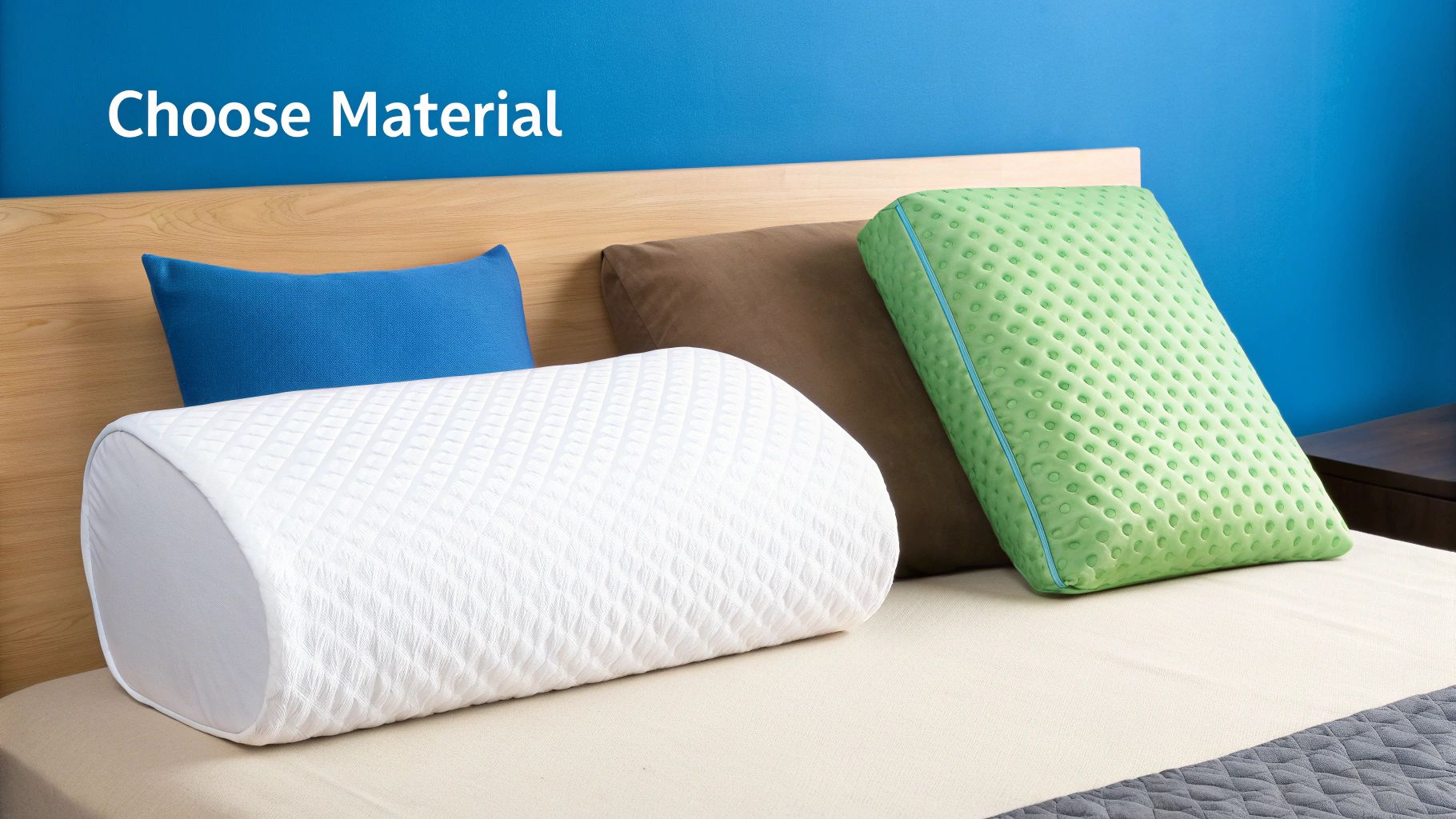
Common Pillow Materials for Back Support
When it comes to lumbar support pillows, two materials really dominate the market, and for good reason. Each offers a distinct set of advantages.
-
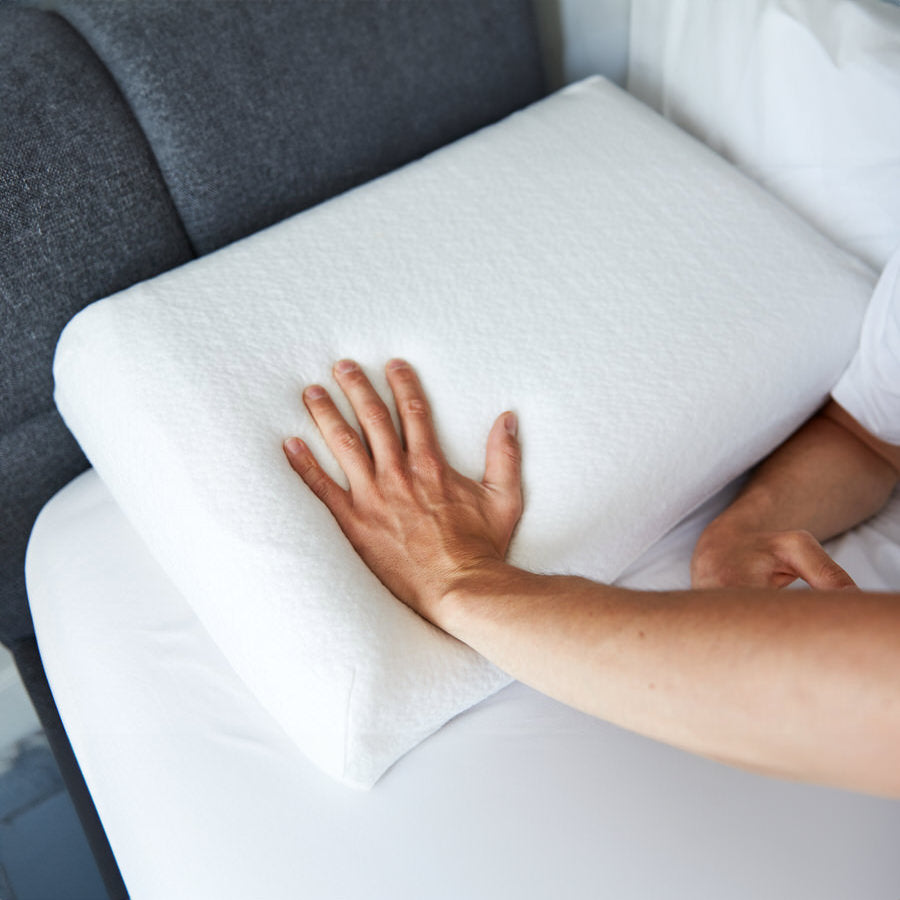
Memory Foam: This is the most popular choice, and it's easy to see why. Memory foam is a viscoelastic material, which is a fancy way of saying it responds to your body's heat and pressure. It contours precisely to your curves, filling every little gap to provide customized support. This makes it a fantastic option for maintaining spinal alignment since it molds to your unique shape. You can dig deeper into the benefits of memory foam pillows in our other guide.
-
Latex: Whether natural or synthetic, latex offers a bouncier, more responsive feel. It provides firm support without that deep "sinking" sensation you get with memory foam. Latex is also known for being incredibly durable and naturally breathable, which is a huge plus if you tend to sleep hot.
Finding the right material isn't just a matter of comfort; it's a critical step in managing pain. Globally, lower back pain is the number one cause of disability, affecting an estimated 619 million people in 2020—a figure expected to climb to 843 million by 2050. And for those dealing with chronic pain, a staggering 76% report that it disrupts their sleep, highlighting just how urgent the need for effective support really is.
Purpose-Built Shapes for Lower Back Pain
Beyond the material, the shape of the pillow is engineered for a specific job. You wouldn't use a hammer to turn a screw, and the same logic applies here. Different pillow shapes are designed to target different areas and sleeping positions to help take the pressure off.
Choosing the right pillow shape is about matching the tool to the task. An ergonomic design isn't just for comfort; it's an engineering solution to a biomechanical problem—spinal misalignment.
Here are a few common designs specifically built to be a great pillow for lower back pain when sleeping:
-
Wedge Pillows: These versatile, triangular pillows are a back-sleeper's best friend. Placing one under your knees elevates your legs, which helps flatten your lower back and instantly relieves pressure on the lumbar spine. It’s a simple change that makes a huge difference.
-
Cylindrical or "Roll" Pillows: These small, round pillows are perfect for targeted support. You can tuck one into the small of your back to maintain your natural lumbar curve, or if you're a side sleeper, slide it between your knees to keep your hips aligned.
-
Full-Body Pillows: Often C-shaped or U-shaped, these pillows are the ultimate multitaskers. They offer comprehensive support by allowing you to hug them to support your torso, place them between your knees, and prop up your back all at the same time. They are an absolute game-changer, especially for side sleepers.
Finding the Perfect Pillow for Your Body
The search for the best pillow for lower back pain when sleeping isn't about tracking down some magical, one-size-fits-all product. It's much more personal than that. Think of it like buying a new pair of running shoes—what works for a marathoner is totally different from what a casual walker needs. The goal is to find the pillow that perfectly matches your body and the way you sleep.
To get started, do a quick self-assessment. What's your go-to sleep position? What’s your body type? You even need to consider your mattress. If you have a soft mattress that you sink into like a cloud, you’ll likely need a thinner support pillow than someone on a firm mattress that keeps their body riding high on the surface.
Personalizing Your Pillow Selection
Once you’ve got a handle on your specific needs, you can start to really narrow down the options. The secret is finding a pillow that perfectly fills the gaps between your body and the bed. You want to leave no part of your spine hanging without support.
-
Loft and Firmness: Loft is just a fancy word for a pillow's height. A side sleeper with broad shoulders is going to need a much thicker, firmer pillow between their knees compared to a petite back sleeper who just needs a small roll to tuck under their lower back. The ultimate goal is neutral alignment—a nice, straight line running from your head all the way down to your hips.
-
Material and Breathability: If you tend to run hot at night, a dense memory foam pillow might feel like a furnace. That trapped heat can cause you to toss and turn all night. A more breathable option, like latex or a gel-infused foam, can give you that same great support without the night sweats.
-
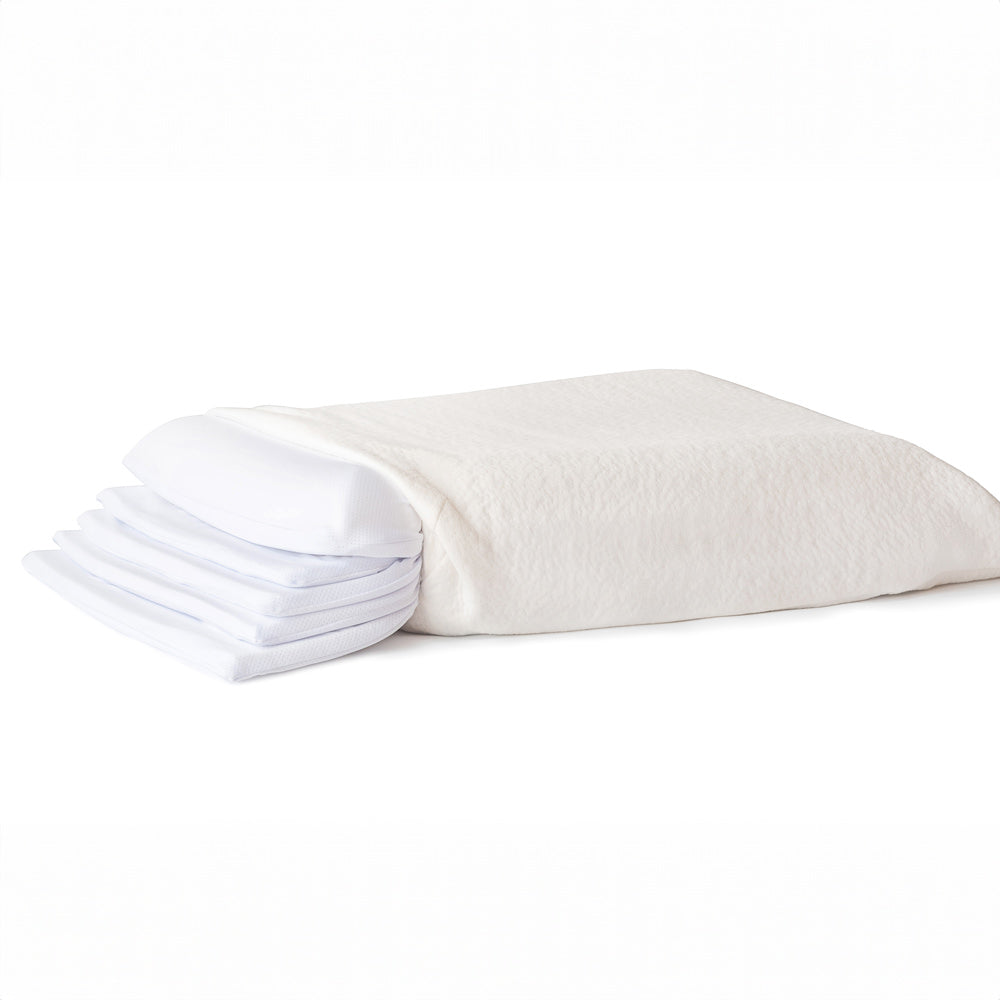
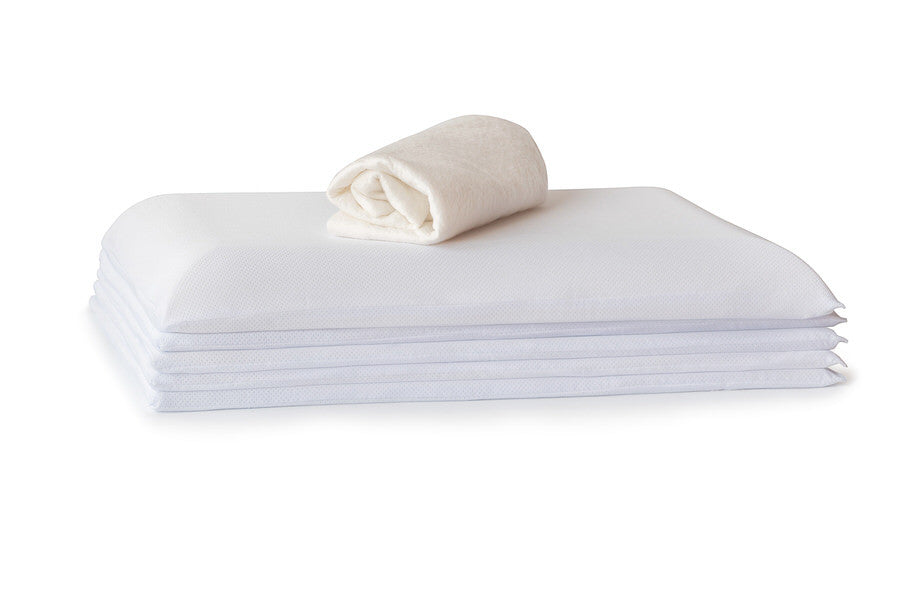
Adjustability: This is a game-changer for so many people. Pillows with adjustable fill are fantastic because you can literally add or remove the stuffing to dial in the perfect loft and firmness. This lets you experiment to find the exact level of support your body is craving, which can finally end that expensive cycle of buying and returning pillows. For those specifically targeting lower back pain, you might also consider specialized lumbar pillows like the Cusco Lumbar Pillow which are shaped to provide that pinpoint relief.
A Note on Pillow Quantity
While adding extra pillows for support is a great strategy, building a mountain of them in your bed is not the answer. In fact, using too many can actually wrench your body into an unnatural posture, creating brand-new aches and pains.
The objective is not to immobilize yourself with pillows but to use them strategically. A single, well-placed pillow under the knees or between the legs is often more effective than three poorly positioned ones.
By focusing on one or two purpose-driven pillows, you can deliver precise support exactly where you need it. If you're curious about the ideal setup for your sleep style, our guide on how many pillows you should sleep on breaks it down in more detail. This personalized approach is what makes your sleep system work for you, not against you.
Building a Complete Sleep System for Back Health
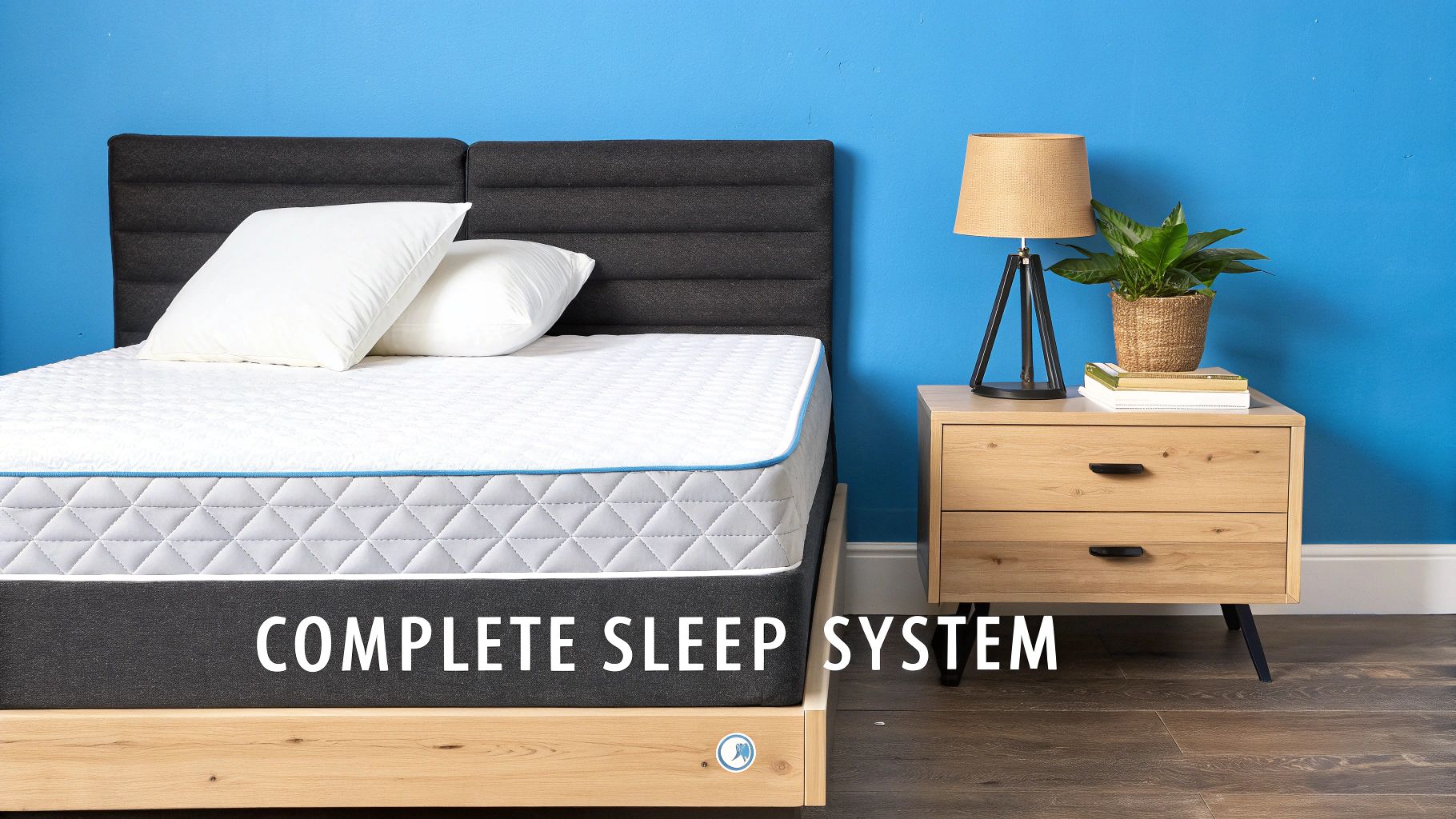
Finding the right pillow for lower back pain when sleeping is a huge step, but it’s only one piece of the puzzle. Think of it like a star player on a team—they can’t win the championship all by themselves. Lasting relief comes from building a complete sleep system where every single component works together to keep your spine happy.
Your pillow’s most important teammate? Your mattress. A sagging, worn-out mattress is like trying to build a house on a shaky foundation. It doesn't matter how supportive your pillow is if the surface underneath allows your hips and shoulders to sink, pulling your spine right out of alignment.
Your Mattress Is the Foundation
Your mattress is the absolute bedrock of your sleep health. If it's more than 7-10 years old or has obvious dips and lumps you can see or feel, it's actively working against you. Most people find that a medium-firm mattress hits the sweet spot, offering just enough contouring comfort while providing stable support. It creates a level playing field so your pillows can do their job properly.
A supportive mattress and a well-placed pillow create a holistic ecosystem for restorative sleep. The mattress provides the stable base, while the pillow fine-tunes the alignment, transforming your bed from a source of pain into a sanctuary for healing.
Creating a Holistic Approach to Back Health
Great sleep support doesn’t start and end in the bedroom. Your daily habits and physical conditioning play a massive role in how your back feels at night. The strain from a full day spent hunched over a desk doesn't just magically vanish the second you lie down. To really tackle back pain, you have to look at the bigger picture.
This is where bringing supportive practices into your daily routine makes all the difference. While your sleep setup is critical, consider adding exercises for improving posture and spinal alignment through Pilates to build a more resilient back. These practices strengthen the core muscles that act as your spine's natural corset, making you less vulnerable to daily aches and pains.
Taking this wider view is essential, especially when you see the scale of the problem. A 2020 study revealed a staggering 619 million people across the globe were struggling with low back pain, and that number is expected to climb to 843 million by 2050. The research also showed a clear link between sleep and pain, finding that every extra hour of sleep (up to 6.5 hours) could slash the risk of lower back pain by 13.6%.
When you treat your mattress, pillows, and daily habits as a single, interconnected system, you're giving your body its best shot at healing and waking up pain-free.
Got Questions About Your New Back Pain Pillow?
Making the switch to a new support pillow is a great first step, but it's totally normal to have a few questions. You're introducing a new tool into your sleep routine, and you want to make sure you're getting it right. Let's tackle some of the most common things people wonder about so you can use your new pillow for lower back pain when sleeping like a pro.
My goal here is to give you straightforward, practical answers to get you through the adjustment period and onto the path to waking up pain-free.
How Long Does It Take for a New Pillow to Help My Back?
Some people feel a difference the very first night, but don't worry if you don't. It's much more common to need a little time to adjust. Think about it like breaking in a new pair of supportive shoes—your body has gotten used to its old (and likely unhelpful) posture, and it needs a moment to learn a new, better way of aligning itself.
Give yourself anywhere from a few nights to a full week. During this time, your muscles are basically being retrained to relax into a healthier, properly supported position. If you're still feeling real discomfort after about a week, that's a good sign the pillow might not be the right height or firmness for you.
Can't I Just Use a Regular Pillow Instead?
Sure, a regular pillow is better than nothing in a pinch, but it's really just a temporary fix. Pillows designed for your head are built to cushion the gentle curve of your neck. They're almost always too soft and squishy to give your knees or lower back the firm, targeted support they need.
A standard head pillow will almost always flatten out by morning, losing its shape and letting your spine slump right back out of alignment. Lumbar and knee pillows, on the other hand, are made with denser materials and ergonomic shapes to provide stable support that actually lasts all night.
That specialized construction is what makes a dedicated support pillow a much more reliable tool for keeping pain at bay long-term.
What if the New Pillow Is Making My Pain Worse?
This is a big red flag. If your new pillow is actually increasing your pain, stop using it. The usual suspect here is a pillow that’s too thick or too firm for your specific body type. This can push your spine too far in the other direction, creating entirely new pressure points.
For instance, if a petite side sleeper uses a really thick pillow between their knees, it can force their hips too far apart and strain the very joints they're trying to protect. If you think this is happening, try a thinner pillow or look for an adjustable one where you can remove some of the filling to get the height just right.
When Should I See a Doctor About My Back Pain?
Support pillows are fantastic for what's called "mechanical" back pain—the kind that stems from poor posture, muscle strain, or sleeping in a funky position. They are not, however, a replacement for a medical professional.
It's time to book an appointment with a doctor if your pain is:
- Severe and Relentless: It doesn’t get better when you shift positions.
- Coming with Other Symptoms: You're feeling numbness, weakness, or a "pins-and-needles" sensation in your legs.
- From an Injury: The pain started right after a fall, accident, or other trauma.
- Waking You Up: The discomfort is so bad it consistently jolts you awake at night.
A good pillow for lower back pain when sleeping is a powerful part of the solution, but only a doctor can rule out underlying issues that might need more direct medical treatment.
Ready to build a complete sleep system that supports your back from head to toe? DubsLabs offers a range of expertly designed sleep products, from adjustable memory foam pillows to calming weighted blankets, created to help you achieve deep, restorative rest. Explore our collection and start your journey to pain-free mornings today.