If you've ever woken up with a back that screams in protest, you already know your sleep position is a huge piece of the puzzle. The goal isn't just to get comfortable, but to keep your spine in a neutral alignment—basically, maintaining its natural, gentle "S" curve without any awkward twists or pressure points.
Let’s get straight to it: for most people dealing with back pain, the best positions are on your back or your side. Why? Because these two make it much easier to keep your head, neck, and spine lined up correctly, which prevents the strain that leads to those dreaded morning aches.
Think of it this way: your spine works hard all day supporting you. When you lie down, you're giving it a chance to rest and recover. But if you force it into a weird position—like flattening the lower back's curve or twisting your neck—you're making your muscles work overtime when they should be off the clock.
This is exactly why spine specialists almost universally warn against stomach sleeping. It’s a double whammy: it flattens the natural curve in your lower back and forces you to crank your head to one side for hours just to breathe. It’s a recipe for strain.
Finding the Right Position for You
So, should you be a back sleeper or a side sleeper? It often boils down to what feels best for your body and any specific conditions you might have.
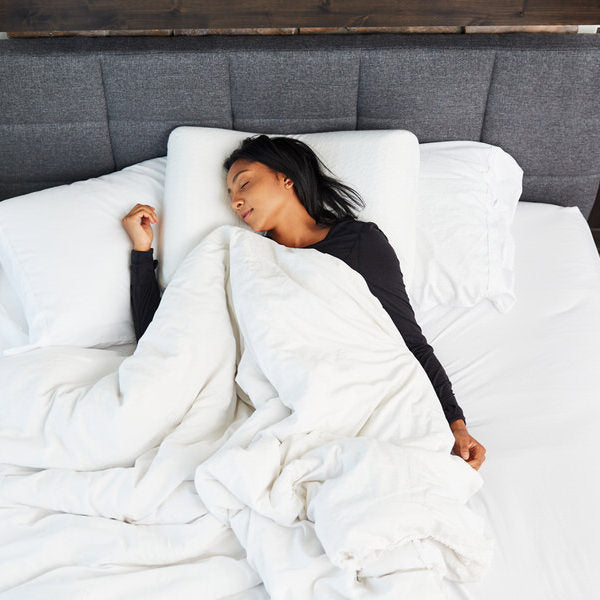
- Back Sleeping: This is often called the gold standard, and for good reason. It distributes your body weight evenly across the widest surface, minimizing pressure points and making it simple to keep your spine in a straight, neutral line from your head to your hips.
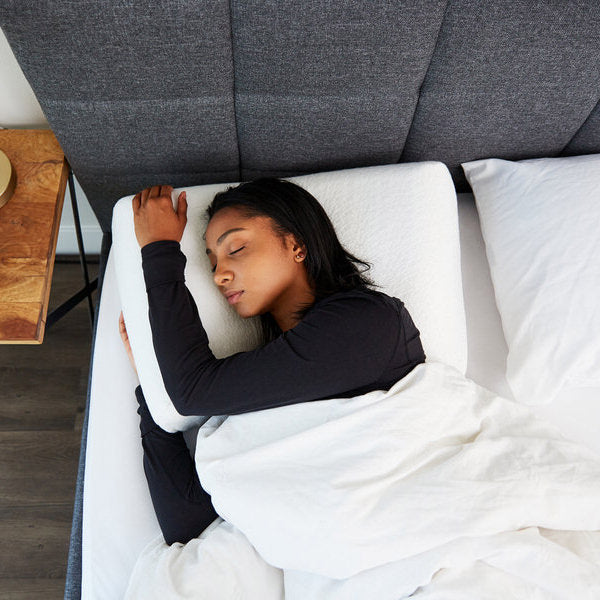
- Side Sleeping: As the most common position out there, this one is also great for keeping the spine long and aligned. The catch? It requires the right pillow setup to keep your head from dropping down or your top hip from rolling forward and twisting your lower back.
This infographic gives a great visual breakdown of how each position stacks up.
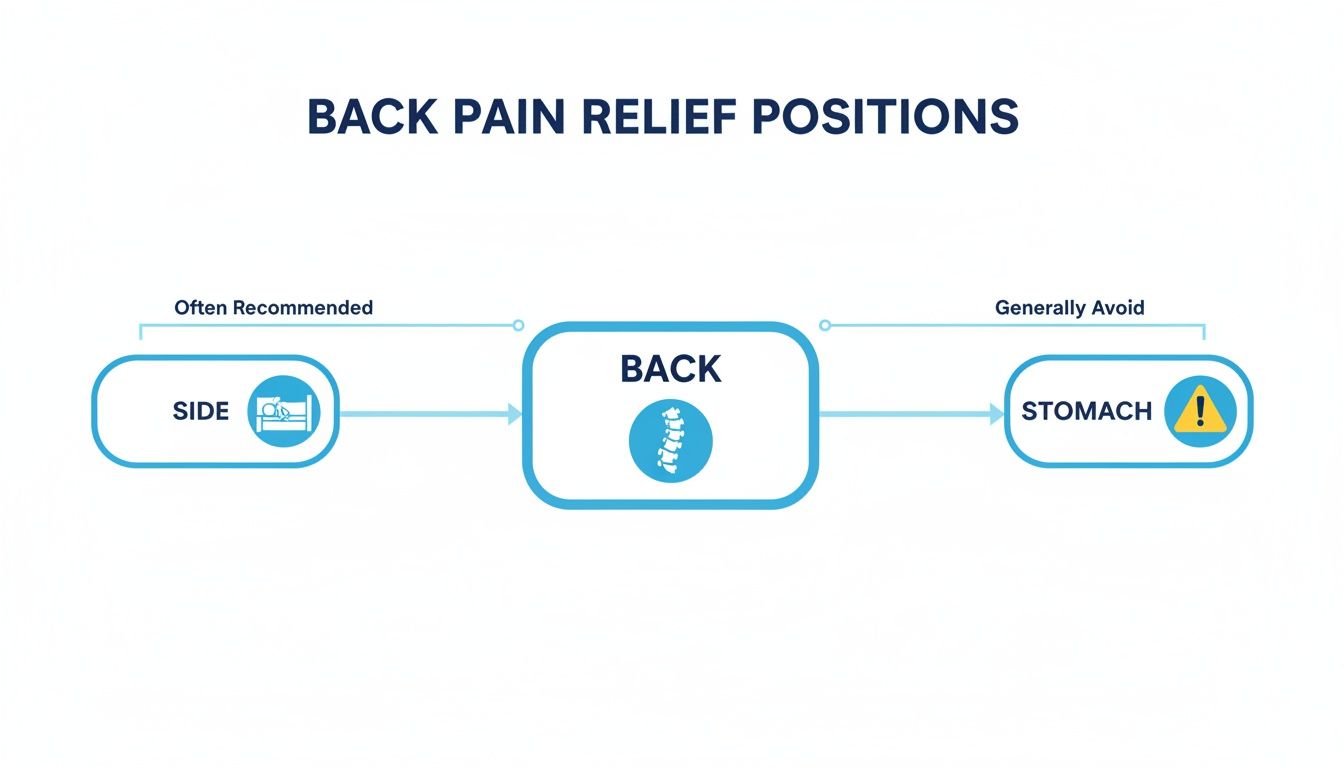
As you can see, both back and side sleeping are clear winners for spinal health, while stomach sleeping is a position you'll probably want to avoid.
For a quick side-by-side comparison, this table breaks down the essentials of each position.
Sleep Position Snapshot for Back Pain Sufferers
| Sleep Position | Spinal Alignment | Pros | Cons |
|---|---|---|---|
| On Your Back | Excellent | Evenly distributes weight, keeps spine neutral. | Can worsen snoring or sleep apnea for some people. |
| On Your Side | Good | Elongates the spine, good for circulation. | Can cause shoulder or hip pain without proper pillow support. |
| On Your Stomach | Poor | Flattens the lumbar curve and twists the neck. | Puts significant strain on neck and back muscles. |
Ultimately, choosing the right position is the first and most critical step toward waking up refreshed and pain-free. But as you'll see, a few simple tweaks with pillows can make a good position even better.
Ever wonder how you can go to bed feeling perfectly fine, only to wake up feeling like you wrestled a bear all night? That stiff, aching back you’re greeted with often comes down to what you were doing during those unconscious hours. Your sleep position is one of the biggest—and most overlooked—factors in your spinal health.
Think of your spine as a garden hose. All day long, it bends and flexes to support your every move. But at night, it needs a break—a chance to rest and recover without any awkward kinks or twists. When you sleep in a wonky position, you're essentially kinking that hose for eight hours straight. That puts a ton of strain on the muscles, ligaments, and sensitive discs that make up your back.
This prolonged stress is the real reason for that morning misery. Your back muscles, which are supposed to be off the clock, are forced to work overtime to prop up a misaligned spine. This is why finding the best sleep position for back health isn’t just about feeling cozy; it’s about giving your body a chance to genuinely repair itself.
The Secret of the Neutral Spine
So, what's the magic formula? It all boils down to achieving a neutral spine. This just means keeping the natural, gentle "S" curve of your spine intact while you sleep, from the base of your skull all the way down to your tailbone.
When your spine is neutral, your body weight gets distributed evenly, so no single spot is taking all the pressure. Your muscles can finally relax, inflammation can subside, and your body can get down to the business of healing.
Your sleep posture determines whether your back gets a chance to truly rest or continues to work all night. An aligned, neutral spine is the foundation for waking up refreshed and pain-free, allowing your muscles and ligaments to decompress and heal.
This alignment is also crucial for your intervertebral discs—those little jelly-donut-like cushions between your vertebrae. Bad posture can squish these discs unevenly, which can lead to bigger problems down the road.
How Different Positions Impact Your Back
Every sleep position has a direct effect on this delicate alignment, which is why some are heroes and others are villains when it comes to back pain.
-
Positions that support neutrality: Sleeping on your back or your side makes it much easier to keep your head, shoulders, and hips in a straight line. These positions work with your spine's natural curves, not against them.
-
Positions that cause misalignment: Sleeping on your stomach is by far the worst offender. It forces the natural curve in your lower back to flatten out and makes you crank your neck to one side for hours on end. Ouch.
Ultimately, your nightly posture is a powerful tool. Once you understand the simple biomechanics at play, you can turn your sleep from a source of pain into a period of powerful restoration. Choosing the right position is your first and most important step toward a healthier, happier back.
Mastering the Side Sleeping Position for Pain Relief
If you're hunting for the best way to sleep to ease your back pain, side sleeping is the reigning champion—and for good reason. It's how most of us naturally choose to sleep, but there's a huge difference between just rolling over and correctly setting yourself up for the night. Getting it right is what separates a restorative, pain-free morning from waking up stiff and sore.
Side sleeping is, by far, the most popular position out there. Studies show that a massive 54% to over 60% of adults worldwide are side sleepers. One detailed analysis even found that people spend about 54% of their total time in bed on their side. It's clearly the go-to for a huge number of people.
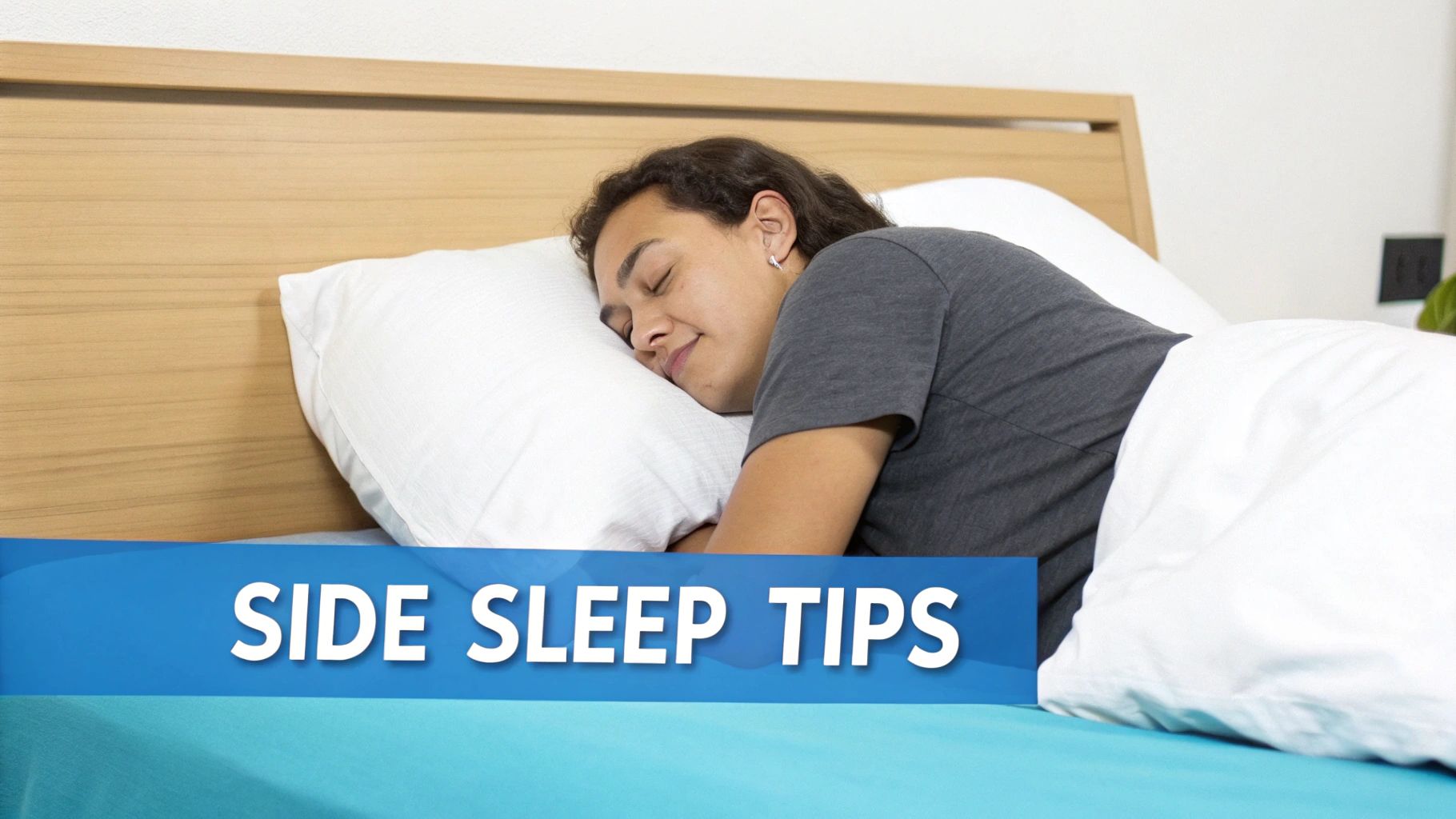
The name of the game is keeping your spine straight, all the way from your neck down to your hips. The most common mistake? Letting your top leg drift forward and down. This simple move twists your lower back and pelvis, putting your lumbar spine under constant strain all night long.
Fine-Tuning Your Alignment with Pillows
Pillows are your secret weapon here. Don't just think of them as a place to rest your head; they are essential props for holding that crucial, neutral spine alignment.
The first, and maybe most important, tweak is to slide a firm pillow between your knees. This simple trick is a game-changer. It stacks your hips directly on top of each other and stops that top leg from pulling your pelvis out of whack, keeping your lower back perfectly aligned and stress-free.
Your head pillow is just as vital. It needs to have the perfect height and firmness to fill the space between your ear and the mattress—no more, no less.
- Too thin: Your head will sag downwards, straining your neck.
- Too thick: Your head gets pushed up at an awkward angle.
- Just right: Your neck forms a straight, happy line with the rest of your spine.
Think of the right pillow combination as a support system for your body. By propping up your head and keeping your hips aligned, you allow the muscles along your spine to finally relax, recover, and repair overnight.
Additional Tips for Comfortable Side Sleeping
For even better support, try drawing your knees up just slightly toward your chest, like a relaxed fetal position. The key word here is relaxed. Avoid curling into a tight ball, which can round your back and even make it harder to breathe. A gentle curve is all you need.
If you're looking for more in-depth advice on perfecting this position, check out our guide on how to sleep comfortably on your side.
By making these small but powerful adjustments, you can turn side sleeping from just a decent option into your best strategy for relieving back pain and waking up ready to take on the day.
Unlocking the Benefits of Sleeping on Your Back
If there were a gold medal for sleep positions that support your spine, sleeping on your back would take first place. It's the one spine specialists consistently recommend, and for good reason: it distributes your body weight evenly across the widest possible surface. Think of it less like sleeping and more like floating—no awkward twists, no pressure points, just pure support.

The biggest win here is achieving a truly neutral spine. When you're flat on your back, it's so much easier to keep your head, neck, and spine all in one straight line. This is the secret sauce to waking up without that familiar ache because you’re working with your body’s natural alignment, not fighting against it.
Often called the supine position, back sleeping is actually the second most popular way we sleep, making up about 37% of our time in bed. Its reputation as the best position for back health comes from its ability to maintain that crucial spinal neutrality and spread your weight out perfectly. You can learn more about optimizing your posture from the experts at wexnermedical.osu.edu.
How to Perfect the Back-Sleeping Position
Just lying flat on your back is a great start, but a couple of small tweaks can take this position from good to absolutely fantastic. These little adjustments are all about giving targeted support right where your body needs it, which lets your lower back and neck muscles finally switch off and relax.
The single most effective trick is to slide a small pillow underneath your knees. This simple move creates a slight bend in your legs, which immediately takes the pressure off your lower back and helps maintain its natural curve. Without it, your lower back can start to arch too much, leading to strain overnight.
Next up, let's talk about your head and neck. The goal is a pillow that cradles the natural curve of your neck without cranking your head up at a weird angle.
- A cervical pillow is designed for this exact purpose, with a built-in contour that fits perfectly into the nook of your neck.
- No special pillow? No problem. A small, rolled-up towel tucked inside your pillowcase right under your neck can do a surprisingly similar job.
By strategically placing pillows to support your body's natural curves, you're essentially creating a custom-fit sleep setup. This stops your muscles from having to pull an all-nighter just to keep you aligned, allowing your spine to decompress and heal while you rest.
Overcoming Common Back-Sleeping Hurdles
While this position is a dream for most people with back pain, it isn't perfect for everyone. The most common hiccup is that it can make snoring or sleep apnea worse. Lying on your back allows gravity to pull your tongue and soft palate backward, which can partially block your airway.
If you find yourself snoring up a storm, try using a slightly thicker pillow or an adjustable wedge pillow to elevate your head and upper body. This little bit of incline can help keep your airway clear while still giving you that fantastic spinal alignment. It’s the best of both worlds.
Why Stomach Sleeping Wrecks Your Back and Neck
Of all the ways you can position your body for a night's rest, stomach sleeping is the one that spine specialists almost universally warn against. If you've ever woken up with a mysteriously stiff neck or an aching lower back, this position is a very likely culprit. It’s hands-down the worst option because it completely sabotages your body’s natural alignment in two major ways.
First, it forces your lumbar spine—the gentle, supportive curve in your lower back—into an unnatural, flattened position. Imagine pressing that curve downward for hours on end. This puts prolonged stress on the very muscles and ligaments that are supposed to be resting and recovering, leading to that all-too-familiar morning stiffness and pain.
Second, and perhaps more obviously, you can't exactly breathe through your mattress. To get air, you have to twist your head sharply to one side and hold it there all night long.
Think about twisting a dish towel as tightly as you can and then just leaving it like that for eight hours. That’s the kind of sustained rotational stress you're putting on the delicate vertebrae and muscles in your neck. It’s a surefire recipe for strain and misalignment.
The Biomechanics of the Problem
This combination of a flattened lower back and a twisted neck creates a perfect storm for discomfort. Your spine is thrown completely out of its neutral, healthy alignment, forcing its supporting muscles to work overtime when they should be off the clock. Over time, this consistent strain can aggravate existing issues or even create entirely new ones.
This position is particularly rough because it puts direct pressure on your spinal discs, which can contribute to long-term wear and tear. You're basically asking your body to hold a stressful, awkward posture during its most critical period of rest and repair. It just doesn't make sense.
Can You Make Stomach Sleeping Safer?
Look, if you're a lifelong stomach sleeper, trying to break the habit can feel impossible. While the best long-term strategy is to train yourself to sleep on your back or side, there are a few harm-reduction techniques you can use in the meantime to lessen the damage. The goal here is to nudge your spine a little closer to a neutral position.
-
Use a very thin pillow or no pillow at all. This is key. A thick pillow cranks your head up at an even sharper angle, making neck strain worse. Keeping your head as flat as possible is the goal. Our guide to the best pillow for stomach sleepers has more detailed advice on this.
-
Place a pillow under your hips. This is a game-changer. Slide a flat pillow under your pelvis and lower abdomen. This simple trick helps elevate your hips just enough to prevent your lower back from sinking into that damaging U-shape, taking a huge amount of pressure off your lumbar spine.
Choosing the Right Mattress and Pillows for Your Position
Nailing down the best sleep position for your back pain is a massive win, but it’s really only half the battle. Think of it this way: your sleep position is the game plan, but your mattress and pillows are the gear you need to execute it. Without the right setup, even a perfect strategy can fail, leaving your spine unsupported and your muscles tense all night long.
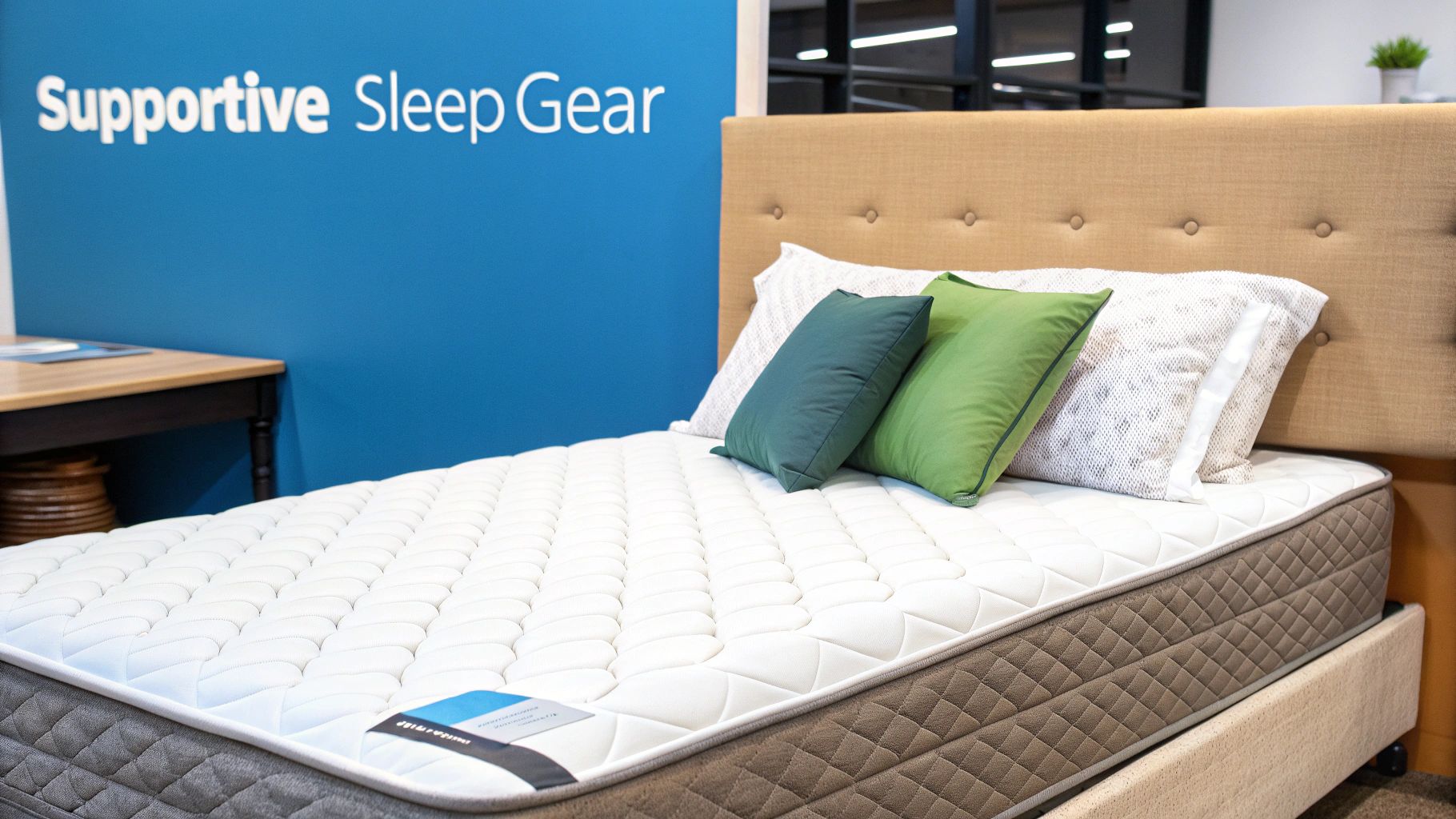
The goal is to create an environment that cradles your body's natural curves, helping your spine hold that all-important neutral alignment. Your gear needs to work with your chosen sleep style—whether you’re on your back or side—so you can wake up feeling refreshed, not like you wrestled a bear.
The Mattress Matters Most
Your mattress is the literal foundation of your sleep health. If it's too soft, your hips and shoulders will sink in too deep, creating a hammock effect that knocks your spine completely out of alignment. On the flip side, a mattress that’s rock-hard won’t give at all, creating painful pressure points on your joints.
For most people struggling with back pain, a medium-firm mattress is the sweet spot. It provides that ideal balance of contouring comfort and solid support, keeping your spine straight without feeling like you're sleeping on a board. Beyond just knowing your best position, having the right surface is critical. You can learn more about finding the best mattress for back pain relief to perfectly complement your efforts.
Your mattress shouldn’t force your spine into a position; it should conform to its natural curves. The goal is to feel supported and cushioned simultaneously, allowing your back muscles to fully relax.
Selecting the Perfect Pillows
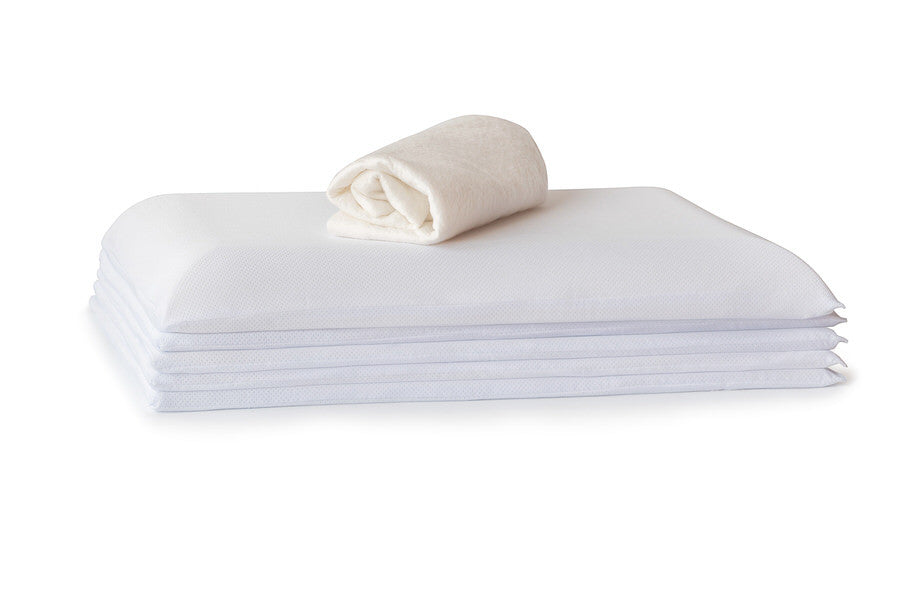
Pillows aren't just for your head—they're incredibly versatile alignment tools. The main pillow supports your head and neck, but you can use extra pillows to prop up other parts of your body, depending on how you sleep.
Here’s a quick guide based on your go-to position:
- For Back Sleepers: You’ll want a relatively thin pillow. It should support the natural curve of your neck without shoving your head too far forward. A cervical pillow with a built-in neck contour can be a game-changer for maintaining proper alignment.
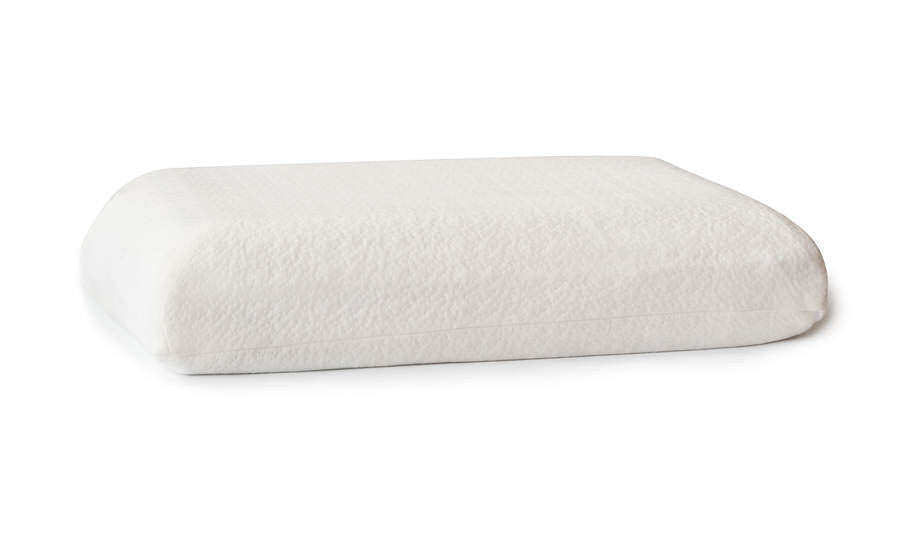
- For Side Sleepers: You need a firmer, loftier pillow to fill that space between your ear and the mattress. This is key to keeping your head from drooping and ensuring your neck stays in a straight line with the rest of your spine. For a deeper dive, check out our guide to the best memory foam pillows for side sleepers.
And don't forget the supporting cast! Tucking a pillow between your knees as a side sleeper, or under your knees as a back sleeper, is non-negotiable. These simple moves prevent your spine from twisting and relieve tension in your lower back. By carefully choosing your mattress and pillows, you're building a sleep sanctuary that actively helps you heal and recover, night after night.
Frequently Asked Questions About Sleep and Back Pain
Even with the best game plan, you're bound to run into specific questions. Let's tackle some of the most common ones that come up when you're trying to get a handle on back pain at night.
What Is the Best Sleep Position for Sciatica?
When sciatica flares up, the name of the game is taking pressure off that irritated sciatic nerve. Most people find the best relief by sleeping on their unaffected side. The key here is to slide a firm pillow between your knees. This simple trick keeps your hips and pelvis aligned, preventing the kind of twisting that makes sciatica scream.
If side sleeping isn't your thing, you can also try sleeping on your back. Just be sure to place a supportive pillow under your knees. That little bit of elevation helps maintain the natural curve in your lower back, which can ease the strain on those sensitive nerve roots.
Can My Mattress Be Causing My Back Pain?
Absolutely. Think of your mattress as the foundation for a good night's sleep—if it's unstable, everything built on top of it will suffer. A mattress that’s too soft lets your spine sag into an unnatural "U" shape, while one that's rock-hard creates painful pressure points on your hips and shoulders.
A medium-firm mattress usually hits the sweet spot. It offers enough give to contour to your body's natural curves but provides enough support to stop your spine from drooping into that dreaded "hammock" shape that so often leads to morning aches and pains.
How Can I Train Myself to Sleep in a New Position?
Kicking a lifelong sleep habit isn't easy, but it's totally doable with a little patience and strategy. Start by building a pillow fortress around yourself. Seriously. If you’re trying to switch to back sleeping, prop pillows up on either side of your body to physically block you from rolling over into your old go-to position.
Consistency is everything. It can take a few weeks for a new position to feel natural, so stick with it. Of course, your posture is just one piece of the puzzle; overall sleep quality plays a massive role in your back's health. For more ideas on how to upgrade your rest, check out how saunas can contribute to better sleep.
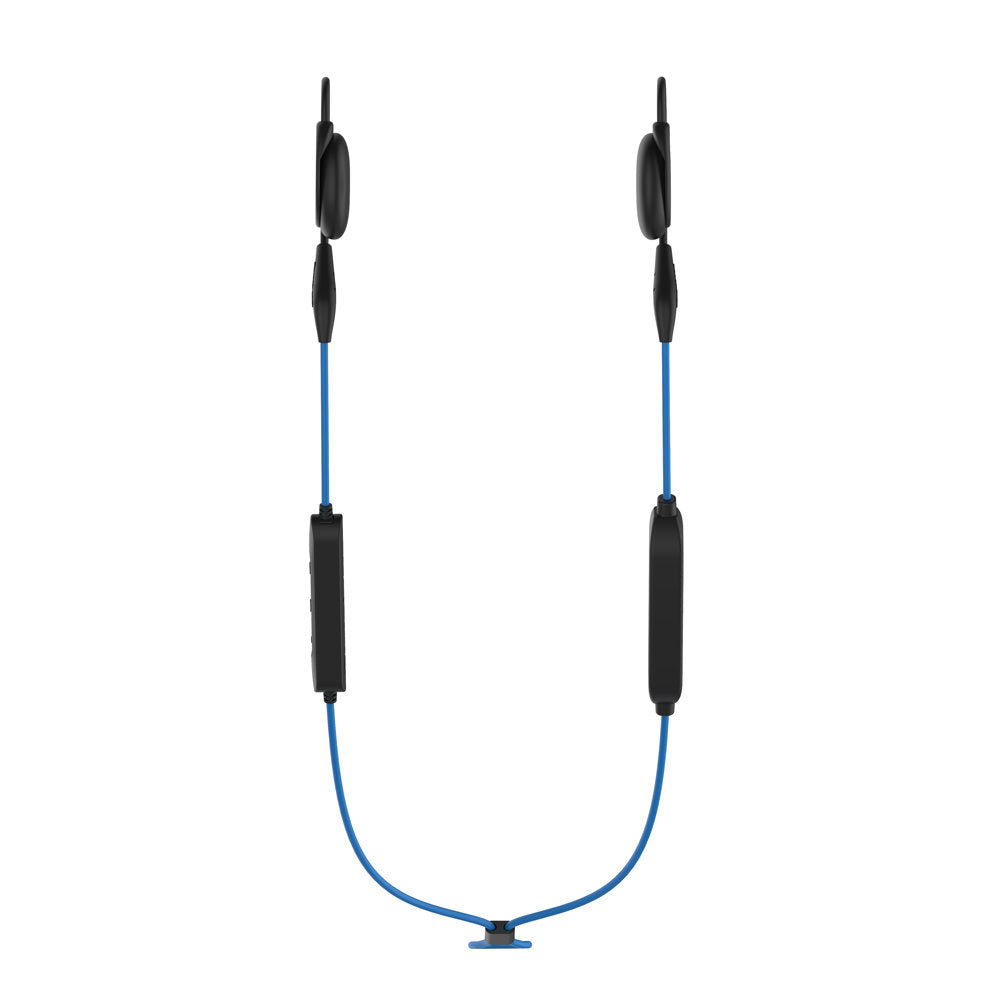
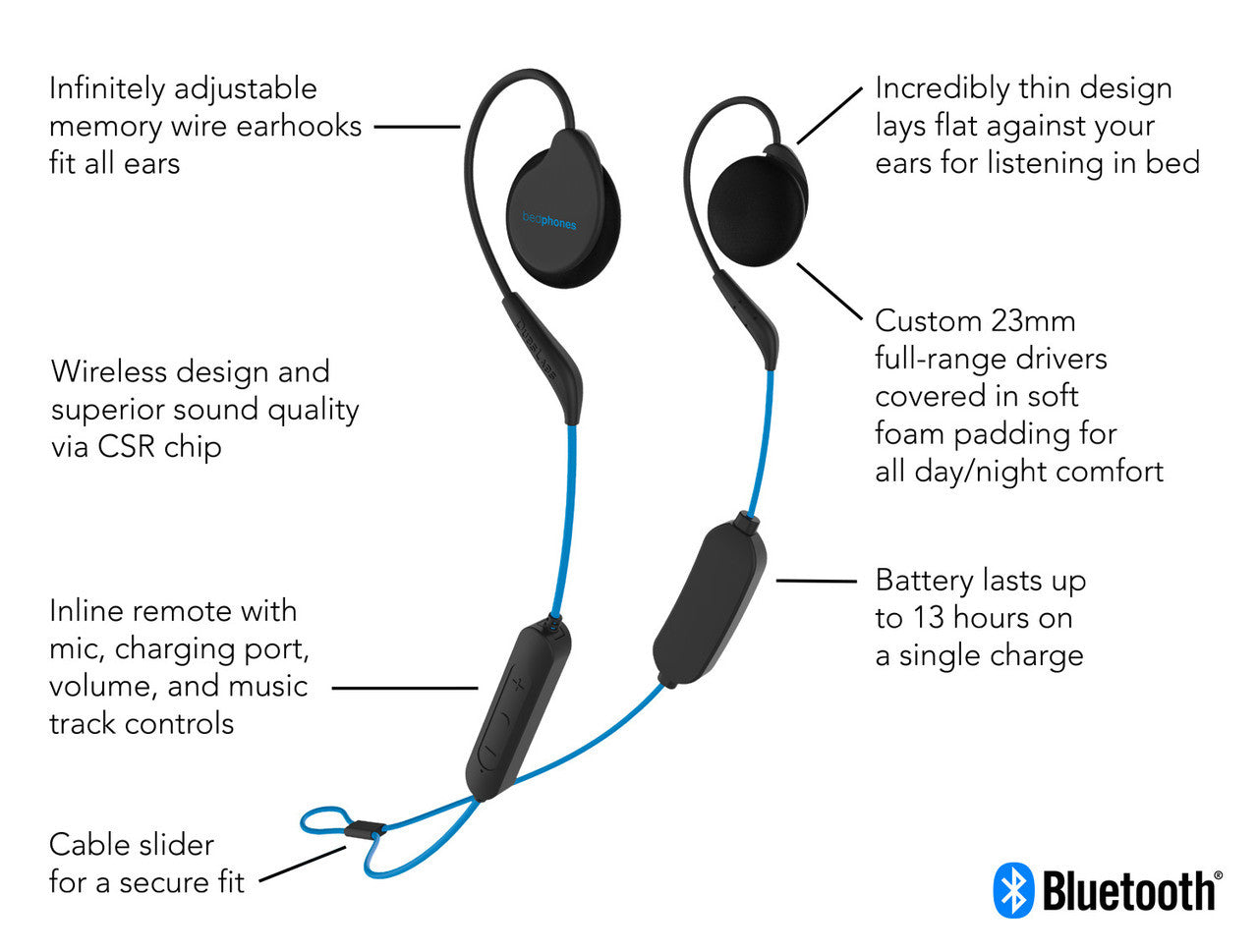
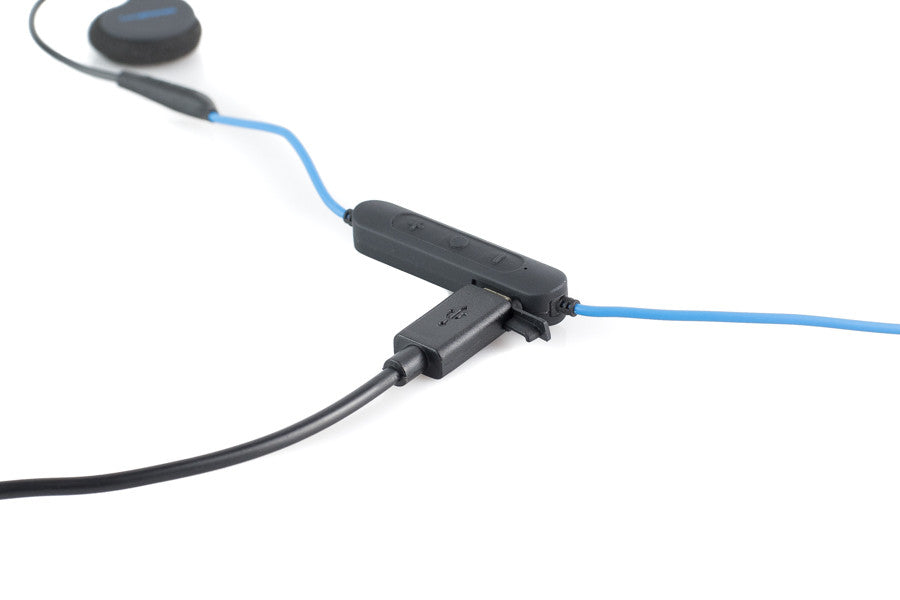
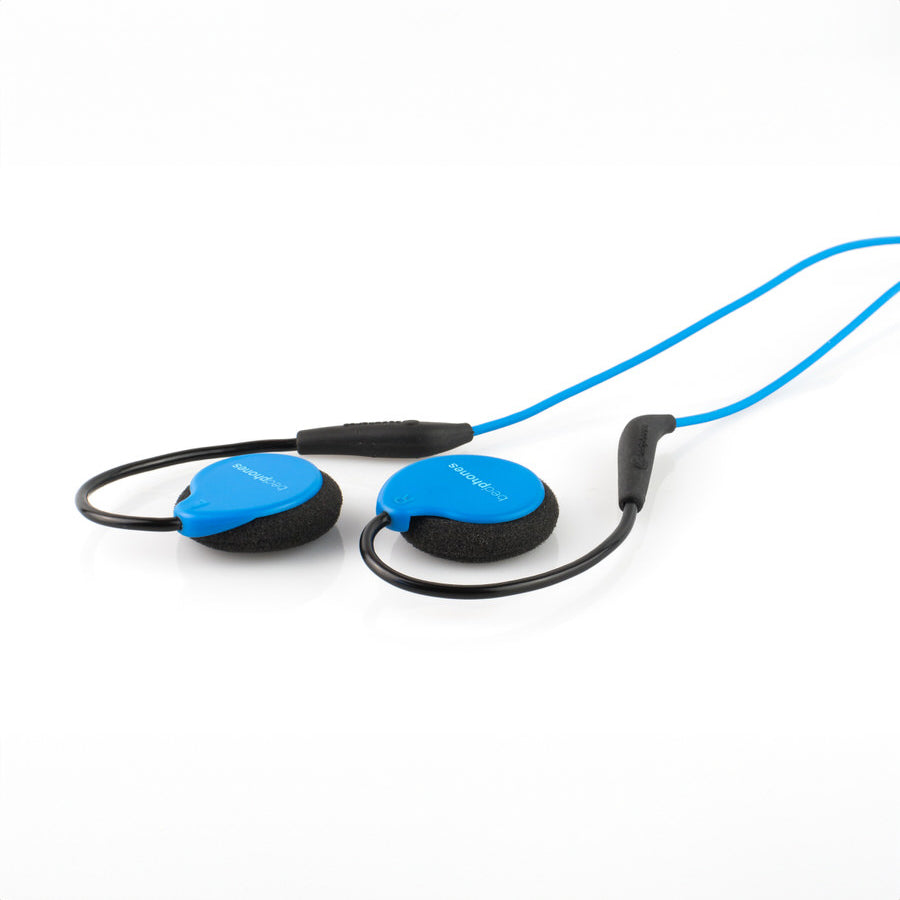
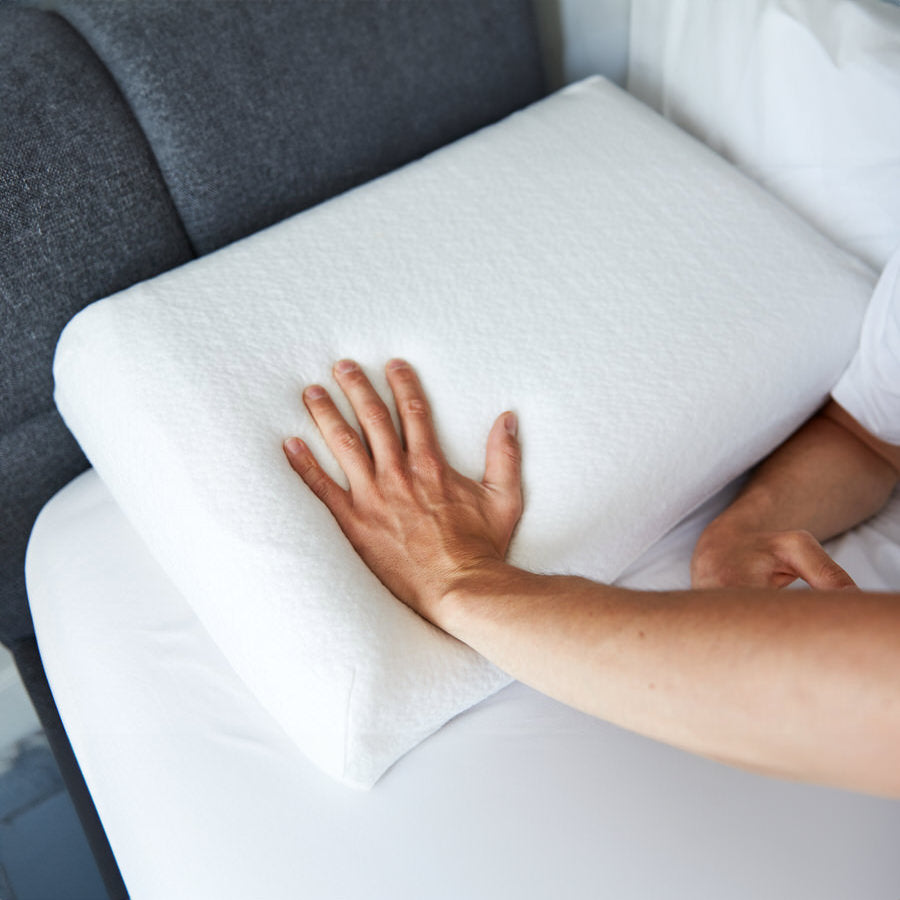
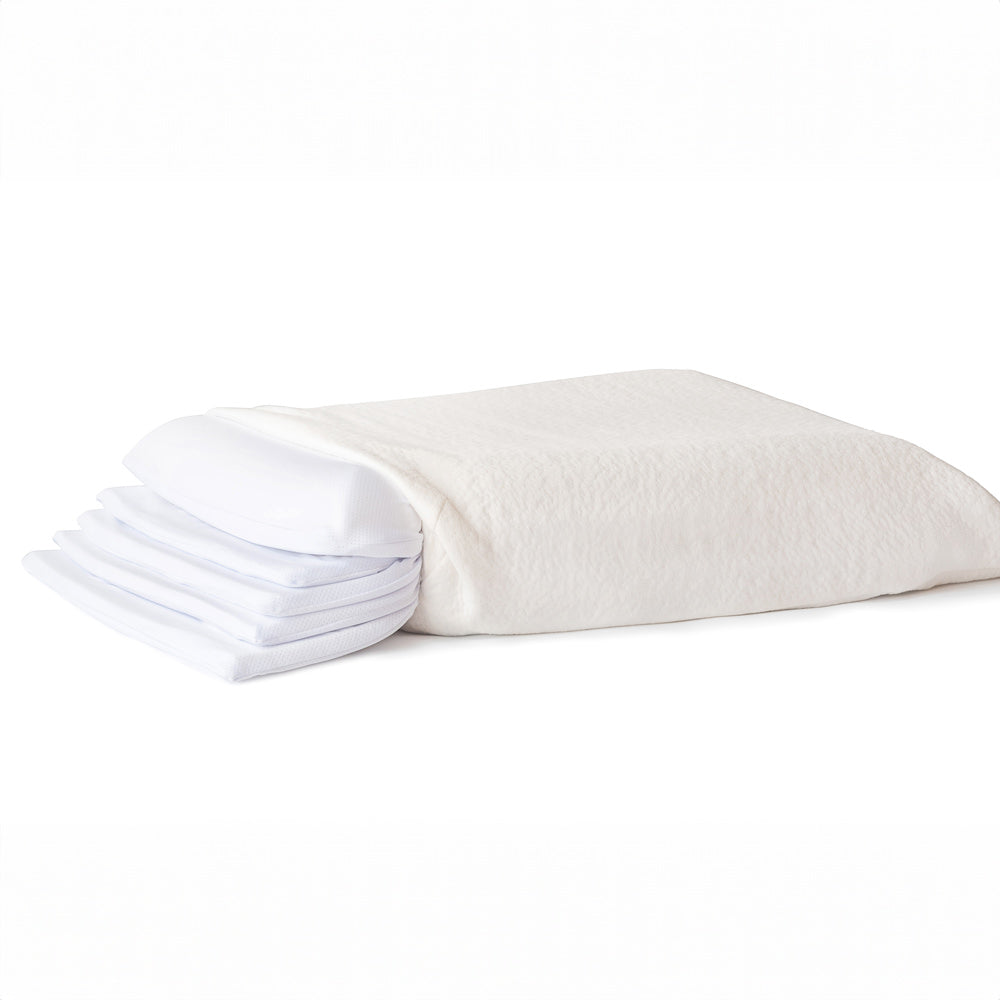
Here at DubsLabs, we know that great sleep is about more than just how you lie down. Our adjustable memory pillows and ultra-thin Bedphones are made to help you build the perfect sleep sanctuary, so you can rest deeply and wake up without the pain. Check out our solutions at https://www.dubslabs.com.