When you hear "natural remedies for insomnia," you might think of lifestyle tweaks, herbal teas, or relaxation exercises. And you'd be right—those are all part of the picture. But the most effective strategies go deeper, targeting the real reasons you're struggling to sleep in the first place.
It's about creating a personalized approach that ranges from building a solid sleep routine and optimizing your bedroom to managing stress with mindfulness and even using specific foods or supplements to your advantage.
Understanding the Root Causes of Your Sleepless Nights

Before you can find a solution that actually sticks, you have to play detective. Why are you staring at the ceiling at 2 AM? Insomnia rarely just happens. It's almost always a symptom that points to an imbalance in your daily habits, your mental state, or even your physical health. Pinpointing your specific triggers is the single most important step toward getting your nights back.
For a lot of people, the problem is behavioral or environmental. That late-afternoon espresso, the endless scroll on your phone right before bed, or a chaotic sleep schedule can all throw your body's internal clock—your circadian rhythm—completely out of whack. These might feel like small things, but their combined effect is surprisingly powerful.
Common Insomnia Triggers You Can Control
Often, the culprits behind your sleeplessness are hiding in plain sight. When you can identify them, you can build a targeted game plan instead of just throwing random solutions at the wall to see what sticks. Take a minute and consider if any of these sound familiar:
- Lifestyle Habits: That glass of wine to "unwind" or a cup of coffee after 3 PM can seriously mess with your sleep quality, preventing you from getting into those deep, restorative stages of rest.
- Mental and Emotional Stress: A racing mind is the enemy of sleep. Whether it's unresolved stress from work, anxiety about tomorrow, or replaying a frustrating conversation, this keeps your brain on high alert when it should be powering down.
- Environmental Factors: A bedroom that’s too hot, too bright, or too noisy is basically sending "wake up!" signals to your brain. Your sleep space should be a sanctuary for rest, not a source of stimulation.
Finding your personal sleep disruptors is the foundation for everything else. You can't fix a problem if you don't know what's causing it. Think of it like finding the right key for a lock—a focused approach always beats trying every key on the ring.
When It Goes Deeper Than Bad Habits
While lifestyle choices are the usual suspects, sometimes the issue is more complex. Things like hormonal shifts, chronic pain, or underlying medical conditions can all show up as persistent insomnia. For example, a staggering up to 90% of patients with Post-Concussion Syndrome (PCS) report sleep disturbances as a major symptom.
Understanding the why behind your sleep issues is empowering. It shifts you from being a passive victim of insomnia to an active participant in your own recovery. As you read through this guide, keep your own potential triggers in mind. This awareness will help you choose the natural remedies most likely to actually work for you.
And if you suspect your sleep issues might be caused by something less obvious, you might find some clues in these unexpected reasons you can't sleep.
Turn Your Bedroom into a Sleep Sanctuary
Your environment sends powerful signals to your brain. If your bedroom is cluttered, bright, or noisy, it’s screaming "activity," not "rest." Creating a true sleep sanctuary is one of the most effective things you can do for insomnia because it directly hacks your body's internal clock.
This is about more than just a comfy bed. It's a strategic move to eliminate disruptions and build a space that practically begs you to fall into a deep, restorative sleep.
The idea is to create an environment so peaceful and dedicated to rest that your brain starts to associate just walking into the room with winding down. This isn't just about feeling cozy; it's about biology. When you control light, sound, and temperature, you're helping your body produce the hormones it needs, like melatonin, to guide you into sleep.
Master the Art of Darkness
Light is the single most powerful cue for your circadian rhythm. Even tiny amounts of light from streetlamps, digital clocks, or phone chargers can sneak through your eyelids, disrupt your sleep, and shut down melatonin production. The mission is to make your room as dark as humanly possible.
- Blackout Curtains: These are non-negotiable if you're sensitive to light. They're way more effective than standard blinds at blocking out the light pollution that's a constant battle in most towns and cities.
- Cover Internal Lights: Grab some black electrical tape or small stickers and cover those tiny LED lights on your TV, power strips, and chargers. That little blue or red dot might seem harmless, but it can be surprisingly disruptive.
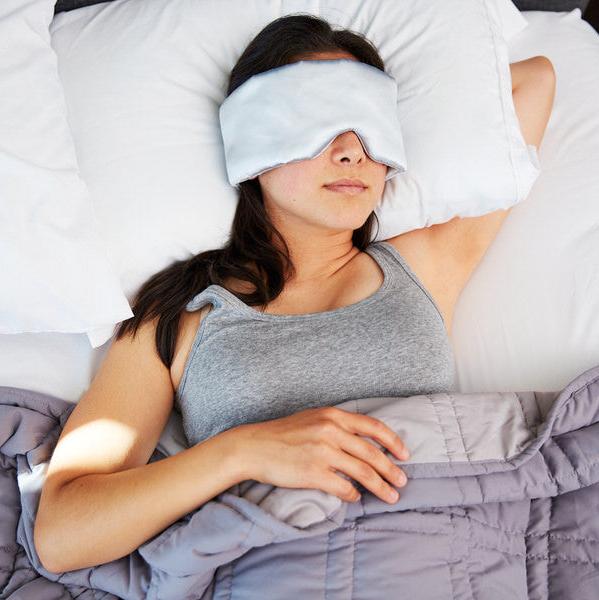
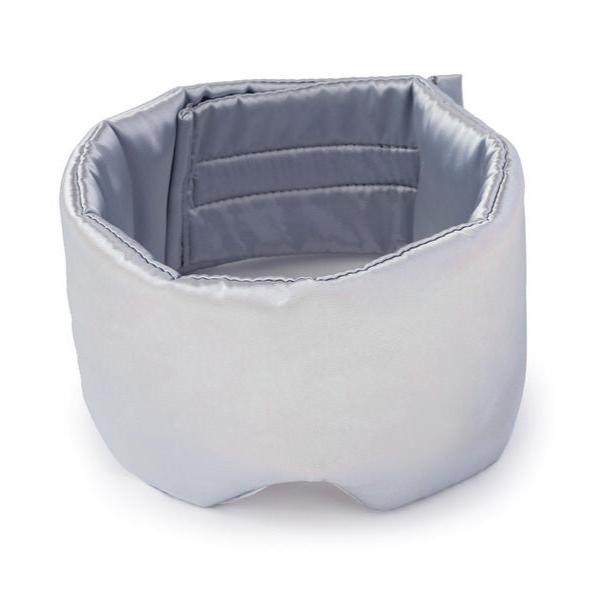
- Embrace a Sleep Mask: A high-quality, total-dark sleep mask can be an absolute game-changer. Look for one like the DubsLabs Total Dark Sleep Mask that's contoured to prevent any pressure on your eyes, giving you complete darkness without the discomfort.
Your brain doesn't care where the light comes from. Whether it's the sun rising or the glow from your alarm clock, the message is the same: "Time to be awake." Absolute darkness is your best tool for telling it otherwise.
Create a Cocoon of Quiet
Noise is another major sleep thief. It could be a partner’s snoring, traffic outside, or the neighbor's dog. Your brain keeps processing sounds even when you're asleep, and sudden noises can easily pull you into a lighter sleep stage or wake you up completely.
The key isn't just to eliminate noise but to create a consistent, soothing audio backdrop.
If outside sounds are the problem, a white noise machine can work wonders. It creates a steady, unobtrusive sound that masks jarring noises like a car horn or a slamming door. This constant hum helps your brain tune out the world, making it easier to fall and stay asleep.
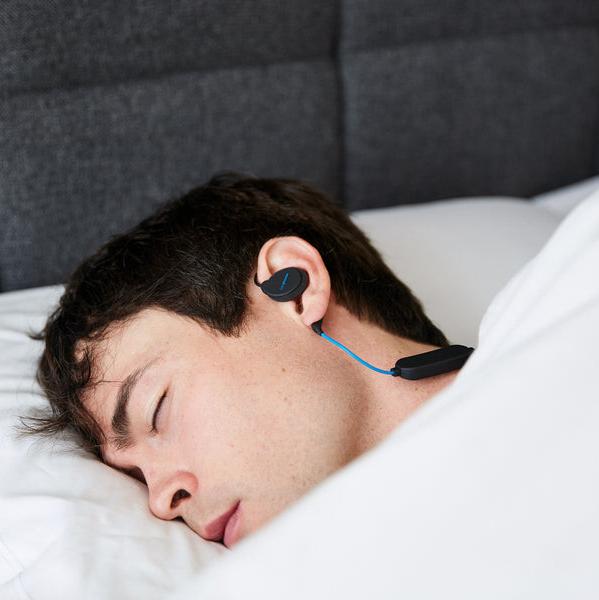
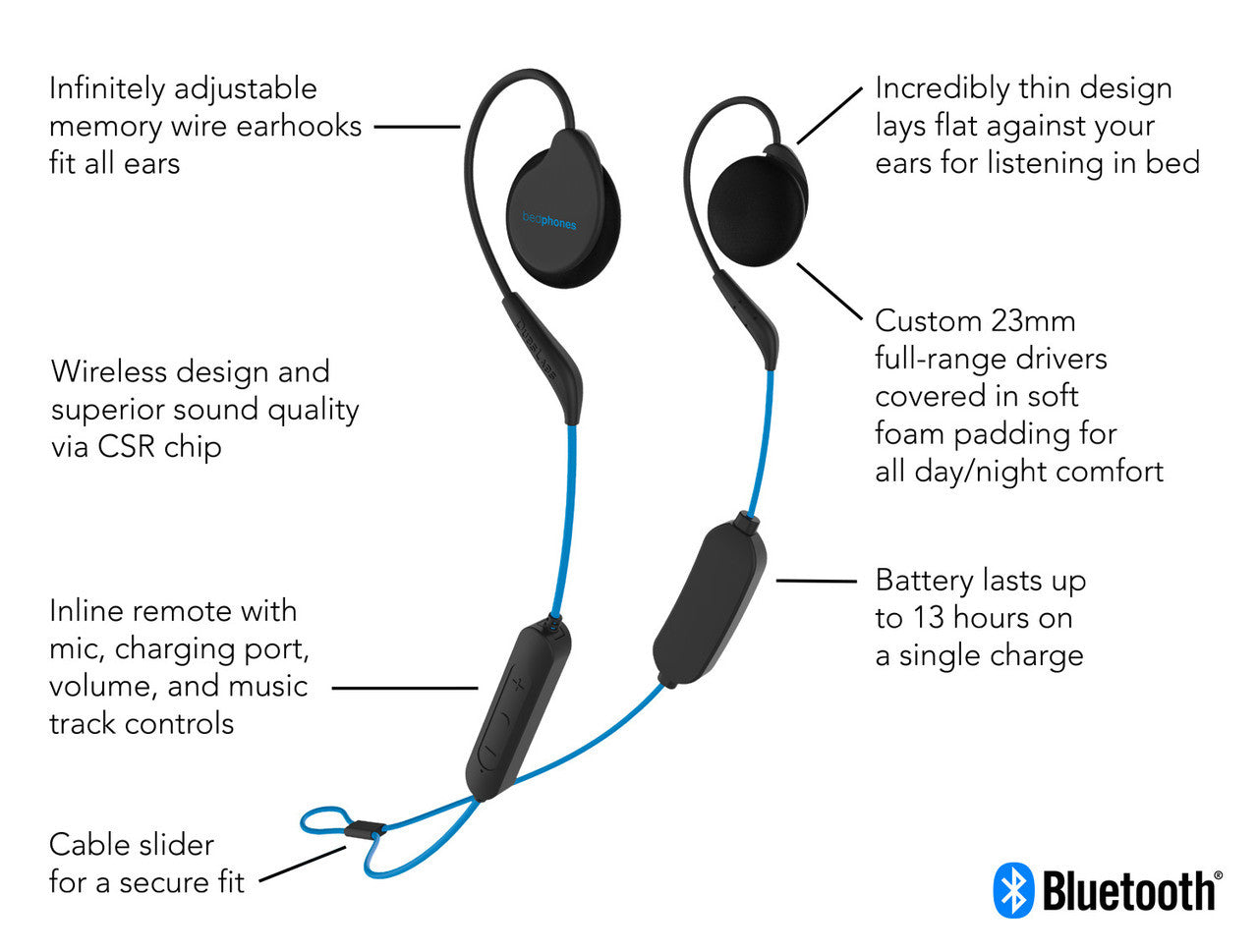
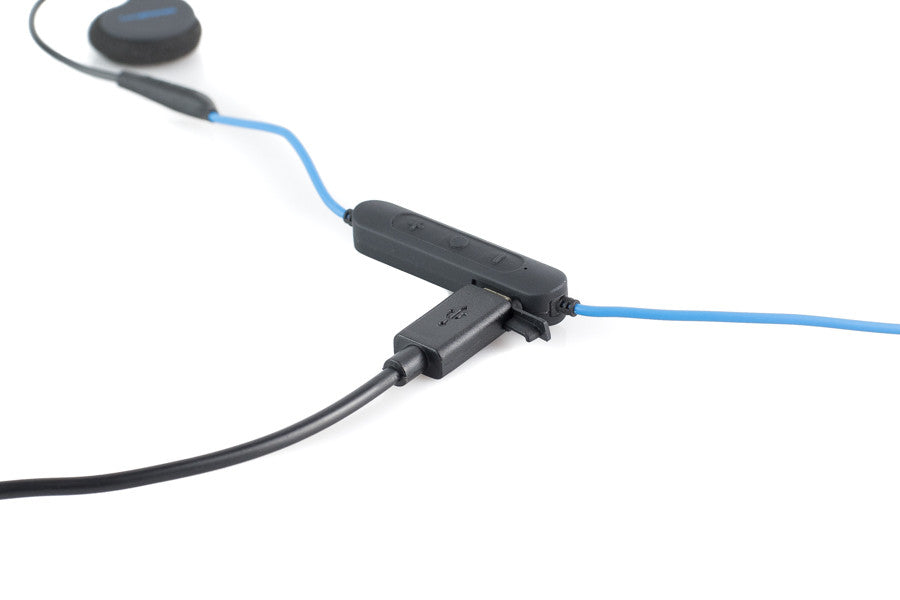
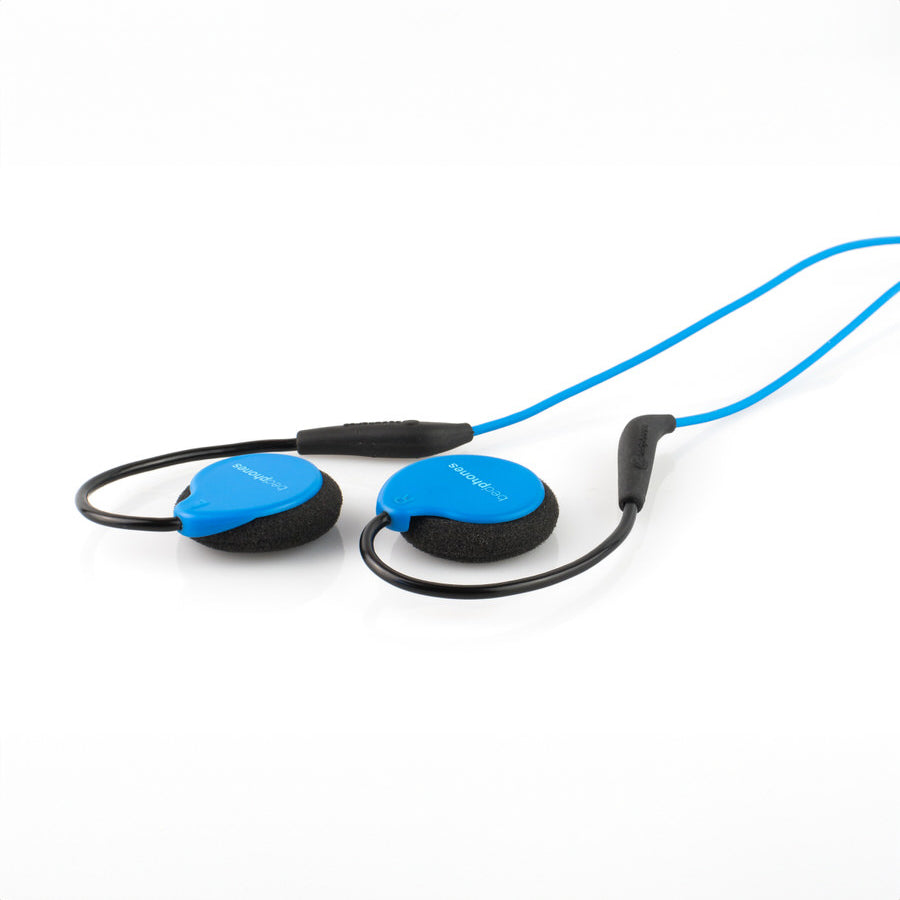
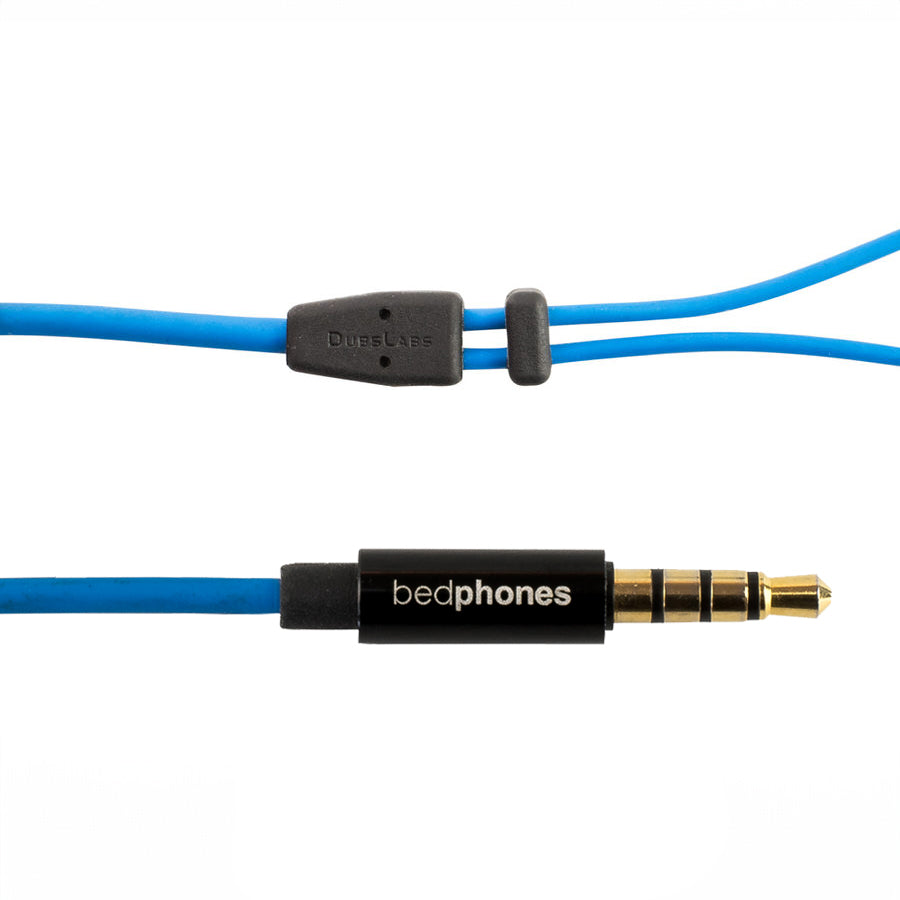
But what if you share a bed or just need your own personal soundscape? Traditional headphones are usually too bulky and uncomfortable for side-sleepers. This is where something like DubsLabs Bedphones really shines. Their ultra-thin, on-ear design lets you lie on your side comfortably while listening to calming music, a guided meditation, or a podcast. You get your own personal sound bubble, blocking out disturbances without bothering anyone else.
Set the Perfect Temperature
Ever woken up kicking off the covers because you're too hot? There's a reason for that. Your body temperature naturally drops as it prepares for sleep, and a cool room helps that process along.
The ideal temperature for sleep is surprisingly cool, generally between 60 and 67 degrees Fahrenheit (15-19 degrees Celsius).
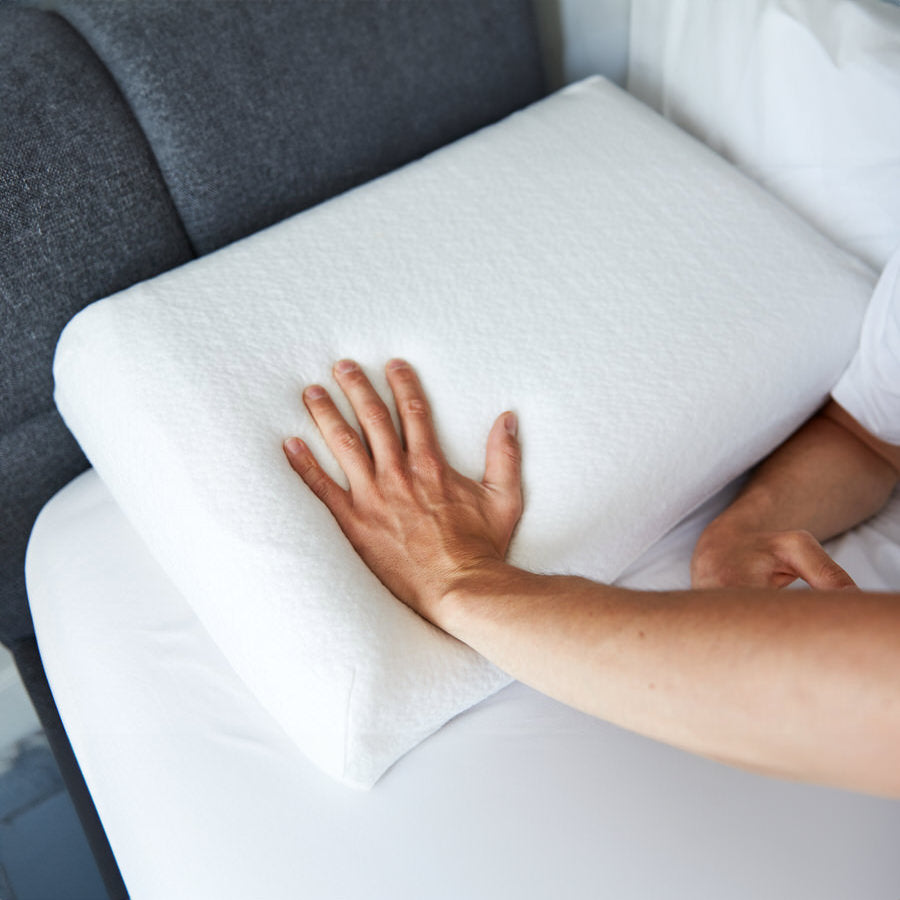
A room that’s too warm can mess with your body's ability to reach and stay in the deepest, most restorative stages of sleep. Play around within this range to find what feels best for you. Using breathable bedding made from natural fibers like cotton or bamboo also helps regulate your temperature through the night, keeping you from waking up in a sweat.
Making your bedroom a cool, dark, and quiet sanctuary is a foundational step in taking back your nights from insomnia.
Craft a Powerful Pre-Sleep Wind-Down Routine
Your bedroom environment is a huge signal to your brain that it’s time to sleep, but a consistent nightly routine is the real game-changer. Think of it as a powerful psychological trigger—a predictable sequence of calming activities that tells your mind and body, "The day is officially over; time to rest." This isn't just about feeling relaxed. It's about creating an almost Pavlovian response where your brain starts associating these specific actions with sleepiness.
You can't expect to go from the high-speed chaos of a busy day straight into a peaceful slumber. It just doesn't work that way. A wind-down routine is your way of methodically downshifting, giving your nervous system the time it needs to transition from a state of high alert to one of deep calm. Honestly, it's one of the most reliable natural remedies for insomnia because it puts you back in the driver's seat.
Building Your Wind-Down Toolkit
The perfect routine is deeply personal, so this is all about finding what genuinely works for you. The goal is simple: choose activities that lower stimulation and promote a sense of tranquility. Steer clear of anything that might cause frustration or a spike in excitement, like checking work emails (a classic mistake) or getting lost in a social media scroll-a-thon.
Instead, focus on things that quiet the mind and relax the body. Here are a few evidence-backed ideas to get you started:
- Journaling for Mental Clarity: Take 10-15 minutes for a "brain dump." Seriously, write down everything that's swirling around in your head—worries, to-do lists for tomorrow, random thoughts. This simple act gets your anxieties out of your head and onto the page, so you're not wrestling with them in the dark.
- Gentle Stretching or Yoga: Focus on slow, mindful movements. Pay special attention to releasing tension in the neck, shoulders, and back, which is where most of us hold our stress. This tells your muscles it's safe to let go.
- Mindful Reading: Pick up a physical book, not a screen. Reading fiction or something light can be a fantastic escape, pulling your mind away from the day's stressors and helping you disengage.
- Listening to Calming Audio: A guided meditation, a quiet podcast, or some soft instrumental music can be incredibly effective. Using comfortable headphones like DubsLabs Bedphones is a great way to create your own private soundscape without bugging your partner, and it helps block out any distracting house noises.
The best routines are supported by the right environment. This simple flowchart shows how the core principles of a sleep sanctuary set the stage for your wind-down to be successful.
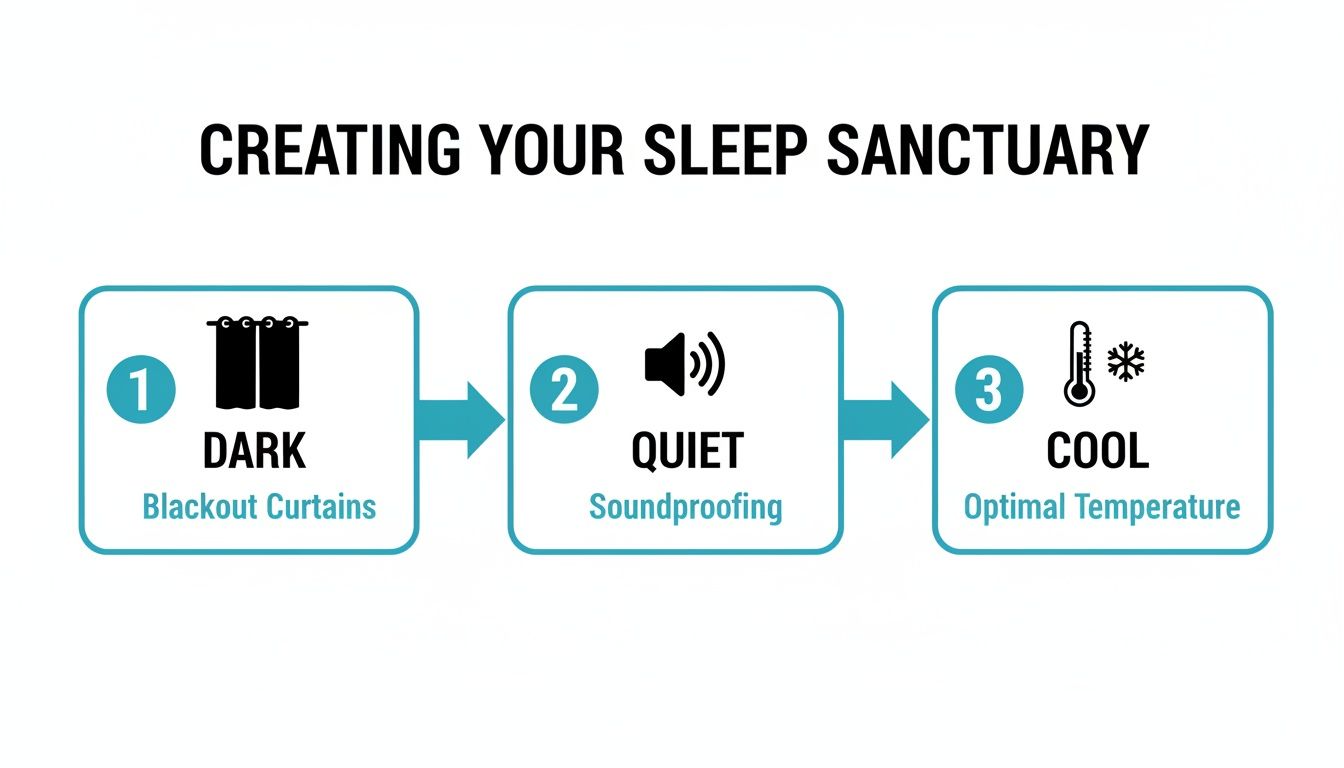
When your space is dark, quiet, and cool, you're giving your wind-down routine the perfect stage to work its magic.
The Science of a Warm Bath
Here's a tip that feels like an indulgence but is actually rooted in science: take a warm bath or shower about 90 minutes before bed. When you soak in warm water, your body temperature rises just a bit. After you get out, the rapid cooling that follows mimics the natural drop in core body temperature your body goes through to prepare for sleep.
This temperature drop is a powerful cue for your brain to start producing melatonin, the hormone that runs your sleep-wake cycle. The end result? You feel sleepy and find it much easier to drift off.
A wind-down routine is your personal boundary between the stress of the day and the peace of the night. It's a non-negotiable appointment with yourself that prioritizes your rest and well-being.
A Sample 60-Minute Wind-Down Routine
Consistency beats perfection every time. The real key is to find a sequence you can actually stick to on most nights. Think of this timeline as a starting point—feel free to swap out activities and adjust the timing to fit your own life.
Here's a practical, step-by-step timeline you can adapt to create your own pre-sleep ritual.
A Sample 60-Minute Wind-Down Routine
| Time (Before Bed) | Activity | Purpose |
|---|---|---|
| 60 Minutes Out | Dim the lights and put away all screens (phone, TV, tablet). | Reduce blue light exposure, which messes with melatonin production. |
| 45 Minutes Out | Perform light chores like packing a lunch or tidying up. | Handle simple tasks to prevent last-minute stress and clear your mind. |
| 30 Minutes Out | Take a warm bath, read a book, or do some gentle stretching. | Lower your core body temperature and actively engage in a relaxing activity. |
| 15 Minutes Out | Journal or listen to a guided meditation. | Calm a racing mind and process any lingering anxieties from the day. |
| Bedtime | Get into bed in your cool, dark, and quiet room. | Transition into your sleep sanctuary, ready for a night of deep rest. |
By establishing and fiercely protecting this pre-sleep period, you're building one of the most powerful habits for overcoming insomnia naturally. It’s a deliberate act of self-care that trains your brain to anticipate rest, making it easier to fall asleep and stay asleep, night after night.
Use Your Diet and Natural Supplements to Sleep Better

It might be surprising, but what you put on your plate can have a huge impact on your sleep. Just like a strong coffee can wire you for hours, certain foods and nutrients can gently nudge your body toward rest. This is a core part of using natural remedies for insomnia—setting your body up for success through nutrition before you even consider supplements.
This isn't just about avoiding stimulants. It’s about actively eating foods rich in sleep-supporting compounds like magnesium, tryptophan, and melatonin. These micronutrients play crucial roles in calming your nervous system and managing your body’s internal clock.
Magnesium, for instance, is known for relaxing muscles and calming nerve activity, making it easier to unwind. Tryptophan is an amino acid that your body converts into serotonin (the "feel-good" neurotransmitter), which then gets converted into melatonin, the hormone that tells your body it's time to sleep.
Eating Your Way to Better Rest
Working sleep-friendly foods into your evening meals or snacks is a simple but effective strategy. You don’t need a restrictive diet; just a few mindful additions can make a real difference.
Here are a few practical ideas:
- A handful of almonds or walnuts: Both are packed with magnesium and even contain some melatonin. They're a perfect light evening snack.
- A small bowl of oatmeal: Complex carbs can help make tryptophan more available to the brain, helping you feel sleepy.
- Tart cherries or tart cherry juice: This is one of the few natural food sources of melatonin. Studies have shown it can improve both sleep duration and quality.
- A soothing cup of herbal tea: Certain herbs have been used for centuries to promote relaxation. You can explore some of the best bedtime teas for sleep and relaxation to find a blend that works for you.
A quick tip: the goal is to support your body's natural sleep drive, not to induce a food coma. A light, balanced snack an hour or two before bed is much better than a heavy meal that could cause indigestion and keep you up.
Navigating the World of Natural Sleep Supplements
When diet and lifestyle tweaks aren't quite cutting it, many people turn to supplements for extra support. The market for these products is massive, which shows a clear shift toward plant-based and herbal options over traditional sleep aids. In fact, the insomnia supplements market was valued at USD 4.67 billion in 2025 and is projected to hit USD 10.86 billion by 2034.
This popularity means you're faced with a dizzying number of choices. It's crucial to approach them with a clear head, understanding what they do and how to use them safely. Always have a chat with your doctor before starting any new supplement, especially if you have existing health conditions or are taking other medications.
For those looking into natural aids, there are plenty of options that can offer relief. For a deeper dive, you can check out this comprehensive guide to supplements for better sleep.
A Closer Look at Popular Options
To help you make a smart choice, let's compare some of the most common natural sleep supplements out there. Each one works a bit differently and might be better suited for specific types of sleep issues.
Here's a breakdown of their main uses, the level of scientific evidence supporting them, and a few important things to keep in mind.
Comparing Popular Natural Sleep Supplements
| Supplement | Primary Use | Evidence Level | Important Considerations |
|---|---|---|---|
| Melatonin | Regulating sleep-wake cycles (circadian rhythm), helpful for jet lag or shift work. | Strong | Best for sleep-timing issues. Start with a very low dose (0.5-1 mg) 30-60 minutes before bed. Higher doses can cause grogginess. |
| Valerian Root | Reducing anxiety and promoting relaxation to help with falling asleep. | Moderate | It may take a couple of weeks of consistent use to see effects. Can cause vivid dreams in some individuals. |
| Magnesium | Calming the nervous system and relaxing muscles. Good for stress-related insomnia. | Moderate | Choose highly absorbable forms like magnesium glycinate. Can cause digestive upset at high doses. |
| Chamomile | Mild sedative effects, used to reduce anxiety and promote a sense of calm. | Mild to Moderate | Often consumed as a tea. Generally very safe, but those with ragweed allergies should be cautious. |
| Tart Cherry | A natural source of melatonin, may help improve both sleep duration and quality. | Moderate | Available as juice or capsules. Look for products without added sugar. Can be a good option for those hesitant to take synthetic melatonin. |
Choosing the right remedy is all about matching the supplement to the root cause of your sleep problems. If anxiety is what’s keeping you up at night, valerian root might be a better fit than melatonin. On the other hand, if your sleep schedule is just completely out of whack, melatonin could be the more targeted solution.
By understanding these differences, you can build a smarter, more effective plan for reclaiming your nights.
Calm a Racing Mind with Relaxation Techniques
Sometimes, the biggest obstacle to sleep isn't a lumpy mattress or a noisy neighbor—it's the relentless chatter inside your own head. We've all been there. Your body is exhausted, but your mind is wide awake, replaying conversations, building to-do lists, or just plain worrying.
This mental static keeps your body on high alert, stuck in "fight or flight" mode when it should be powering down. This is why relaxation techniques are some of the most powerful natural remedies for insomnia. The goal isn't to force your mind blank, but to gently guide your nervous system into a state of calm, creating the mental space for sleep to happen naturally.
Harness the Power of Your Breath
Your breath is the most immediate tool you have. You can use it anywhere, anytime. Deep, controlled breathing sends a direct signal to your brain to chill out, slowing your heart rate and releasing muscle tension. It’s a simple physiological hack that can instantly break the cycle of bedtime anxiety.
A fantastic method to try is the 4-7-8 breathing technique. It's incredibly simple and effective when you're lying in bed and can feel the stress building.
- Place the tip of your tongue against the ridge of tissue just behind your upper front teeth and keep it there.
- Exhale completely through your mouth, making a whoosh sound.
- Close your mouth and inhale quietly through your nose for a mental count of four.
- Hold your breath for a count of seven.
- Exhale completely through your mouth, making that whoosh sound again, for a count of eight.
- That’s one full breath. Now, inhale again and repeat the cycle three more times for a total of four breaths.
The rhythm forces you to focus, pulling your attention away from whatever thoughts are keeping you awake.
Master Progressive Muscle Relaxation
Mental stress almost always shows up as physical tension. You might not even realize you’re clenching your jaw or hunching your shoulders until you consciously check in. Progressive Muscle Relaxation (PMR) is a fantastic technique that teaches you to systematically release this trapped tension.
The idea is to tense a specific muscle group for about five seconds, then fully release it for 30 seconds, paying close attention to the feeling of relaxation that follows. You just work your way up your body.
- Start with your feet and toes: Curl them tightly, hold the tension, and then release it completely. Feel the warmth and heaviness as the muscles let go.
- Move up to your legs: Tense your calves, then your thighs. Hold each one, then release.
- Continue upwards: Progress through your abdomen, chest, arms, hands, shoulders, neck, and finally, the tiny muscles in your face.
By the time you're done, your entire body will feel looser and heavier, making it much easier for your mind to follow suit. For a deeper dive, check out these other relaxation techniques for better sleep.
Relaxation isn't about forcing your mind to be empty. It's about giving it something calm to focus on, like your breath or physical sensations, so it has a place to rest instead of spinning in circles.
Adopt Principles from Cognitive Behavioral Therapy
Cognitive Behavioral Therapy for Insomnia (CBT-I) is widely considered the gold-standard treatment for chronic sleep issues. While a full program is best done with a professional, you can absolutely borrow some of its core principles. One of the most effective is stimulus control.
At its heart, stimulus control is about breaking the connection your brain has made between your bed and being awake (and frustrated). You want to retrain your brain to see the bed as a place for sleep, and only sleep.
- The bed is for two things only: sleep and intimacy. No more working from bed, eating dinner while watching a show, or endlessly scrolling.
- If you can't sleep, get up. If you find yourself lying there wide awake for what feels like 20-30 minutes, get out of bed. Go to another room and do something quiet in dim light, like reading a boring book (no thrillers!).
- Only return to bed when you feel sleepy. This is crucial. It reinforces the message to your brain that bed = sleepiness.
A huge part of making these techniques stick is learning how to manage your reactions to stress and anxiety. The practice of developing emotional regulation and resilience is a cornerstone of quieting a busy mind and getting the most out of these strategies.
By weaving these mental and physical relaxation techniques into your nightly routine, you're building a powerful, drug-free toolkit to manage bedtime anxiety and finally break the cycle of sleeplessness.
Answering Your Questions About Natural Sleep Remedies
Dipping your toes into the world of natural sleep support usually brings up a lot of questions. That’s perfectly normal. Getting solid, reliable answers is the best way to feel confident and safe as you start exploring what works for you. Let's tackle some of the most common things people ask about using natural remedies for insomnia.
How Long Until Natural Remedies Start Working?
This is probably the number one question we hear, and the honest answer is: it really depends. Unlike a prescription sleep aid that can knock you out almost immediately, natural remedies tend to work more gently and often need a little time.
For instance, a technique like the 4-7-8 breathing method can bring you a sense of calm right in the moment. You might feel your racing thoughts slow down after just one round. It's fantastic for that immediate, "I need to relax now" feeling.
On the other hand, herbal supplements like valerian root require a bit more patience. Some people might feel a difference in their sleep within a week, but for many, it can take two to three weeks of consistent use before they notice a real shift. The active compounds need time to build up in your system.
The key here is consistency. Think of natural remedies less as a quick fix and more as a way to support your body's natural sleep rhythms over the long haul. Give any new routine a few weeks before you decide if it's the right fit.
Can I Combine Different Natural Sleep Remedies?
Absolutely! In fact, that's often the most effective way to go. Instead of searching for one single "magic bullet," it’s much better to build a personalized toolkit that tackles sleep issues from different angles.
A layered approach tends to deliver the best results. For example, you could easily combine:
- A new behavior: Winding down for an hour before bed with a good book instead of your phone.
- An environmental tweak: Using a DubsLabs Total Dark Sleep Mask to create true, uninterrupted darkness.
- A gentle supplement: Sipping a warm cup of chamomile tea as part of your new wind-down routine.
This kind of combination addresses potential disruptions from all sides—mental, environmental, and physiological. The synergy between different natural approaches is often what leads to that final breakthrough for better sleep.
Are There Any Safety Concerns or Side Effects?
Just because something is labeled "natural" doesn't automatically mean it's risk-free, so it's smart to be informed. Most of the lifestyle and behavioral remedies, like mindfulness or creating a cool, dark bedroom, are perfectly safe for everyone.
But when you get into herbs and supplements, that's a different story.
These are bioactive substances, meaning they have a real effect on your body and can sometimes interact with prescription medications or cause side effects. For example, St. John's Wort is known to interfere with antidepressants and birth control pills. Taking too much magnesium can lead to an upset stomach.
This is non-negotiable: before starting any new supplement, you absolutely must talk to your doctor or another qualified healthcare provider. They can look at your personal health history and any medications you're taking to make sure there are no conflicts. This is the only way to make a choice that's both safe and effective for you.
Ready to create the perfect soundscape for your wind-down routine? The ultra-thin DubsLabs Bedphones are designed for ultimate comfort, allowing you to listen to calming audio while sleeping in any position.