To truly get the best sleep of your life, you need to think beyond just climbing into bed. It starts with creating a consistent routine that basically tells your brain, "Hey, it's time to power down."
This means setting a hard stop for screen time, swapping scrolling for calming activities like reading or gentle stretching, and making sure your bedroom is dark, quiet, and cool. A solid 30-90 minute routine is the sweet spot for de-stressing and prepping your body for a restorative night.
Why Winding Down Is No Longer a Luxury
In a world buzzing with endless notifications and late-night work emails, the jump from a busy day to a restful night feels almost impossible. We can't just treat sleep like an on/off switch—going from 100 mph to a dead stop in minutes just doesn't fly. Your brain needs clear signals to shift gears from being active and alert to a state of deep relaxation.
A dedicated wind-down routine is that signal. It's not just a nice idea; it's a biological necessity that helps you:
- Lower Cortisol: It dials down the stress hormone cortisol, which is notorious for keeping you wired and anxious.
- Boost Melatonin: It naturally encourages your body to produce melatonin, the hormone that governs your sleep-wake cycle.
- Calm the Nervous System: It helps your body transition from the frantic "fight-or-flight" mode to the peaceful "rest-and-digest" state.
This isn't just about turning off the lights; it's a full-sensory approach to finding calm. And the need for it is more critical than ever. A huge report from Sleep Cycle that analyzed over 105 million nights of sleep found that global sleep quality has actually dropped. This just goes to show how modern life is making it tougher than ever to wind down properly. You can learn more about these global sleep trends and insights on their site.
A consistent pre-sleep ritual acts as a powerful buffer against daily stress, creating a predictable transition that your mind and body can rely on to initiate rest. It's not about adding another task to your day but about protecting your most vital recovery period.
This infographic breaks down a simple yet effective 90-minute timeline to get you started.
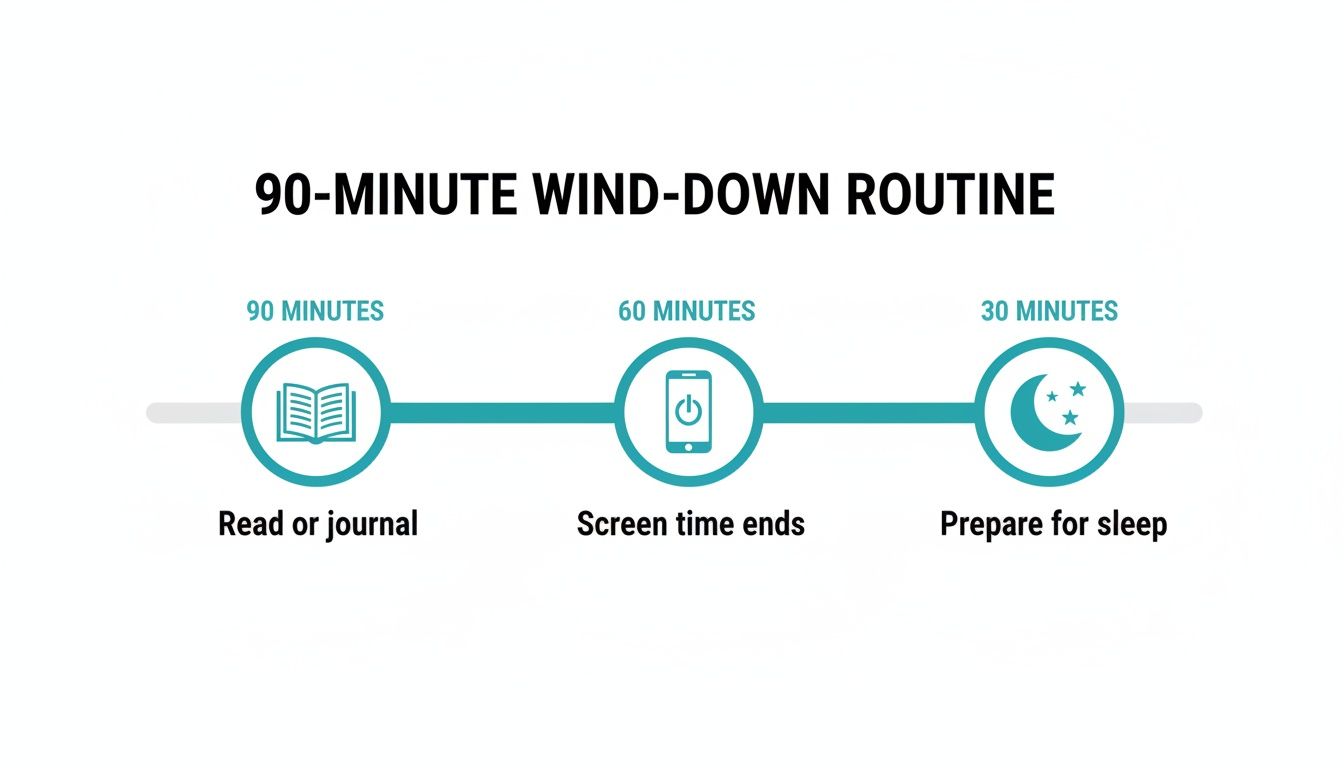
Think of it as a visual roadmap. By dedicating specific blocks of time to calming activities, you're progressively getting your mind and body ready for bed, making that final transition feel natural and totally effortless.
A Sample 90-Minute Wind-Down Timeline
To make this even clearer, here's a quick, scannable overview of an ideal pre-bed routine. We've broken it down into manageable time blocks to give you a clear roadmap for the actionable advice ahead.
| Time Before Bed | Activity | Primary Goal |
|---|---|---|
| 90-60 Mins | Light activity & tidy up | Gently expend last bits of energy; create a calm space. |
| 60-30 Mins | Ditch screens & personal care | Reduce blue light exposure; signal relaxation. |
| 30-10 Mins | Quiet, relaxing activity | Lower heart rate & calm the mind. |
| Final 10 Mins | Breathing & meditation | Prepare the body for immediate sleep. |
Using a simple timeline like this takes the guesswork out of your evening and helps build a powerful habit over time.
Designing Your Ultimate Sleep Sanctuary
Your bedroom should be your ultimate retreat, a space dedicated entirely to rest and rejuvenation. Think of it as the control center for your nightly wind-down routine. When every element works together, it sends a powerful signal to your brain that it’s time to switch off and sleep. Building this sanctuary is about more than just a comfy mattress; it’s about actively curating your environment.
The first step? Get a handle on the sensory inputs: temperature, light, and sound. These three factors have a massive impact on your ability to fall—and stay—asleep.
Dial In the Perfect Climate
Ever notice how you sleep better in a cool room? There’s a biological reason for that. Your body's core temperature actually needs to drop slightly to kickstart the sleep process. Keeping your room cool, ideally around 65°F (18.3°C), helps this happen naturally. If your room tends to run warm, something as simple as a fan can make a big difference by circulating air and providing a gentle, soothing hum.
Engineer Total Darkness and Silence
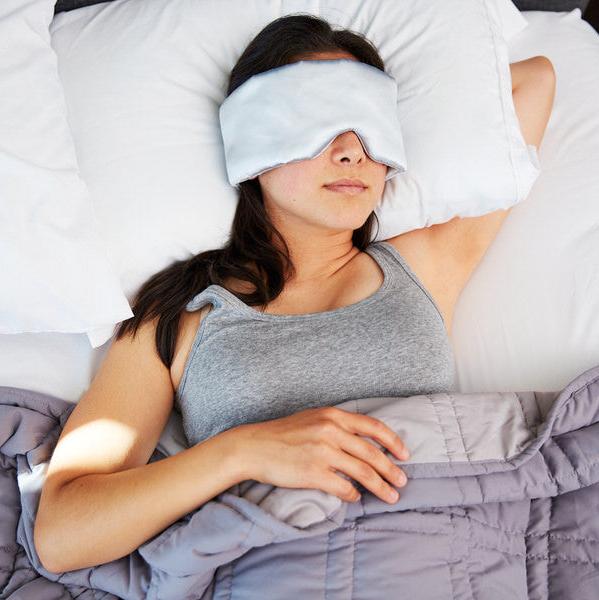
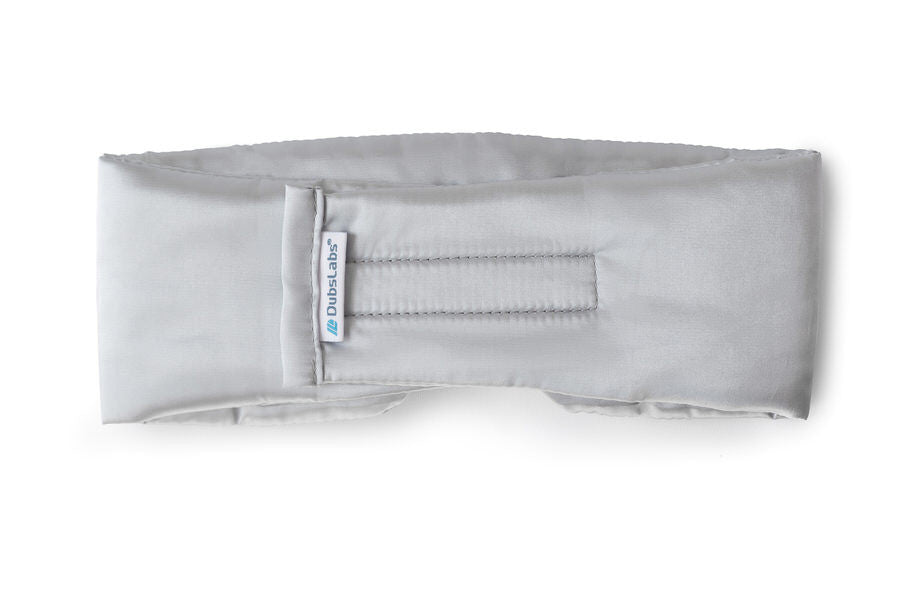
Even tiny amounts of light can throw a wrench in your body's melatonin production. That sliver of a streetlight peeking through the blinds or the faint glow from a digital clock can be surprisingly disruptive. This is where a high-quality, total-dark sleep mask becomes a game-changer, creating pitch-black conditions no matter what’s going on outside.
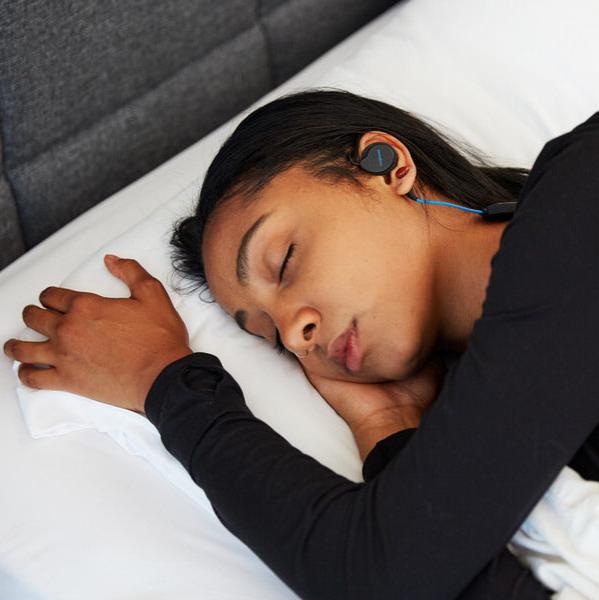
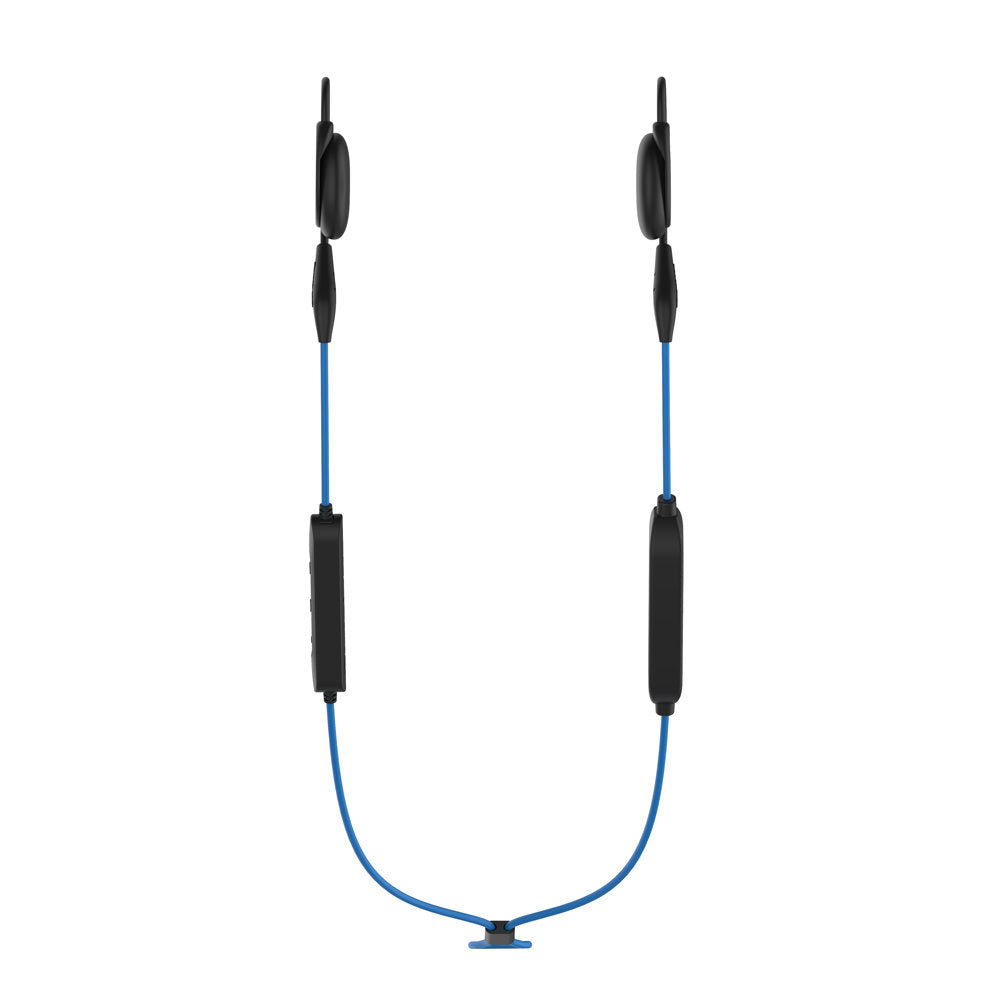
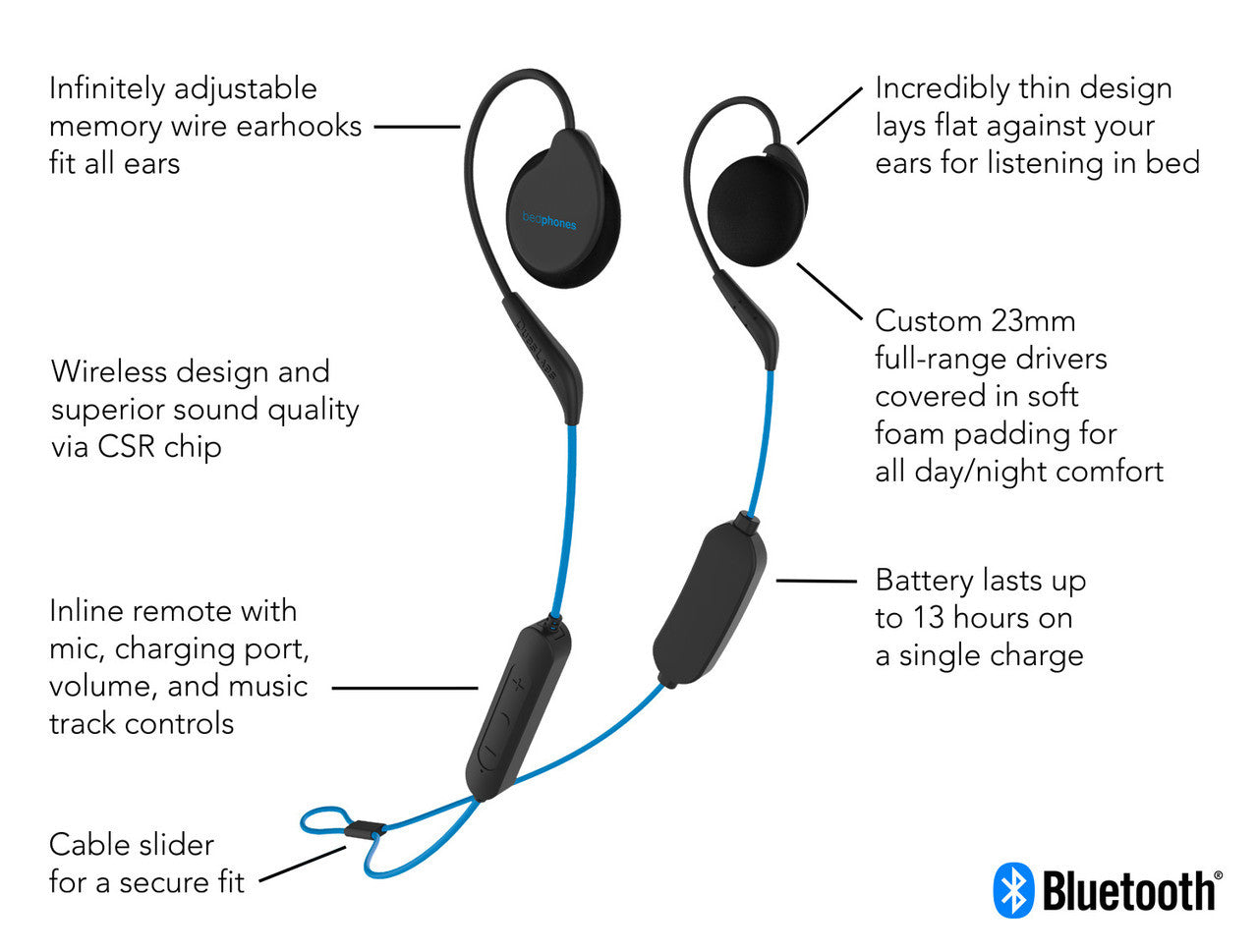
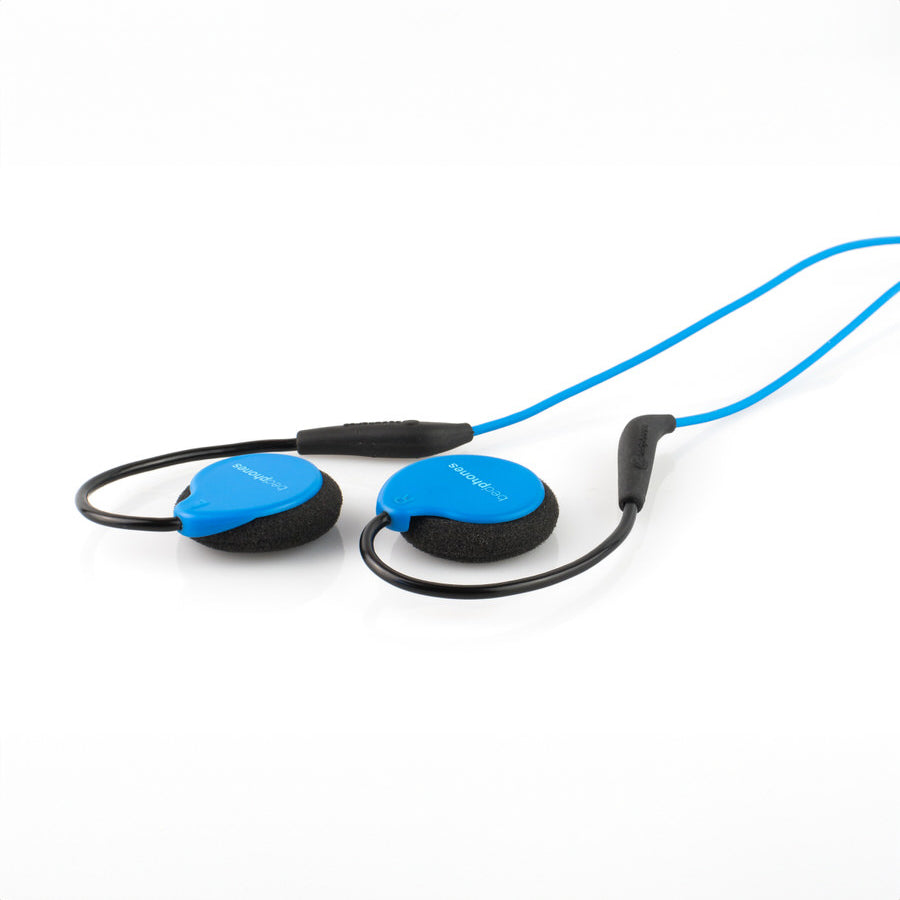
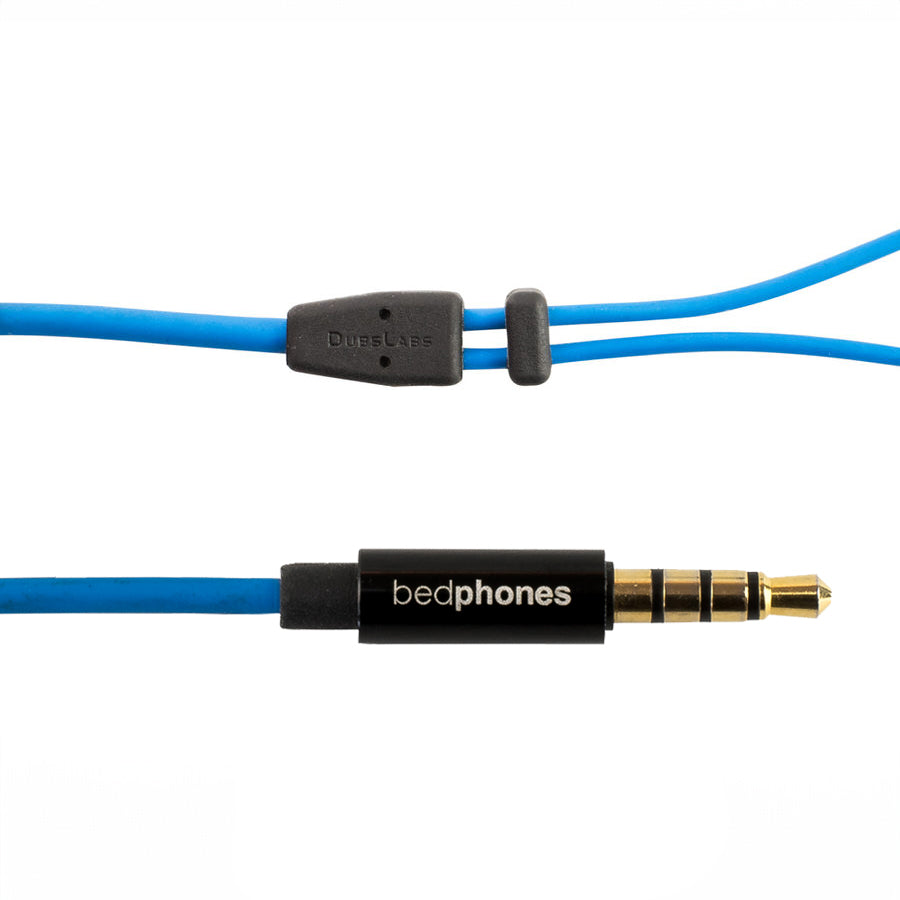
The same goes for sound. Unexpected noises—the neighbor’s late-night TV, passing traffic, or even a snoring partner—can easily jolt you out of light sleep. Using ultra-thin Bedphones to play a bit of white noise or some calming soundscapes can effectively create a shield against these interruptions, wrapping you in a consistent and peaceful audio bubble.
It’s no surprise that the IKEA Sleep Report found a global average Sleep Score of just 63 out of 100. We’re all struggling. But simple changes, like using a sleep mask to block 99% of light, can make a huge difference. You can dig into more of their findings from the world's largest sleep surveys.
A decluttered, organized bedroom reduces visual “noise” and mental clutter. When your space is calm and orderly, your mind is more likely to follow suit, making it easier to wind down before bed.
At the end of the day, a well-designed sleep environment doesn’t just happen—it’s built with intention. For a deeper dive, check out our guide on how a great sleep environment improves sleep quality.
Simple Techniques to Calm Your Mind and Body
Once your bedroom is a peaceful sanctuary, the next step is to quiet the internal chatter and release the day's physical tension. Honestly, learning how to wind down before bed often comes down to a few simple, intentional practices. These techniques are all about signaling to your nervous system that it's safe to rest. The best part? You don't need any special equipment, just a few minutes of focus.

One of the most powerful tools you have is your own breath. Controlled breathing is like a direct line to your parasympathetic nervous system—the body's "rest-and-digest" command center. When you consciously slow your breathing, you're telling your body to lower your heart rate and blood pressure, gently easing yourself out of a stressed-out state. If you want to dive deeper, we have a whole guide on breathing exercises for falling asleep.
The 4-7-8 Breathing Method
Think of this technique as a natural tranquilizer for your nervous system. It’s incredibly straightforward and you can do it anywhere, even after you’ve already settled into bed for the night.
Here’s how it works:
- Start by exhaling completely through your mouth. Let it all out with a gentle whoosh sound.
- Next, close your mouth and inhale quietly through your nose for a mental count of four.
- Hold that breath for a count of seven.
- Finally, exhale slowly and completely through your mouth—making that whoosh sound again—for a count of eight.
That’s one cycle. Repeat it three more times, for a total of four breaths. The real magic is in that long, controlled exhale. It’s profoundly relaxing.
Understanding how to reduce stress naturally is fundamental to winding down effectively. Simple practices like these are the building blocks of a calmer mind and, ultimately, restorative sleep.
Unwind with Progressive Muscle Relaxation
Another fantastic technique is progressive muscle relaxation (PMR). It sounds complicated, but it's just the simple act of tensing and then releasing different muscle groups, one by one. This practice is brilliant because it makes you aware of where you’re holding tension and then teaches you to consciously let it go.
Listening to a guided PMR session can make this even more immersive. Try it with a pair of comfortable Bedphones to really tune out the world and focus inward.
Here’s a quick 10-minute script you can try tonight:
- Toes and Feet (1 min): Curl your toes as tightly as you can for 10 seconds, then completely release the tension for 20 seconds. Notice the difference.
- Legs (2 mins): Tense your calves, then your thighs. Hold each for 10 seconds before letting go.
- Hands and Arms (2 mins): Clench your fists tight, then tense your biceps. Hold, and then release.
- Torso (2 mins): Tighten your abdominal muscles, then your chest. Now, let it all go.
- Shoulders and Neck (2 mins): Shrug your shoulders all the way up to your ears, hold them there, and then let them drop completely.
- Face (1 min): Scrunch up all your facial muscles—your forehead, eyes, jaw—and then relax everything.
Finish off with a few deep, cleansing breaths. You’ll be surprised at how much lighter and calmer your whole body feels.
Mastering the One-Hour Screen-Free Rule
Your phone is almost certainly the biggest obstacle standing between you and a truly restful night. The blue light blasting from screens—phones, tablets, computers, and TVs—is a sneaky sleep killer. It tricks your brain into thinking it's still daytime, slamming the brakes on melatonin production, the crucial hormone that runs your sleep-wake cycle.
Setting a one-hour digital curfew before bed isn’t about punishment or restriction. It’s about taking back control of your body's natural sleep rhythm. This one simple rule is a cornerstone of good sleep hygiene and can make a massive difference in how quickly you fall asleep.
Creating Your "Digital Sunset"
The real trick is to replace mind-numbing scrolling with something genuinely calming. Instead of passively soaking up stimulating content, pick an activity that actively soothes your mind. This is your "digital sunset"—the moment you intentionally power down your devices and give your brain the signal to start winding down.
Think of your phone like a cup of coffee: great in the morning, but a bad idea right before you want to rest. By setting it aside, you’re giving your mind the quiet space it needs to prepare for sleep.
Making this transition stick requires a few practical changes. First, create a designated charging station for all your electronics and make sure it's outside of your bedroom. This simple change of scenery removes the temptation to check your phone if you wake up in the middle of the night.
Next, get proactive with your notifications. Use your phone’s "Do Not Disturb" or "Focus" mode to automatically silence all those dings and buzzes during your wind-down hour and throughout the night. No exceptions.
Finally, you need to fill that screen-free time with something you actually enjoy. What's something that feels like a treat? Maybe it’s listening to an audiobook, a calming podcast, or a guided meditation with a pair of comfy, wireless Bedphones. This lets you enjoy the content you love without the sleep-wrecking blue light, turning your digital curfew into a peaceful and restorative part of your evening.
Wind-Down Routines for Every Lifestyle
There’s no magic, one-size-fits-all wind-down routine. What helps a night owl relax might be completely useless for a new parent running on fumes. The real secret to winding down is creating a plan that actually fits your life, not trying to force someone else's perfect routine into your already-packed schedule.
This is more important than ever. ResMed's recent Global Sleep Survey is pretty eye-opening: people are losing almost three nights of good sleep every single week. And what’s the biggest culprit? 57% of people blame stress. With so many of us struggling, a personalized pre-bed ritual isn't a luxury—it's a necessity.
For the Anxious Adult
If your mind starts racing the second your head hits the pillow, your routine needs to be all about getting those worries out. It sounds simple, but dedicating just 10-15 minutes to journaling can be a game-changer.
Grab a notebook and just dump everything that's spinning in your head—that to-do list for tomorrow, a conversation you can't stop replaying, all those nagging anxieties. Getting it all down on paper feels like physically offloading a heavy backpack.
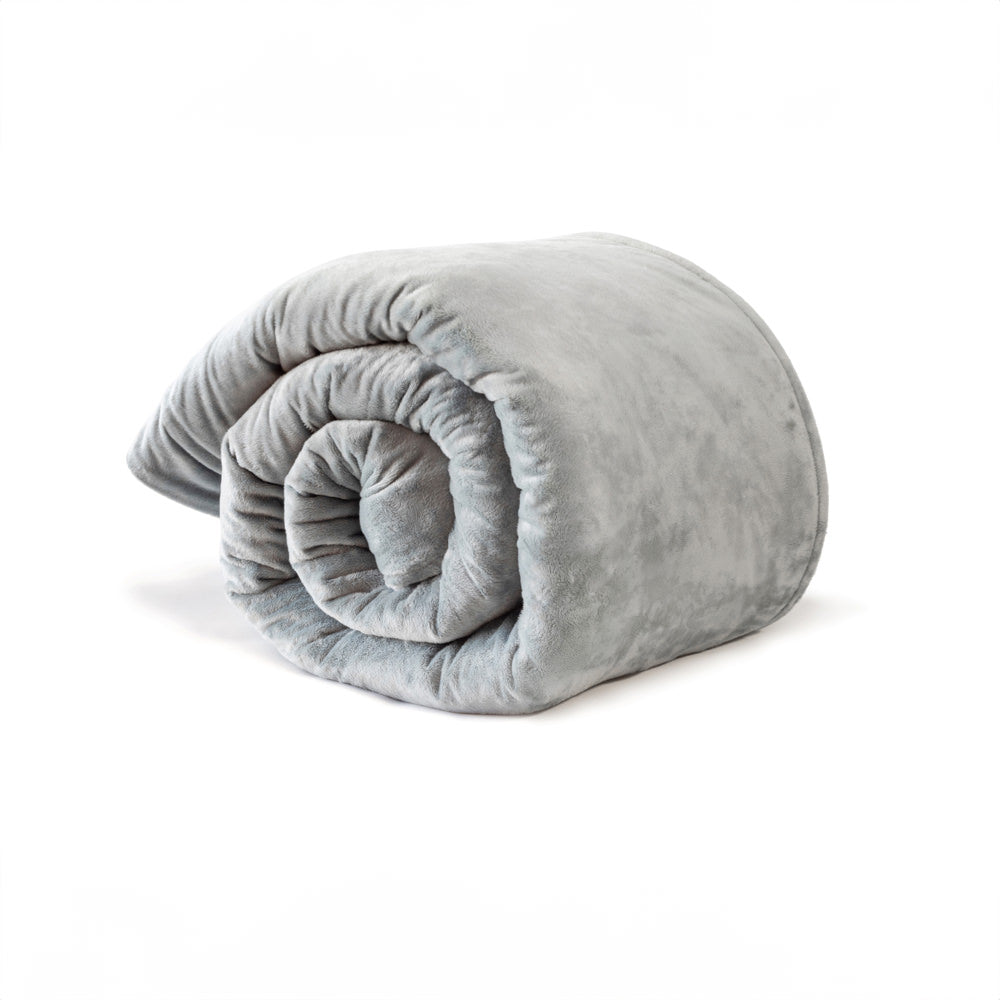
Once you’ve done that, switch gears to a guided meditation or a calming podcast. This is where a pair of comfortable Bedphones really shines, helping you block out distractions and truly sink into the moment. For an extra layer of calm, a weighted blanket can work wonders. That gentle, deep pressure can be incredibly soothing for an overactive nervous system.
For the Busy Parent
Parents, I see you. Time is your most precious resource. Your wind-down routine has to be quick, efficient, and pack a serious punch.
Once the kids are finally down for the night, claim just 15 minutes for yourself. The temptation to finally do the dishes or scroll through your phone will be strong. Resist.
Find a quiet corner and listen to one chapter of an audiobook or a short, relaxing playlist. Discreet Bedphones are perfect for this, letting you unwind without worrying about waking anyone up. The goal here isn't a long, elaborate ritual; it's about creating a small, protected pocket of calm that signals the end of your "on-duty" time. If you're looking for more ways to make that transition, check out these five tips for going to sleep quicker.
Even a brief, intentional relaxation session can be incredibly effective. It's about the consistency and quality of the time you set aside, not the duration.
For the Shift Worker
When your "bedtime" is a moving target, consistency feels impossible. For shift workers, the biggest challenge is creating a portable ritual that tells your body it’s time to rest, no matter what the clock says. Your entire focus should be on creating artificial nighttime cues.
Your best friend here is a total blackout sleep mask. Blocking out every last bit of daylight is crucial for tricking your brain into producing melatonin.
Combine that with white noise or a familiar sleep story to drown out the daytime world. Together, these tools create a predictable sleep environment that helps regulate your internal clock, even when your schedule is anything but regular.
Got Questions About Winding Down?
Whenever you start a new routine, a few questions are bound to pop up. Getting those sorted out ahead of time can make all the difference between sticking with your new habit and letting it slide.
Let's clear up some of the most common things people ask when they're learning how to properly wind down for the night.
How Long Should My Wind-Down Routine Be?
The sweet spot for a wind-down routine is anywhere from 30 to 90 minutes. This gives your brain and body enough runway to actually decelerate from the day's chaos and shift into rest mode.
But don't get hung up on the number. Even a solid, focused 30 minutes every single night can be incredibly powerful. What matters most isn't the exact time on the clock, but the consistency. Find a window that you can realistically commit to, and then protect that time.
What if I Wake Up in the Middle of the Night?
It happens to the best of us. You're wide awake at 3 a.m., staring at the ceiling. If you've been trying to fall back asleep for about 20 minutes with no luck, the best thing you can do is get out of bed.
Find a dimly lit spot somewhere else in your home and do something quiet. Read a few pages of a real book (no screens!) or listen to some quiet music. The key is to only head back to bed when you feel that wave of sleepiness returning. This simple trick helps break the frustrating cycle of associating your bed with being awake and stressed.
The biggest mistake people make is staying in bed, trying to force themselves back to sleep. This almost always backfires by creating more anxiety. Getting up for a few minutes to reset is a much smarter strategy.
Is It Okay to Watch TV to Wind Down?
I get this one a lot. While zoning out in front of the TV might feel like you're relaxing, it's actually not a great way to prepare for sleep.
All screens, including your television, blast out blue light, which is notorious for messing with melatonin—the hormone that tells your body it's time to sleep.
Plus, the shows themselves, whether it's a tense drama or a late-night talk show, can keep your mind buzzing when it should be powering down. A much better option? Pop on a calming podcast or listen to an audiobook. You get the benefit of unwinding without the screen's disruptive glow.
Ready to perfect your wind-down routine? The DubsLabs collection, featuring our ultra-thin Bedphones and total dark sleep masks, provides the tools you need to create your ultimate sleep sanctuary. Explore our sleep solutions at https://www.dubslabs.com and start your journey to better rest tonight.