Breathing exercises for falling asleep are simply controlled breathing patterns designed to calm your nervous system and get your body ready for rest. If you've ever heard of techniques like the 4-7-8 method or diaphragmatic breathing, that's what we're talking about. They work by slowing your heart rate and quieting all that mental chatter, making it much easier to drift off naturally.
How Your Breath Controls Your Ability to Sleep
Ever notice how your breathing gets fast and shallow when you're stressed or anxious? That's your body stuck in its high-alert "fight or flight" mode, a state driven by the sympathetic nervous system. It’s a lifesaver if you're facing a real emergency, but it's terrible for trying to get some sleep.
Intentional breathing exercises act like a manual override for that internal alarm system. By deliberately slowing down and deepening your breath, you flip the switch and activate the parasympathetic nervous system—your body’s "rest and digest" command center. This simple action sends a powerful signal throughout your body that the coast is clear and it's safe to relax.
The Shift from Stress to Rest
The physical changes happen almost immediately. A slower breathing rhythm has a direct effect on your heart, causing it to beat more slowly. As your heart rate drops, your blood pressure follows suit, further dialing down the physical feelings of stress.
It’s a cascade effect: a calm body helps create a calm mind.
This infographic breaks down the core benefits of using your breath to prime your body for sleep.
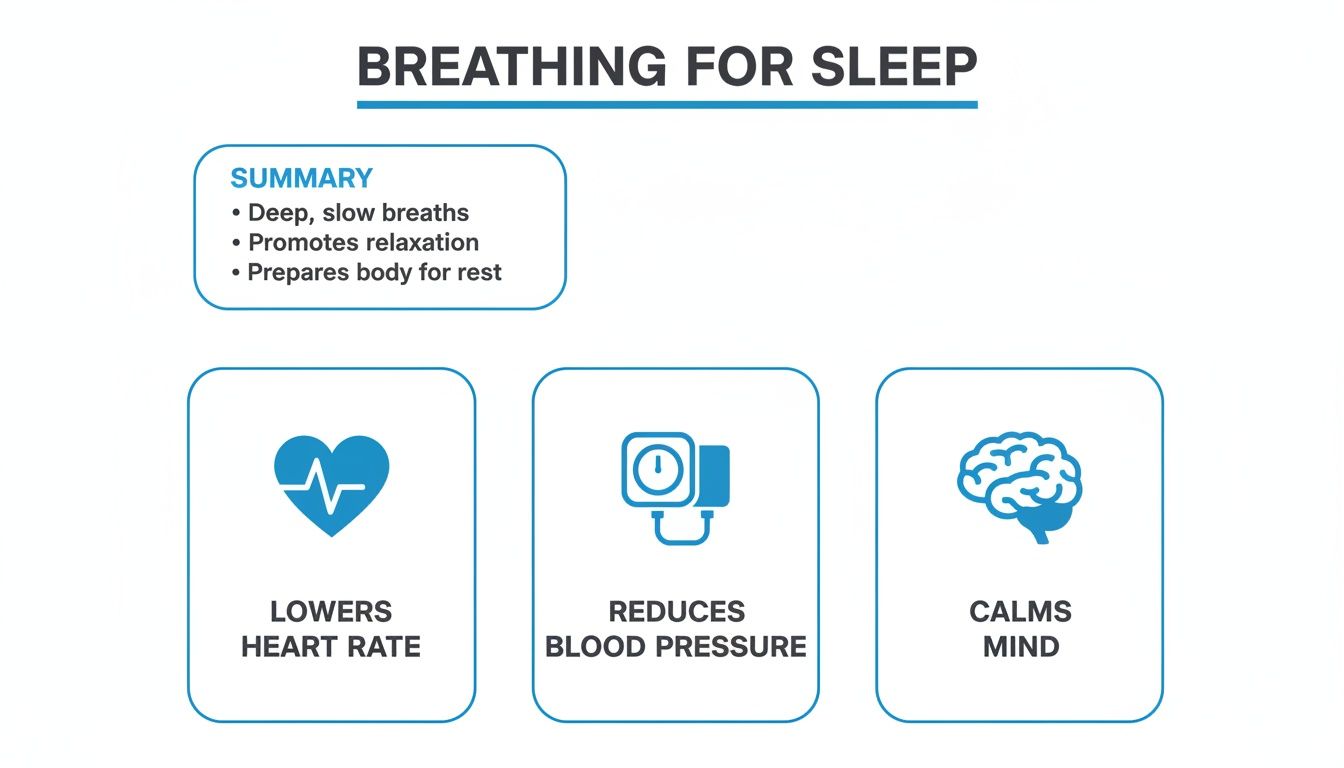
Each of these pieces—a lower heart rate, reduced blood pressure, and a quieter mind—works together to create the ideal internal environment for falling asleep fast.
The Science Behind a Slower Pace
This isn't just wishful thinking; there's real science to back it up. Controlled studies have shown that just 15-20 minutes of slow, intentional breathing before bed can significantly shorten the time it takes to fall asleep.
The magic number seems to be a pace of about six breaths per minute. This specific rhythm has been found to maximize your heart rate variability (HRV), which is a key biological marker of relaxation and resilience to stress.
Your breath is one of the only autonomic functions you can consciously control. This gives you direct access to influence systems—like heart rate and stress response—that are typically involuntary. By taking charge of your breath, you are taking charge of your body's readiness for sleep.
Ultimately, these exercises aren't just another chore for your bedtime routine. They're a way to work with your body's natural biology. Instead of wrestling with a racing mind, you’re giving it a simple, soothing task to focus on, allowing sleep to arrive effortlessly.
A Quick Look at Popular Sleep Breathing Methods
Here's a snapshot of the primary breathing exercises in this guide, their rhythm, and how they help you fall asleep.
| Technique | Breathing Pattern | Primary Benefit |
|---|---|---|
| 4-7-8 Breathing | Inhale (4s), Hold (7s), Exhale (8s) | Deep relaxation and mild sedation |
| Box Breathing | Inhale (4s), Hold (4s), Exhale (4s), Hold (4s) | Calms the mind and reduces stress |
| Coherent Breathing | Inhale (5-6s), Exhale (5-6s) | Balances the nervous system |
| Diaphragmatic Breathing | Deep belly breaths | Improves oxygen exchange and physical relaxation |
Each of these methods offers a slightly different approach, so you can find the one that feels most natural and effective for you.
The 4-7-8 Breathing Method for Fast Relaxation
When your mind just won't quit after a long day, the 4-7-8 breathing method can feel like a godsend. It's incredibly simple, but its calming effects are profound, which is why so many people swear by it. Think of it as a natural tranquilizer for your nervous system.
This technique is more than just counting. It’s a way to deliberately change your breathing pattern, which gives your racing mind a concrete task to focus on instead of that endless loop of worries or tomorrow's to-do list.
How to Practice 4-7-8 Breathing
First, get comfortable. You can do this sitting up with a straight back or, even better, lying down in bed. Rest the tip of your tongue against the ridge of tissue just behind your upper front teeth. It’ll feel a bit strange at first, but try to keep it there through the whole exercise.
Ready? Here’s the sequence:
- Let out all your air through your mouth with a gentle whoosh sound.
- Close your mouth and inhale quietly through your nose to a mental count of four.
- Now, hold that breath for a count of seven.
- Finally, exhale completely through your mouth—making that whoosh sound again—for a count of eight.
That’s one full cycle. All you need to do is repeat it three more times, for a total of four breaths. It’s a short practice, but the impact is immediate. You'll feel it.
The real magic of the 4-7-8 technique is that long exhale. By making your out-breath twice as long as your in-breath, you’re sending a powerful signal to your parasympathetic nervous system—your body's "rest and digest" mode. This directly shuts down the "fight or flight" response that’s keeping you wide awake.
The Science Behind the Numbers
Every part of that count has a purpose. The four-second inhale lets you take in a measured amount of oxygen without accidentally hyperventilating. It’s a calm, controlled start.
That seven-second hold is the crucial step. This pause gives your body a moment to fully absorb the oxygen, letting it saturate your bloodstream and get delivered to your cells. This simple act helps slow your heart rate and brings on a sense of stillness.
The long, eight-second exhale is what really drives the relaxation home. It helps expel all the stale carbon dioxide from your lungs, purging both physical and mental tension along with it.
Making It Work for You
Does holding your breath for seven seconds feel like an eternity? Don't worry, that's completely normal, especially if you're used to quick, shallow breathing. The key isn't hitting the exact second count but maintaining the 4:7:8 ratio.
- Beginner's Tip: Start with a shorter version, like a 2-3.5-4 count. As you get more comfortable, you can gradually work your way up to the full count.
- Mind Wandering? If you lose count or your thoughts drift off, just gently bring your focus back to the sensation of your breath. Don't beat yourself up; just restart the count.
Picture this: you've just climbed into bed after a ridiculously stressful day. Your heart's still thumping, and your brain is replaying a tense conversation on a loop. This is the perfect time to use 4-7-8. With just four cycles, you can literally feel your body letting go of the day's stress, creating that calm inner space you need to finally drift off.
Using Rhythmic Breathing to Calm a Racing Mind
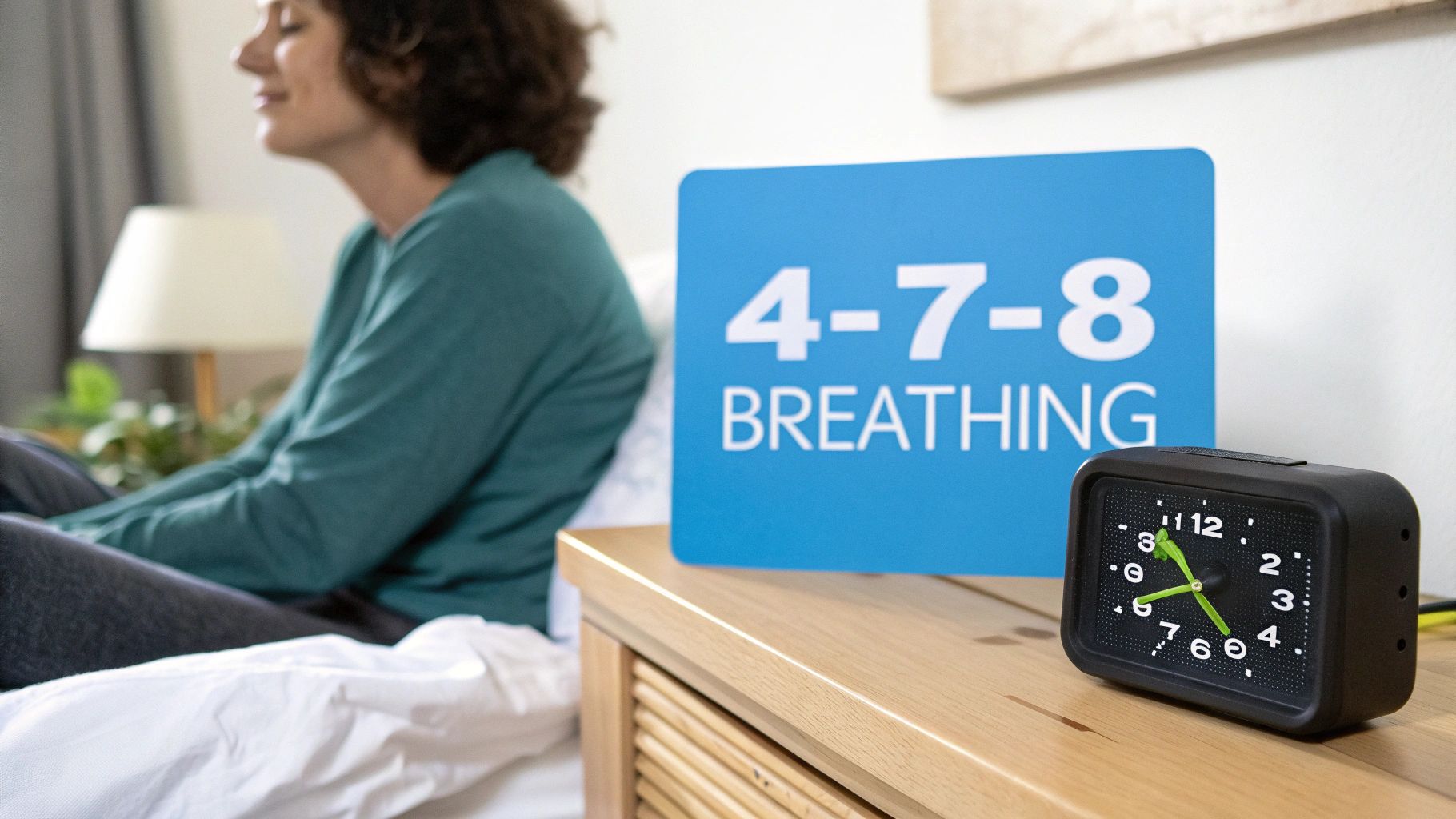
Sometimes, the real reason you can’t sleep isn’t a lumpy mattress or a noisy neighbor. It’s a mind that just refuses to power down. When your thoughts are stuck on a loop, replaying the day's events or worrying about tomorrow, rhythmic breathing can be a powerful circuit breaker.
Giving your brain a simple, repetitive task—like counting breaths—is a surprisingly effective way to guide it away from the mental chaos. Two fantastic methods for this are Box Breathing and Coherent Breathing. Each offers a different kind of mental anchor, so you can pick the one that feels right for you on any given night. If a racing mind is a regular visitor, exploring some grounding techniques for anxiety can also offer some much-needed relief.
Finding Calm Under Pressure with Box Breathing
Made famous by the Navy SEALs, Box Breathing is a go-to tool for staying calm and focused, even in high-stakes situations. Its structure is brilliantly simple, which makes it easy to remember when you’re feeling overwhelmed. The idea is to create a mental "box" with your breath.
It’s a straightforward four-part pattern:
- Breathe in slowly through your nose for a count of four.
- Hold your breath at the top for another count of four.
- Breathe out gently through your mouth for a count of four.
- Hold your breath at the bottom for a final count of four.
The equal sides of this "box"—the inhale, hold, exhale, and hold—create a stable, predictable rhythm that does wonders for regulating your nervous system. That symmetry helps pull your focus away from whatever is causing all that mental static. For a deeper dive into similar methods, check out our guide on other relaxation techniques for better sleep.
Aligning with Your Body's Natural Rhythm
Where Box Breathing provides structure, Coherent Breathing (also called Resonant Breathing) aims for pure biological harmony. The goal here is to hit a breathing rate of about five to six breaths per minute. This isn't just a random number; it's considered the "resonant frequency" for most adults.
At this specific pace, your heart rate, blood pressure, and even your brainwaves start to sync up in a beautiful, calming dance.
This rhythm maximizes your heart rate variability (HRV), which is a key marker of your nervous system's resilience. Higher HRV is directly tied to a more relaxed, "rest and digest" state—exactly where you want to be when you're trying to fall asleep.
To practice Coherent Breathing, you just inhale for a count of five or six and then exhale for that same count. There are no holds to worry about, just a smooth, continuous flow. It’s like a gentle wave, which makes it incredibly soothing and less mentally demanding than other techniques. It's perfect for nights when you want to drift off without too much effort.
In fact, one study showed that a controlled four-week breathing program for frontline nurses during the COVID-19 outbreak led to big improvements in sleep quality. It helped them fall asleep faster and wake up less during the night. You can read more about how structured breathing improves sleep latency and duration.
Making Deep Diaphragmatic Breathing Your Natural Habit
Believe it or not, most of us spend our days breathing all wrong. We fall into a pattern of shallow, rapid chest breaths that keep our bodies simmering in a low-grade state of stress. This is a tough habit to kick at night when you're trying to signal to your body that it's finally time to power down.
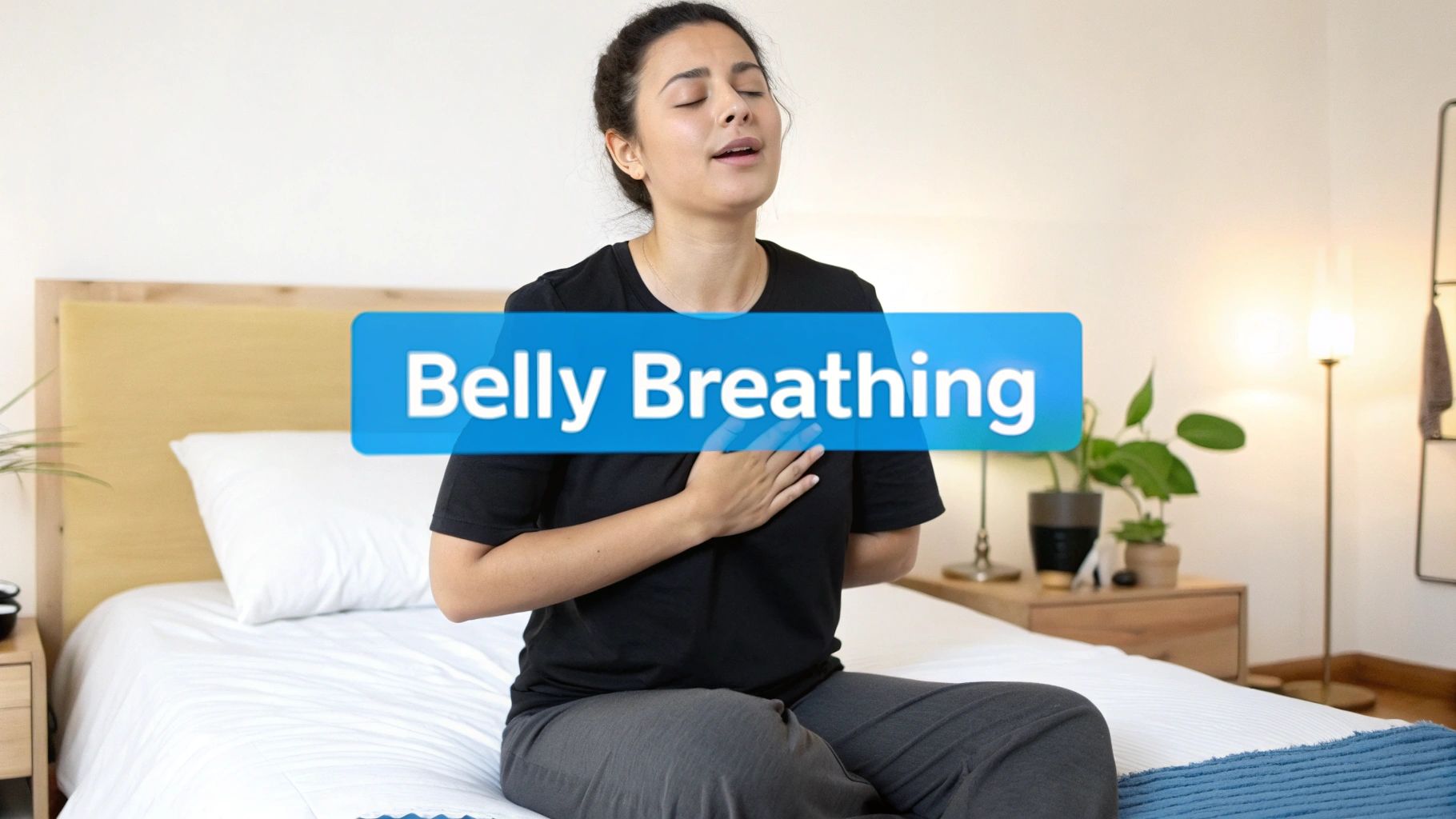
The key to unlocking truly effective breathing exercises for sleep is to first reclaim your body's natural way of breathing. It all starts with diaphragmatic breathing—you've probably heard it called "belly breathing." This technique engages the big, dome-shaped muscle at the base of your lungs, allowing for much deeper, more efficient breaths.
Feel the Difference Yourself
Let’s try a quick experiment so you can feel what I'm talking about. Lie down comfortably on your back, maybe bend your knees a bit. Now, place one hand flat on your chest and the other on your belly, just below your rib cage.
Breathe like you normally would for a few moments. Pay attention to which hand is moving more. Is it the one on your chest, rising and falling while the hand on your belly stays pretty still? If so, you're a classic chest breather.
The goal is to flip that. As you take a slow breath in through your nose, consciously direct the air deep down into your belly. Imagine it expanding like a small balloon. Your stomach hand should rise noticeably, while your chest hand stays as quiet as possible. Then, as you exhale slowly through your mouth, you'll feel your belly gently contract and fall.
This isn't just some mental visualization; it's a real physiological shift. Deep belly breathing directly stimulates the vagus nerve, a key player in your parasympathetic nervous system—the body's "rest and digest" mode. This simple action helps slow your heart rate and lower your blood pressure, actively coaxing your body into a state of calm.
Building a Lasting Habit
Here’s the secret: to make this work for you at night, you need to practice during the day. Don't worry, I'm not asking you to block out huge chunks of time. Just a few minutes here and there are enough to start retraining your body's default breathing pattern.
Give it a shot during those little pockets of downtime you already have:
- Waiting in line at the coffee shop or grocery store.
- Stopped at a red light during your commute.
- During a quick break from your screen at work.
This kind of consistent, bite-sized practice is what makes the motion feel second nature. Even short daily breathing sessions have been shown to produce tangible results. Research has found that just five minutes of targeted breathing a day can lead to measurable improvements in cardiovascular health and sleep quality. You can dive deeper into the science behind how simple breathing exercises improve sleep and blood pressure to see the data for yourself.
By making deep breathing a familiar, comfortable habit, it stops feeling like a chore and becomes a reliable tool you can grab when your head hits the pillow. It’s no longer a strange exercise but your body's natural off-ramp to relaxation, making it that much easier to drift into a deep, restorative sleep. For more ideas on building a calming nightly routine, our guide on daily meditation for sleep is packed with other great techniques.
Tools and Tech to Guide Your Breathing Practice
Let's be honest, trying to learn a new breathing technique can feel like one more thing to think about when all you really want is for your brain to shut down. The good news is you don't have to go it alone, especially when you're just starting. The right tech can be a game-changer.
Guided audio tracks, whether you find them on apps like Calm or on YouTube, take all the counting and timing off your plate. Instead of mentally chanting "inhale, two, three, four," you can just melt into the rhythm set by a soothing voice. This frees up your mind to actually relax instead of managing the process.
Finding the Right Guided Session
When you’re browsing for a guided session, a few things really matter for making it sleep-friendly. The pacing is key—it should feel unhurried and natural, not like a race. The speaker's voice should be calm and steady, the kind that eases you down, not jolts you awake.
Think about length, too. A 5-10 minute guided exercise is often the sweet spot. That’s long enough to work its magic but short enough that you don't feel pressure to make it to the end.
Remember, the point of a guided breathing exercise isn't to finish it. It's to create the perfect conditions for sleep to arrive. If you drift off halfway through, it has done its job perfectly.
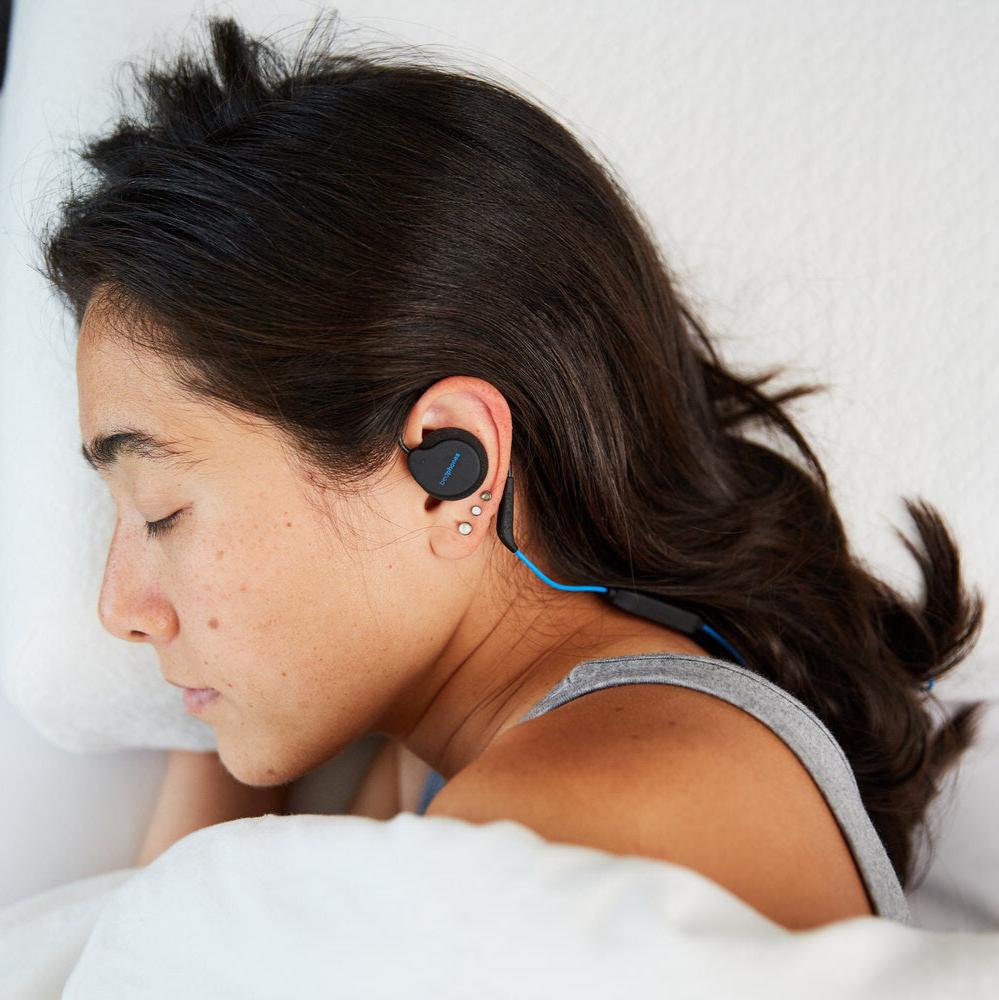
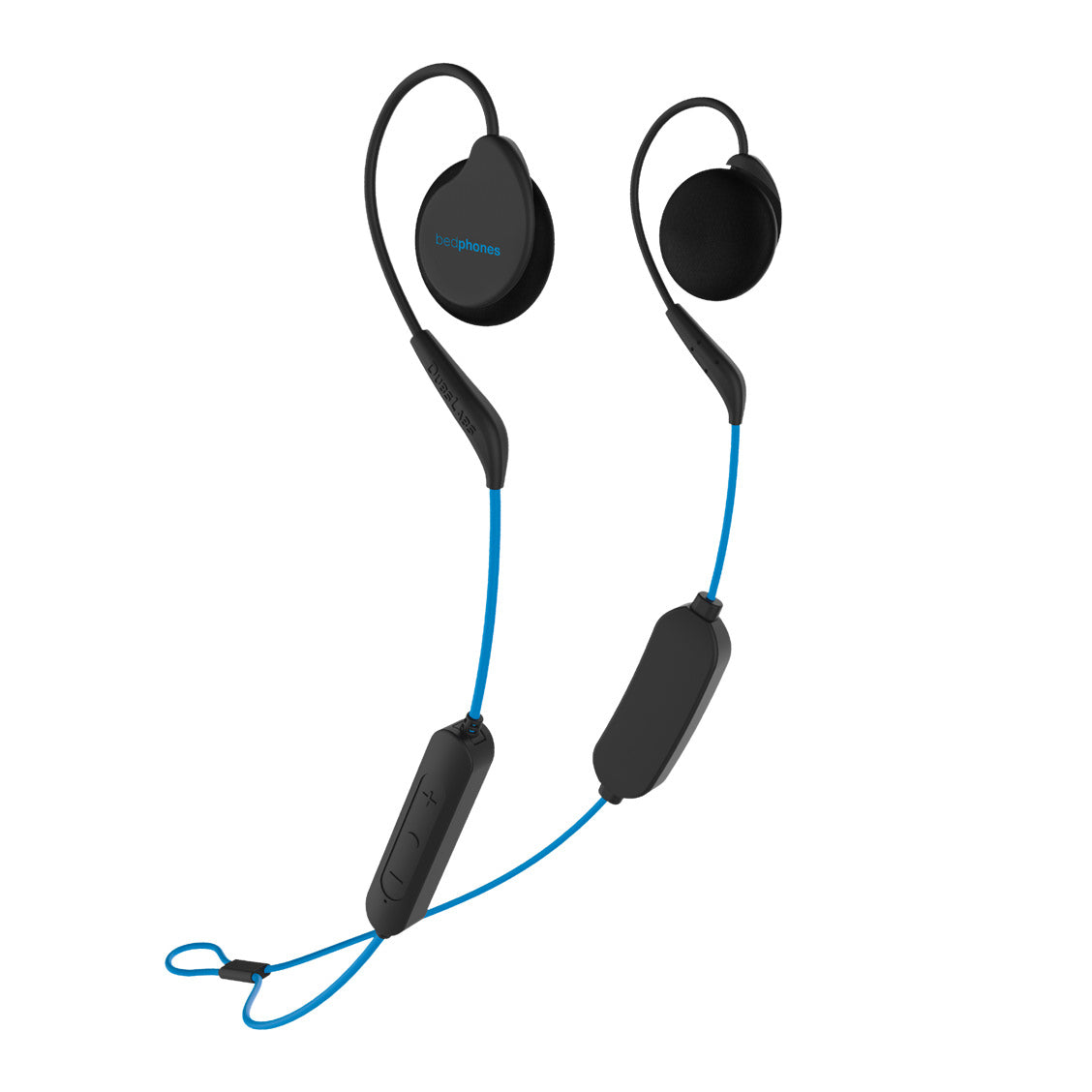
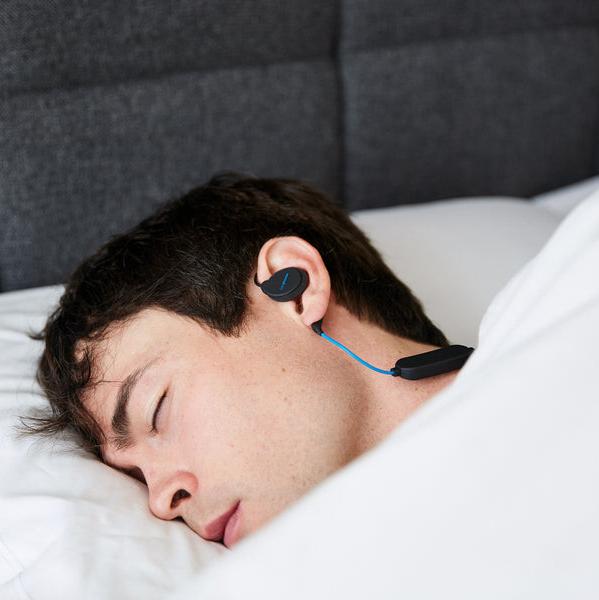
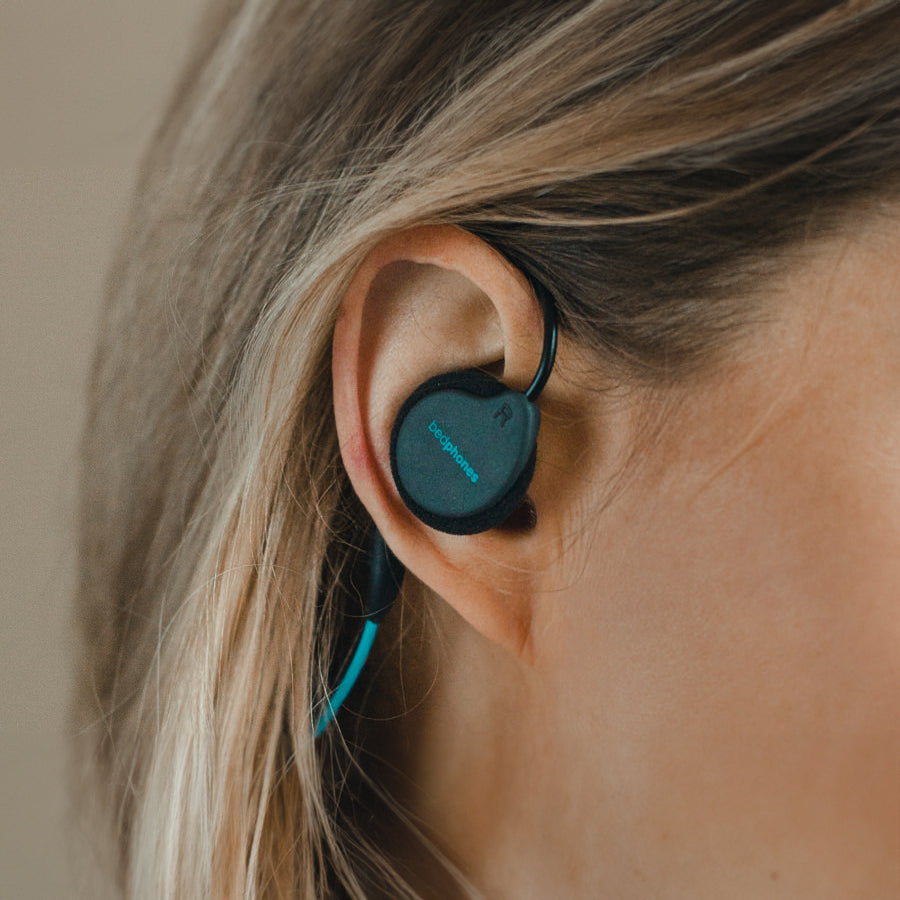
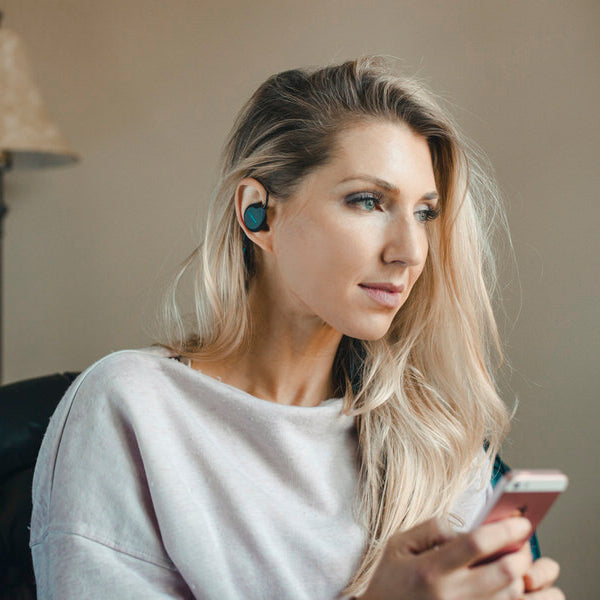
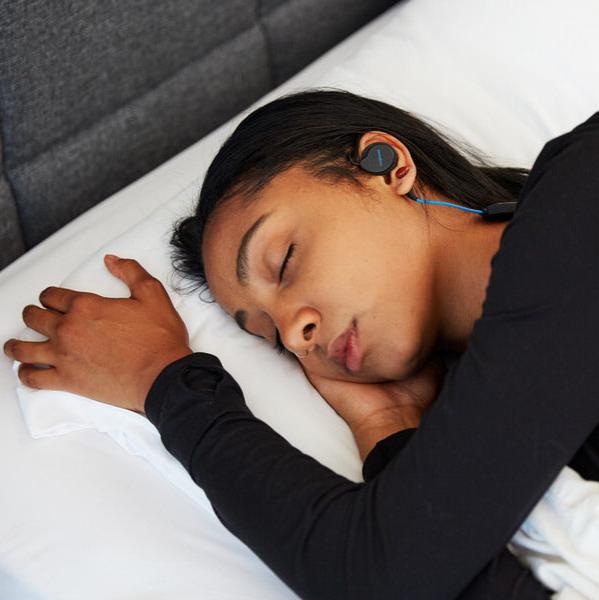
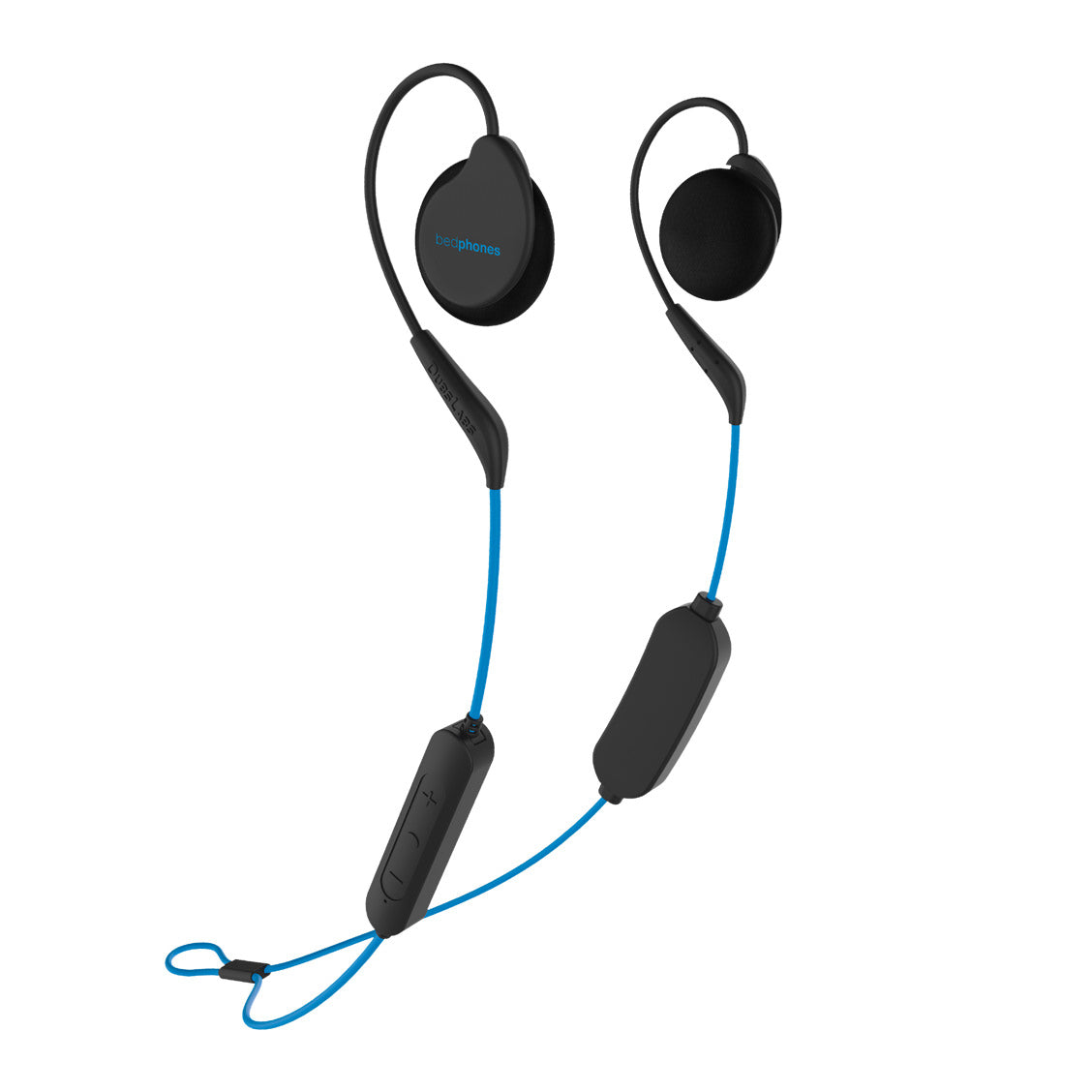
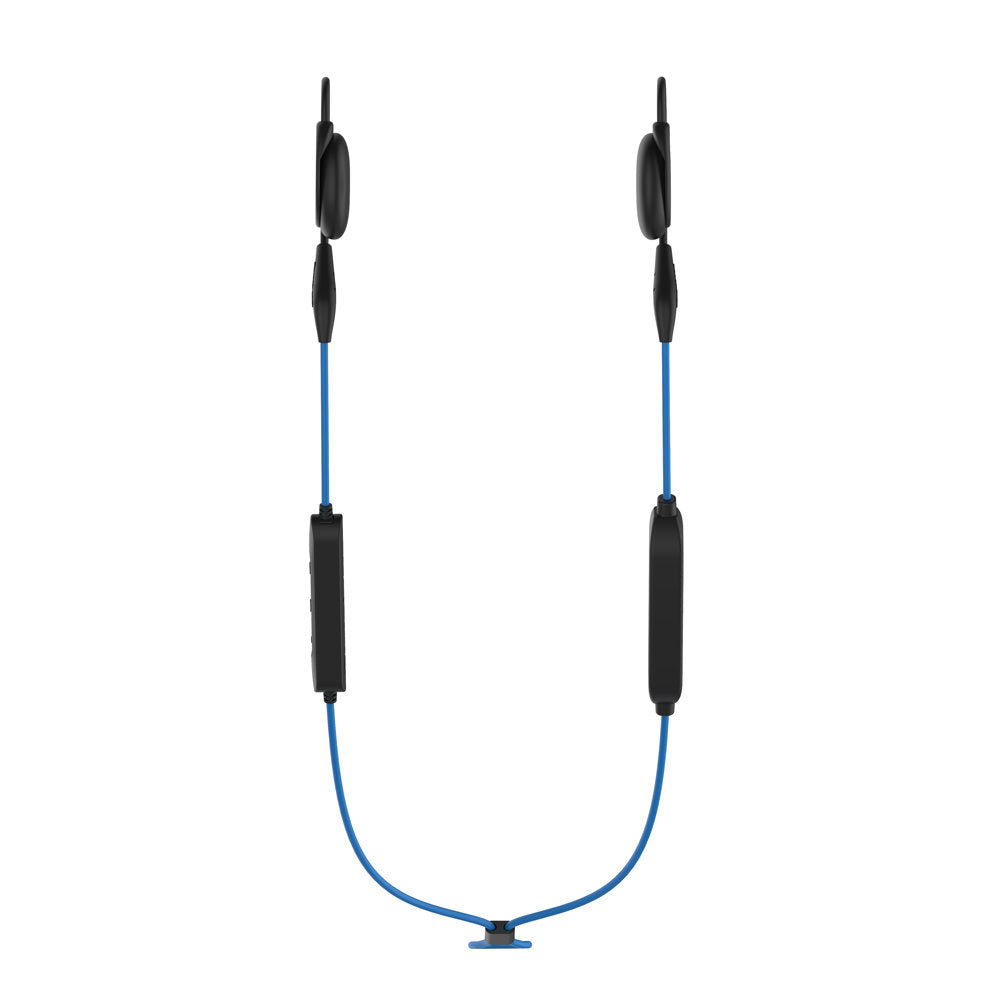
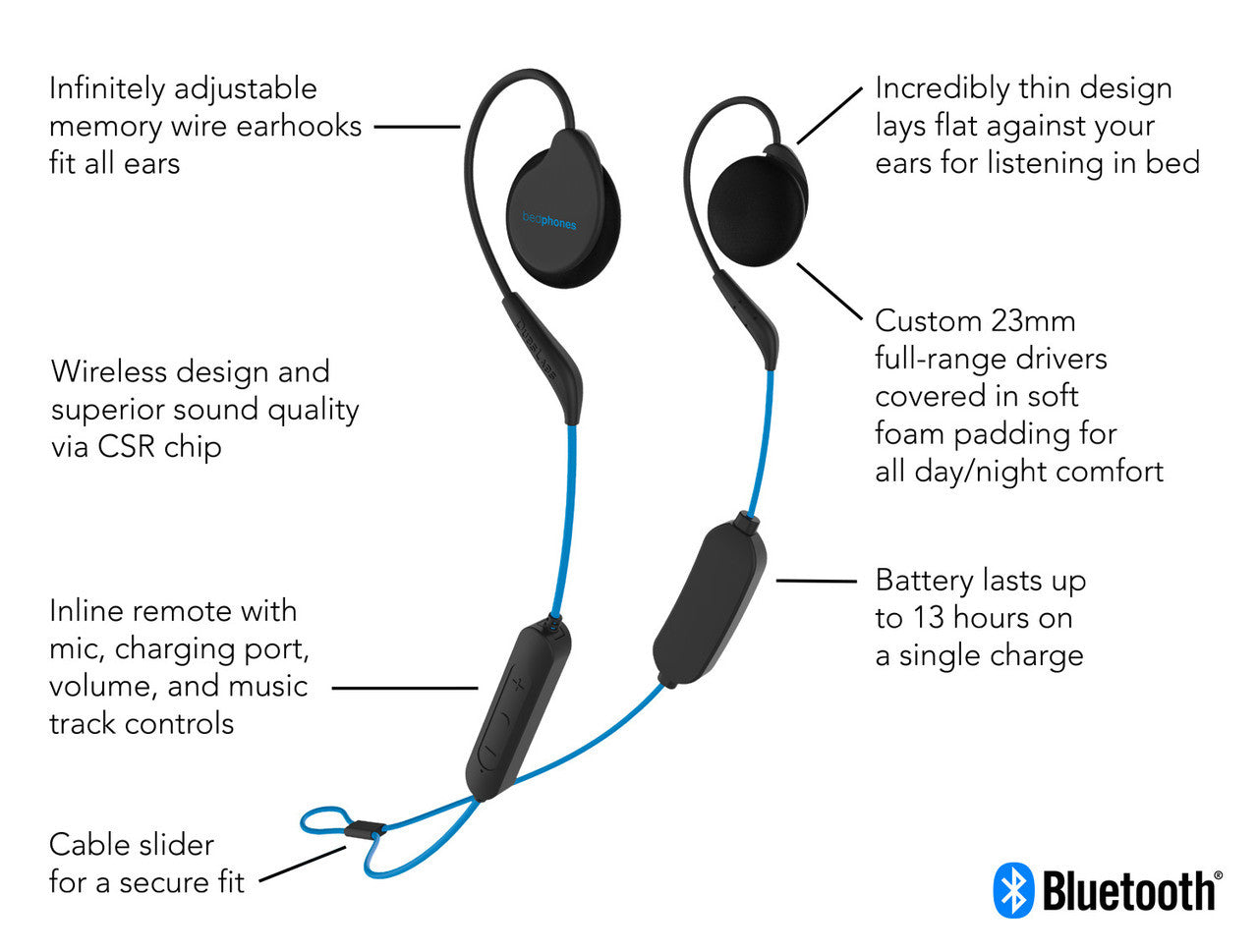
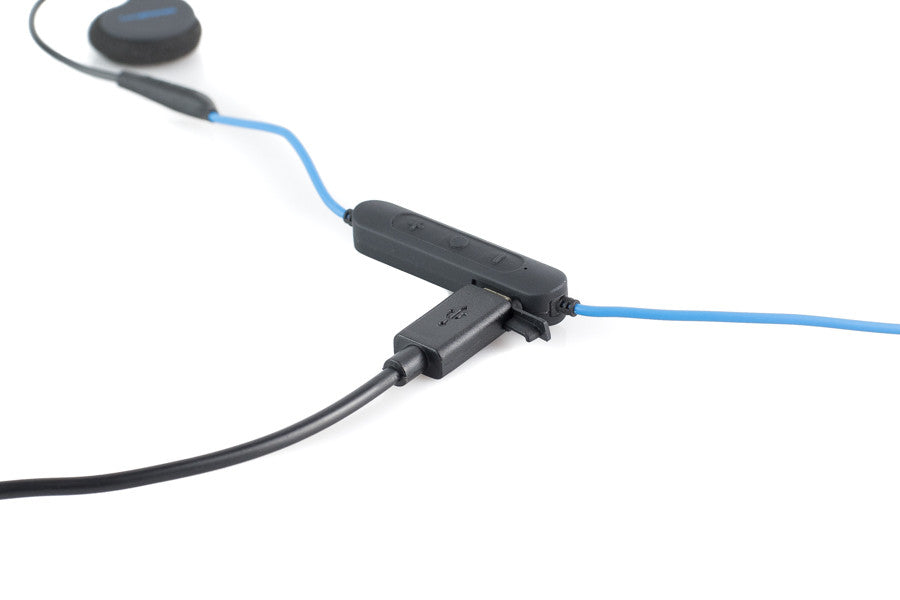
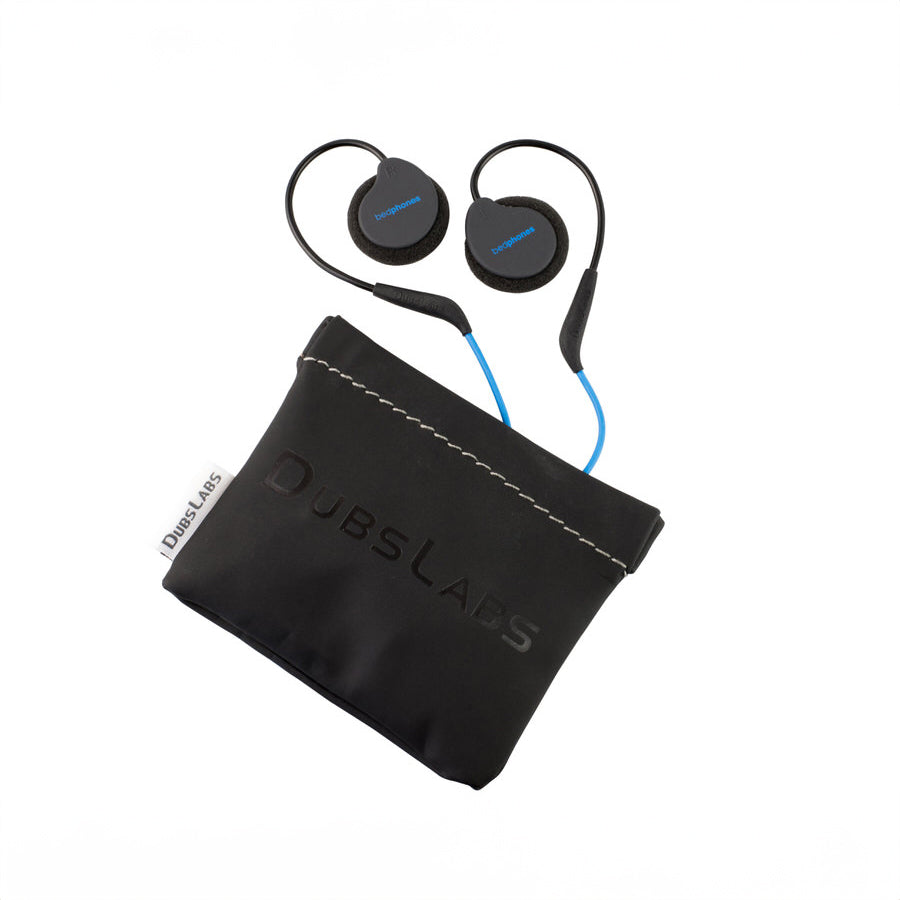
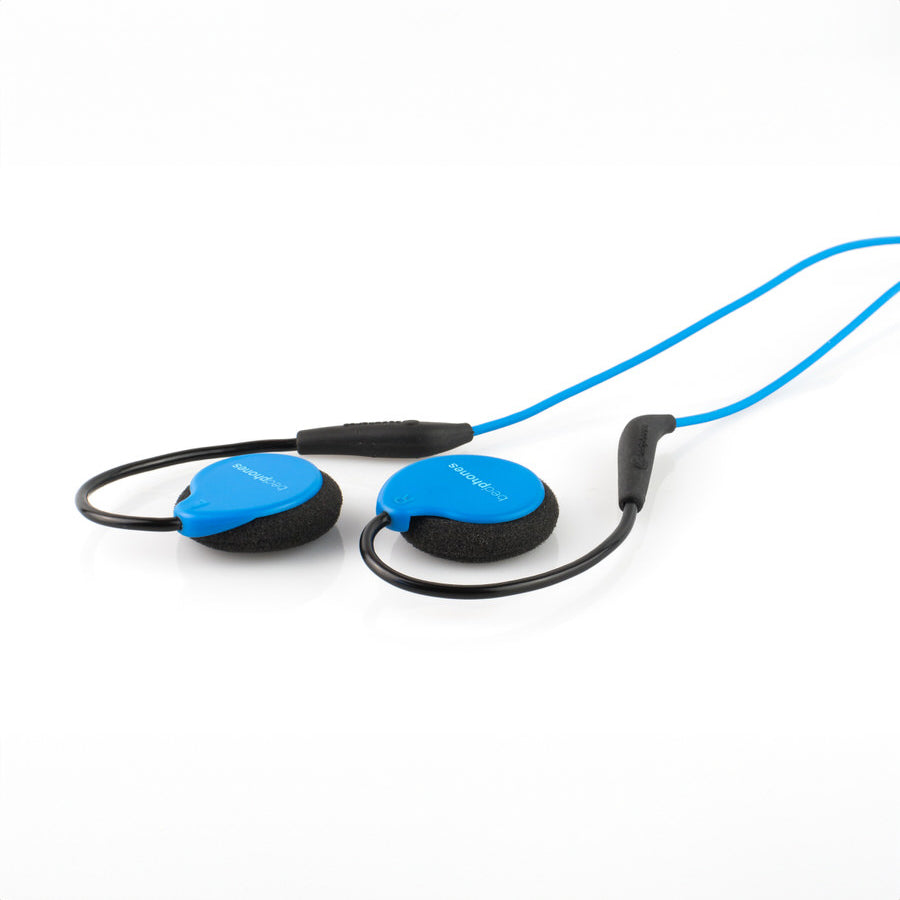
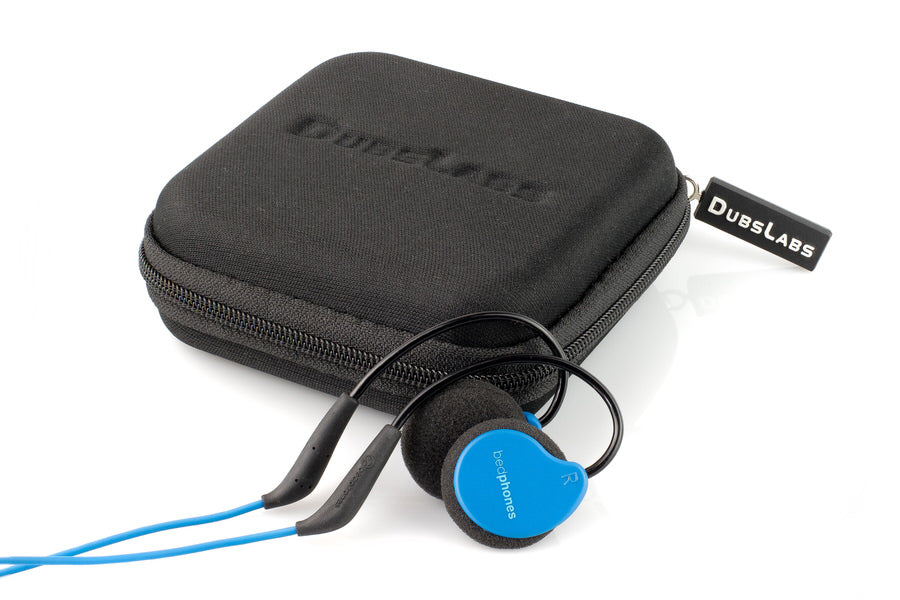
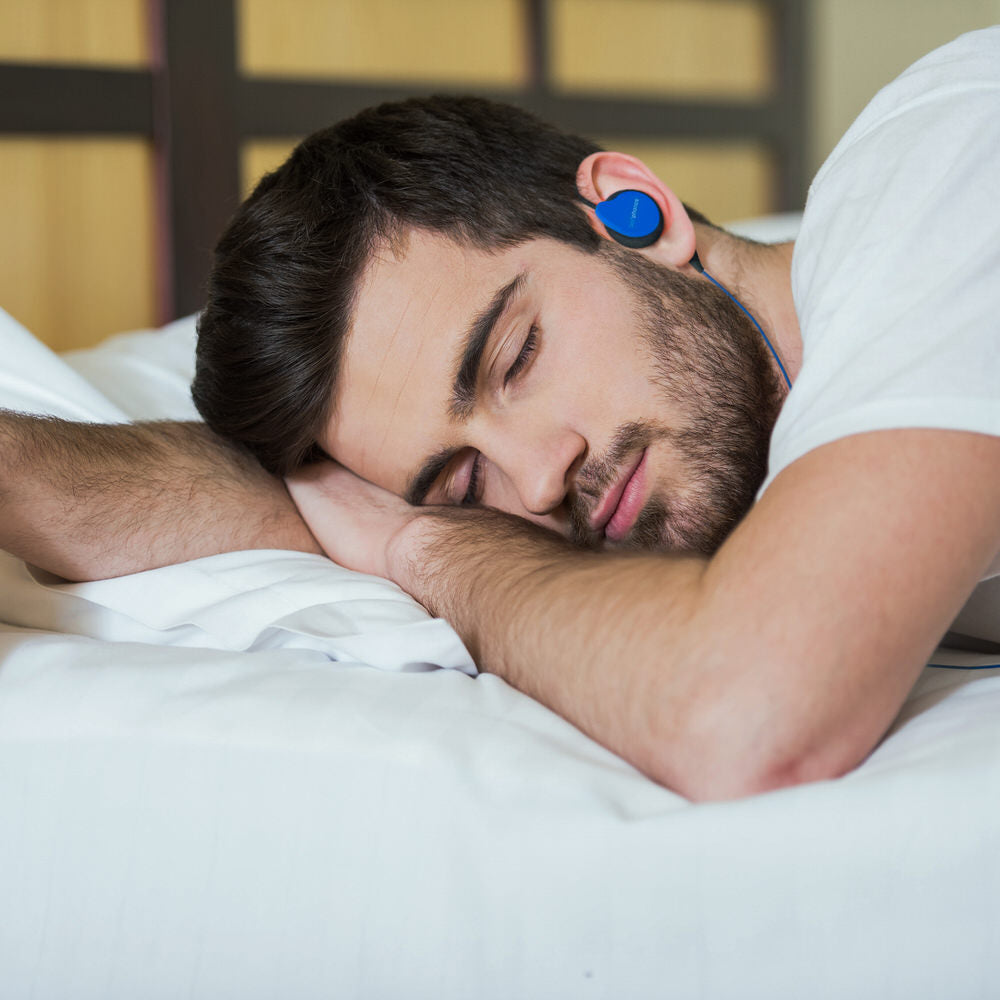
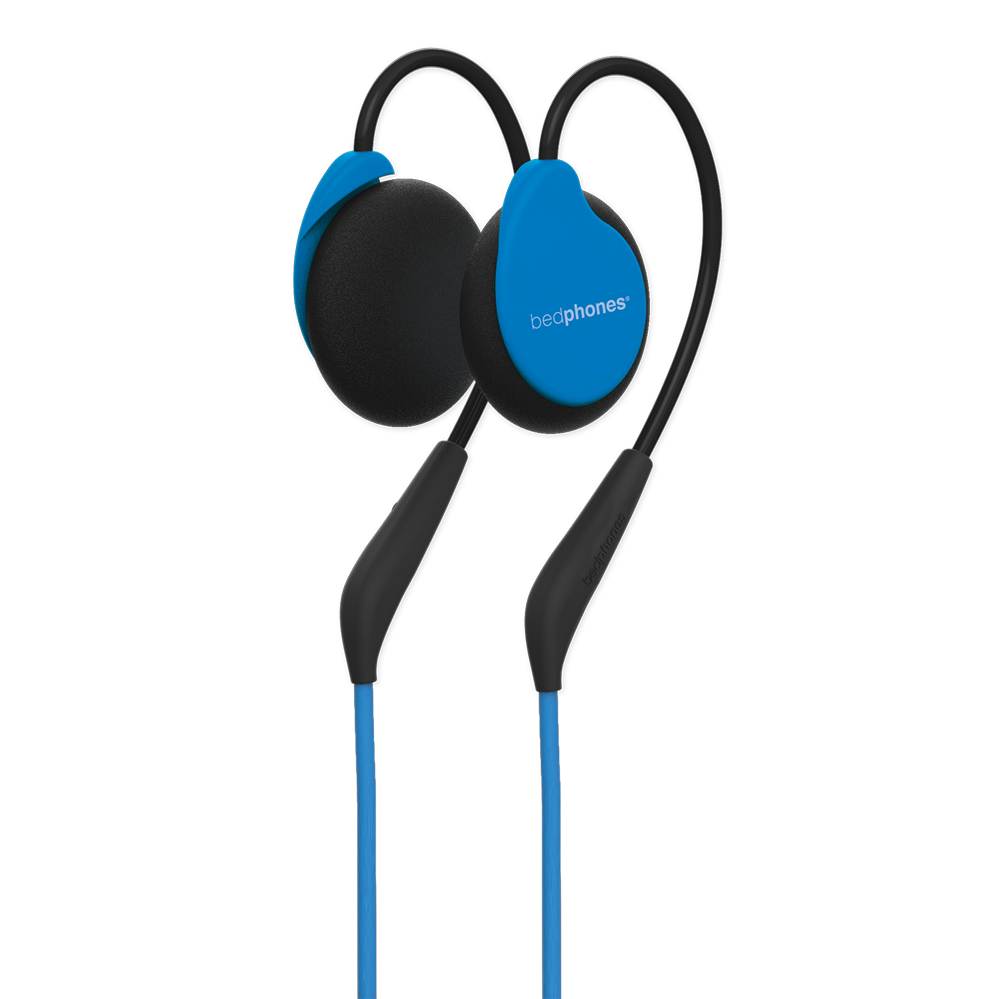
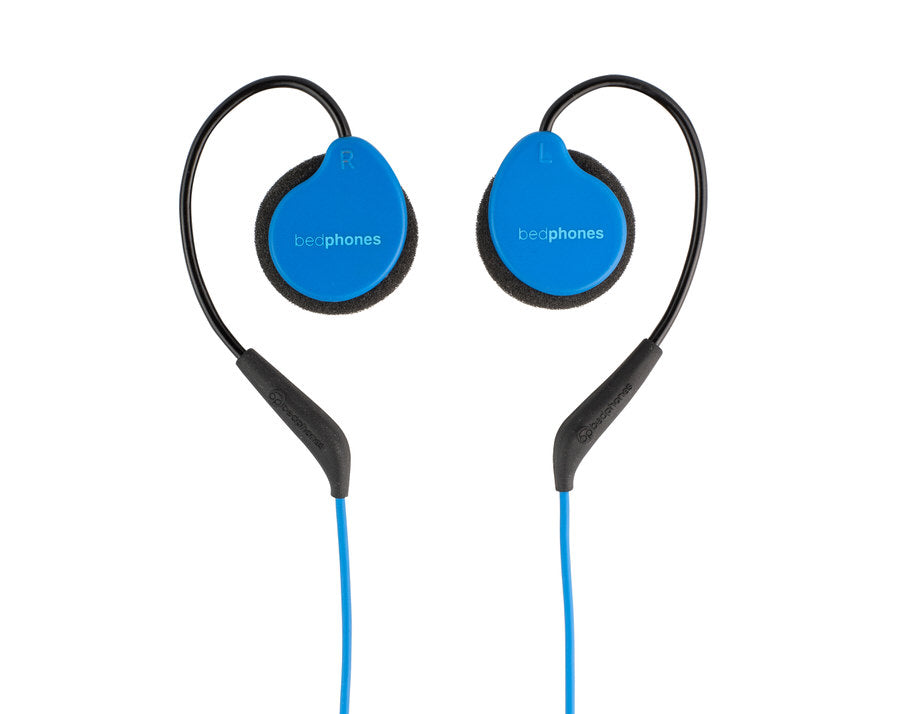
For a truly immersive experience, headphones are the way to go. They help block out that random creak in the floor or the neighbor's dog and let you focus entirely on the audio. Of course, most headphones are a nightmare to sleep in. This is where finding comfortable headphones for bed makes all the difference, letting you lie on your side without a plastic chunk digging into your ear.
Tracking Your Progress and Seeing Results
Technology can also show you that your efforts are paying off. Many modern sleep trackers and smartwatches keep an eye on things like your resting heart rate and Heart Rate Variability (HRV) while you sleep.
As you make these breathing techniques a regular habit, you’ll likely start to see real, measurable changes in your sleep data. Maybe you’ll notice your heart rate dropping faster as you settle into bed, or you'll see a gradual uptick in your nightly HRV scores. This kind of data is awesome because it’s concrete proof that your breathing practice is successfully nudging your nervous system toward rest, which is fantastic motivation to keep it up.
Common Questions About Breathing for Sleep
When you start playing around with breathing exercises, a few questions are bound to pop up. It's totally normal to wonder if you’re doing it right, how long it’ll take to actually work, or what to do when your mind is still racing at 3 AM.
Let's walk through some of the most common things people ask. Getting these sorted will help you build a practice that feels confident, easy, and effective.
How Long Until I Notice a Real Change?
This is usually the first question on everyone's mind. You’ll probably feel a wave of calm almost immediately, especially after just a few rounds of something like the 4-7-8 method. That initial sigh of relief is a great sign you're on the right track.
But the real, lasting change—the kind that rewires your sleep patterns—comes from consistency. Think of it like going to the gym. The magic happens after a few weeks of practice, once your body learns to drop into that relaxed state faster and more automatically.
For most people, significant and stable improvements in sleep quality show up after about four weeks of nightly practice. We're talking about falling asleep faster and staying asleep longer. The trick is to make it a non-negotiable part of your wind-down routine, just like brushing your teeth. Don't get discouraged if the first few nights feel a little clunky. You're learning a new skill, and that always takes a minute.
What If I Wake Up in the Middle of the Night?
Ah, the dreaded 3 AM wake-up call, complete with a racing mind. It’s an incredibly common and frustrating experience. This is the perfect moment to put your breathing exercises to the test. Instead of grabbing your phone (which will only wake you up more), gently ease into a simple, rhythmic breathing pattern.
Box Breathing is a fantastic tool for this. It gives your brain a simple, low-stakes job to do, steering it away from those anxious, looping thoughts.
The goal here isn't to force yourself back to sleep. That just creates more pressure. Instead, focus on creating a state of deep calm. More often than not, once you quiet the mental noise, sleep will naturally find its way back to you.
Is It Normal to Feel a Little Dizzy?
Yes, feeling a bit lightheaded when you first start is pretty common. It usually just means your body is adjusting to the new mix of oxygen and carbon dioxide, especially if you're used to breathing shallowly from your chest all day.
If it happens, just pause the exercise and go back to your normal breathing for a minute. When you're ready to try again, just ease up on the intensity.
- Shorter Inhales: Try a count of 3 instead of 4.
- Shorter Holds: If the technique has a hold, cut it in half or skip it entirely.
- Focus on Comfort: Never push through real discomfort. The whole point is to relax.
With a little bit of practice, your body will get used to it, and that dizzy feeling will fade away.
Which Breathing Technique Is Best for Me?
Honestly, the "best" technique is whichever one feels the most comfortable and that you’ll actually do consistently. Every method has a slightly different vibe, and what you need might even change from one night to the next.
Here’s a quick cheat sheet:
- For quick, powerful calm: The 4-7-8 method is your go-to for an immediate "off switch."
- For a busy, looping mind: Box Breathing gives your brain a grounding structure that helps silence the mental chatter.
- For building a solid foundation: Diaphragmatic Breathing is the cornerstone of all effective relaxation breathing.
My best advice? Experiment. Try one for a few nights, then switch to another. Pay attention to how your body and mind respond. The one that feels the most natural and soothing is the right one for you.
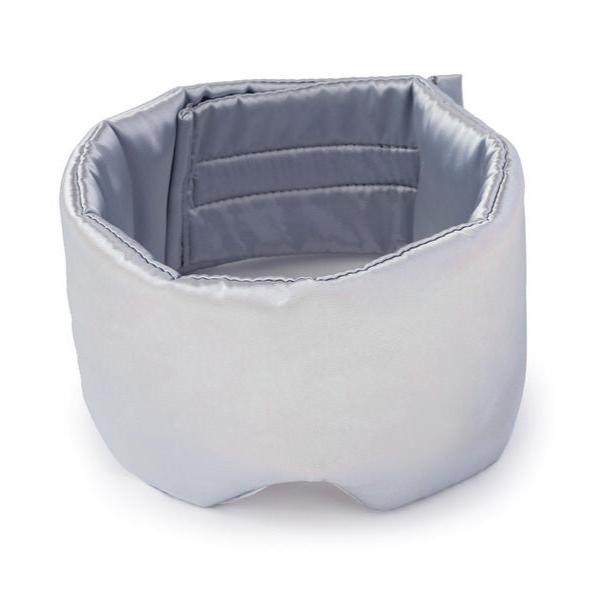
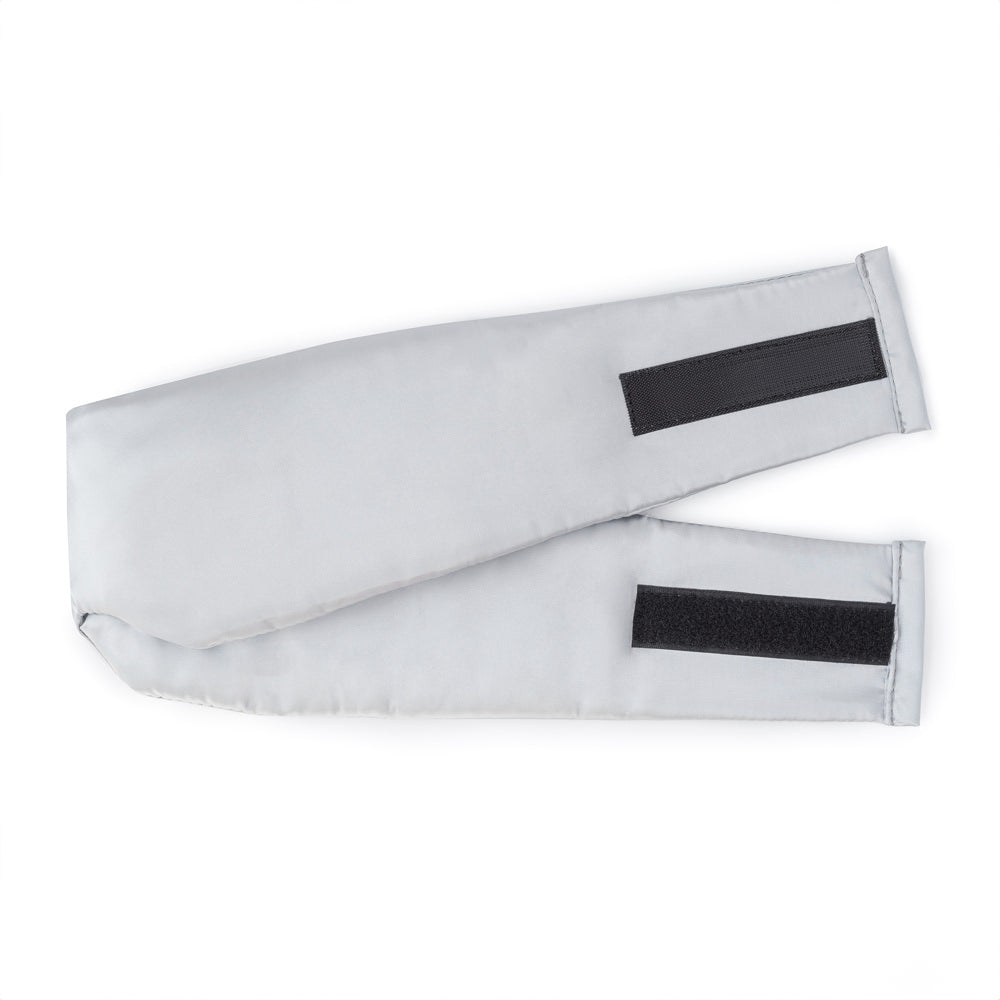
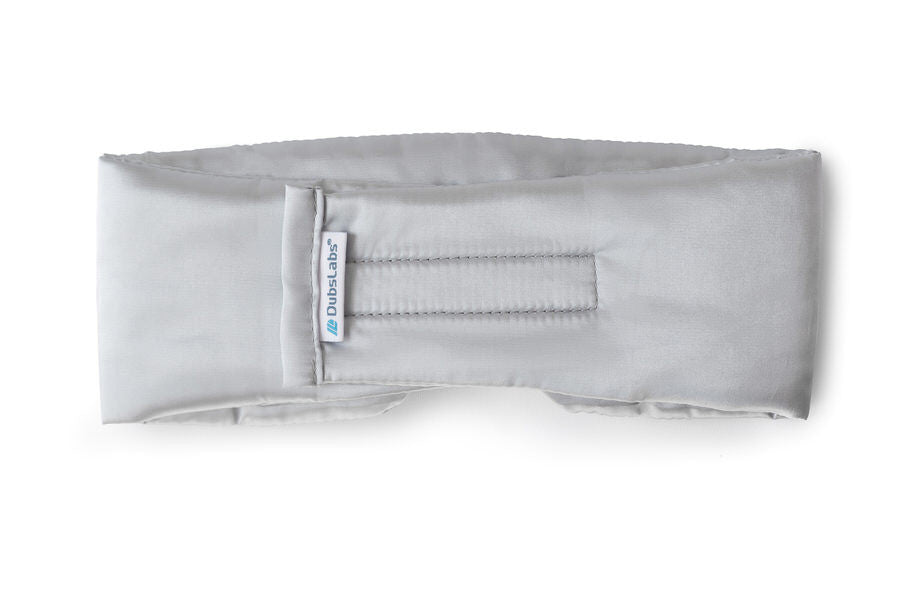
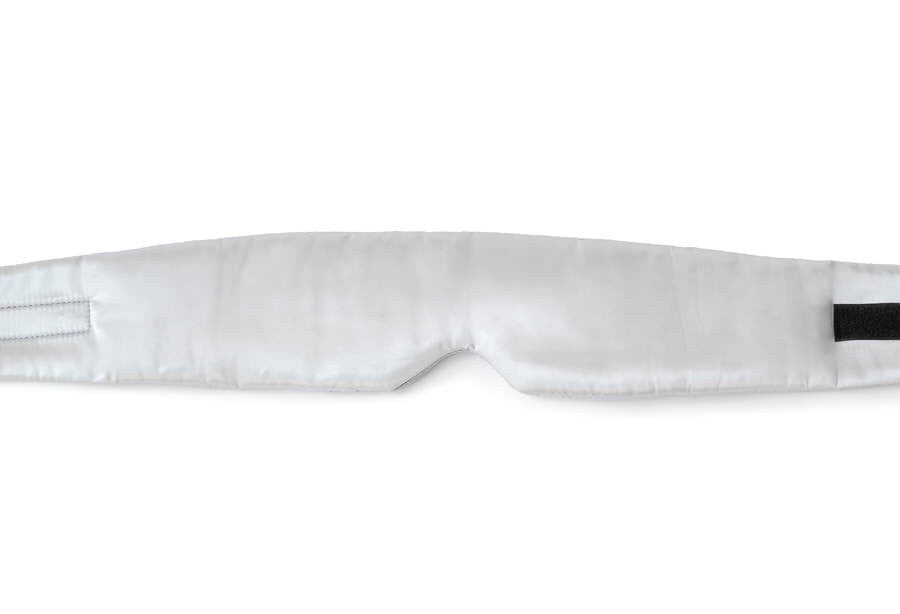
Ready to enhance your nightly relaxation routine? DubsLabs Bedphones are designed to be the most comfortable headphones for sleep, allowing you to follow guided breathing exercises or listen to calming audio without any discomfort. Discover how you can drift off peacefully.