To stop overthinking at night, the core idea is to acknowledge your racing thoughts without judgment and then gently guide your focus elsewhere. Think of it less as a battle and more as a gentle redirection. Techniques like a "brain dump" in a journal, mindful breathing, or even just listening to a calming podcast can create the mental space you need to finally drift off.
It's all about breaking the cycle, not fighting the thoughts themselves.
Understanding Why Your Mind Races at Night
Ever found yourself staring at the ceiling, your brain replaying every single conversation and worry from the day? You’re definitely not alone. The moment our heads hit the pillow, all the distractions that kept us busy just… fade away.
This sudden quiet is the perfect opportunity for the brain's "default mode network" to fire up. This is what can turn small, manageable concerns from your day into major, late-night anxieties that feel impossible to solve at 2 AM.
This mental chatter isn't some personal flaw; it’s a shared human experience, usually fueled by the day's unresolved stress and thoughts that never got a chance to land. When we're busy, our brains are focused on what's in front of us. At night, that focus turns inward. Suddenly, that awkward comment you made in a meeting or a looming deadline feels absolutely monumental.
The Science Behind Nighttime Worry
This cycle is incredibly common. According to ResMed's 2025 Global Sleep Survey, about one-third of people struggle to get to sleep at least three nights a week. The top culprits? Stress was cited by 57% of respondents, and anxiety by 46%. That's a powerful link between our mental state and our ability to get quality rest.
Overthinking at night often traps us in a frustrating feedback loop:
- The Spark: A thought about a future event or a past mistake just pops into your head.
- The Spiral: Your brain immediately tries to "solve" this worry, running through endless "what-if" scenarios and hypotheticals.
- The Physical Reaction: Before you know it, your heart rate might be up, and your body is releasing stress hormones like cortisol, making sleep feel even more out of reach.
Gaining a deeper insight into this process is helpful, and you can start by understanding overthinking and anxiety and how they feed off each other.
The real irony is that the more you try to force your mind to be quiet, the louder it often becomes. The goal isn't to achieve a completely blank mind, but to learn how to gently guide your attention away from the storm of thoughts.
Understanding what's causing your mind to race is the first step toward reclaiming your peace. Sometimes the reasons are obvious, but other times there are truly unexpected reasons you can't sleep. By recognizing the patterns that trigger your brain's nightly marathon, you can start putting the practical, actionable solutions we’ll explore next into practice. Consider this your toolkit for quieting the noise and finally welcoming a night of restful, uninterrupted sleep.
How a Brain-Dumping Journal Quiets Your Mind
Sometimes the most powerful tool for shutting down a racing mind isn’t a fancy gadget or a complex meditation practice. It’s a simple pen and paper. The technique is called a “brain dump,” and it’s an incredibly effective way to offload all the mental clutter that keeps you tossing and turning.
This is more than just scribbling down tomorrow’s to-do list. A brain dump is a strategic process of getting every single thought, worry, task, and half-baked idea out of your head and onto the page. When you externalize these thoughts, you’re essentially telling your brain, "Hey, I've got this. It's captured, and we can deal with it tomorrow." This simple act provides a sense of closure that’s crucial for sleep.
Daily stress has a nasty habit of following us to bed, sparking that all-too-familiar cycle of racing thoughts and restless nights.
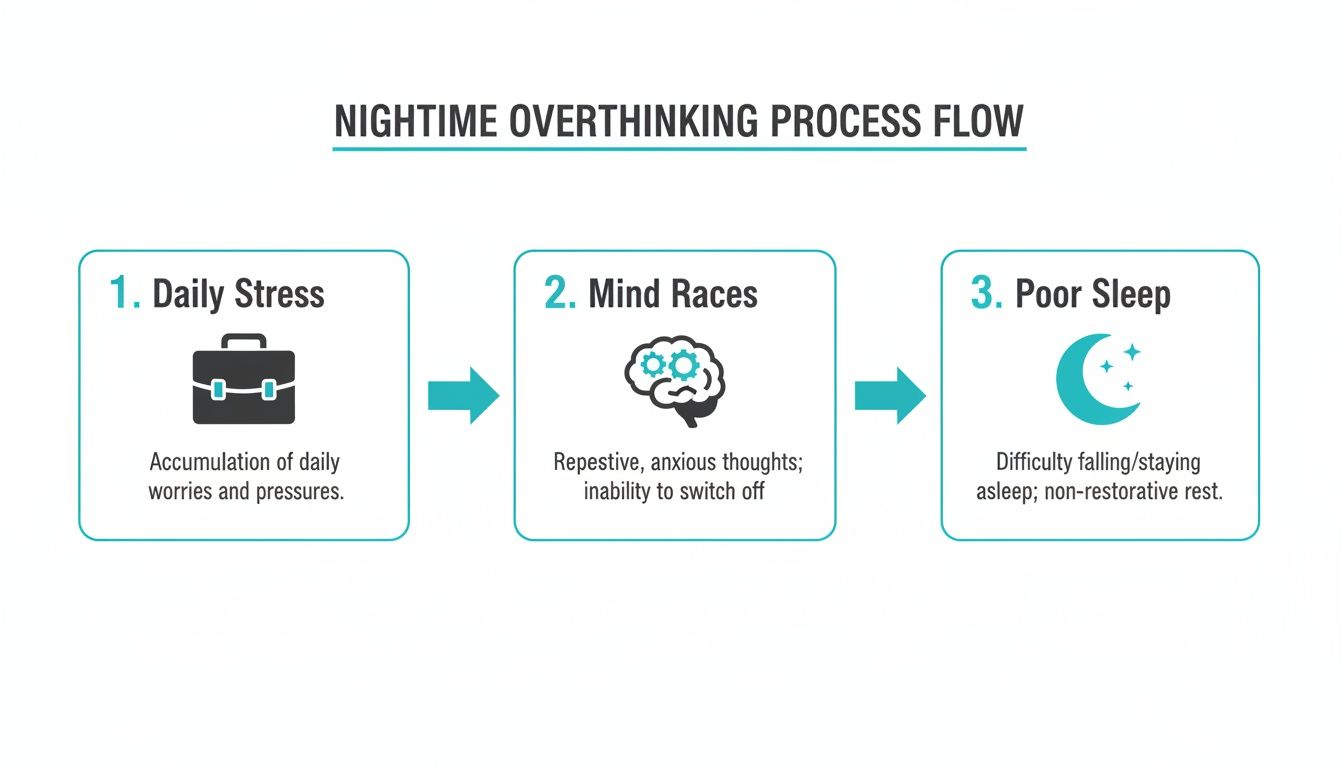
The flowchart above shows exactly how daytime pressures can spiral into nighttime overthinking. The key is to find a routine that intentionally breaks this cycle before your head even hits the pillow.
Your 5-Minute Brain-Dumping Framework
This entire process shouldn't take more than five minutes, but it needs to be a non-negotiable part of your nightly wind-down. Consistency is what makes it work.
To get the most out of this quick ritual, I recommend a structured approach. It helps you move from chaos to clarity in just a few short minutes.
| Step | Action | Goal |
|---|---|---|
| 1. Unfiltered Thoughts (2 min) | Write down everything on your mind. No filter, no organization. Worries, tasks, random ideas—get it all out. | Clear your mental cache by externalizing every thought, big or small. |
| 2. Organize & Act (2 min) | Scan your list. Circle the top 2-3 items that need action. For each, jot down the very next step. | Turn vague anxieties into concrete, manageable actions for tomorrow. |
| 3. Reframe One Worry (1 min) | Pick one big concern. Write a realistic, balanced counter-statement to challenge it. | Shift your perspective from catastrophic thinking to a more grounded, rational view. |
This structured dump prevents you from just creating a new list of things to worry about. Instead, you're building a clear, actionable plan that puts your mind at ease.
Let's walk through a real scenario: Say you're stewing over a big presentation at work. Your brain dump might include thoughts like, "What if I forget what to say?" or "They'll think my ideas are terrible." For your reframe, you could write: "I've prepared for this and I know the material inside and out. It's okay to be nervous, but I'm ready."
This simple practice is actually a core component of cognitive behavioral therapy for insomnia (CBT-I). Research even shows that a structured, five-minute journaling session can slash bedtime rumination by 25% and help people fall asleep 15 minutes faster. If you want to dive deeper, you can discover more insights about these sleep-focused trends and their benefits.
Why This Technique Is So Effective
So, why does scribbling in a notebook work so well? It all comes down to giving your brain a plan.
Anxious thoughts thrive on uncertainty and a lack of control. When you write down a worry and assign a specific next step, you’re taking back the reins. You’re telling your brain, "I see this problem, and I have a plan to handle it."
That simple act of planning creates the closure your mind needs to let go. Instead of letting your anxieties run on an endless loop, you’ve parked them in a documented plan. This frees up your mental energy to finally switch from problem-solving mode to rest mode.
Creating a Sensory-Soothing Sleep Environment

So, you've successfully offloaded all those racing thoughts onto paper. What's next? It's time to tackle your external world. Your bedroom environment sends incredibly powerful signals to your brain, and if it's overstimulating, it can completely sabotage your efforts to wind down.
Think of it as creating a sensory-soothing sanctuary. The goal is to send a clear message to your nervous system that it's safe to finally switch off. This whole process comes down to intentionally managing the key sensory inputs that dictate your state of mind: sight, sound, and touch. When they work together, you build a cocoon of calm that actively pushes overthinking out the door.
Master the Darkness to Signal Sleep
Your brain is hardwired to associate darkness with rest. It's a primal trigger. Even tiny amounts of light peeking in from streetlamps or glowing from electronics can disrupt the production of melatonin, the hormone that runs your internal sleep-wake clock.
Honestly, one of the most effective things you can do to quiet your mind is to make your room pitch-black.
The physical environment of your bedroom plays a massive role here. Choosing the right window coverings, like finding the best blinds for bedroom windows, can make a world of difference. A high-quality sleep mask is another game-changer. It creates your own personal blackout zone, making sure your melatonin production stays on track no matter what.
Control Your Auditory Environment
A racing mind can feel like a loud, chaotic radio station you just can't turn off. The secret isn't to force total silence—that can sometimes make things worse. Instead, you want to replace that chaotic internal noise with a calm, predictable external soundscape.
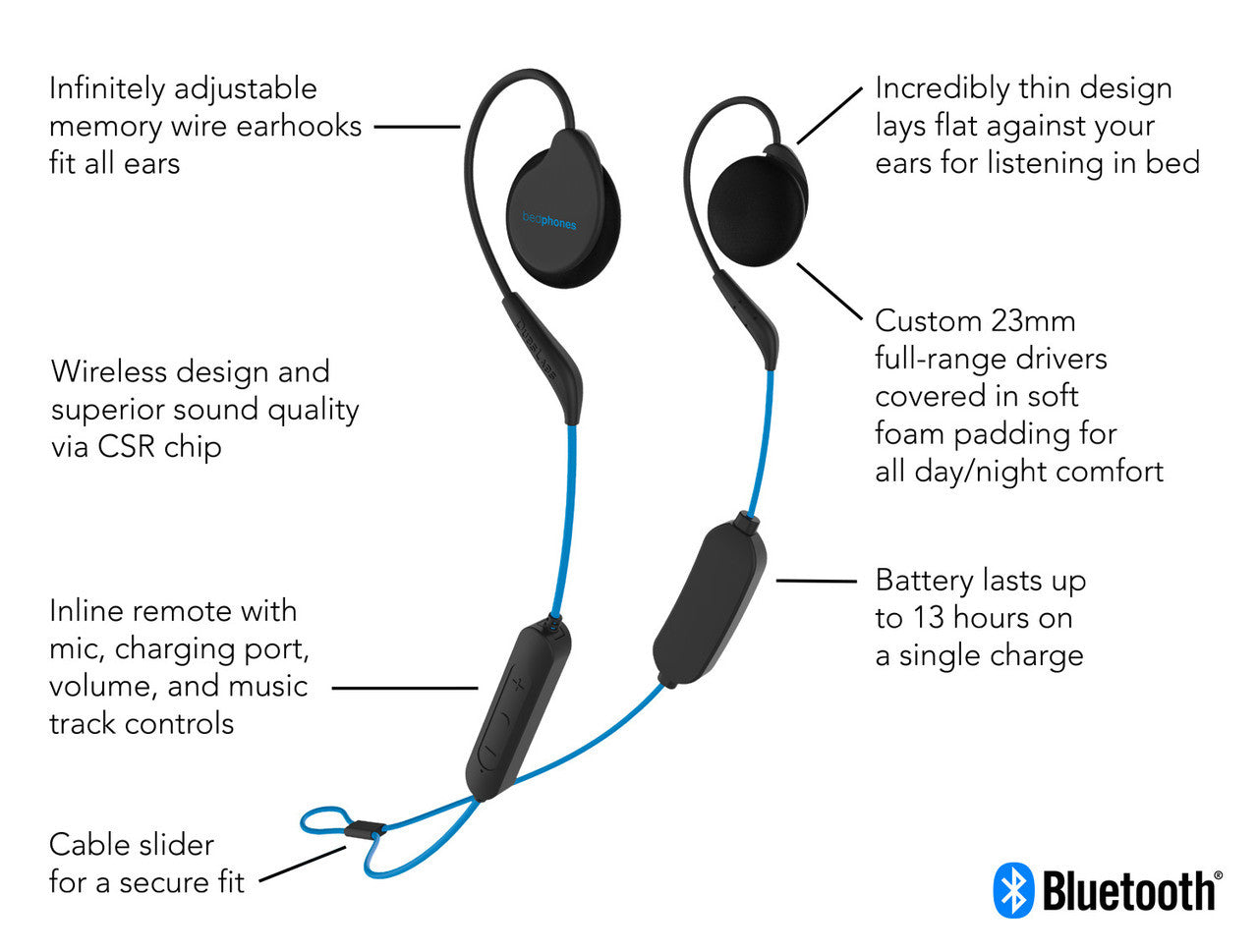
This is where a good pair of sleep headphones becomes your best friend.
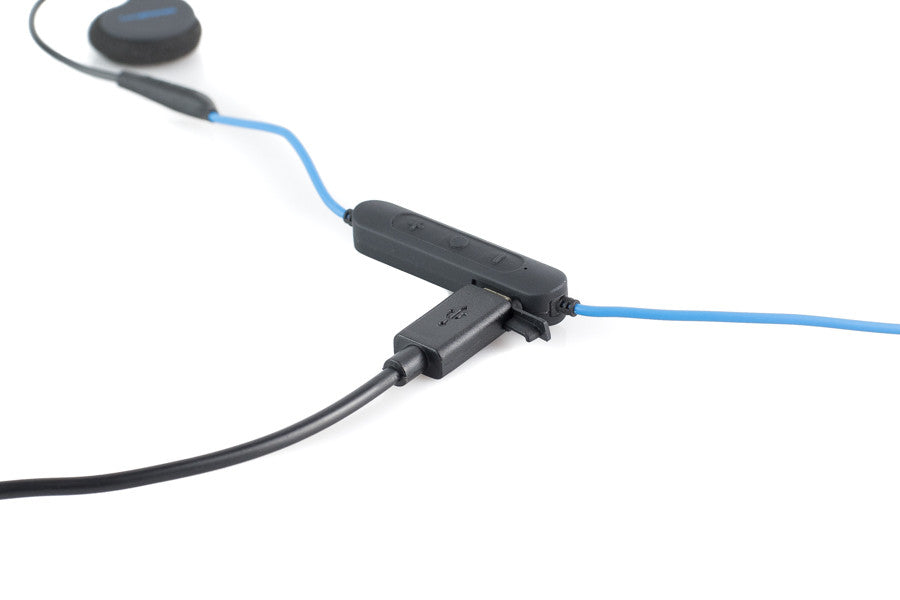
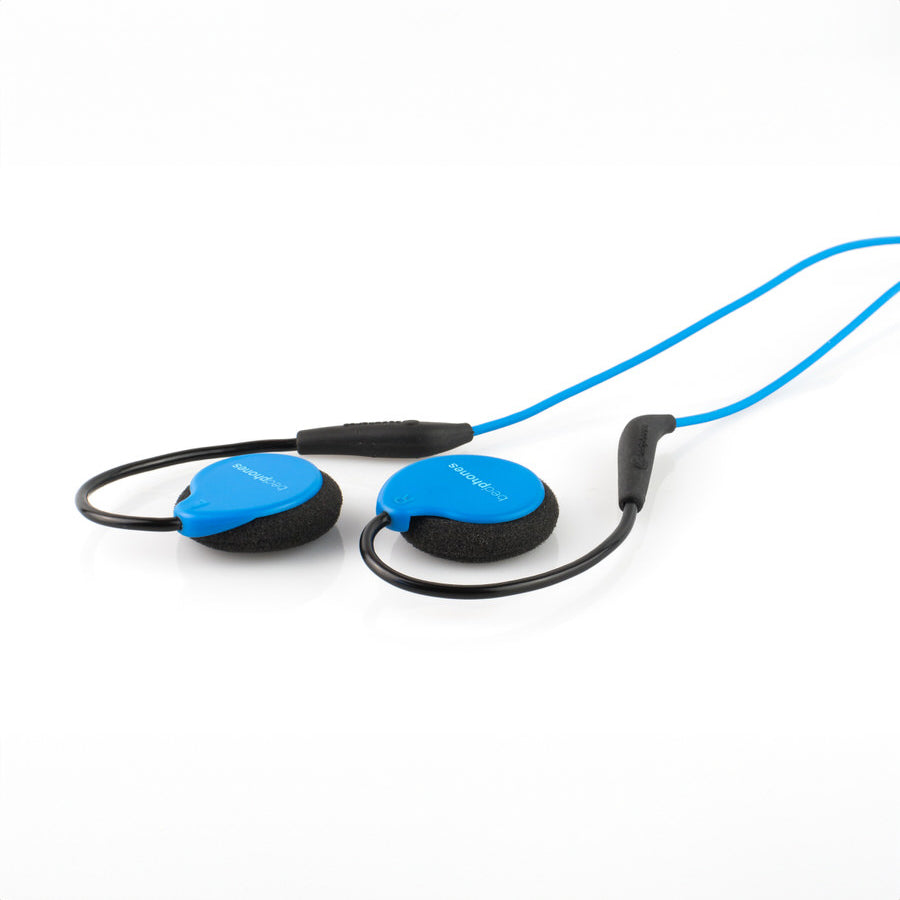
Unlike bulky, traditional headphones, options like Bedphones are specifically designed to be worn comfortably while lying down. They allow you to tune into calming audio without even noticing they're there.
- Guided Meditations: These audio tracks give your brain a gentle, singular focus point, steering it away from your own looping worries.
- White or Pink Noise: This steady, consistent sound is brilliant for masking jarring noises—think traffic, a snoring partner, or the neighbor's dog—that might otherwise startle you awake and trigger a whole new spiral of thoughts.
- Audiobooks or Podcasts: The trick here is to pick something with a calm narrator and a low-stakes storyline. You're aiming for gentle distraction, not a high-drama thriller that gets your heart pumping.
By curating what you hear, you're actively filling the mental space where overthinking thrives, swapping out those anxious loops for a soothing stream of sound.
"Your bedroom should be a sanctuary dedicated to sleep. When you consciously design it for calm—controlling light, sound, and comfort—you're not just creating a pleasant space; you're actively training your brain to associate this room with deep relaxation and rest."
Harness the Power of Touch
Finally, don't ever underestimate the calming influence of physical sensation. Anxious thoughts often create a jittery, restless feeling in the body. This is where the science of deep pressure stimulation comes into play—a gentle, firm pressure that has a profoundly calming effect on the nervous system.
A weighted blanket is the perfect example of this principle in action.
The steady, distributed pressure actually mimics the feeling of a comforting hug. This simple physical input can help lower cortisol (the stress hormone) and boost the production of serotonin, a neurotransmitter that promotes feelings of well-being and calm. This physical grounding makes it much harder for your mind to drift away into abstract worries.
You can learn more about dialing in your space in our detailed guide on how to improve your sleep environment for better sleep quality. By layering these sensory strategies, you transform your bedroom from a place of potential stress into a true sleep sanctuary.
Using Mindful Breathing to Anchor Your Thoughts

Once you’ve created a calm physical space, the next move is to find that same sense of peace inside your own head. When your mind is racing, trying to wrestle it into submission is always a losing battle. A much better approach is to gently guide its attention away from the whirlwind of thoughts and anchor it in the here and now.
Mindful breathing is an incredibly powerful—and simple—tool for this. It shifts your focus from abstract worries about yesterday or tomorrow to the simple, tangible sensation of your own breath. This isn't just a distraction; it’s a physiological reset button for your entire nervous system.
One of the most effective techniques I've come across is the 4-7-8 breathing method. It's well-known for its ability to kick your parasympathetic nervous system (your "rest and digest" system) into gear, which actively dials down your body's stress response.
The 4-7-8 Breathing Method Explained
This technique is incredibly simple and can be done anywhere, but it's a lifesaver when you’re lying in bed, stuck in an overthinking loop.
Here's how it works:
- Get comfy: Rest the tip of your tongue against the ridge of tissue right behind your upper front teeth. Keep it there through the whole exercise. Now, exhale completely through your mouth, making a gentle whoosh sound.
- Inhale: Close your mouth and breathe in quietly through your nose for a slow count of four.
- Hold: Hold that breath for a count of seven.
- Exhale: Breathe out completely through your mouth, making that same whoosh sound, for a count of eight.
That’s one full breath. The goal is to repeat this three more times, for a total of four breaths. The long exhale is the real magic here; it helps slow your heart rate and sends a clear signal to your brain that it's safe to relax. If you're looking for more techniques, our complete guide to breathing exercises for falling asleep is a great next step.
Shifting Focus with a Body Scan Meditation
Another fantastic mindfulness practice is the body scan meditation. Overthinking often traps us in our heads, making us feel completely disconnected from our physical selves. A body scan gently pulls your awareness back down into your body, grounding you in real sensations instead of abstract fears.
The goal isn't to force your mind into silence, but simply to observe what's there. You can find tons of guided meditation tracks online, which are great for beginners since you can just follow along with a calming voice.
Whether you use a guide or not, the process is pretty straightforward:
- Lie comfortably on your back, letting your arms and legs fall naturally to the sides.
- Bring your attention all the way down to the toes on your left foot. Just notice any sensations—warmth, tingling, the weight of the blanket—without judging them.
- Slowly, methodically, move your awareness up your body, section by section: your foot, ankle, calf, knee, and so on. Spend a few moments on each part, just noticing how it feels.
Your mind will wander back to a worry. That's a guarantee. When it happens, just gently acknowledge the thought without getting swept up in it. Then, kindly guide your focus back to whatever part of your body you were observing.
Remember, the point of mindfulness isn't to achieve a perfectly empty mind. It's about learning to watch your thoughts come and go like clouds in the sky, rather than getting caught in the storm.
By weaving these practices into your nightly routine, you're actively training your brain to let go of the day's baggage. You’re building a new skill: the ability to unhook from anxious thought loops and settle into a state of calm, preparing your mind and body for a night of truly restorative sleep.
Setting Daytime Boundaries to Prevent Nighttime Overthinking
How you spend your day has a direct, undeniable impact on how you spend your night. The real secret to quieting that racing mind at 2 AM often starts hours before your head even hits the pillow. It’s all about building proactive boundaries that keep your stress and anxiety contained to the daytime, where they belong.
Think of it this way: without these structures, all the unresolved worries, frustrations, and digital noise from your day just bleed right into your evening. They set the perfect stage for an overthinking marathon. By taking back control of these things during the day, you're giving yourself a fighting chance to start your wind-down routine from a place of quiet and calm.
Schedule Your Worry Time
This might sound completely backward, but one of the most powerful things you can do for your anxiety is to give it an appointment. This technique, known as scheduled worry time, is a game-changer for training your brain.
Carve out a specific 15-minute window during the day—just make sure it’s not right before bed. This is your dedicated time to sit down and confront whatever's on your mind. You can write it all out, think through problems, or just let the anxieties run their course without judgment.
When the 15 minutes are up, the session is over. You make a conscious decision to postpone any more worrying until tomorrow's appointment. If an anxious thought pops up later that night, you can simply tell yourself, "Nope, not now. I'll deal with this during my scheduled time." It’s amazing how well this teaches your brain that there's a proper time and place for these thoughts, stopping them from ambushing you when you’re trying to sleep.
Create a Digital Sunset
Let's be honest, our brains weren't designed for this constant connection. The never-ending flood of notifications, emails, and blue light from our screens is a major source of anxiety and actively messes with the production of melatonin, the hormone that tells your body it's time to sleep.
To really put a stop to nighttime overthinking, you need to draw a clear line in the sand with your devices. I like to call it creating a "digital sunset."
- Set a hard cutoff time: Power down every single screen—that means your phone, tablet, laptop, and TV—at least 90 minutes before bed. No exceptions.
- Move your charger out of the bedroom: This simple trick removes the massive temptation to grab your phone and start scrolling if you happen to wake up in the middle of the night.
- Replace screen time with calm time: You've just gifted yourself 90 minutes. Fill that time with things that actually soothe your nervous system.
So, what do you do instead? Grab a physical book. Do some light stretching. Listen to a calming podcast or an audiobook using your Bedphones. Maybe just sip on a warm cup of herbal tea and enjoy the quiet. This transition is so crucial for signaling to your brain that the day's chaos is over and it's time to prepare for rest. When you build this protective buffer, you quiet the external noise, which makes it infinitely easier to quiet the internal noise, too.
Common Questions About Nighttime Overthinking
Even when you have a solid plan, a few nagging questions can pop up. Let's tackle some of the most common roadblocks people run into when they're trying to reclaim their nights from a racing mind.
What If I Wake Up and Start Overthinking Again?
That 3 AM jolt into full-blown panic mode is frustratingly common. The absolute worst thing you can do is lie there and fight it. That struggle just amps up the anxiety, making it even harder to drift back off.
Instead of wrestling with your thoughts in bed, get up for about 15-20 minutes. Head to another room with dim lighting. Do something mind-numbingly boring—leaf through a dull book, listen to some quiet ambient sounds, whatever. The key is to break the association your brain is making between your bed and being anxiously awake.
Once you feel that sleepy feeling creeping back in, head back to bed. Try a few rounds of the 4-7-8 breathing technique to soothe your nervous system and guide yourself back to sleep.
How Long Until These Techniques Actually Work?
There's no magic number here. Everyone's brain is wired differently. Some people might find that a brain-dump journal works like a charm on the very first night. For others, it’s more of a slow burn, building momentum over several days or even weeks.
Consistency is so much more important than perfection. You're essentially retraining your brain's entire response to bedtime, forging new, healthier pathways. Give your chosen routine a fair shot—stick with it every single night for at least two weeks. Be patient with yourself. You're unlearning old habits and building new ones, and that takes time.
Can These Strategies Help My Anxious Child Sleep Better?
Absolutely. The core principles are incredibly effective for kids, and you can easily adapt them. A simple "worry journal" could just be drawing their fears or talking them out with you before lights out. It's all about getting those big feelings out of their head and onto the page.
A predictable, sensory-soothing routine is also a huge help for children. A weighted blanket can be a game-changer, especially for kids with anxiety, giving them a comforting, secure feeling. Playing calming stories or ambient nature sounds can also help their busy little minds settle down, turning bedtime into a reliable source of comfort.
Ready to build the ultimate sensory-soothing haven for deep, uninterrupted sleep? The products at DubsLabs are designed to quiet all the noise—both outside your head and inside it. From our paper-thin Bedphones Sleep Headphones to our calming weighted blankets, we have the tools you need to finally stop overthinking and start sleeping. Explore our collection and find your peace at DubsLabs.