Dealing with sleep anxiety is all about breaking a vicious cycle. You know the one: worry keeps you from resting, and the exhaustion just fuels more worry for the next night. But you can break it. It starts with creating a calming pre-sleep routine, learning how to reframe those anxious thoughts, and turning your bedroom into a space that signals safety and relaxation to your brain.
Understanding the Vicious Cycle of Sleep Anxiety
It’s an incredibly frustrating feeling. You’re bone-tired, but the second your head hits the pillow, your mind decides to run a marathon. This isn't just a random bad night; it's the beginning of a pattern where anxiety sabotages your sleep, and the exhaustion that follows just dials up the anxiety for the next night. Soon enough, you start to dread bedtime, associating your bed with stress instead of sanctuary.
This isn't just in your head—it's deeply rooted in your body's biology. When you feel anxious, your system gets flooded with stress hormones like cortisol, kicking off the "fight or flight" response. This state of high alert is the polar opposite of the calm, relaxed state you need to fall asleep. Your heart might pound, your muscles get tight, and your thoughts spiral, making it physically impossible to drift off. This is where understanding the connection between insomnia and mental health becomes crucial for finding a way out.
The Global Impact of Anxiety on Sleep
If this whole experience feels isolating, I promise you, you're not alone. Not even close. Anxiety disorders are the most common mental health conditions in the world, affecting an estimated 359 million people globally. And this has a direct, measurable impact on sleep.
Research makes it clear that the relationship is a two-way street: anxiety messes with sleep, and poor sleep makes anxiety worse. One global meta-analysis, for example, found that while 23.2% of healthcare workers experienced anxiety, a staggering 38.9% of them also had insomnia. You can discover more insights about these global mental health findings directly from the source.
The core problem with sleep anxiety is that the more you worry about not sleeping, the less likely you are to sleep. This creates a self-fulfilling prophecy that can feel impossible to escape without the right tools.
Your Roadmap to Breaking the Cycle
The good news? You can absolutely dismantle this cycle. This guide is your roadmap, filled with actionable strategies to help you take back control of your nights. We're not going to just tell you to "relax more." Instead, we’ll walk through a complete plan that covers everything you need to know to deal with sleep anxiety for good.
To give you a clear path forward, we've organized the best evidence-based strategies into a simple action plan.
Your Quick-Action Plan for Sleep Anxiety
This table gives you a bird's-eye view of the core strategies we'll be diving into. Think of it as your at-a-glance cheat sheet for reclaiming your sleep.
| Strategy Area | Key Action | Primary Benefit |
|---|---|---|
| Evening & In-Bed Routines | Create a consistent, calming "buffer zone" before bed. | Signals to your brain and body that it's time to wind down. |
| Cognitive Strategies (CBT-I) | Challenge and reframe anxious thoughts about sleep. | Breaks the mental loop of worry and catastrophizing. |
| Acute Anxiety Tactics | Use in-the-moment techniques like deep breathing when anxiety spikes. | Calms your nervous system to make sleep possible again. |
| Environment & Product Aids | Optimize your bedroom for sleep and use calming tools. | Creates a sanctuary that promotes rest and reduces alertness. |
Each of these areas plays a critical role. By combining them, you create a powerful, multi-layered defense against sleep anxiety. You're not just hoping for a good night; you're actively building the foundation for one, every single day. Let's get started.
Crafting Your Pre-Sleep Wind-Down Routine
The hour before you hit the pillow can make or break your night. It can either set the stage for anxious tossing and turning or gently guide you into a deep, restorative sleep. Think of this time as your personal "buffer zone"—a dedicated transition period that tells your brain the day is done and it’s finally safe to power down.
This isn’t about cramming more tasks into your evening. It’s about creating a simple, repeatable ritual that actively calms your nervous system.
So many of us make the mistake of working, scrolling social media, or watching intense TV shows right up until the moment we turn off the lights. That abrupt jump from high-stimulation to a quiet, dark room is like an open invitation for racing thoughts to take over. Your brain simply hasn't been given a chance to slow down, creating the perfect breeding ground for sleep anxiety.
This is the vicious cycle it creates: anxiety leads to a bad night's sleep, which leads to exhaustion, which only fuels more anxiety for the next night.
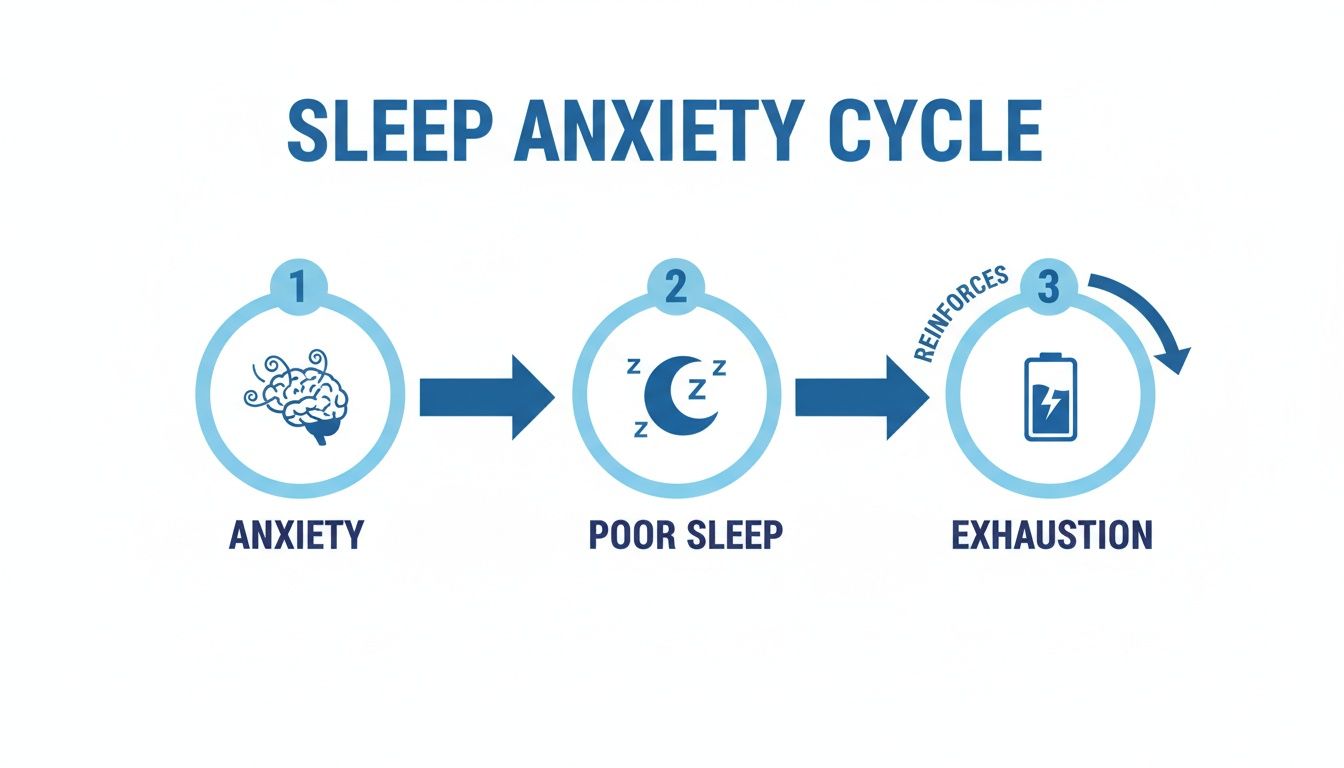
A solid wind-down routine is your chance to break that loop before it even starts.
The Power of Light and Darkness
One of the easiest yet most effective ways to begin this transition is by controlling your light exposure. Bright overhead lights and, famously, the blue-tinted light from our screens, actively suppress your body's production of melatonin—the essential hormone that governs your sleep-wake cycle.
About an hour before you plan to go to bed, start dimming the lights. Switch off the bright ceiling fixtures and turn on a warm-toned lamp instead. This simple adjustment mimics a natural sunset and sends a powerful biological cue to your brain that it's time to prepare for sleep.
Offload Your Worries with a Brain Dump
A mind buzzing with the day’s unprocessed thoughts, worries, and to-do lists is a major driver of sleep anxiety. Instead of carrying all that baggage to bed with you, give it a place to live for the night. This is where the "brain dump" comes in—a simple but wildly effective journaling exercise.
Find a notebook and a pen (not your phone!) about 30-45 minutes before bed and just let it all out.
- Worries: Write down every single concern, no matter how big or small.
- To-Do Lists: Get tomorrow's agenda out of your head and onto the page.
- Ideas: Jot down any creative thoughts or random solutions that have been bouncing around.
The goal here isn't to solve anything. It's simply to externalize it. The physical act of writing everything down signals to your brain, "I see you, I've logged you, and we'll deal with this tomorrow." This offloading frees up precious mental space and helps short-circuit the rumination that keeps so many of us staring at the ceiling.
A wind-down routine isn't about perfection; it's about consistency. A simple 20-minute ritual you do every single night is far more powerful than a fancy, elaborate one you only manage once a week.
Putting It All Together: A Real-World Example
Let's take Alex, who usually works late and then scrolls through social media in bed until feeling exhausted but mentally wired. This habit often leads to an hour of stressing about work deadlines instead of sleeping.
Here’s how Alex could build a new, calming routine:
- 9:00 PM (T-minus 60 mins): A "wind-down" alarm goes off. Alex turns off the bright overhead lights, switching to a single warm lamp, and plugs the phone in to charge across the room for the night.
- 9:15 PM (T-minus 45 mins): For the next 15 minutes, Alex does a "brain dump," writing down worries about an upcoming project and mapping out a simple to-do list for the morning.
- 9:30 PM (T-minus 30 mins): With a clearer head, Alex makes a cup of chamomile tea and reads a chapter from a physical book—something engaging but not overly stimulating.
By the time Alex gets into bed at 10:00 PM, the brain has been gently guided from a state of high alert to one of calm. This structured transition systematically dismantles the link between bedtime and anxiety. For more tips and ideas, check out our guide to building a bedtime routine for your best sleep.
Using Cognitive Tools to Calm Nighttime Worries
Let's be honest, the hardest part of sleep anxiety is the battle that happens inside your own head. A small worry can morph into a full-blown catastrophe in the quiet darkness, kicking off a frustrating spiral. This is where you can bring in some powerful mental tools, many adapted from Cognitive Behavioral Therapy for Insomnia (CBT-I), to disarm that anxiety at its source.
It’s a vicious cycle. You worry you won’t sleep, which floods your body with stress hormones, which then—you guessed it—makes sleep physically harder to achieve. You are far from alone in this. Anxiety is a massive sleep disruptor, especially for younger adults and women.
The 2025 Global Sleep Survey found that 53% of Gen Z and 47% of women pointed to anxiety as a primary reason they struggle to sleep. You can read the full research about these sleep disruption findings to see just how common this is.
The goal here isn't to magically erase anxious thoughts. That’s impossible. Instead, it's about changing your relationship with them so they no longer run the show.
Schedule a Time for Constructive Worry
One of the most powerful things you can do is give your worries a designated time and place—one that is absolutely not your bed at 2 AM. This strategy is called "constructive worry" or "scheduled worry time," and it's brilliant for containing anxieties so they don't bleed into your rest time.
Here’s how to put it into practice:
- Set aside 15-20 minutes earlier in the evening, well before you start winding down for bed.
- Grab a notebook and write it all down. Get everything out of your head and onto the page, from big-picture fears to the nagging items on your to-do list.
- Brainstorm one simple next step. For each worry, try to identify one small, actionable thing you can do about it tomorrow. This shifts you from spinning your wheels to proactive problem-solving.
- Physically close the notebook. When your time is up, shut the book. This is a symbolic end to worrying for the day. If those thoughts creep back in later, you can gently remind yourself, "Nope, I've already dealt with that. Its time is over for today."
This simple exercise trains your brain to understand that bedtime is for rest, not for problem-solving. It helps you reclaim your bed as a sanctuary.
By scheduling a dedicated "worry session" earlier in the day, you stop your mind from defaulting to this high-alert state the moment your head hits the pillow. It’s like telling your brain, “Meeting adjourned until tomorrow.”
Try Paradoxical Intention
This is going to sound completely backward, but sometimes the best way to fall asleep is to try to stay awake. I know, it's weird. This counterintuitive method is called paradoxical intention, and it's designed to dismantle the performance anxiety that builds up around sleep. The intense pressure to "fall asleep now!" is often the very thing keeping us wide-eyed.
So instead of fighting it, you lean in. Get into bed, get comfortable, but keep your eyes open. Tell yourself your only job for the next ten minutes is to stay awake and rest quietly.
This mental flip accomplishes two things:
- It takes all the pressure off. By removing the goal of "sleep," you remove the anxiety of failing to achieve it.
- It lets your natural sleep drive take over. Without all that mental resistance and the stress hormones that come with it, your body's innate sleepiness can finally do its job.
You might be shocked at how heavy your eyelids feel when you’re no longer forcing them shut.
Reframe Your Anxious Thoughts
When a worried thought pops into your head, it’s easy to believe it 100%. But these thoughts are often distorted, exaggerated versions of reality. Learning to gently challenge and reframe them can strip them of their power.
Take this classic middle-of-the-night thought: "If I don't sleep tonight, I'll completely bomb my presentation tomorrow and everyone will think I'm incompetent."
Let's break that down and reframe it with a more balanced, realistic perspective:
- Challenge the Catastrophe: "Have I had a bad night's sleep before a big day? Yes. Did I get through it? Also yes. It might be tough and I'll need extra coffee, but it won't be a total disaster."
- Focus on Rest, Not Sleep: "Okay, maybe deep sleep isn't happening right now. But just lying here quietly with my eyes closed is still restorative for my body. My only goal is to rest."
- Practice Self-Compassion: "It makes sense that I'm anxious. This presentation is important to me. But stressing out about sleep isn't helping. I'll just do the best I can tomorrow with the energy I have."
Beyond these specific cognitive exercises, sometimes diving into a good book can offer new perspectives. You might want to explore some books specifically designed to help with anxiety for more ideas.
And remember, pairing these mental tools with physical relaxation techniques can be incredibly effective. Our guide on breathing exercises for falling asleep is a great place to start.
Optimizing Your Bedroom for Truly Restful Sleep
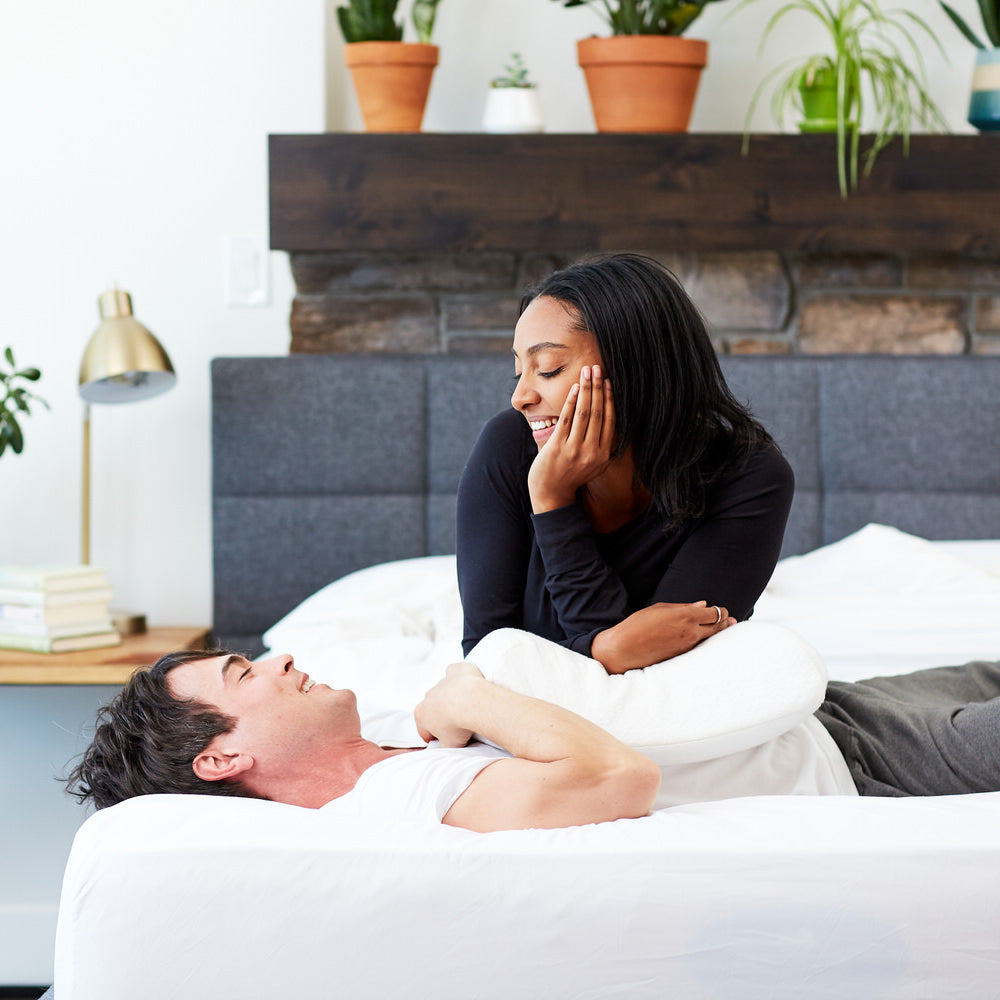
Your bedroom should be a sanctuary—a place your brain connects with peace and restoration, not the dread of another sleepless night. When you’re trying to kick sleep anxiety to the curb, creating an environment that actively calms your nervous system isn't just a nice-to-have; it's a non-negotiable.
This is about more than just a comfy mattress. It’s about consciously engineering a space that sends a powerful "it's time to rest" signal to your mind and body.
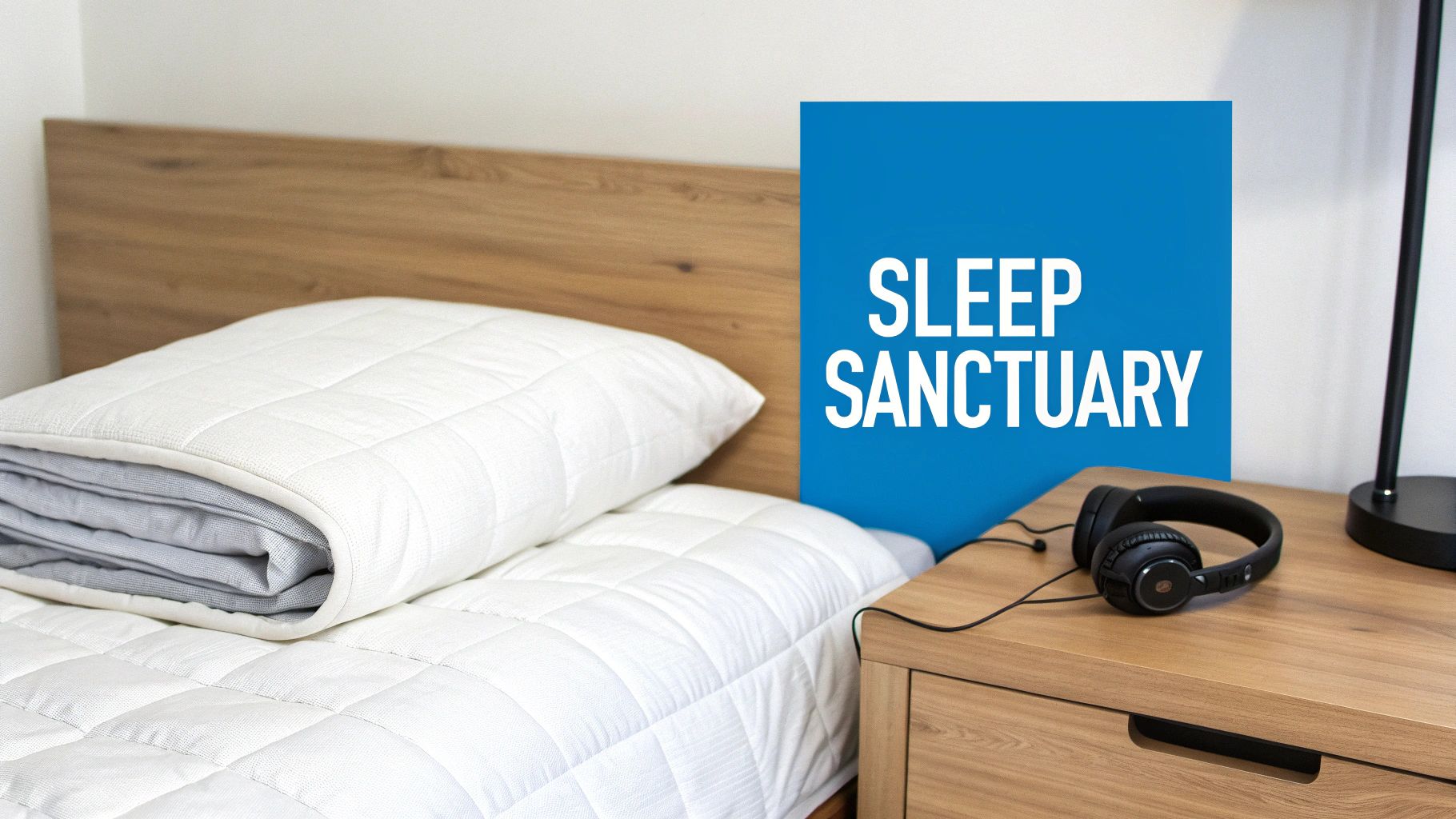
The pillars of a great sleep environment are simple: keep it cool, dark, and quiet. Each of these plays a very specific biological role in getting you ready for sleep, and dialing them in can make a world of difference.
Setting the Foundational Scene
A cool room temperature is surprisingly critical. To initiate sleep, your body's core temperature naturally needs to dip. A cooler room, somewhere between 60-67°F (or 15-19°C), helps that process along. If your room is too warm, it can actually interfere with this thermal regulation, leaving you restless and waking up throughout the night.
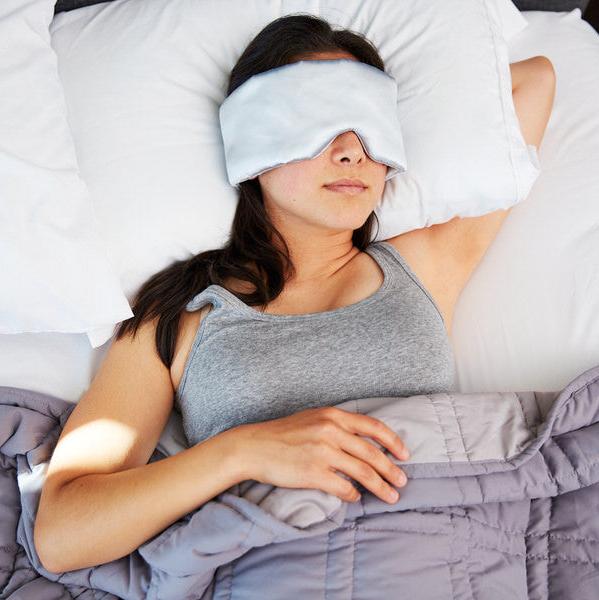
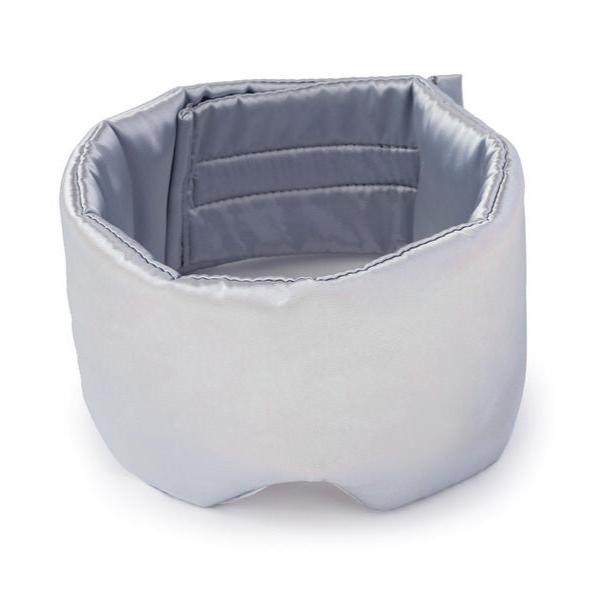
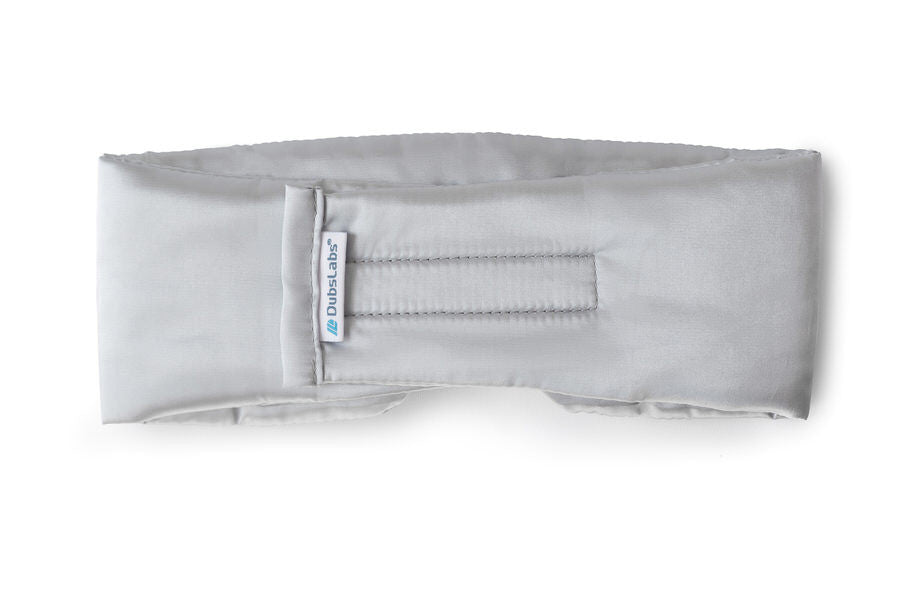
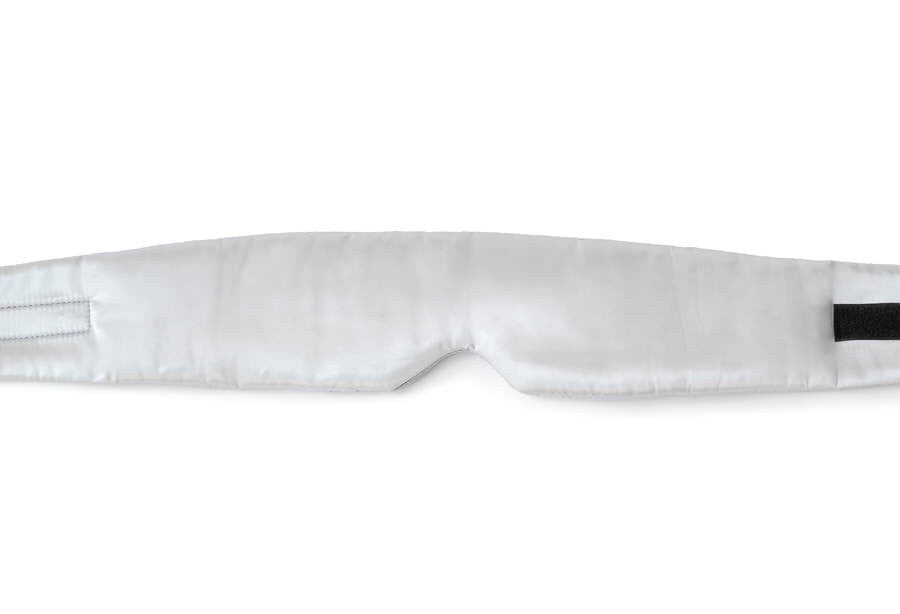
Darkness is equally important. Any light exposure, even from a pesky streetlight or the glow of an electronic device, can suppress the production of melatonin—the essential hormone that tells your body it’s nighttime. Blackout curtains are a fantastic investment, but even a high-quality sleep mask can create the pitch-black conditions your brain craves.
Finally, a quiet space prevents your brain from staying on high alert. You might not even notice it, but unpredictable noises can trigger a tiny stress response, pulling you out of light sleep or stopping you from drifting off in the first place.
Tools That Actively Calm the Nervous System
Once you've got the basics down, you can bring in some specific tools designed to soothe an anxious mind. Think of these not as accessories, but as functional aids that work with your body's own relaxation responses.
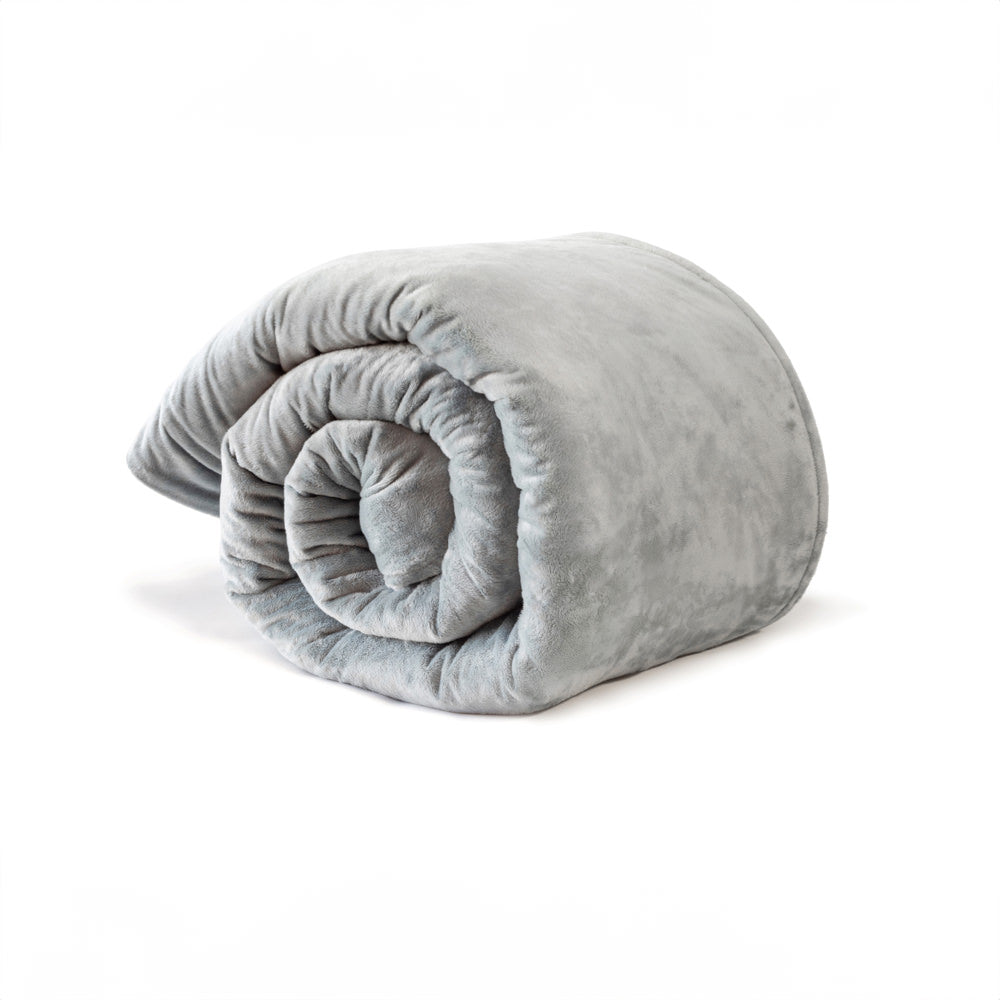
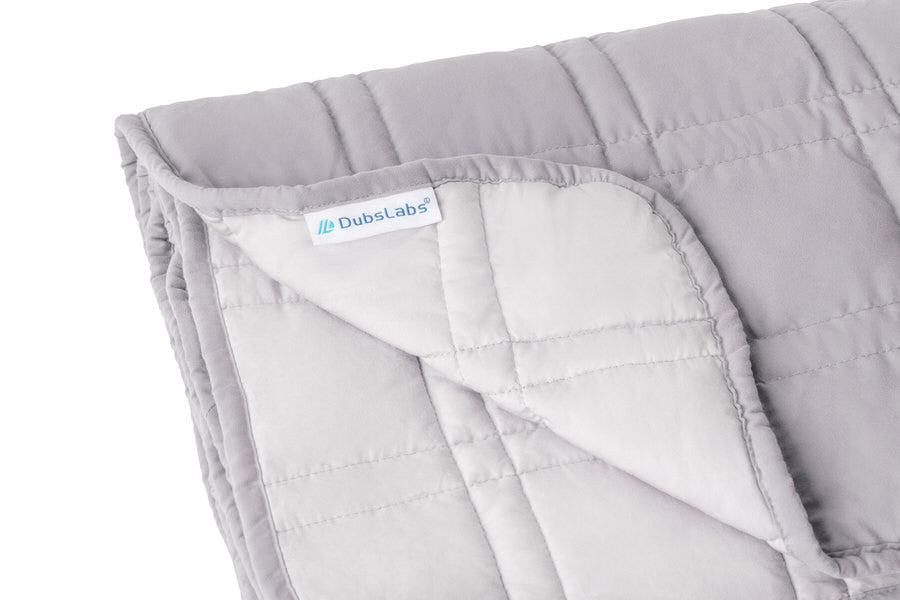
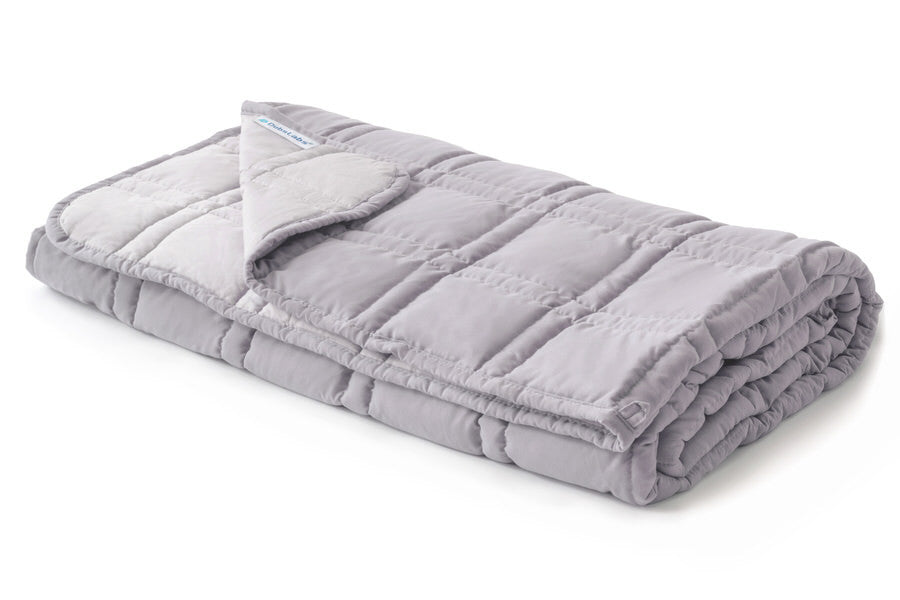
A weighted blanket is a perfect example. These blankets use glass beads or other materials to provide a gentle, consistent pressure across your body. This is called deep pressure stimulation, and it's thought to help shift your autonomic nervous system out of "fight-or-flight" mode and into a calmer "rest-and-digest" state. For many, it feels like a firm, reassuring hug, which can do wonders for easing the physical sensations of anxiety.
A bedroom that has been optimized for sleep becomes a powerful psychological cue. When you enter it, your brain begins to anticipate rest, not stress, which helps break the negative association between your bed and anxiety.
Creating Your Own Audio Sanctuary
For a lot of us, the biggest challenge isn't the noise outside, but the chatter inside our own heads. This is where controlling your auditory environment becomes a total game-changer. Listening to something calming—guided meditations, ambient sounds, white noise, or even a familiar podcast—gives your anxious brain a different focal point.
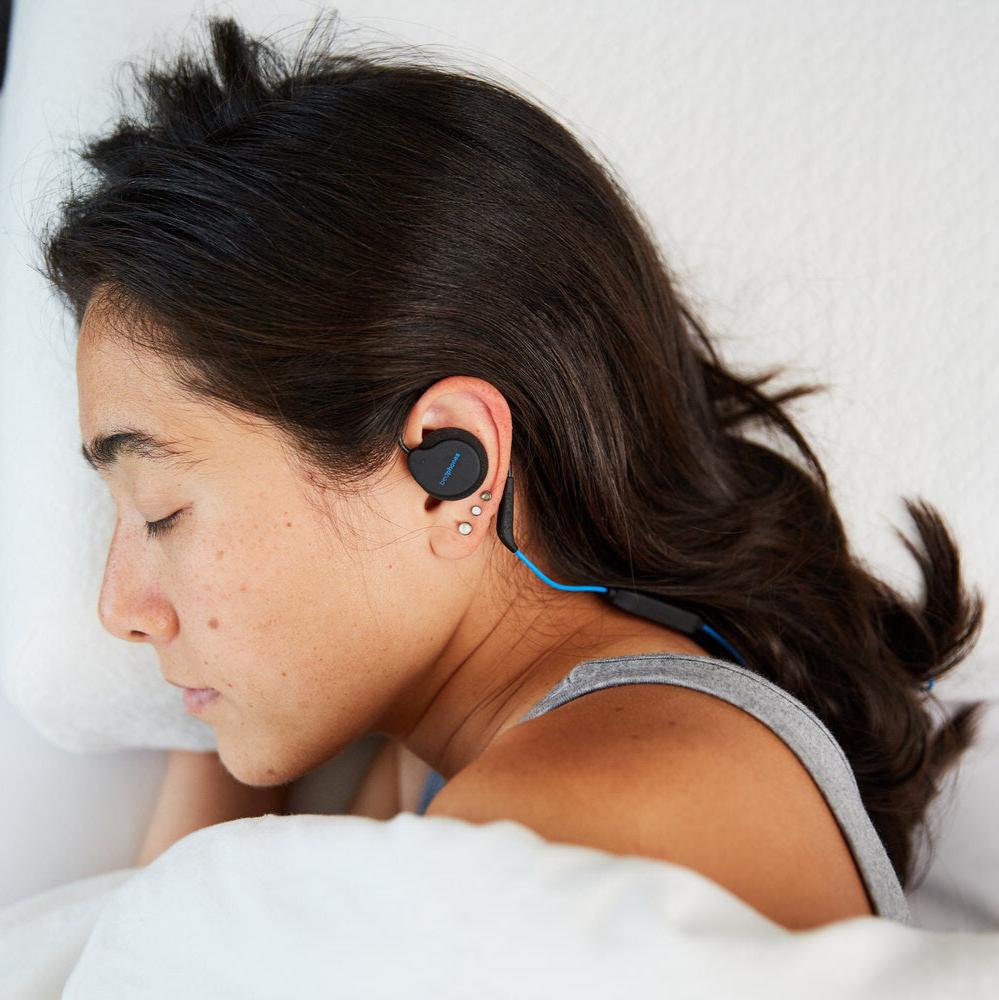
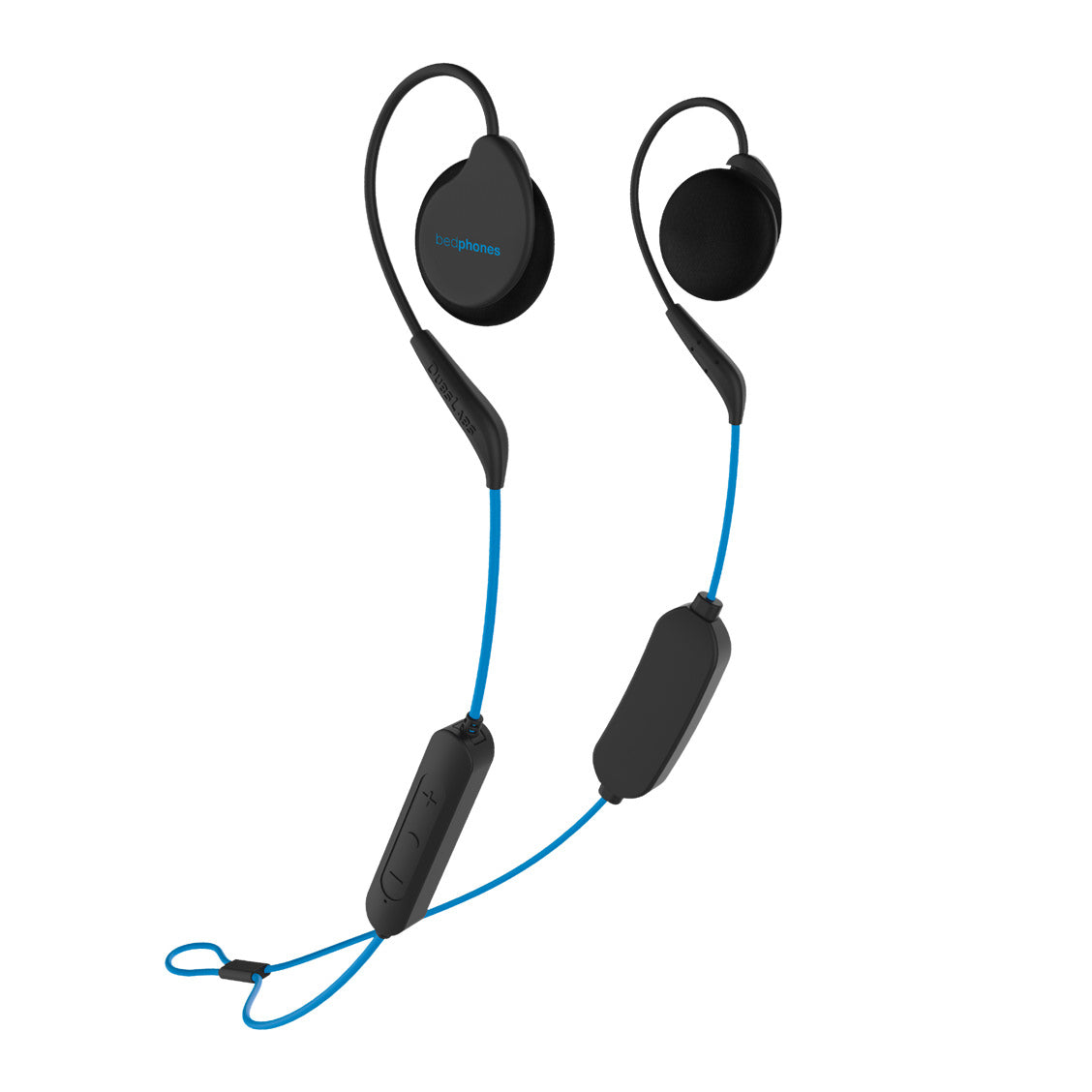
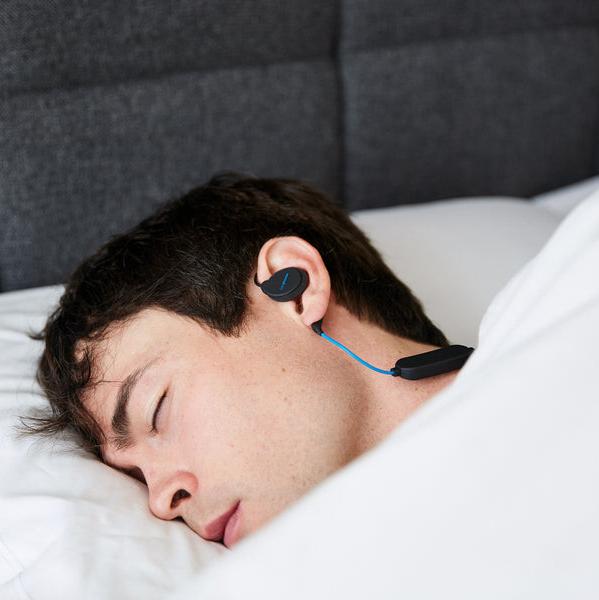
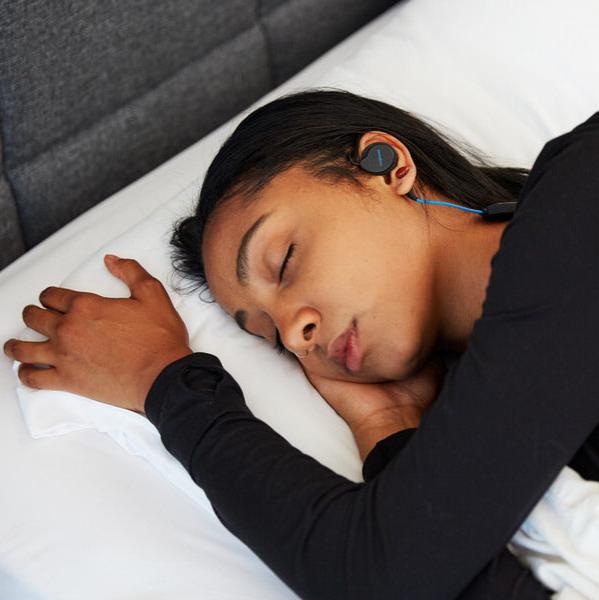
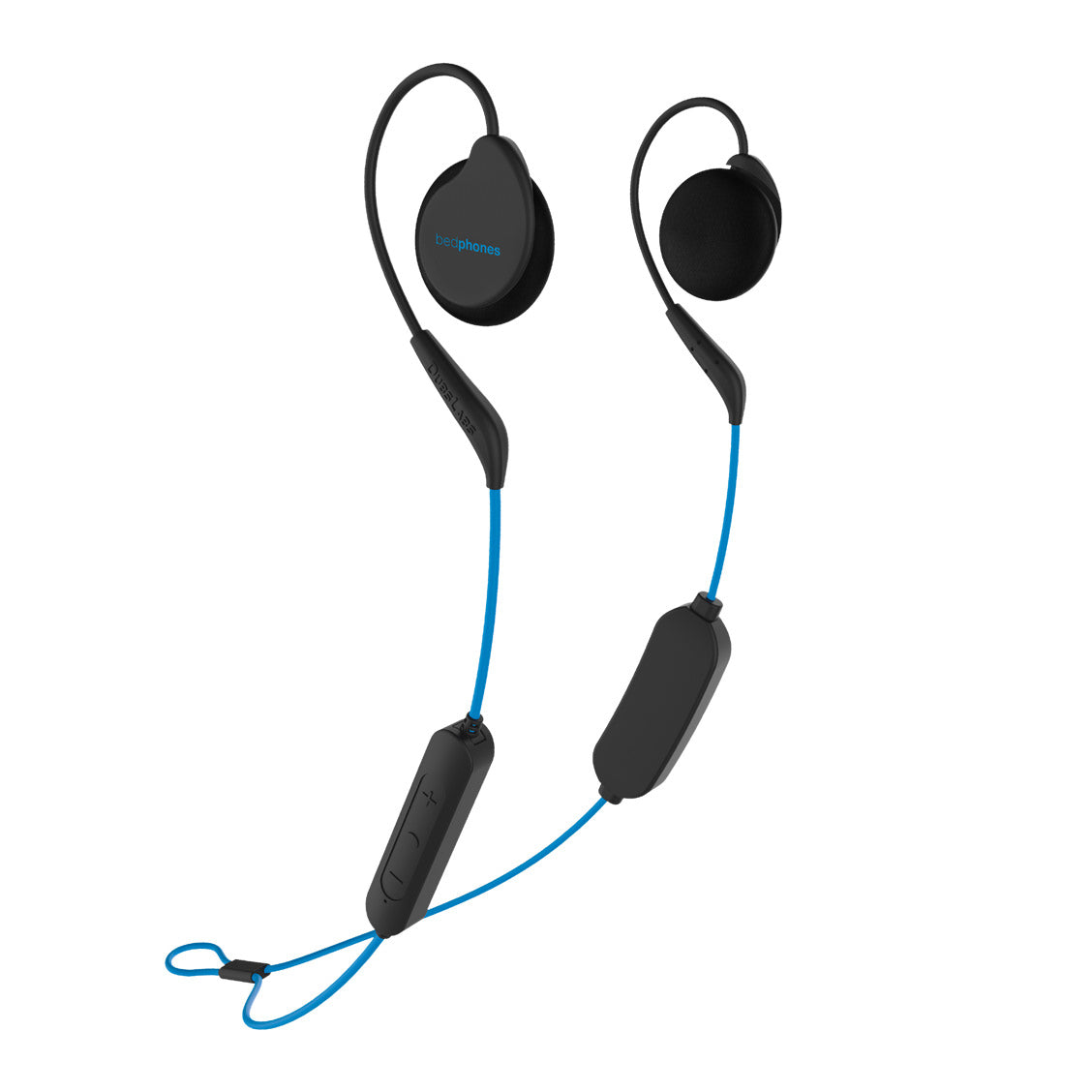
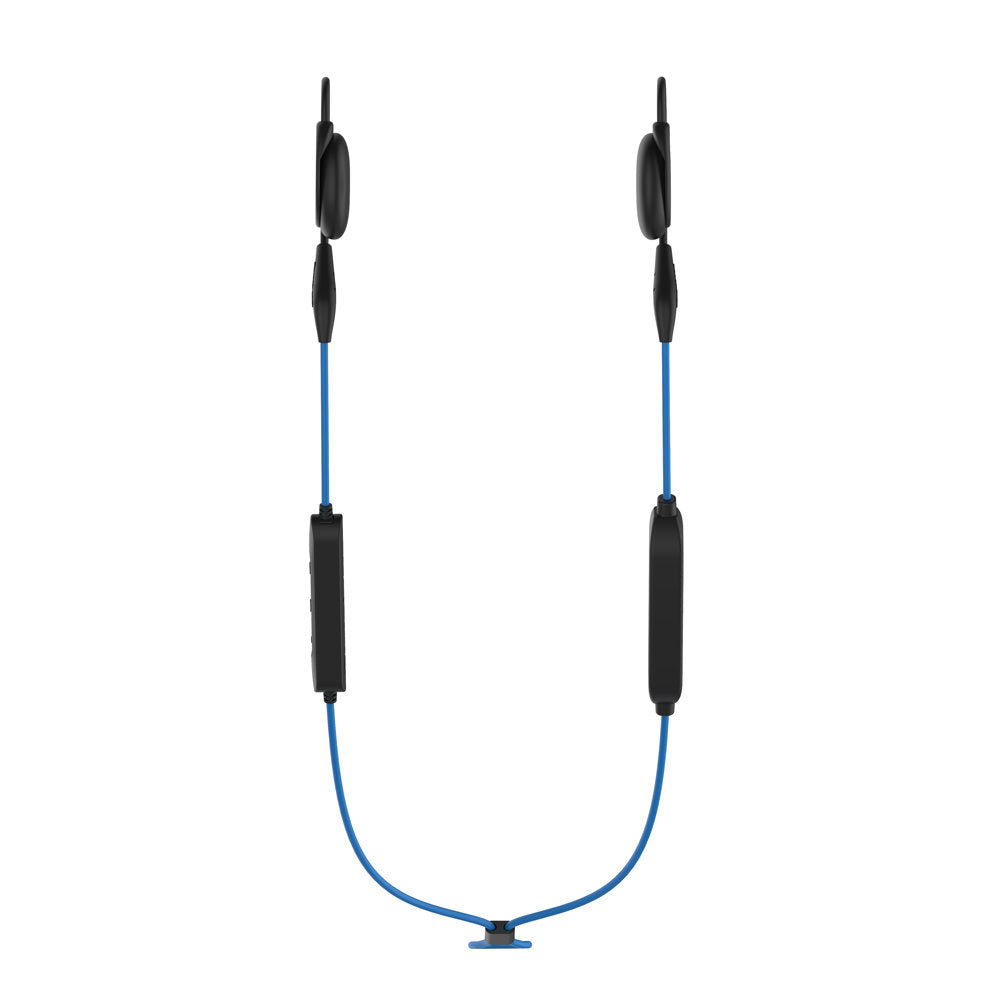
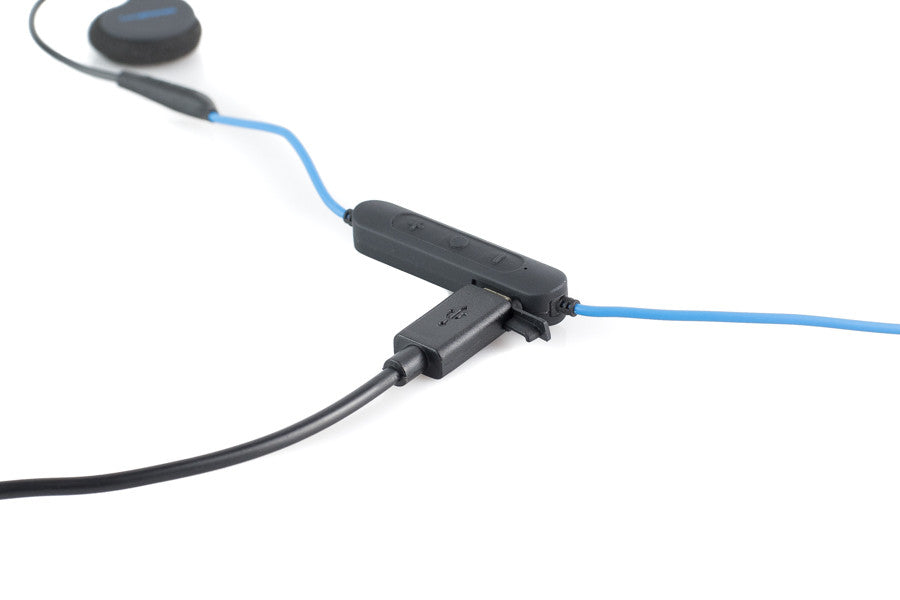
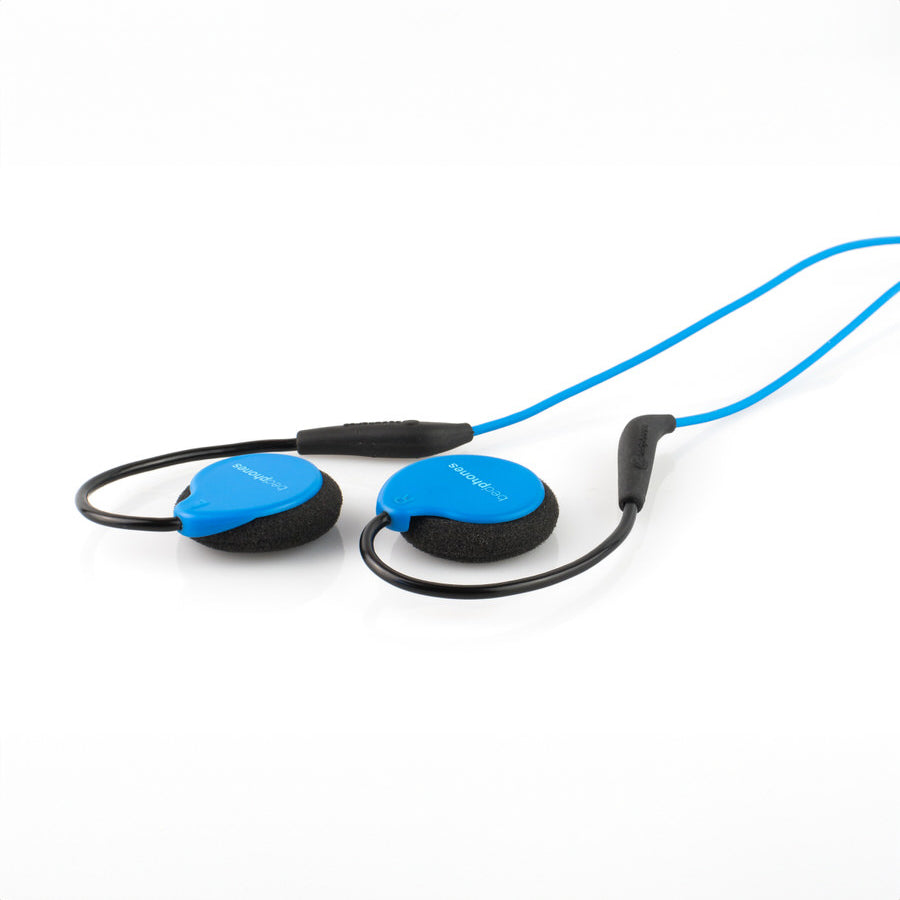
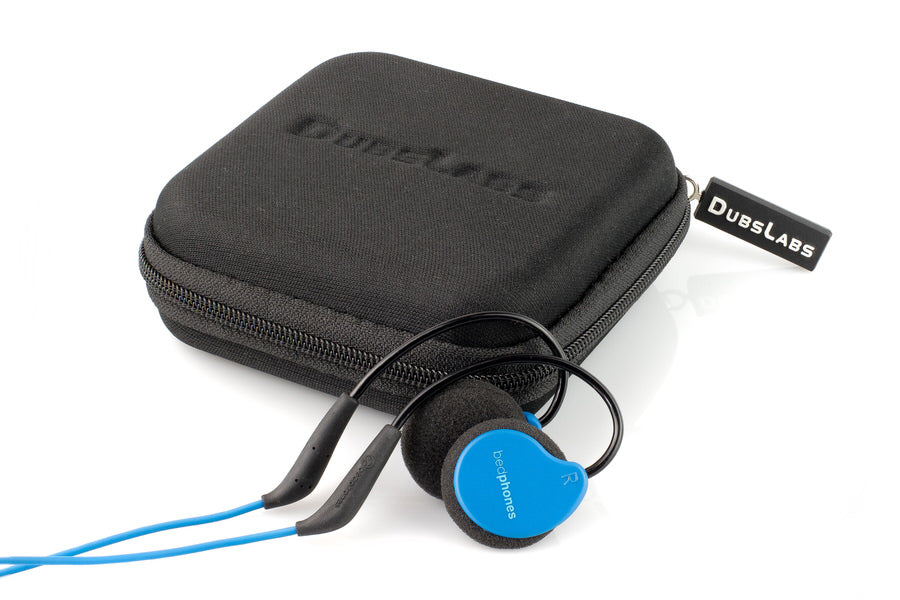
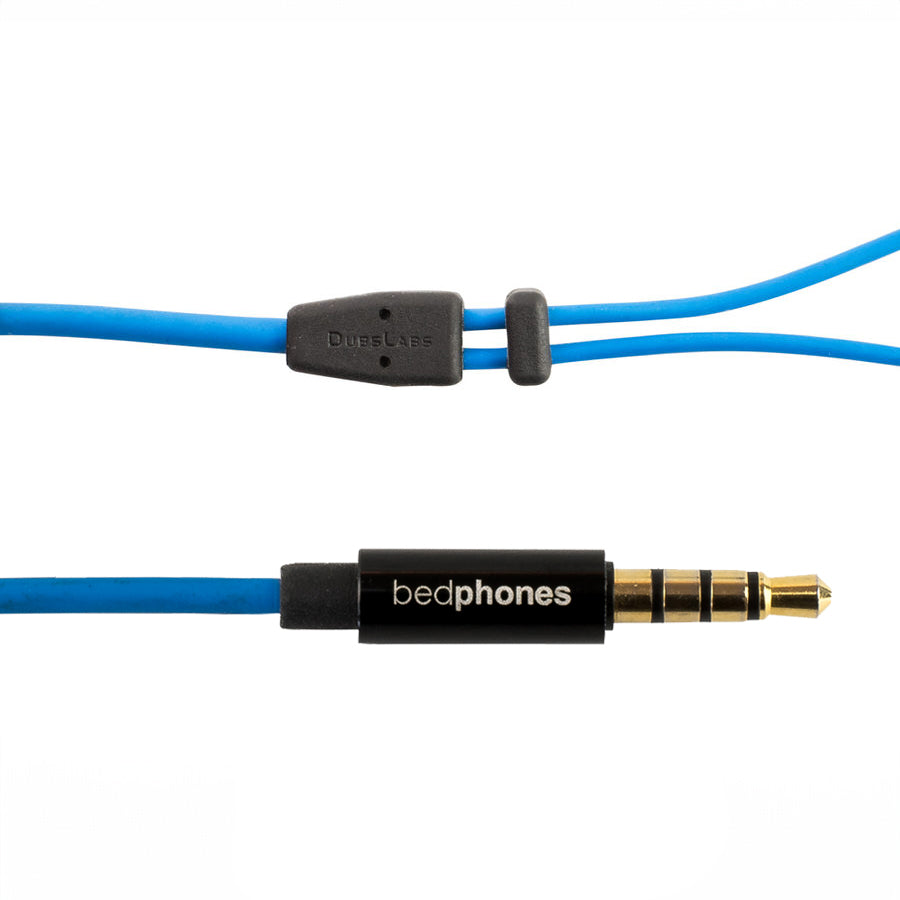
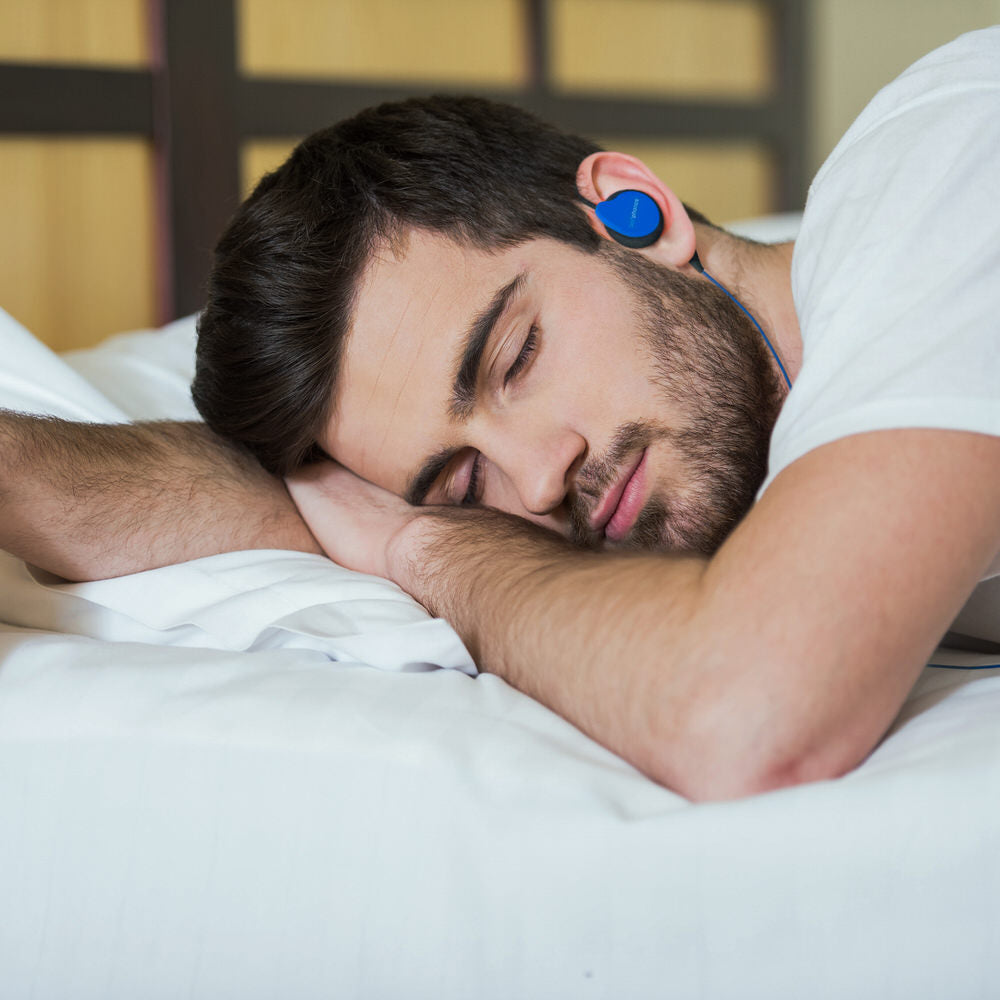
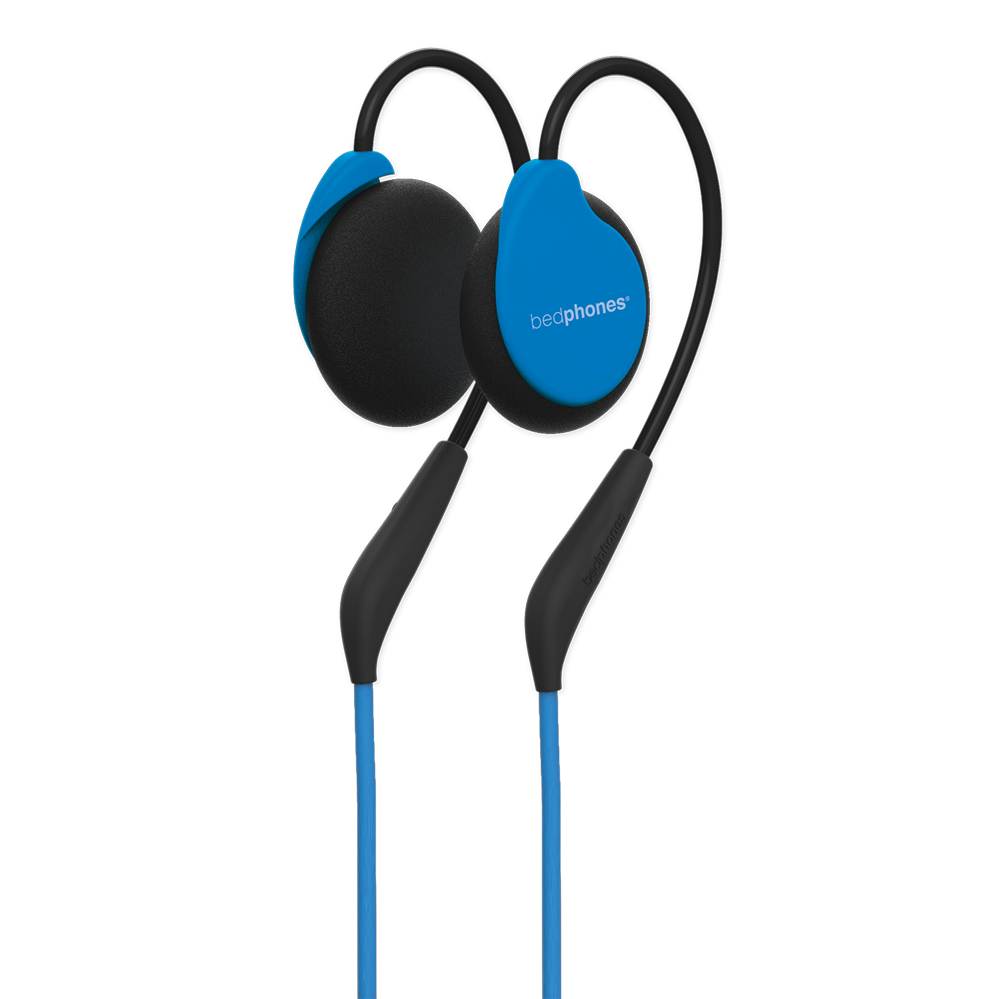
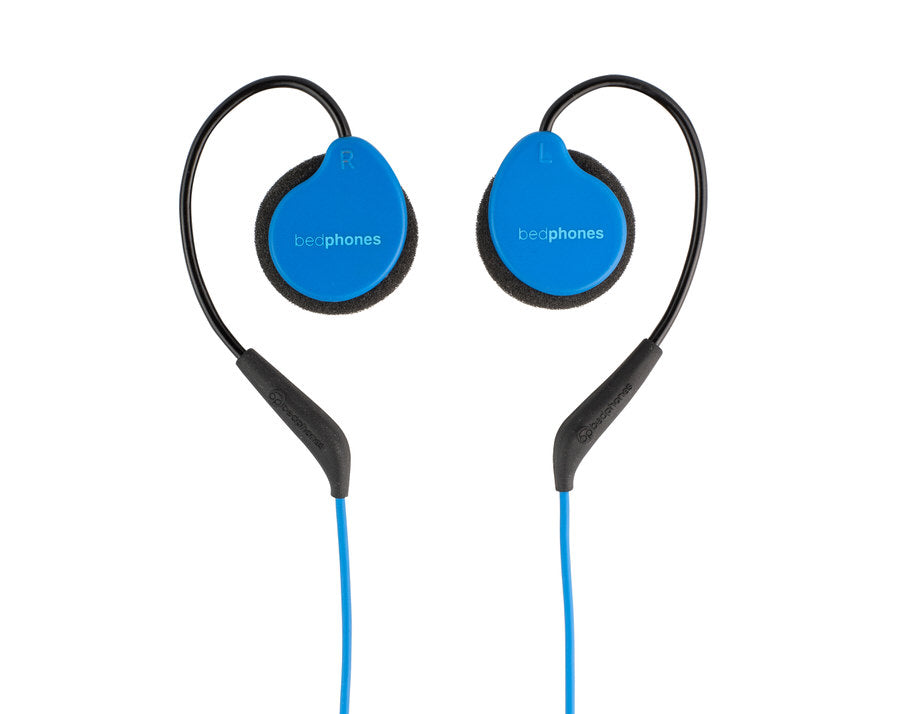
But let's be honest, traditional headphones or earbuds are a nightmare for side sleepers. That's exactly the problem ultra-slim headphones like Bedphones were created to solve.
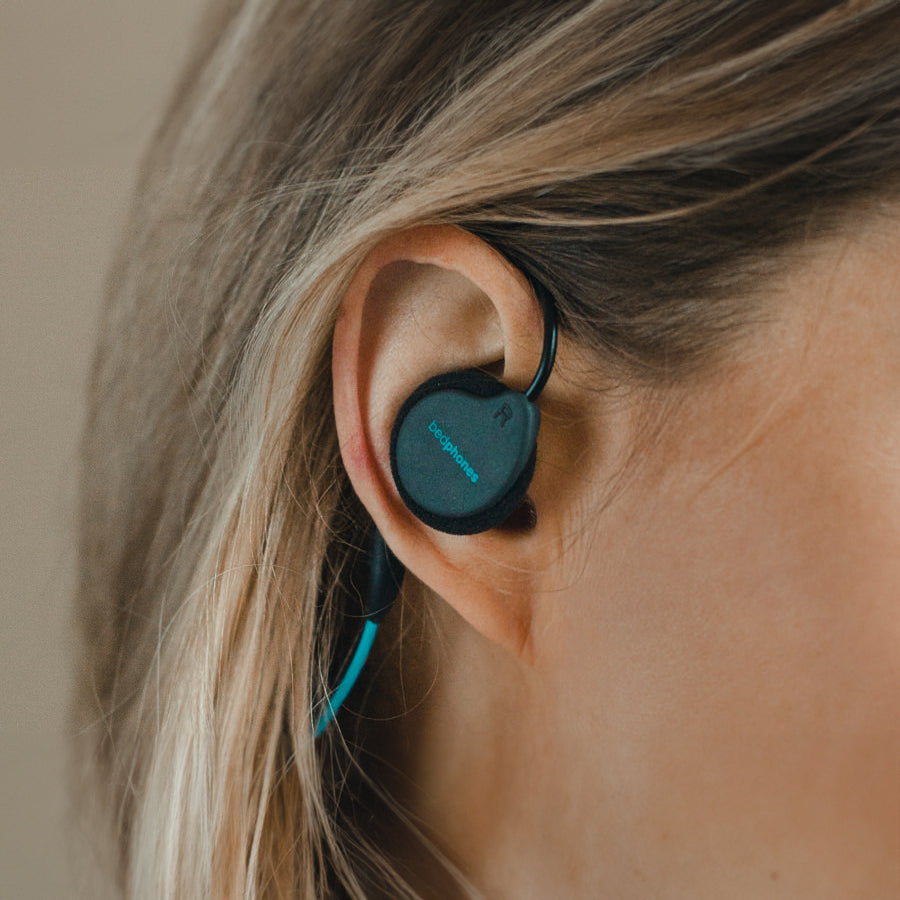
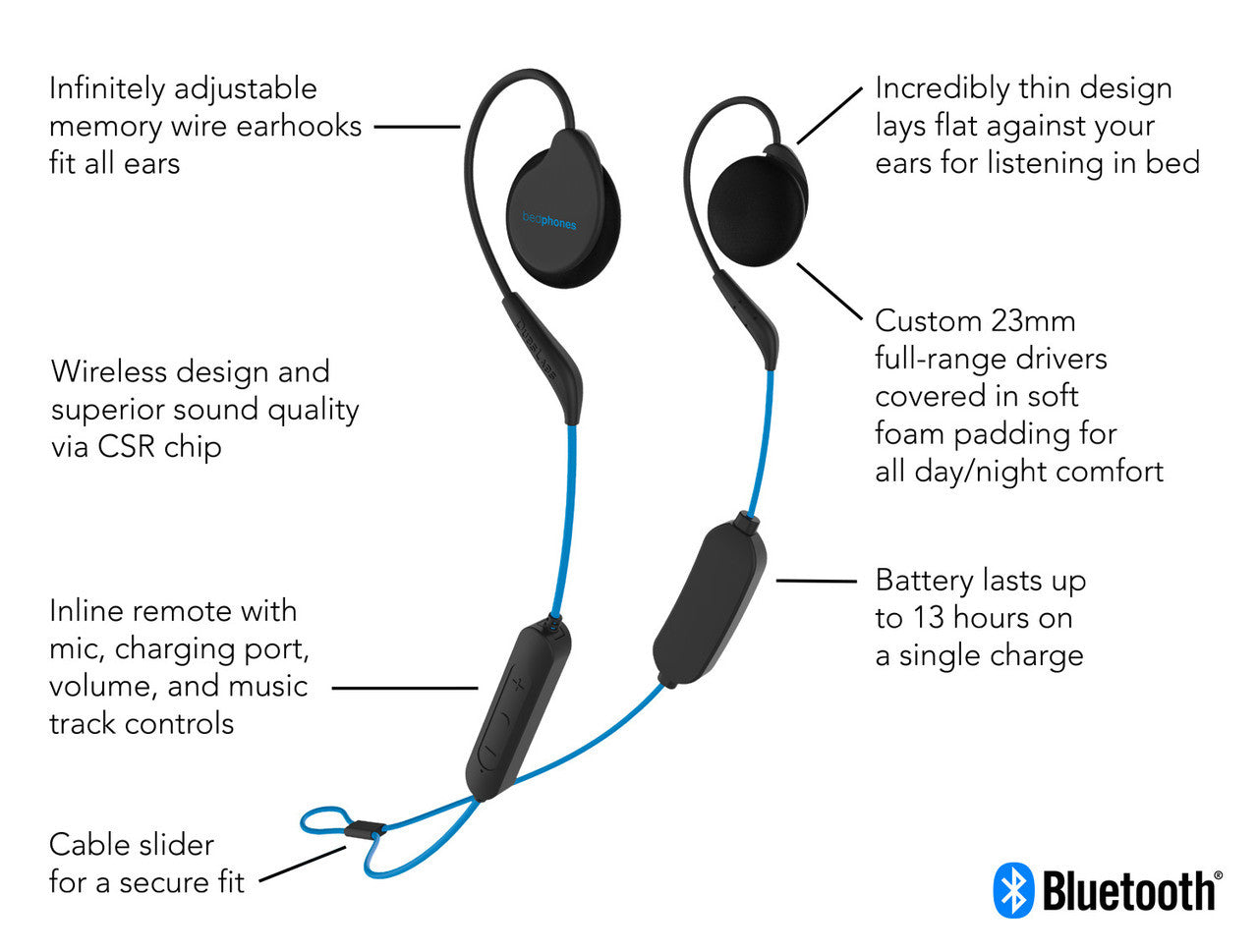
- Unmatched Comfort: They are less than a quarter-inch thick. Their on-ear design and soft foam padding mean you can lie comfortably on your side without any painful pressure.
- Secure Fit: An adjustable memory wire hook makes sure they stay put, even if you toss and turn. No more waking up to hunt for a lost earbud.
- Sound Management: They let you create a personal sound bubble to drown out intrusive thoughts, but they don't completely isolate you from important sounds like a smoke alarm or a child calling out.
This ability to comfortably immerse yourself in calming audio provides a powerful escape from anxious thought loops. Instead of fighting your worries, you're simply giving your brain a more peaceful path to follow. Many companies, including DubsLabs, offer risk-free trials because they get it—experiencing the comfort for yourself is the only way to know if it's the right fit.
By combining an optimized environment with targeted tools, you can transform your bedroom from a place of dread into a true haven for sleep.
What to Do When Anxiety Wakes You Up at 3 AM
It's a uniquely awful feeling, isn't it? That sudden, heart-pounding jolt from sleep at 3 AM. One moment you're out, the next your mind is screaming and your body is on high alert. When this happens, you need a specific, in-the-moment toolkit to gently coax your nervous system back down from the ceiling.
The trick is not to fight the anxiety. That almost always adds more fuel to the fire. Instead, the goal is to acknowledge it and use simple, physical techniques to signal to your body that you're safe and it's okay to stand down.
Use Your Breath as an Anchor
When anxiety spikes, your breathing gets shallow and quick. Deliberately slowing it down is one of the fastest ways to tell your body's relaxation response to kick in. The 4-7-8 breathing method is brilliant for this.
Here’s how it works:
- Let all the air out of your lungs with a whooshing sound.
- Close your mouth and inhale quietly through your nose for a count of four.
- Hold that breath for a count of seven.
- Exhale slowly and completely through your mouth for a count of eight.
Do this cycle three to five times. That long exhale is the magic ingredient; it stimulates the vagus nerve, which helps slow your heart rate and lower your blood pressure. It's much harder for your mind to stay in a state of panic when your body is physically calming down.
This isn't just a "you" problem. Anxiety-induced sleep loss is a massive global issue. A major analysis found the worldwide weighted prevalence is 11.35%, but that number swings wildly from 6.56% in Southeast Asia to 15.58% in Africa, which really shows how much our environment and culture can impact our sleep. You can discover more insights about these regional differences in sleep anxiety on frontiersin.org.
Find a Sensory Anchor
A racing mind loves to pull you into a vortex of what-ifs and should-haves. To break free, you need to ground yourself in the here and now. A sensory anchor is just a fancy term for focusing intensely on a simple physical sensation.
Don't overthink it. Just pick one thing and put all your attention there:
- Touch: How does the cool, smooth texture of your pillowcase feel against your cheek? What about the weight of your blanket on your legs?
- Sound: Can you hear the faint hum of the refrigerator? The gentle whir of a fan?
- Feeling: Just notice the physical sensation of your chest rising and falling as you breathe.
By focusing on a neutral, physical sensation, you give your brain a new, less stressful job. It yanks your attention away from those spiraling thoughts and anchors you in the present moment—which is almost always safer than the scary scenarios your brain is cooking up.
The goal isn't to stop thinking. It's to give your mind a quieter, calmer place to focus. Shifting attention from internal chaos to an external sensation can break the anxiety loop.
Obey the 20-Minute Rule
If you've been lying in bed for what feels like an eternity, wrestling with your thoughts and failing to fall back asleep, it's time for a change of scenery. Tossing and turning only reinforces the mental connection between "my bed" and "frustration."
The rule is simple: if you haven't drifted off after about 20 minutes, get up.
Go to another dimly lit room and do something quiet and frankly, a little boring. Read a dry book (no thrillers!), listen to some soft instrumental music, or do some gentle stretches. Just stay away from all screens.
Only head back to bed when you feel genuinely sleepy again. This simple act helps re-train your brain to see your bed as a place for sleep, not for worry. For those who find this middle-of-the-night waking is becoming a habit, you might find it helpful to stop waking up at 3am with these five tips.
Knowing When to Seek Professional Support
The tools and routines we’ve covered can be life-changing for getting a handle on sleep anxiety. Truly. But it's just as important to recognize when you're fighting a battle that's too big to win on your own.
Reaching out for professional help isn't a sign of failure. It’s a smart, proactive step toward reclaiming your nights—and your days. Sometimes, despite your best efforts, the anxiety just sticks around. If you feel like you’re treading water or even losing ground, that's a clear signal it might be time to talk to someone.
Clear Signs It’s Time for More Help
So, how do you know if you've crossed the line from a rough patch into territory that requires a professional? There's no single magic answer, but a few red flags strongly suggest there’s a deeper issue at play.
Keep an eye out for these indicators:
- Duration and Severity: Your insomnia or intense sleep anxiety has been a constant struggle for more than a few weeks. It's starting to seriously mess with your mood, your work, and your relationships.
- Daytime Disruption: The anxiety is no longer just a nighttime problem. You feel on edge, worried, or overwhelmed for a good chunk of your day.
- Feeling Overwhelmed: You’ve tried a bunch of different strategies, but you still feel totally hopeless or trapped in that awful cycle of sleeplessness and worry.
- Panic Symptoms: You're having nighttime panic attacks. Think racing heart, shortness of breath, or a sudden, intense feeling of dread that jolts you awake.
If any of that sounds painfully familiar, it's probably a good idea to consider getting some professional backup.
Recognizing you need help is a strength, not a weakness. It means you're tuned in to what you need and you're ready to take the next powerful step toward feeling better.
Who to Talk To and What to Expect
Diving into the world of mental health support can feel like a huge, intimidating task, but it's more straightforward than you might think. A great first stop is always your primary care doctor. They can help rule out any underlying medical issues that could be contributing to your sleep problems and give you a referral to a specialist.
From there, you’ll likely connect with:
- A Therapist or Counselor: Look for professionals who specialize in Cognitive Behavioral Therapy for Insomnia (CBT-I). It's widely considered the gold-standard treatment for insomnia because it directly targets and changes the thoughts and behaviors that are wrecking your sleep.
- A Psychiatrist: This is a medical doctor who can figure out if medication might be a useful part of your treatment plan. This is especially true if you're also dealing with a significant anxiety disorder or depression alongside your sleep issues.
Making that first call is often the hardest part. Just remember, these professionals are trained to offer compassionate, non-judgmental support to help you finally get some lasting relief.
Your Questions About Sleep Anxiety Answered
Even with a solid plan in place, you're bound to have questions pop up along the way. Let's tackle some of the most common ones I hear about dealing with sleep anxiety. The goal here is to give you clear, direct answers to help you finally get some rest.
Can Sleep Anxiety Be Cured Completely?
I get this one a lot. While "cured" might not be the perfect word, I can tell you that sleep anxiety is highly manageable. Think of it less like a disease to be cured and more like a skill to be learned.
Through consistent practice of the cognitive strategies we've talked about, making some key lifestyle adjustments, and really sticking to a healthy sleep routine, most people can dramatically reduce its power—or even get to a point where it's a total non-issue.
The real goal is to build a toolkit of coping mechanisms. That way, when those anxious feelings do bubble up (and they might from time to time), you have the confidence and the skills to handle them without letting them completely derail your night. For many, it truly does become a thing of the past.
What If I Have Anxiety About Using Sleep Products?
This is a totally valid concern, especially if you’re sensitive to new things or worry about becoming dependent on a gadget to fall asleep. My advice is always the same: go slow. A gentle, gradual introduction is key.
- Weighted Blankets: Don't just throw it on and try to sleep for eight hours. Start by draping it over your lap for just 15-20 minutes while you're reading on the couch during your wind-down routine. Let your body get used to that unique sensation of deep pressure stimulation.
- Audio Products: For something like our slim Bedphones, start with the volume super low. Put on something familiar and comforting—a podcast you've heard before or some gentle music—for just a short time. The goal is a gentle distraction, not a sensory overload.
A lot of companies, including us, get this. That's why many offer risk-free trials. It takes the pressure off and lets you test out a product in your own home to see if it genuinely helps you.
How Can I Help My Child Who Has Sleep Anxiety?
Helping a little one navigate their own sleep anxiety requires a ton of patience, calm, and consistency. The single most important thing is to establish a predictable and soothing bedtime routine they can count on every single night. That consistency builds a powerful sense of security.
It's also crucial to validate their fears without making them bigger. Saying something like, "I know you feel scared right now, and I'm here to help you feel safe," is so much more effective than dismissing their worries with, "There's nothing to be afraid of."
You can also bring in some helpful tools, like a child-sized weighted blanket to provide that comforting, hug-like pressure. Listening to quiet audiobooks or calming stories on comfortable headphones can also work wonders, giving them something positive and engaging to focus on instead of their anxious thoughts.
If the anxiety continues or seems to be getting worse, don't hesitate to talk to a pediatrician or a child therapist. They can offer more targeted support.
At DubsLabs, we know firsthand that a quiet mind is the bedrock of a good night's sleep. That’s why we created products like Bedphones and our weighted blankets—to provide the physical comfort and mental calm you need to push back against sleep anxiety. Discover how our tools can become a key part of your journey to better rest.
Explore our sleep solutions at https://www.dubslabs.com.