Waking up with a stiff, aching neck is a miserable way to start the day. It’s a frustrating cycle that turns what should be a restful night into the very source of your chronic pain.
This isn’t just about feeling a little groggy; it’s about starting your day with a physical handicap that kills your mood, tanks your productivity, and just plain hurts. For millions of us, the root cause is something simple: poor sleep posture. That standard, fluffy pillow you're using? It's likely forcing your neck into an unnatural position for hours on end.
Your Path to Waking Up Pain-Free
Think of the natural C-shaped curve of your neck like a finely engineered suspension bridge. When the support cables are perfectly balanced, the structure is strong and stable. But if those cables are strained or uneven, the whole bridge suffers.
A traditional pillow often acts like a faulty cable. It might be too high, pushing your head up, or too flat, letting it drop. Either way, it messes with that crucial C-curve, leading to a cascade of problems:
- Muscle Strain: Your neck muscles have to work overtime all night long just to try and compensate.
- Joint Pressure: The small, delicate facet joints in your cervical spine get compressed and irritated.
- Nerve Irritation: This misalignment can pinch or put pressure on sensitive nerves, leading to sharp pain, numbness, or tingling.
A cervical pillow, on the other hand, is specifically designed to be that set of perfectly calibrated support cables. It cradles the unique contour of your neck, maintaining a healthy, neutral alignment all night long.

Why Is Everyone Talking About Cervical Support?
The problem of neck pain is so widespread that it’s sparked a huge shift toward more ergonomic sleep solutions. It’s not just you. The global market for cervical pillows was valued at a massive USD 4.03 billion in 2023 and is expected to hit USD 6.0 billion by 2032.
This boom isn't just a fad; it reflects a growing public awareness of just how critical spinal health is to our overall well-being. People are finally connecting the dots between sleep quality and daily life, and the market is responding.
To give you a head start, here’s a quick rundown of what makes these pillows so effective.
Cervical Pillow Quick Guide Key Takeaways
| Key Feature | How It Relieves Neck Pain | Best For |
|---|---|---|
| Contoured Shape | Cradles the natural curve of the cervical spine, preventing awkward angles. | Side and back sleepers needing precise alignment. |
| Firm Support | Keeps the head and neck stable, reducing muscle strain from sinking or shifting. | Individuals with chronic stiffness or disc issues. |
| Memory Foam | Molds to your unique shape, distributing pressure evenly across the head and neck. | Sleepers who need personalized comfort and support. |
| Central Dip | Allows the head to rest comfortably while supporting the neck, promoting neutral posture. | Back sleepers who want to avoid neck flexion. |
| Raised Sides | Provides a supportive surface for the head when sleeping on the side, keeping the spine straight. | Side sleepers who need to maintain shoulder-neck alignment. |
This table shows how a cervical pillow is more than just a place to rest your head—it’s an engineered tool for better health.
This guide will walk you through everything you need to know to choose the right one for you and finally break that painful morning cycle. To get the most out of it, it helps to understand the science of sleep and comfort and how it all connects.
The goal is simple: transform your sleep from a source of pain into a period of genuine recovery. A cervical pillow isn't just a comfort item; it's a therapeutic tool designed to support your body's natural structure, allowing you to wake up feeling refreshed and ready for the day. If you're constantly waking up exhausted despite getting enough hours, our guide on why you might be waking up tired can offer additional insights.
How Cervical Pillows Restore Spinal Alignment
To get why cervical pillows can feel like magic for a sore neck, we first need to look at what’s going wrong with your standard, fluffy pillow.
Your neck, known as the cervical spine, has a natural and gentle C-shaped curve. Think of it as your body's built-in shock absorber. This curve is crucial for maintaining flexibility, absorbing impact, and keeping your whole spine happy.
But when you lay your head down on a regular pillow, that delicate curve often gets pushed into an awkward position. If the pillow's too high, it shoves your neck forward. Too low, and your head tilts back. Either way, you're spending hours with your spine out of whack.
Imagine your spine is a chain. If you bend one link—your neck—out of shape all night long, it sends strain rippling down the rest of the chain. This is a classic recipe for morning stiffness, stubborn muscle knots, and that nagging, chronic neck pain.
The Mechanics of Ergonomic Support
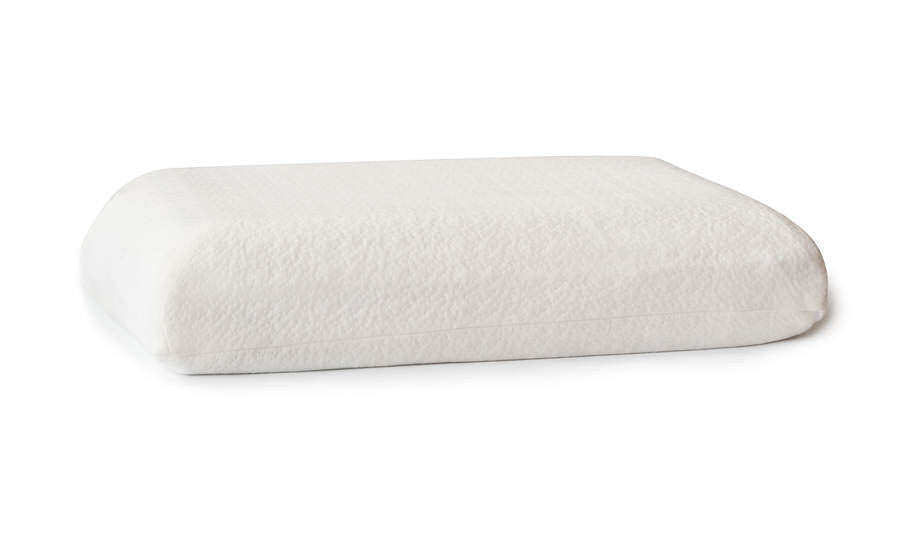
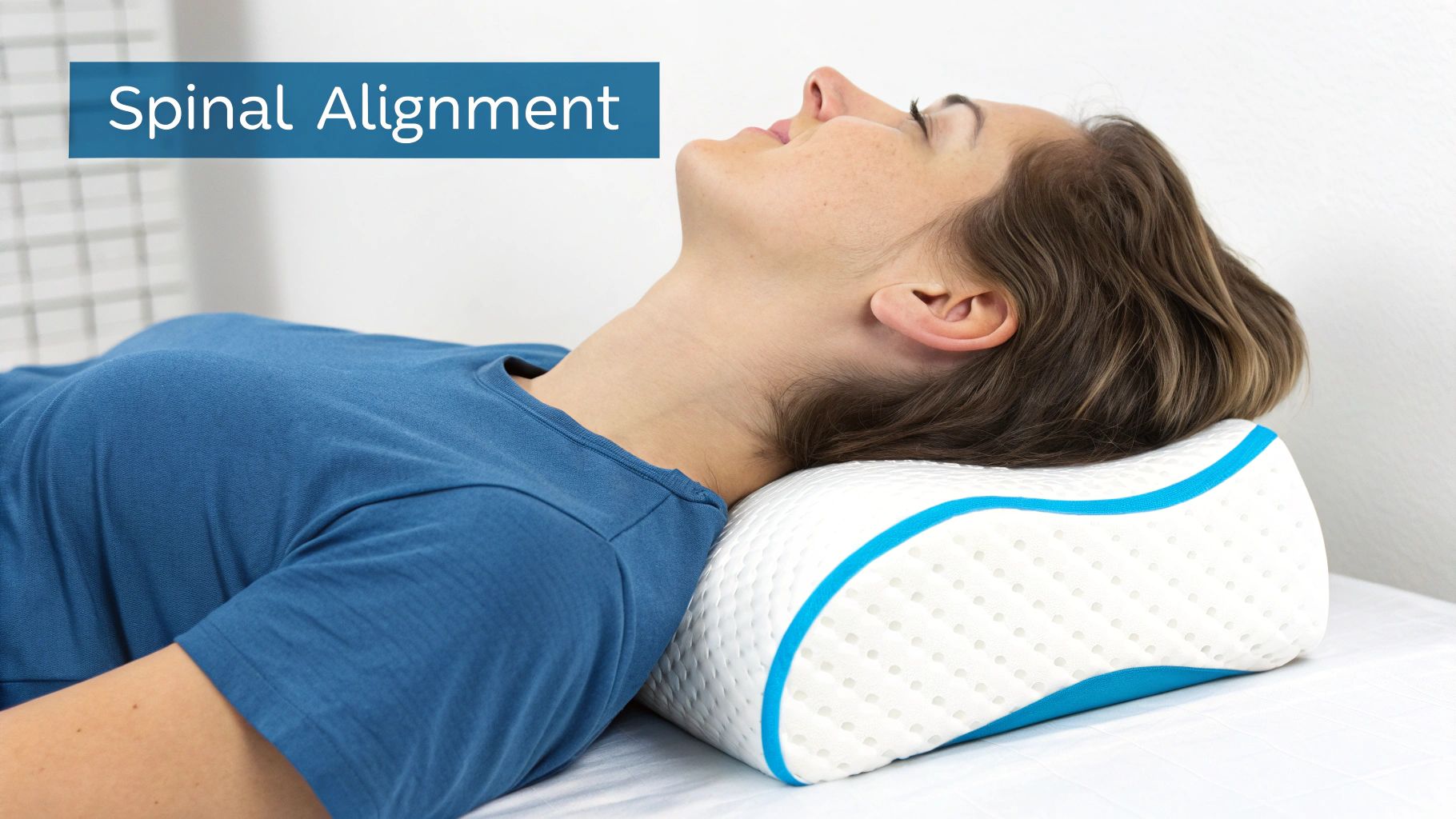
This is where cervical pillows come in. They are engineered specifically to counteract this problem by providing targeted, ergonomic support. Unlike a one-size-fits-all pillow that just squishes down, a cervical pillow is intentionally shaped to cradle your head and neck, preserving that all-important C-curve.
Here’s a quick breakdown of how the design gets the job done:
- Contoured Neck Roll: This is the raised edge that fits perfectly into the space under your neck. It gives direct support right where your cervical curve needs it most.
- Central Depression: You'll notice a dip in the middle. This area lets your head rest comfortably without being propped up too high, keeping it perfectly in line with the rest of your spine.
- Side Sleeper Supports: Many pillows also have raised sides. These are designed to fill that critical gap between your ear and the mattress when you roll onto your side, keeping your spine straight instead of slumped.
It's this combination of features that stops your neck from being left hanging or forced into a weird angle. The pillow simply holds your head and neck in their most natural, relaxed state, allowing your muscles and ligaments to finally get a real break and recover overnight.
Reducing Pressure and Improving Circulation
When your spine is out of alignment, it’s not just your bones taking the hit. The muscles in your neck and shoulders tense up, trying to compensate and hold your head in place. This constant, low-level effort restricts blood flow, which leads to inflammation and that familiar deep, aching pain.
By holding your spine in proper alignment, a cervical pillow helps those overworked muscles completely relax.
This relaxation does more than just stop you from feeling sore. It actually improves blood circulation to the surrounding tissues. Better blood flow brings more oxygen and nutrients to the area, helping repair tiny muscle tears and flush out the waste products that make you feel stiff.
The ripple effect can be pretty profound. Many people find they not only have less neck pain but also fewer tension headaches and less shoulder discomfort. The right support takes the pressure off sensitive nerve roots that exit the cervical spine—the very same nerves that can cause pain or numbness to radiate down your arm.
To see how clinicians objectively measure improvements in neck mobility from things like pillow changes, you can learn more about How to Measure Range of Motion Accurately.
In short, a cervical pillow creates the ideal environment for your neck to truly rest and heal. It's less about fluffy comfort and more about providing structural integrity, making sure your sleep is genuinely restorative instead of being the source of your pain.
Choosing the Right Cervical Pillow Material
The shape of a cervical pillow is only half the story. What’s inside—the fill material—is what really dictates the feel, support, and overall performance you'll get. Think of it like buying a new mattress; the components tucked away inside are what make or break your comfort night after night. Getting this part right is crucial for finding a pillow that not only eases your neck pain but actually feels good to sleep on.
Every material offers a completely different experience. From the slow, deep hug of memory foam to the bouncy, responsive lift of latex, the right fill can make all the difference. Let's dig into the most common options so you can find your perfect match.
Memory Foam: The Contouring Champion
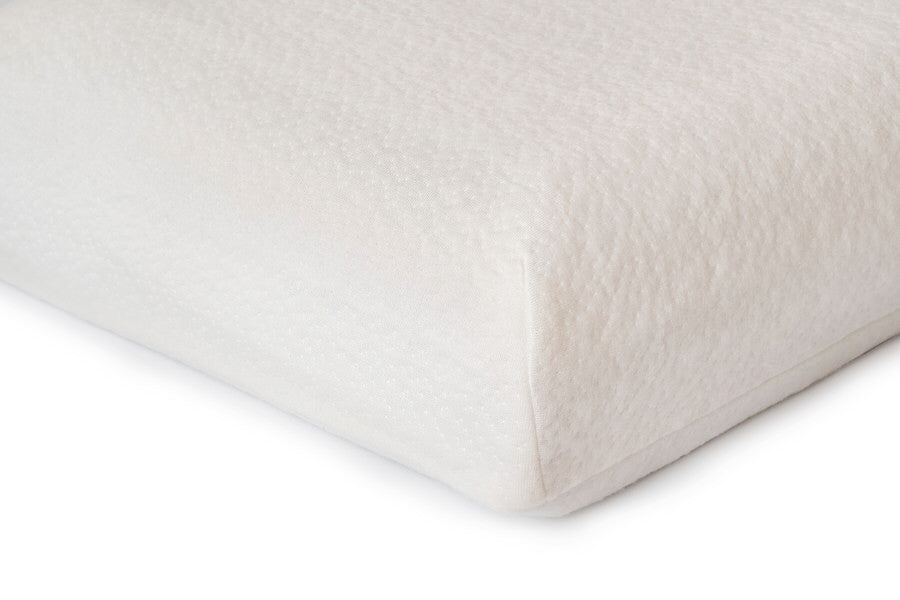
There's a good reason why memory foam is the king of the cervical pillow world. Made from something called viscoelastic polyurethane, it’s a smart material that reacts to your body heat and pressure. This lets it soften up and mold perfectly to the unique shape of your head and neck, giving you a personalized fit that feels like it was made just for you.
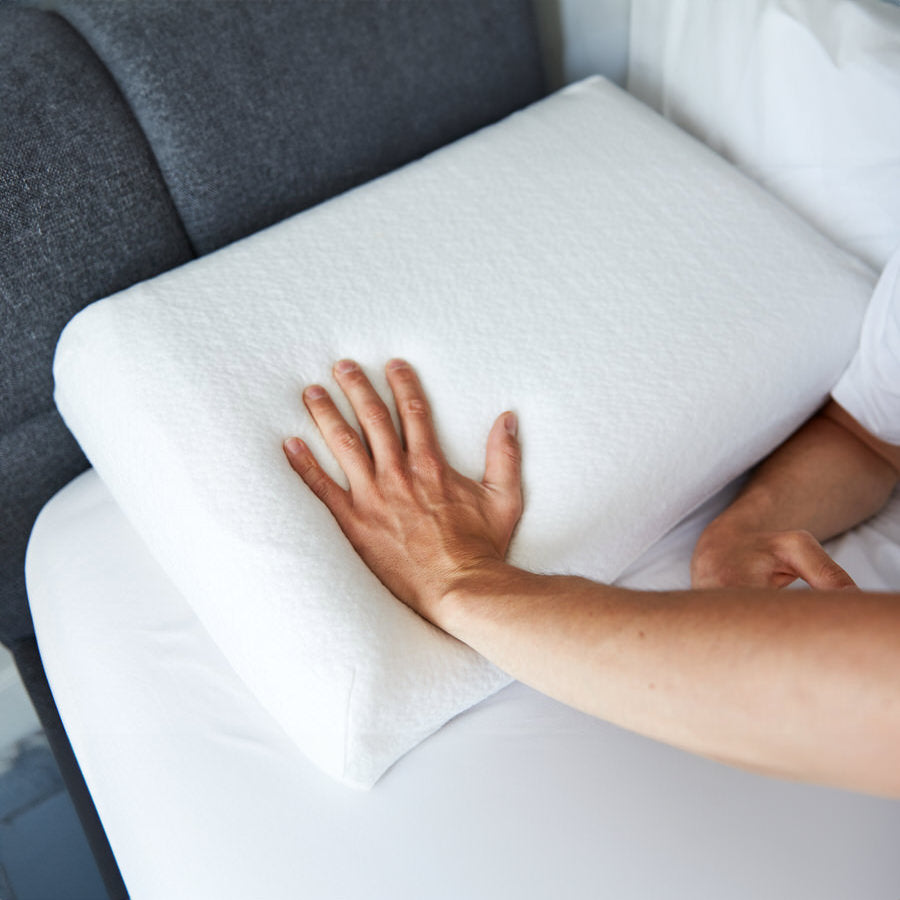
Imagine pressing your hand into a piece of soft dough. It leaves a perfect impression that holds its shape for a moment before slowly bouncing back. That’s pretty much how memory foam works. It creates a cradling sensation that spreads your weight out evenly, getting rid of those painful pressure points. This deep contouring is its secret weapon against neck pain—it fills the gap under your neck completely, so you’re supported all night long.
This is exactly why memory foam pillows are such a dominant force. They're on track to command an estimated 31.8% market share by 2025, leading the pack because of their top-notch ergonomic support. With over 35% of Americans getting less than the recommended seven hours of sleep, effective solutions like these are more in demand than ever. You can learn more about how memory foam helps improve sleep in this article about its benefits.
You'll generally find two main types:
- Solid Memory Foam: This is a single, molded block of foam, often in a wave-like contour. It delivers consistent, firm support and holds its shape without ever needing to be fluffed.
- Shredded Memory Foam: These pillows are stuffed with tiny, torn pieces of memory foam. Their big advantage is adjustability; you can usually add or remove the filling to get the height and firmness just right.
Latex: The Responsive Supporter
If memory foam gives you that slow, sinking-in feeling, natural latex offers a buoyant, almost weightless lift. Harvested from rubber trees, latex is an incredibly durable and eco-friendly material known for its springy, responsive feel. Instead of molding to you, it gently pushes back to keep you supported.
Think about the difference between a memory foam mattress topper and a bouncy, supportive yoga mat. Latex has that resilient quality, keeping your head and neck perfectly elevated without that "stuck" feeling some people get from memory foam. It also has an open-cell structure, making it one of the most breathable pillow materials out there—a huge bonus if you tend to sleep hot.
Key Takeaway: Choose latex if you want instant, responsive support and superior cooling. It’s excellent for sleepers who change positions frequently and prefer a more buoyant feel over a slow-sinking one.
Buckwheat Hulls: The Natural and Adjustable Option
For anyone looking for something completely different and all-natural, buckwheat hull pillows are a fantastic choice. These pillows are filled with the outer casings of buckwheat seeds and have been used for centuries in Asia for their firm, breathable, and incredibly adjustable support.
The little hulls interlock to create a solid but malleable surface that conforms precisely to your head and neck. Picture a beanbag that’s firm enough to hold its shape perfectly. You can shift, add, or remove the hulls to create the ideal contour for your neck, giving you customized support that won’t flatten out by morning. They also allow for amazing air circulation, which helps keep you cool and comfortable.
The only real downsides are the noise—they can make a soft rustling sound when you move—and some people find them a bit too firm at first. But for those who prioritize natural materials and ultimate adjustability, they are an amazing tool in the fight against neck pain.
Comparison of Cervical Pillow Materials
To make things a bit clearer, let's break down how these materials stack up against each other. Each one has its own personality, and what works for one person might not be the best fit for another.
| Material | Key Characteristics | Best for Sleepers Who... | Average Lifespan |
|---|---|---|---|
| Memory Foam | Contours deeply to relieve pressure points; slow response feel. | Need consistent, cradling support for chronic neck pain and prefer a "sinking in" sensation. | 2-3 years |
| Latex | Bouncy, responsive, and sleeps cool; naturally hypoallergenic. | Change positions often, sleep hot, and prefer a buoyant, "on top of the pillow" feel. | 3-5 years |
| Buckwheat Hulls | Firm, highly adjustable, and very breathable; all-natural. | Need customizable firmness and height, prefer natural materials, and don't mind a little noise. | 5-10+ years |
Ultimately, the best material comes down to what you find most comfortable. Think about whether you prefer a pillow that hugs you, one that lifts you, or one that you can shape yourself.
Matching a Cervical Pillow to Your Sleep Style
We've talked materials, which is a huge step, but now we get to the most personal part of the puzzle. Your dominant sleeping position is the single most important factor in finding a cervical pillow that will actually do its job and relieve your neck pain. A pillow that’s a dream for a back sleeper could be a total nightmare for someone who sleeps on their side.
Think of it like this: your goal is to keep your spine in a perfectly straight, neutral line all the way from your head down to your hips. The pillow's only job is to fill the specific amount of space created by your sleeping posture to maintain that line.
Getting this right is the difference between waking up refreshed and waking up with that familiar, dreaded crick in your neck.
Side Sleepers: Finding the Right Height
If you spend most of the night on your side, your biggest challenge is bridging the significant gap between your ear and the mattress. Your shoulders create a lot of empty space that needs to be filled correctly to stop your head from collapsing downward, which strains your neck muscles all night long.
For side sleepers, the loft, or height, of the pillow is everything. A pillow that’s too low will cause your neck to bend sideways; one that is too high will prop your head up at an awkward, uncomfortable angle.
Here’s how to find the right fit:
- Measure Your Shoulder Width: A simple trick to estimate the loft you need is to measure the distance from the base of your neck to the outer edge of your shoulder. This gives you a great baseline for the pillow height required to keep your spine perfectly level.
- Look for Firmness: Side sleepers generally need a firmer pillow that can handle the weight of their head without collapsing as the night goes on. Materials like solid memory foam or latex are excellent choices because they really hold their shape and support.
- Consider Contours: Many cervical pillows are designed with raised sides specifically for this position. These give your head a stable platform and ensure you get consistent support.
Finding the right support is becoming more critical as people realize how much posture impacts their overall health. This growing awareness is a key driver for the cervical pillows market, which was valued at USD 15.78 billion in 2024 and is projected to hit USD 26.70 billion by 2034. As more people connect poor sleeping posture to their neck pain, they are wisely investing in better pillows for relief. You can discover more insights about this growing market trend at ExpertMarketResearch.com.
For a deeper dive into materials that are perfect for this sleep style, you might want to check out our guide on the best memory foam pillows for side sleepers.
Back Sleepers: Protecting the Natural Curve
Back sleepers face a different kind of challenge. Instead of filling a large gap, their main goal is to support the natural C-shaped curve of the cervical spine without pushing the head too far forward. The wrong pillow can easily force your chin toward your chest—a position that strains the very muscles you’re trying to relax.
The best cervical pillow for a back sleeper usually has a lower profile in the middle, with a supportive roll or contour along the bottom edge.
This design cradles your head in a central depression while the raised edge tucks perfectly under your neck. It provides support exactly where it's needed, maintaining that healthy alignment and allowing your neck and shoulder muscles to finally, fully release.
A pillow that's too thick or puffy is a back sleeper's worst enemy. It will flex your neck forward, creating tension that can lead to morning headaches and stiffness. You'll want to look for thinner pillows that offer targeted cervical support.
Stomach Sleepers: Minimizing the Damage
Let’s be direct here: sleeping on your stomach is the most stressful position you can put your neck and spine in. It forces you to twist your head to one side for hours on end, which puts a tremendous amount of torque on your cervical vertebrae. Over time, this can lead to chronic pain, disc issues, and serious muscle imbalances.
While the best advice is always to try and train yourself to sleep on your back or side, we all know that's easier said than done. If you just can't break the habit, the goal becomes damage control.
This means using an ultra-thin pillow—or even no pillow at all for your head. The flatter the surface, the less your neck is forced into that extreme, twisted angle. Some stomach sleepers find that placing a thin pillow under their hips and stomach can help keep their spine in a more neutral alignment, which takes some of the pressure off the lower back.
The flowchart below can help you zero in on the right material based on your temperature and feel preferences.
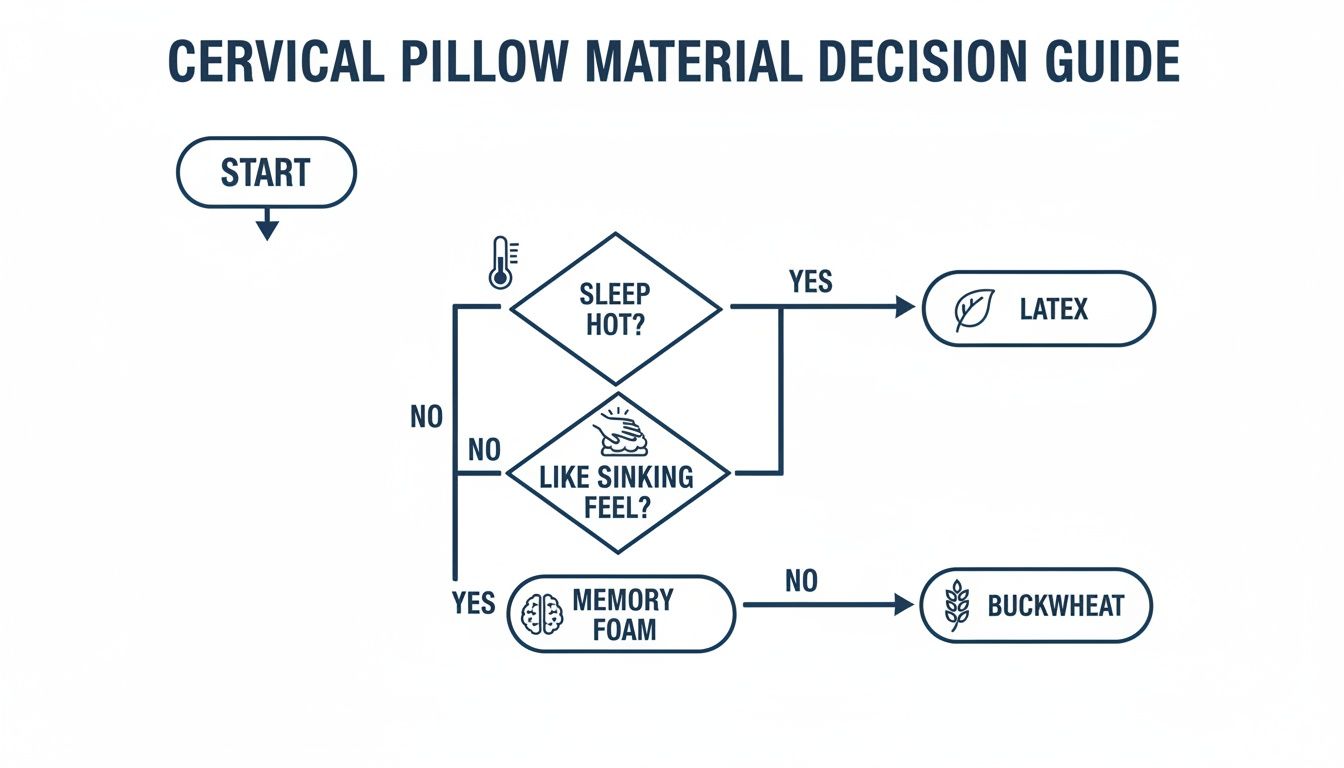
As this decision tree shows, personal preference plays a huge role. If you sleep hot, latex is a fantastic choice, but if you love that classic sinking feel, memory foam is the clear winner.
Tips for Adjusting to Your New Pillow
Making the switch to a cervical pillow isn't just about getting a new place to rest your head. It's more like retraining your neck and shoulder muscles to hold a healthier posture while you sleep. This means there’s a short but crucial adjustment period as your body unlearns old, unhelpful habits.
Think of it like getting a new pair of supportive shoes after you've spent years in worn-out sneakers. That new arch support might feel a little strange, maybe even a bit uncomfortable at first. Your body simply needs time to adapt to the proper alignment it's been missing.
The very same idea applies here. Your muscles have gotten used to compensating for poor support from your old pillow. Now, they need to learn to relax and trust the new structure. This "break-in" period is actually a great sign that the pillow is doing its job and correcting your alignment.
Most people find they're fully adjusted to their new pillow within 3 to 14 days. It's totally normal for things to feel a little different for the first few nights.
Positioning Yourself for Success
How you actually place your head on the pillow is everything. Unlike a standard pillow where you can just flop down anywhere, a cervical pillow is a specific tool that needs to be used correctly. Getting the positioning right ensures those special contours are supporting your spine just as they were designed to.
Follow these simple steps to get it right:
-
For Back Sleepers: Lie down so the taller, more supportive edge tucks right into the natural curve of your neck. Your head should settle comfortably into the dip in the center. This keeps your spine in a nice, straight, neutral line.
-
For Side Sleepers: When you roll onto your side, your head should move to one of the raised "wings" or side sections of the pillow. This part is intentionally higher to perfectly fill the space between your ear and the mattress, which stops your head from tilting down and straining your neck.
-
Give It a Test Run: Don't be afraid to shift your position slightly until you feel your neck is supported but still relaxed. The goal is to feel cradled, not forced into some awkward angle.
If you're still feeling discomfort after a few nights, it's possible the pillow might be the wrong height or firmness for your specific body type and sleep style.
Caring for Your Investment
A little bit of care will go a long way in extending the life of your pillow and making sure it keeps providing that amazing support. Different materials need different cleaning methods, so always start by checking the manufacturer’s instructions.
- Memory Foam: You can't just toss these in the washing machine. Instead, spot-clean any stains with a bit of mild detergent and water, then let it air dry completely.
- Latex: Much like memory foam, latex should only be spot-cleaned. Keep it out of direct sunlight, too, as that can cause the material to break down over time.
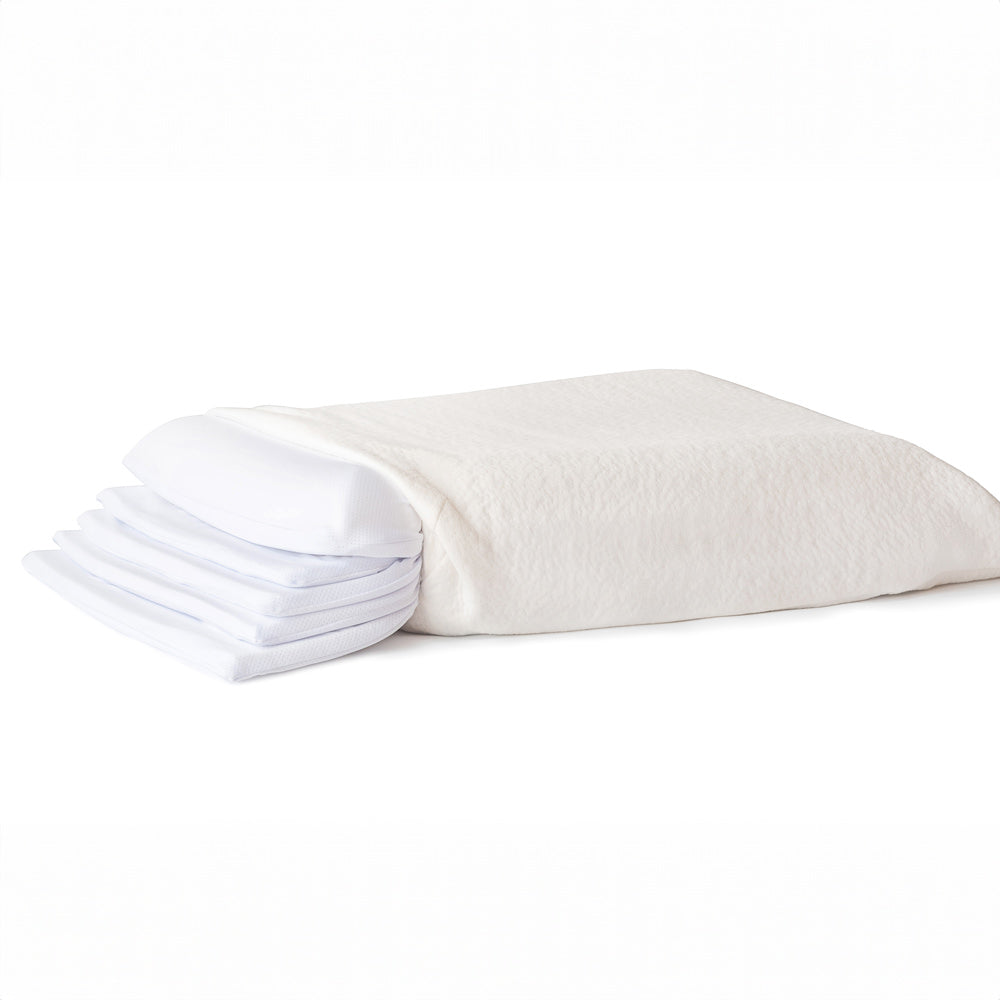
- Pillowcases: Always, always use a pillowcase. It’s your first line of defense against dirt, oils, and sweat. Just toss it in the wash weekly with your other bedding to keep things fresh and hygienic.
With the right adjustment plan and a simple care routine, your cervical pillow will quickly become your best friend for waking up feeling refreshed and pain-free.
Answering Your Cervical Pillow Questions
Even after doing all the research, you probably still have a few questions about making the switch to a cervical pillow. That’s completely normal. Changing something as personal as where you rest your head every night is a big deal, so let's clear up some of the most common questions.
How Long Does It Take to Get Used to a Cervical Pillow?
Most people take anywhere from 3 to 14 days to fully adjust to a new cervical pillow. Think of it like breaking in a new pair of supportive shoes—your muscles and ligaments have gotten used to an old, often unhelpful, position. They need a little time to adapt to a healthier alignment.
To make the transition smoother, try using the pillow for just an hour or two the first night, maybe while reading in bed. You can gradually increase the time each night as your neck and shoulders get more comfortable with the new kind of support.
Can a Cervical Pillow Make My Neck Pain Worse at First?
It's possible to feel some mild stiffness or a bit of new discomfort during the first few nights. Don't panic! This is often just a sign that your muscles are adapting to being held in a proper, neutral posture, which can feel strange and new.
However, that sensation should be mild and go away quickly. If you experience any sharp, persistent, or worsening pain, the pillow is probably not the right fit for your body. It could be too high, too firm, or just the wrong shape for how you sleep.
Important Note: A pillow is a tool for better posture, not a miracle cure. While the right pillow can work wonders for pain caused by poor sleep alignment, it's never a substitute for professional medical advice.
How Do I Know If My Cervical Pillow Is the Right Height?
The whole goal is to keep your spine in a neutral, straight line. Here’s a quick way to check if you've got it right:
- For Side Sleepers: Lie down and have a partner or friend look at your spine from behind. It should form a perfectly straight, horizontal line from the base of your skull all the way down your back. If your head is tilting up or down, the pillow's height isn't right.
- For Back Sleepers: Your neck should feel comfortably cradled in its natural C-shaped curve. A major red flag is your chin being pushed down towards your chest or, conversely, tilting too far back. Both positions create a lot of strain.
When Should I See a Doctor for My Neck Pain?
While cervical pillows for neck pain are fantastic for tackling issues from muscle strain or bad posture, they can't fix more serious underlying conditions. You should definitely check in with a doctor or physical therapist if your neck pain:
- Is severe or just won't go away after several weeks.
- Shoots down into your arms or legs.
- Comes with persistent headaches, numbness, tingling, or weakness.
These kinds of symptoms could point to a condition that needs a professional diagnosis and a proper treatment plan. Think of your pillow as one part of your wellness strategy, not the only solution.
At DubsLabs, we understand that restorative sleep is the foundation of a healthy life. Our carefully designed sleep products, from adjustable memory pillows to calming weighted blankets, are created to help you wake up feeling your best. Explore our collection and start your journey to pain-free mornings today.
Find your perfect sleep solution at https://www.dubslabs.com.