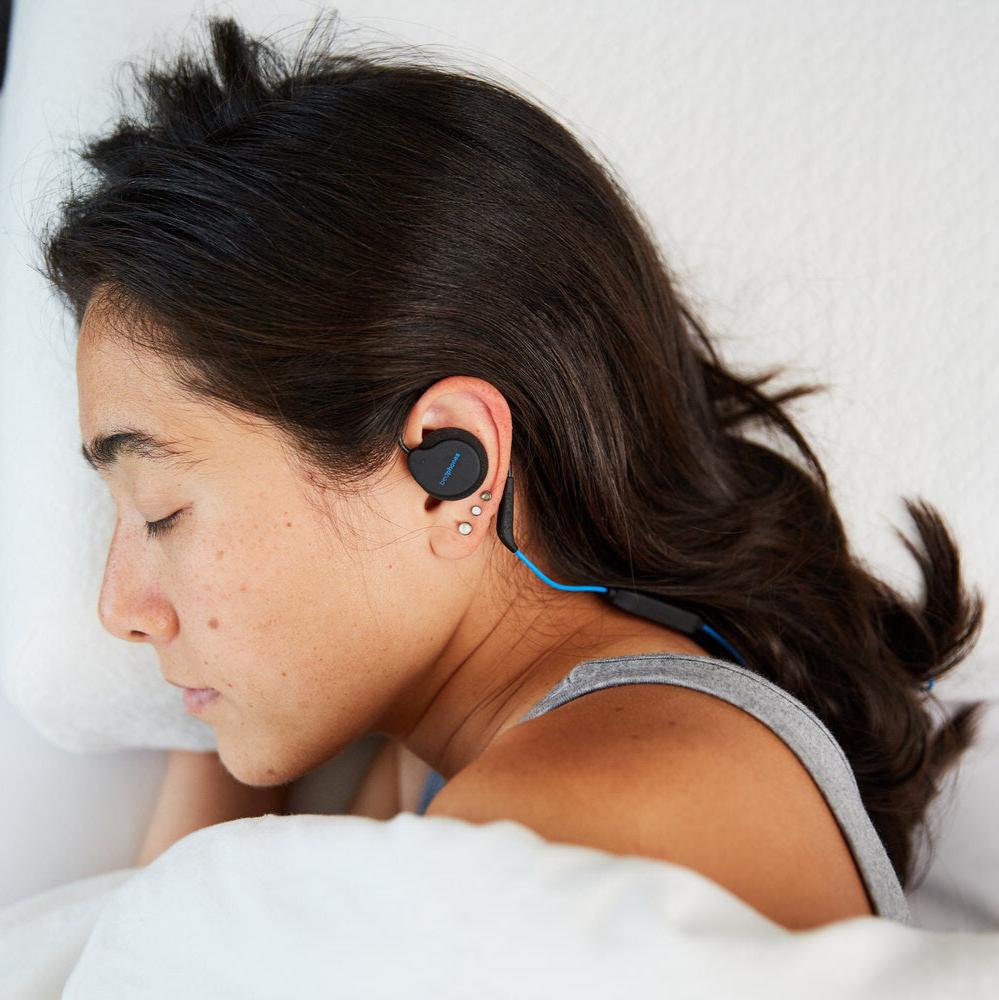
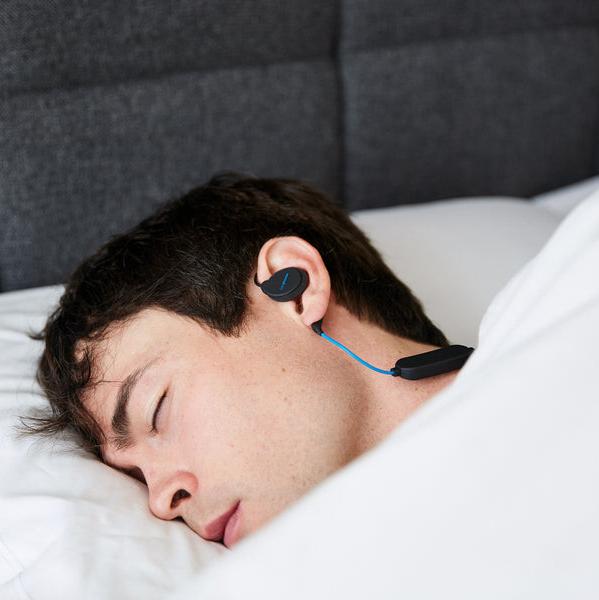
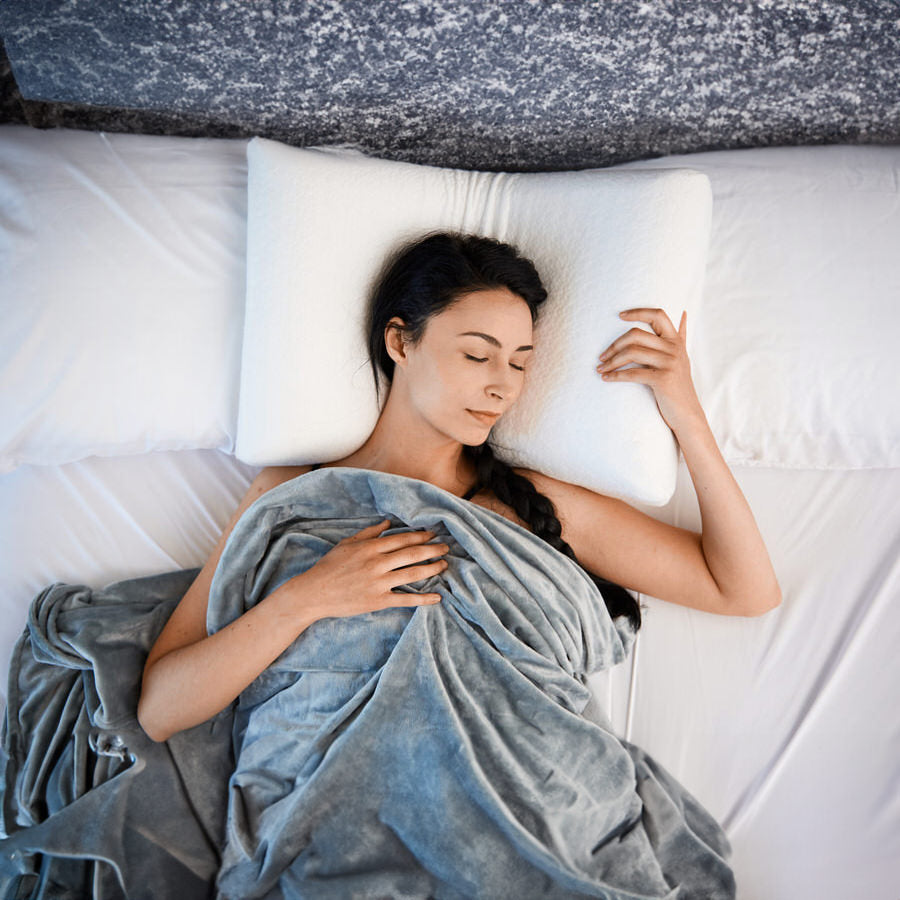
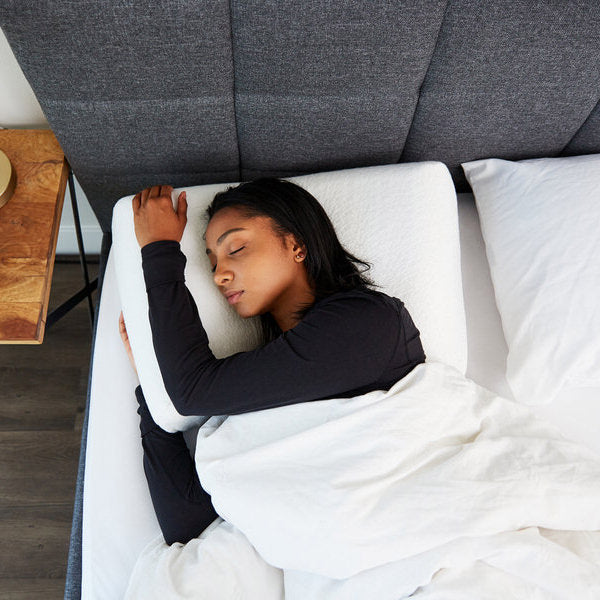
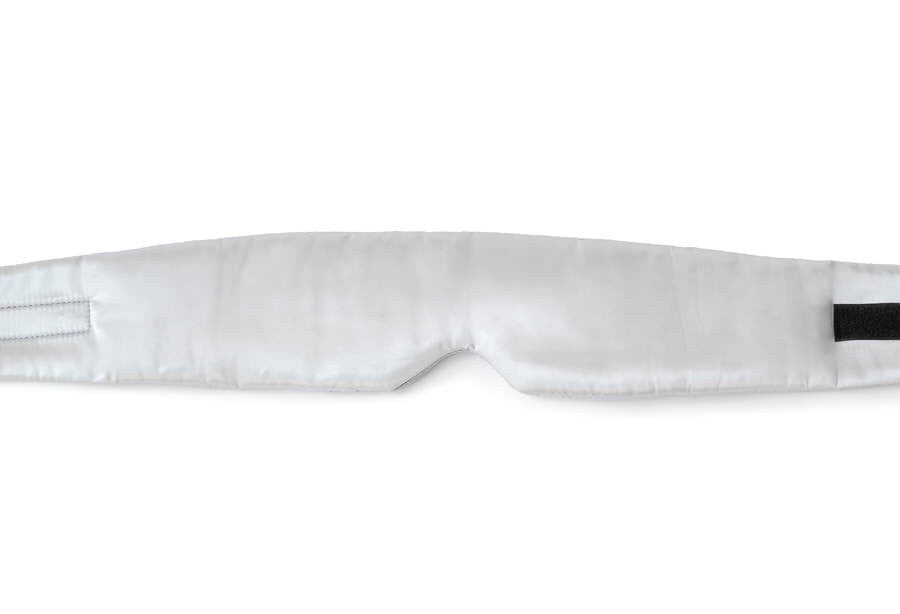
So, can you sleep with headphones in? The short answer is yes, but it’s not exactly a straightforward "yes." It's one of those things where the convenience has to be weighed carefully against some real, not-so-obvious risks.
Plenty of people do it to block out a snoring partner, noisy city streets, or just to drift off to a favorite podcast. But making it a nightly habit without knowing the full picture can cause some trouble down the line for your hearing, your ears, and even your overall sleep quality.
The Trade-Offs Of Sleeping With Headphones
Let's be honest, slipping on headphones and drowning out the world can feel like a superpower, especially when you're trying to unwind. It’s an easy, instant way to create your own peaceful bubble, which is exactly why so many people swear by it.
But this nightly escape isn't a completely free ride. The very thing that makes it work—creating a seal in or over your ears for hours at a time—is also what introduces some potential health issues. We’re talking about eight solid hours of direct audio exposure and blocked ear canals, night after night.
It’s less about whether you can sleep with headphones and more about whether you should. And if you do, it's about doing it smartly to protect your long-term health.
Weighing The Pros And Cons
To figure out if this is the right move for you, it helps to see the good and the bad laid out side-by-side. On one hand, you get total control over your sound environment, which can be a game-changer for falling and staying asleep. On the other, you're opening the door to risks that could have lasting consequences.
Here's a quick look at what you're really trading off:
- The Good: You can finally mask that distracting background noise that keeps you up.
- The Bad: You risk noise-induced hearing loss from having audio playing directly into your ears all night.
- The Good: You can build a relaxing bedtime routine with calming music, audiobooks, or ambient sounds.
- The Bad: You might be setting yourself up for ear infections because your ear canals can't breathe.
- The Good: It's a drug-free way to help manage things like tinnitus or anxiety at bedtime.
- The Bad: You could wake up with sore ears, or worse, get tangled up if you're using a wired pair.
For a clearer picture, let's break down the core give-and-take.
Sleeping With Headphones: A Quick Comparison
It's a classic balancing act. On one side, you have the immediate relief that can lead to better sleep tonight. On the other, you have potential health issues that could pop up later. This table sums it up.
| Potential Benefit | Potential Risk |
|---|---|
| Noise Cancellation: Blocks out snoring, traffic, and other disruptions. | Hearing Damage: Prolonged volume, even at moderate levels, can harm your hearing. |
| Relaxation Aid: Calming audio can reduce stress and anxiety, making it easier to fall asleep. | Ear Infections: Trapped moisture and warmth create a breeding ground for bacteria. |
| Tinnitus Management: Steady, low-volume sound can mask the ringing associated with tinnitus. | Wax Buildup: Earbuds can push wax deeper into the ear canal, causing blockages. |
| Improved Sleep Quality: A controlled sound environment can lead to deeper, more restful sleep. | Safety Concerns: Inability to hear smoke alarms, intruders, or a child crying out. |
| Personal Privacy: Listen to your own audio without disturbing a partner. | Physical Discomfort: Can cause soreness, pressure points, and even strangulation risk with cords. |
Ultimately, whether the benefits are worth the risks is a personal call. The key is to be aware of what you're getting into and take steps to minimize the downsides.
The rest of this guide will walk you through these risks in more detail, show you which types of headphones are safer for sleeping, and give you some practical tips to protect your ears while still getting a good night's rest.
Understanding The Real Health Risks
Thinking about drifting off to your favorite podcast or playlist sounds amazing, right? But here’s the thing: wearing headphones for an eight-hour stretch overnight is a completely different ballgame than using them for a one-hour gym session. When you have a device in or on your ears for that long, you introduce some specific health concerns that are really important to understand.
Picture noise-induced hearing damage not as a sudden lightning strike, but more like a slow, cumulative sunburn on your inner ears. One blaringly loud concert might cause an obvious, immediate burn. But low-level exposure day after day, or in this case, night after night, also causes serious long-term damage. Listening to audio at what seems like a moderate volume for eight straight hours can gradually wear down the delicate hair cells inside your ear that are responsible for hearing.
The Cumulative Effect On Your Hearing
This "slow burn" is where the real danger sneaks up on you. Your ears never get a break to recover, and over time, that constant strain can lead to permanent hearing loss or tinnitus—that persistent, maddening ringing in your ears.
The risk boils down to two things: volume and duration. Health experts warn that exposure to sounds around 80–85 decibels (dB)—think of a garbage disposal or a noisy restaurant—can cause hearing damage after just two hours. If your music or podcast is playing at that level all night, you're blowing way past the safe listening limit. Studies have found that a surprising number of regular headphone users show early signs of hearing loss, which just goes to show how easily this damage can happen without you even noticing until it’s too late. You can find more details on headphone safety guidelines and how they relate to long-term hearing.
A massive global analysis estimated that around one billion young people worldwide are at risk of hearing loss from unsafe listening habits. With headphone use being a huge part of that, it really puts the scale of the issue into perspective when you think about nightly, multi-hour listening.
Ear Canal Health And Infection Risks
Hearing isn't the only thing at stake. Blocking your ear canal all night long creates a warm, moist, and dark environment—basically, a perfect petri dish for bacteria to thrive. Your ear canals are designed to breathe and self-clean. When you plug them up with an earbud, you're trapping moisture and blocking the natural exit route for earwax.
This can roll out the welcome mat for a few nasty and painful conditions:
- Otitis Externa (Swimmer's Ear): This is a gnarly infection of the outer ear canal that’s often caused by bacteria having a party in trapped moisture. It can lead to itching, redness, discharge, and some serious pain.
- Wax Impaction: Instead of letting earwax work its way out naturally, earbuds can shove it deeper into the canal. Over time, this can form a hard plug, causing muffled hearing, dizziness, and earaches.
- Skin Necrosis: This one is rare but scary. The constant pressure from a poorly fitting earbud can actually cut off blood flow to the skin inside your ear, causing the tissue to die.
This infographic does a great job of laying out the balancing act between the benefits and the real-deal risks.
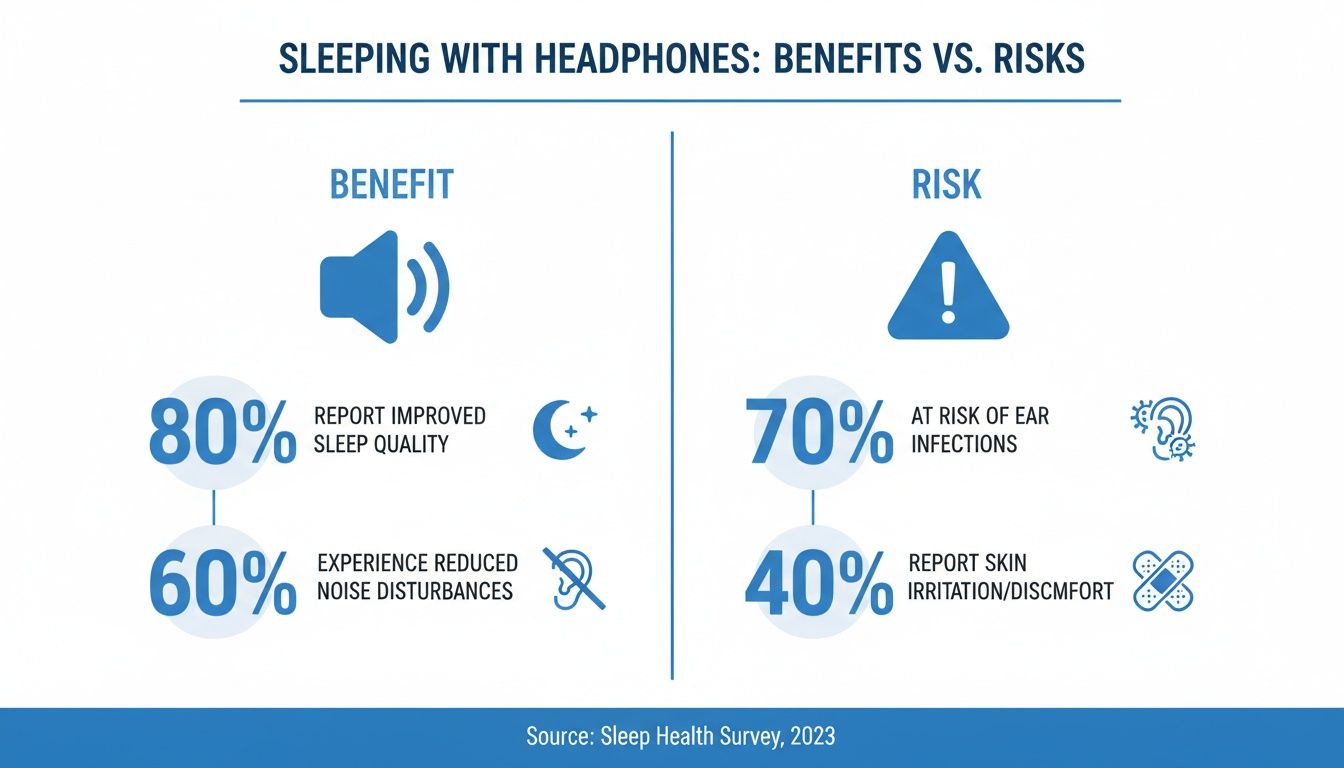
As you can see, while sound can be a fantastic sleep aid, it comes with some significant trade-offs that you need to manage carefully.
Physical Safety And Awareness
Finally, let's talk about the more immediate physical dangers. If you’re using wired headphones, there’s a genuine risk of the cord tangling around your neck while you toss and turn, which is a strangulation hazard. Even with wireless buds, there's a chance one could pop out and get lodged deeper in your ear canal.
Beyond that, completely blocking out the world around you can be a safety issue. You might not hear a smoke alarm, a baby crying, or someone breaking in, leaving you totally vulnerable in an emergency. It's a critical point to consider when you're weighing whether you can sleep with headphones in safely.
Choosing The Right Headphones For Sleeping
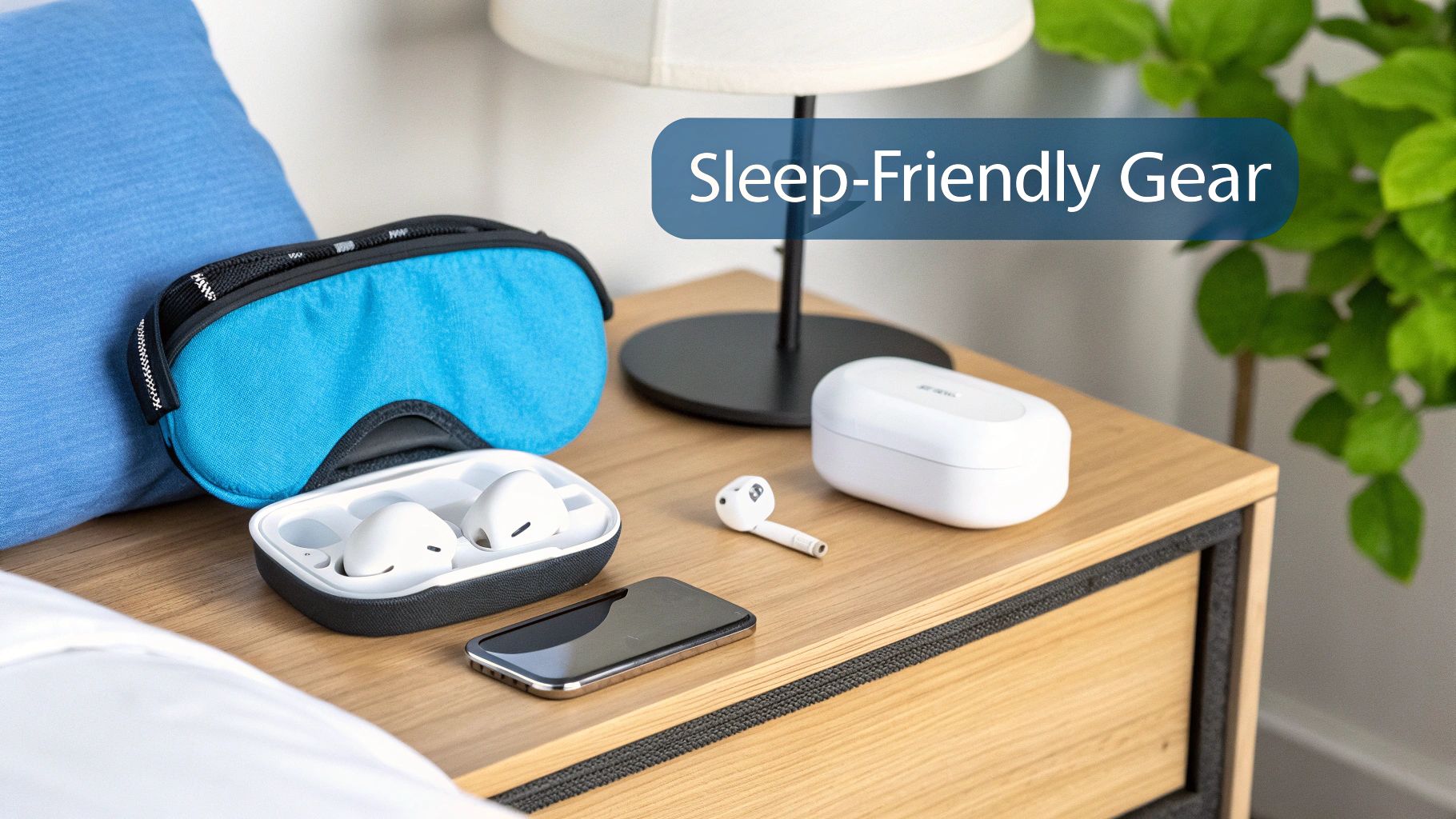
Not all headphones are created equal, especially when your head will be pressed against a pillow for eight hours. The sleek, high-fidelity cans you love for your commute are almost always a terrible choice for overnight use. When it comes to sleep, comfort, safety, and your typical sleeping position are the only things that matter.
Think of it like choosing shoes for a marathon; you wouldn't wear your nicest dress shoes, no matter how much they cost. The same logic applies here. Your premium over-ear headphones might have amazing sound, but their bulky design creates painful pressure points—a dealbreaker for anyone who sleeps on their side.
Even traditional in-ear buds, while much smaller, can dig into your ear canal when you lie on your side. That constant pressure can lead to soreness and inflammation. Over time, it can even cause cartilage pain. They’re also notorious for falling out and getting lost somewhere in your sheets by morning.
A Breakdown Of Common Headphone Types
Let's be honest, when you ask if you can sleep with headphones in, the real answer depends entirely on which headphones you're talking about. Below is a quick comparison of the usual suspects and how they really stack up for a night of rest.
Comparing Headphone Types For Sleep
The right choice for you will depend on how you sleep. A back sleeper might get away with something a side sleeper would find torturous. Here’s a look at how different styles perform when the lights go out.
| Headphone Type | Best For | Comfort Level (Side Sleepers) | Safety Concern |
|---|---|---|---|
| Over-Ear Headphones | Upright listening only | Very Low | Can cause jaw/ear pain; blocks too much ambient sound, creating a safety hazard. |
| On-Ear Headphones | Back sleepers (maybe) | Low | Constant pressure on ear cartilage leads to pain and restless sleep. |
| In-Ear (Hard Plastic) | Back sleepers | Very Low | Rigid design digs painfully into the ear canal when pressure is applied. |
| In-Ear (Silicone Tip) | Back sleepers | Low to Medium | Can still create pressure points; traps moisture, increasing infection risk. |
| Sleep Headbands | All sleepers | Very High | Minimal; low-profile speakers and soft fabric prevent pressure and tangling. |
As you can see, what works during the day rarely works at night. Your everyday gear is designed for an upright head, not one resting on a pillow.
The ideal sleep headphone should feel almost invisible, especially when you're lying on your side. If you're constantly aware of the device in or on your ear, it’s disrupting your rest, not improving it.
The Rise Of Specialized Sleep Headphones
Because of all these comfort and safety issues, a whole new category of audio gear has popped up, designed from the ground up specifically for sleep. These products tackle the unique challenges of listening to audio while lying down all night.
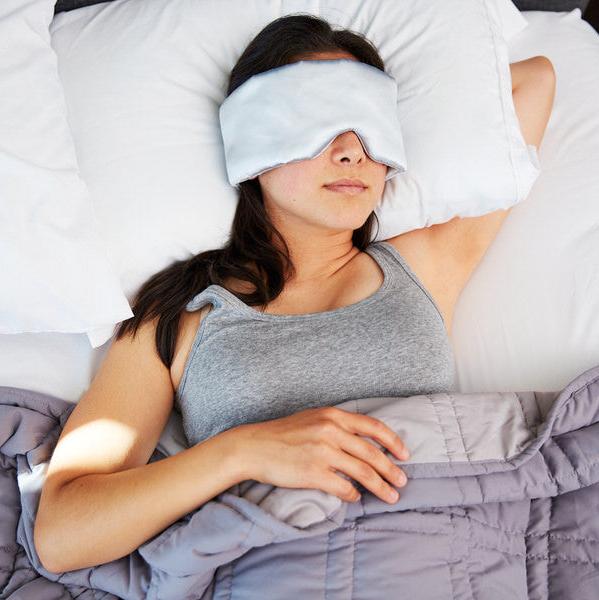
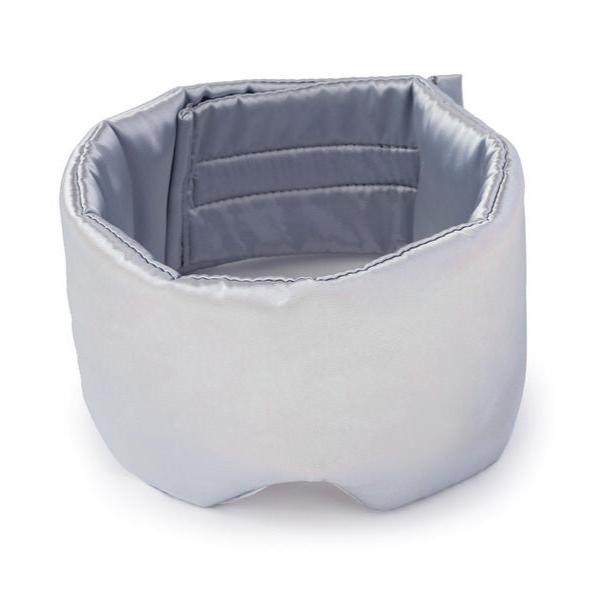
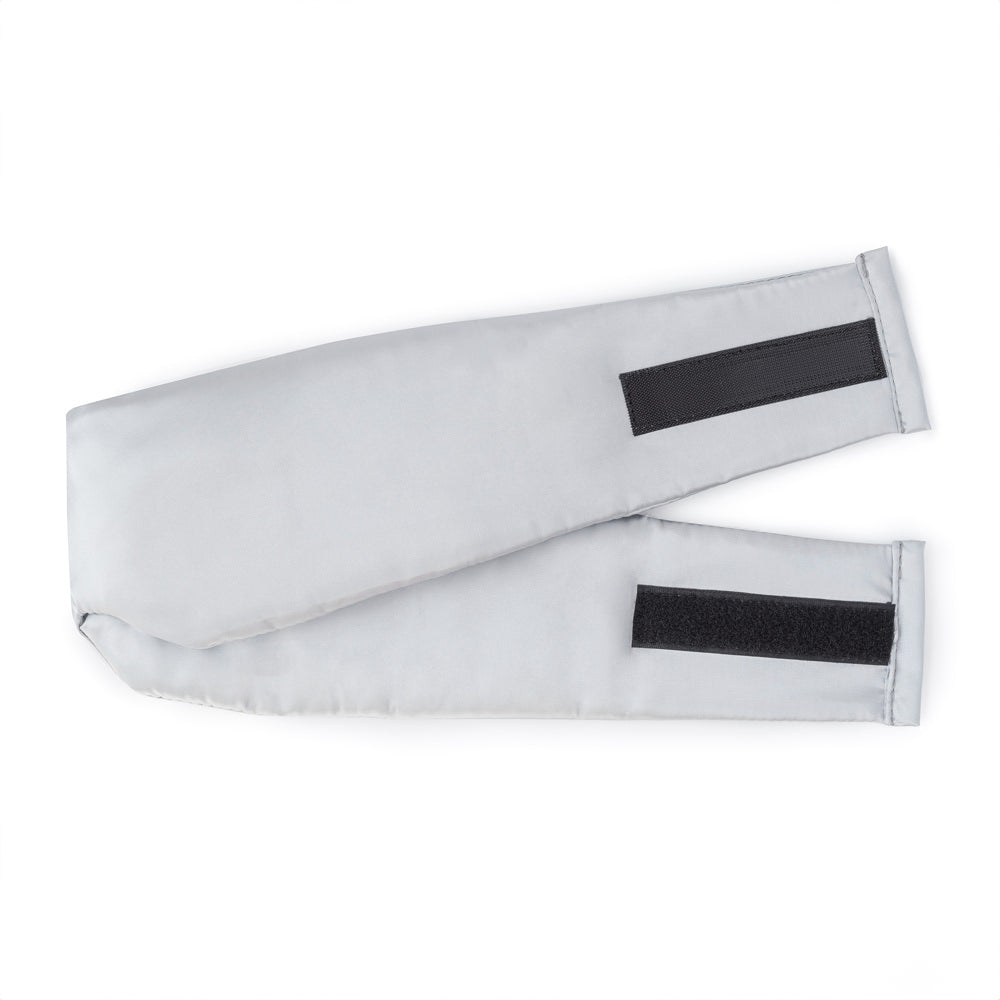
The most popular design by far is the sleep headband. These are soft, stretchy fabric headbands with ultra-thin, flat speakers tucked inside. You can slide the speakers around so they sit right over your ears, and because they are so flat and cushioned, they create zero pressure points for side sleepers.
They're a much safer and more comfortable alternative to trying to make regular earbuds work. If you want to go deeper, check out this detailed guide on finding comfortable headphones for sleeping, which explores more of these specialized options.
Ultimately, picking the right gear is the single most important step you can take to make this a safe and restful habit.
How Noise Cancelling Headphones Affect Sleep
For many people, the idea of technology that can just erase annoying noises sounds like a dream come true for getting a good night's rest. This is the big appeal of Active Noise Cancellation (ANC), a feature that's pretty standard in modern headphones and earbuds these days. But how does this tech actually work, and is it really the silver bullet for sleep we hope it is?
Think of ANC as a high-tech sound-eraser. Instead of just physically plugging your ear canal like a foam earplug, ANC is smart. It uses tiny microphones to listen to the constant, low-frequency sounds around you—the hum of your air conditioner, the rumble of traffic outside, or the drone of a plane engine.
Then, it pulls a clever trick. It creates an exact opposite soundwave, a sort of "anti-noise," which collides with the original sound and cancels it out before it ever hits your eardrum. It's a completely different approach than the physical sound-blocking you get from the headphone's materials, which you can read all about in our guide to passive noise cancelling headphones.
The Good And The Not So Good
The main benefit here is obvious. By digitally quieting the world, you can listen to your sleep sounds or podcasts at a much lower, safer volume. This is great for protecting your hearing long-term while still masking the little disturbances that might otherwise keep you up.
But ANC isn't a perfect solution for every noise. It’s fantastic at killing constant, droning sounds, but it often gets tripped up by sudden, sharp noises. A dog barking next door or a door slamming down the hall? Those high-frequency sounds tend to slice right through the digital filter.
On top of that, some people report a weird "cabin pressure" sensation in their ears when using ANC. It’s a known side effect from the anti-noise wave and can feel pretty uncomfortable if you're sensitive to it.
While noise-cancelling technology may help some sleepers by lowering environmental noise exposure and subjective disturbance, robust, large-scale evidence on long-term sleep outcomes and safety is currently limited.
What Does The Research Say?
So, does this tech actually help you sleep better? The evidence is encouraging, but we're still in the early days. A few small studies have shown that people who wore noise-cancelling earbuds overnight reported better sleep quality and felt less tired during the day, especially if they were poor sleepers to begin with.
While that's promising, a lot of this data comes from what people say about their sleep, not from clinical sleep studies with brainwave monitors and all that jazz. So, we still need more solid research to really confirm the long-term benefits and safety. You can learn more about the current findings on noise-cancelling headphones and sleep to get a better sense of where the science stands.
Best Practices For Safe Listening Overnight
So, you've weighed the risks and decided that sleeping with headphones is still the right move for you. The next step is making sure you do it as safely as possible. Think of it this way: if you have to drive in bad weather, you don't just hope for the best. You buckle up, check your tires, and slow down.
The same idea applies here. It's all about harm reduction. A few simple, consistent habits can make a huge difference, dramatically lowering the chances of long-term damage. These aren't complicated rules—just a straightforward safety checklist to build into your nightly routine.
Master Your Volume And Duration
The two biggest villains when it comes to hearing damage are volume and duration. Since you can’t exactly control how long the audio plays once you’ve drifted off to sleep, getting these settings right beforehand is absolutely critical.
-
Stick to a Strict Volume Limit: Never, ever listen at more than 50-60% of your device’s maximum volume. A good rule of thumb? If someone standing a few feet away can hear your audio, it's way too loud. You want the volume just high enough to hear the content, and not a notch higher.
-
Use a Sleep Timer: Don't let your podcast or playlist run for eight straight hours. Almost every modern audio app—whether for music, podcasts, or audiobooks—has a built-in sleep timer. Set it for 30 to 60 minutes, just enough time to help you fall asleep. This one simple action is probably the single most effective way to cut down on your cumulative noise exposure overnight.
The danger here is real and well-documented. Global surveys show that around 24% of young people between 12 and 35 listen to their personal audio devices at unsafe volumes. This is a massive public health concern, which is why managing your own overnight exposure is so important. You can dig deeper into how unsafe listening habits impact hearing and see why these guidelines really matter.
Prioritize Safety And Hygiene
Beyond just the sound, your physical safety and ear hygiene are non-negotiable. The type of headphones you pick and how you take care of them can make all the difference.
Choosing the right gear is everything when it comes to overnight safety. Wireless headphones completely eliminate the risk of getting tangled in a cord, a serious and frightening hazard that wired models present. This isn’t just a friendly suggestion; it’s a critical safety rule.
Finally, you have to make hygiene a priority. Your earbuds are spending hours inside a warm, moist environment—the perfect breeding ground for bacteria.
- Go Wireless Only: Seriously, never use wired headphones in bed. The risk of the cord wrapping around your neck while you sleep is small but terrifyingly real. It’s just not worth it.
- Clean Your Gear Regularly: At least once a week, give your earbuds or sleep headband speakers a good wipe-down with an alcohol-based wipe. This kills off any nasty bacteria that might be building up.
- Give Your Ears a Break: If you can, try not to use headphones every single night. Giving your ear canals a chance to breathe can go a long way in reducing the risk of infections and wax buildup.
Exploring Safer Alternatives For Sleep Audio
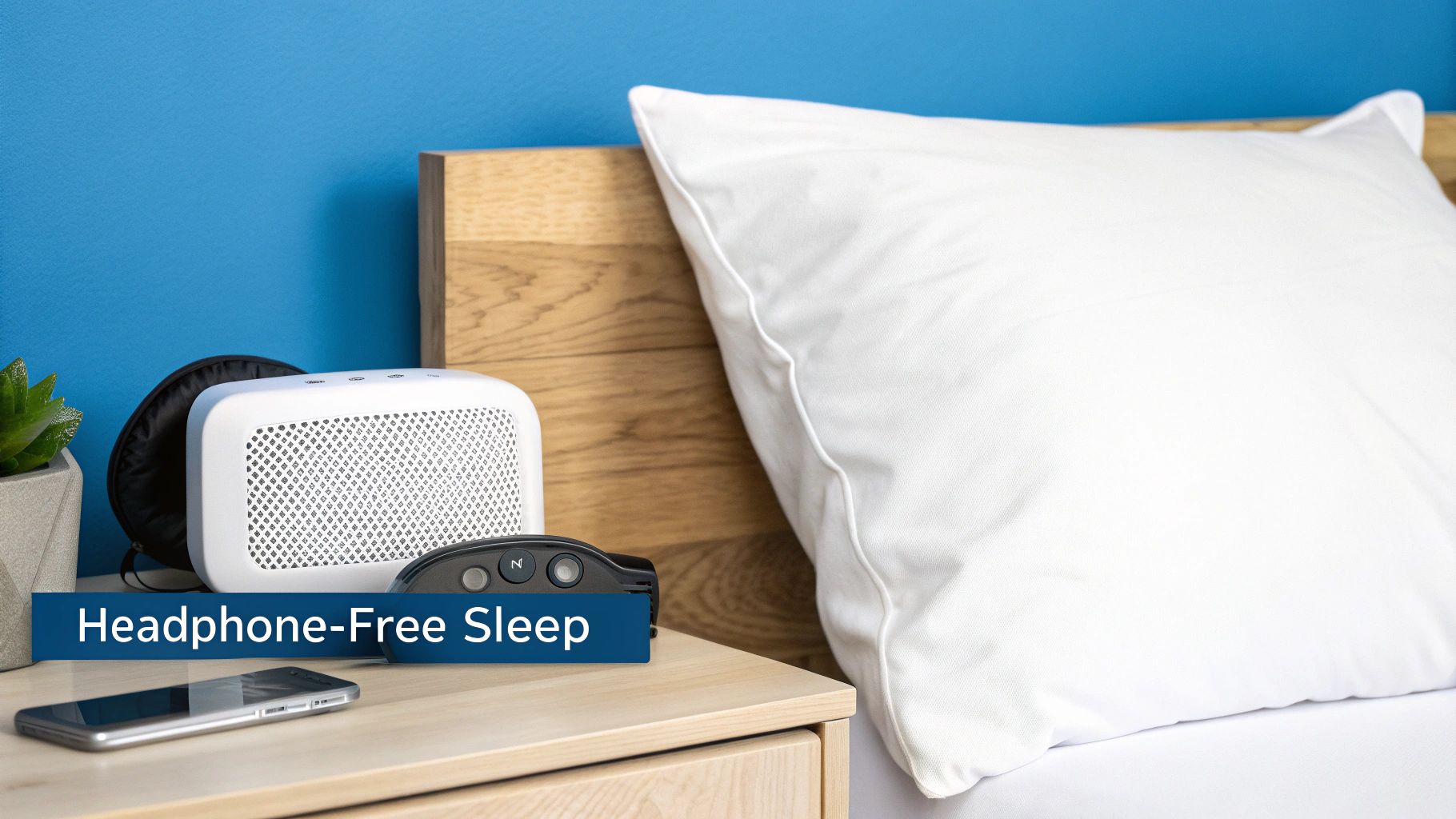
What if you could get all the benefits of calming audio without wearing headphones all night? It's not only possible, but it's often a much better experience. The trick is to shift the sound from being in or on your head to being around your head.
Going headphone-free means you can finally stop worrying about things like ear infections, wax buildup, and those awful pressure points that plague side sleepers. Instead of plugging up your ears, these solutions gently fill your space with consistent sound, helping your brain tune out a snoring partner or late-night traffic. You get the noise-masking benefits you're looking for, but without any of the direct physical downsides.
The goal is to create a soothing soundscape, not a private concert in your ear canal. By externalizing the audio source, you give your ears the freedom to breathe and rest naturally throughout the night, which is crucial for long-term health.
Headphone-Free Sleep Sound Solutions
Ditching your earbuds for the night is a great first step toward safer sleep. Each of these alternatives serves a slightly different purpose, whether it's masking background noise or delivering personal audio without the discomfort. If you're generally looking for ways to keep your ears clear and healthy at night, our guide on ear plug alternatives for sleeping has some extra tips you might find useful.
Here are a few of the most popular and effective headphone-free options:
- White Noise Machines: These are the workhorses of sleep audio. They're dedicated devices that produce steady, soothing sounds like static, rain, or ocean waves. They excel at drowning out sudden, jarring noises that would otherwise wake you up.
- Pillow Speakers: Exactly what they sound like—ultra-thin, flat speakers you can slide right under your pillow. They deliver sound at a low volume that's perfect for you but won't disturb your partner sleeping next to you.
- Sleep Headbands: Okay, so you technically wear these, but they're a world away from traditional headphones. They feature thin, cushioned speakers that sit over your ears, not inside them. This design completely eliminates the risk of ear infections and painful pressure points for side sleepers.
Combining one of these solutions with some general tips for going to sleep quicker can make a huge difference in your overall sleep quality.
Got More Questions About Sleeping With Headphones?
Even after digging into the details, you might still have a few specific questions floating around. It makes sense—this is about your health, after all. Let's tackle some of the most common ones head-on so you can make the best choice for your nightly routine.
Is It Safer To Sleep With Only One Earbud In?
Sleeping with just one earbud might feel like a clever workaround, but it really only solves half the problem. Sure, it keeps one ear open to your surroundings, which is a definite plus for safety. You can hear the smoke alarm, a child crying out, or an unusual noise downstairs.
But it doesn't do anything to address the risks for the ear you are using. You're still looking at potential hearing damage from hours of sound, not to mention the risk of ear infections and wax buildup. It's a slightly better option for awareness, but the core health concerns for that one ear don't just disappear.
Can Sleeping With Headphones Cause Tinnitus?
Yes, there's absolutely a link here. Tinnitus—that maddening, persistent ringing or buzzing in your ears—is often a glaring sign of underlying hearing damage.
Think of it this way: when you pipe audio into your ears for hours overnight, even at what seems like a totally reasonable volume, you're putting your inner ear through a marathon. You risk fatiguing and damaging the tiny, delicate hair cells that process sound. This kind of slow, cumulative damage is a primary cause of noise-induced tinnitus. If you must listen, setting a sleep timer and keeping the volume incredibly low are non-negotiable.
What Should I Listen To For Better Sleep?
The best sounds for sleep are consistent, calming, and don't have any sudden changes in volume or tone that might jolt you awake. Some of the best options include:
- White or Pink Noise: These are fantastic for masking disruptive background noises, like a partner's snoring or traffic outside. They create a smooth, steady "wall of sound."
- Ambient Sounds: Think gentle rain, rolling ocean waves, or a soft breeze. These nature sounds can be incredibly soothing and help your mind drift off.
- Guided Meditations: If your mind is racing, a guided meditation can help you quiet those anxious thoughts and lead you into a more restful state.
- Instrumental Music: Look for slow-tempo classical, ambient, or lo-fi tracks. The key is to avoid lyrics, which can sometimes engage your brain more than relax it.
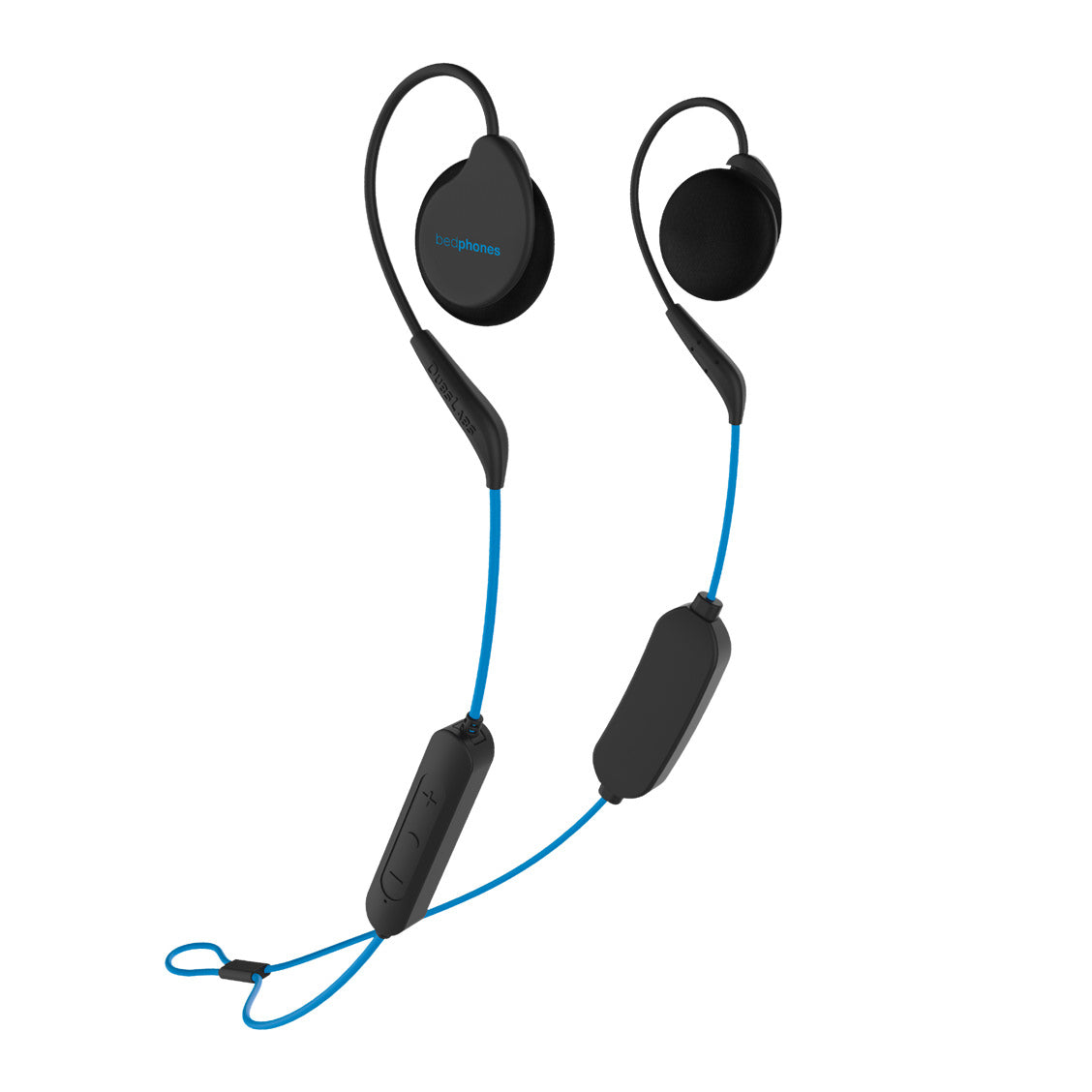
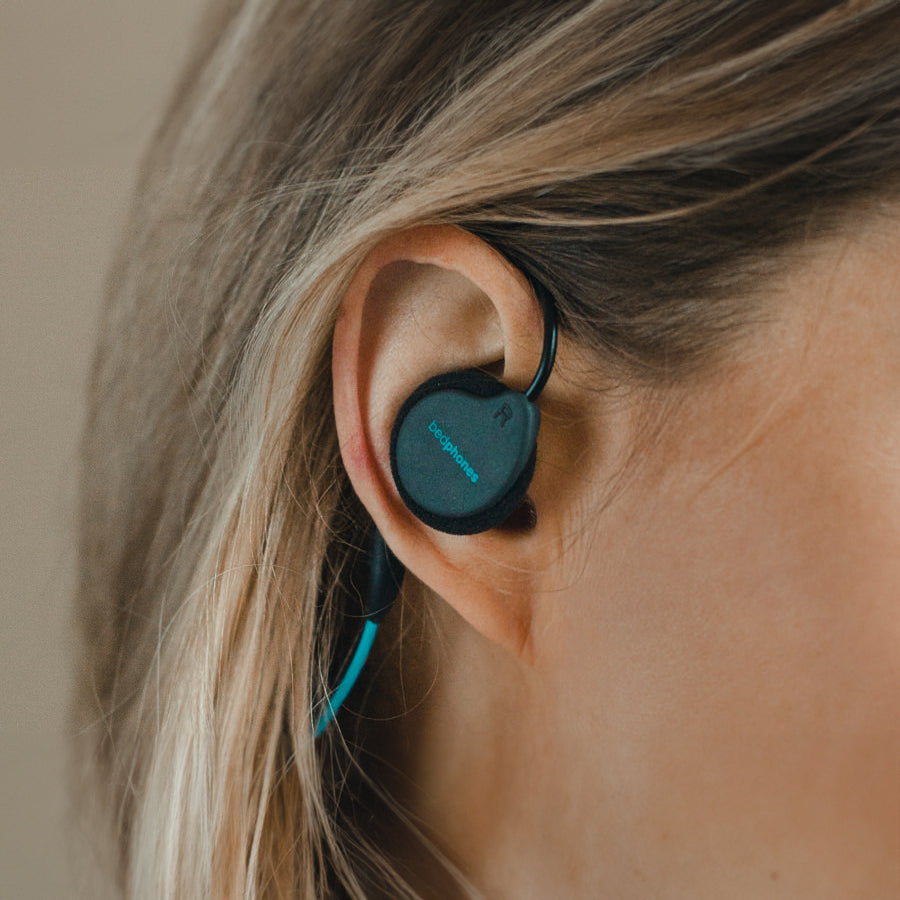
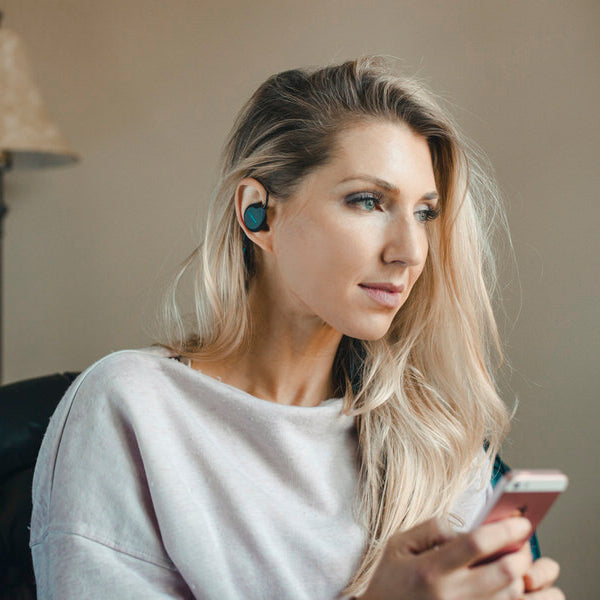
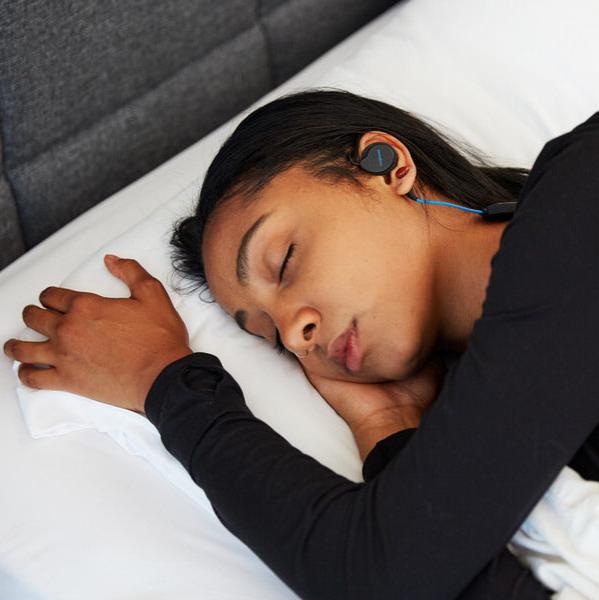
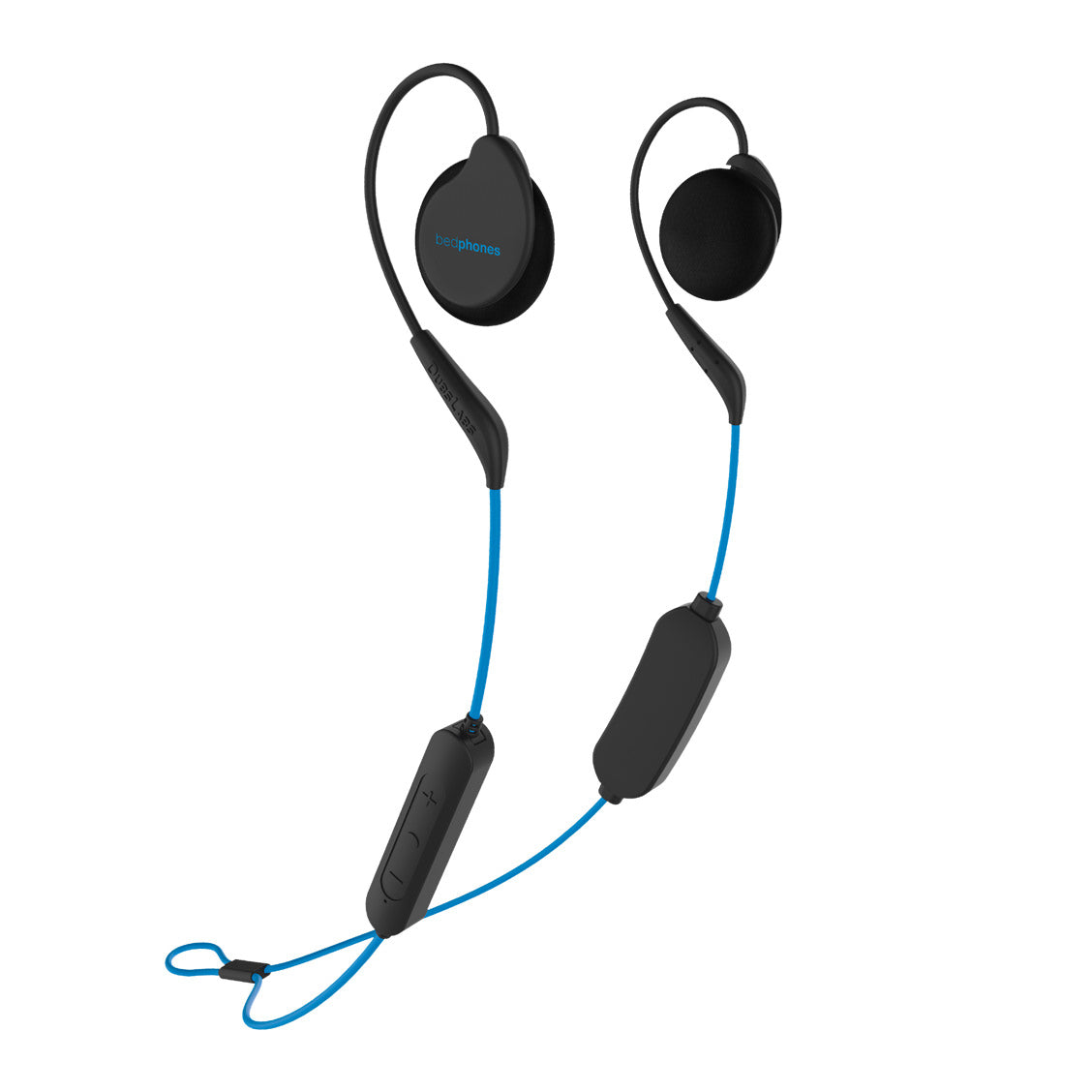
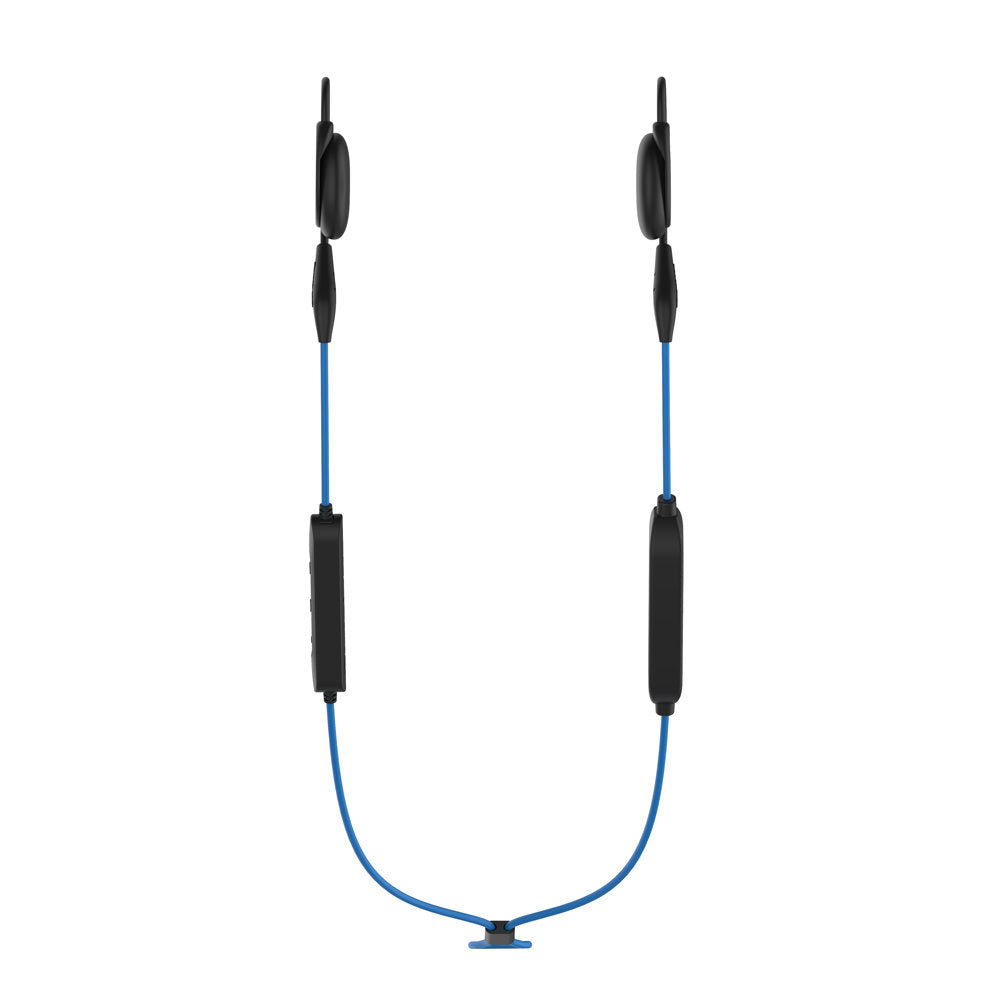
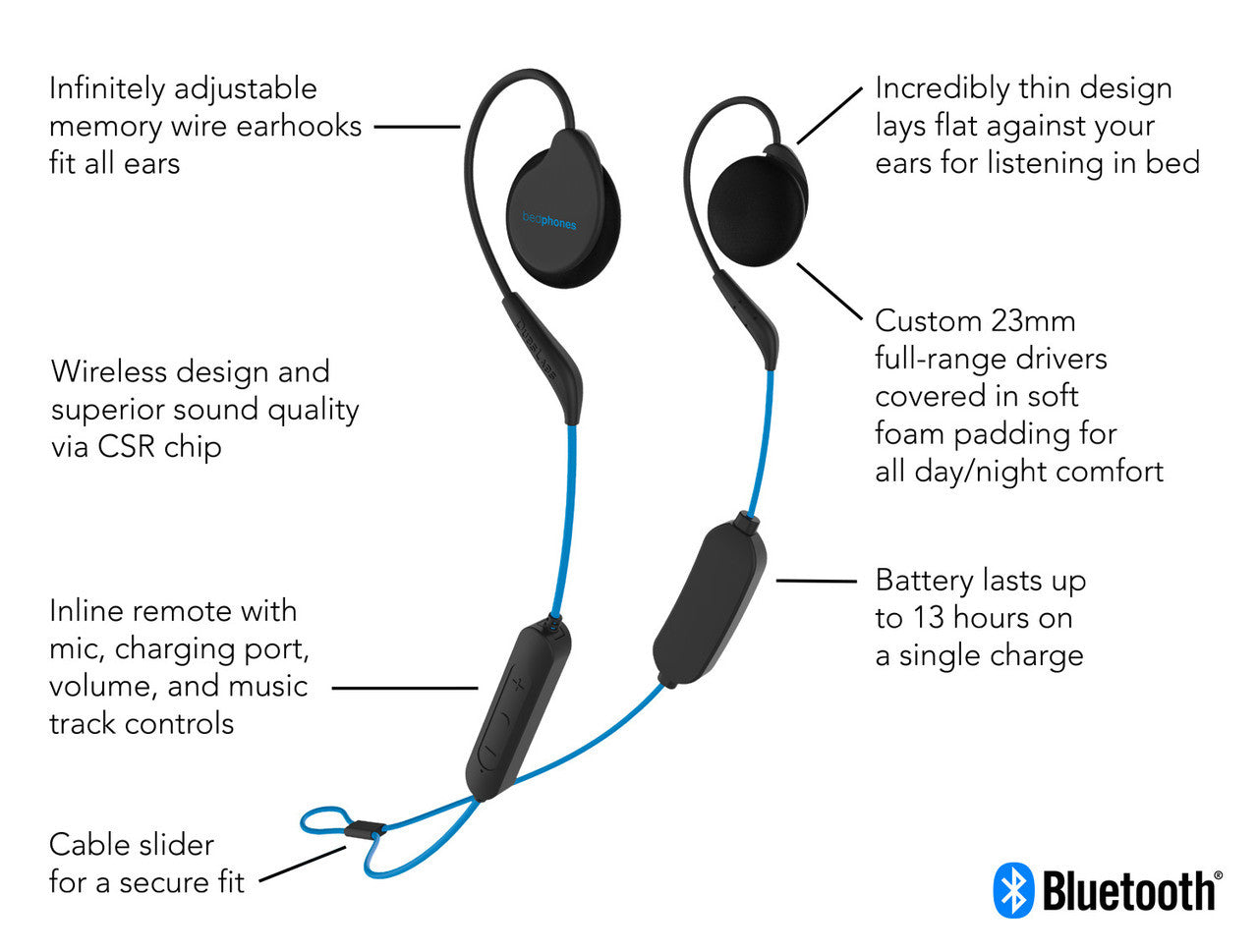
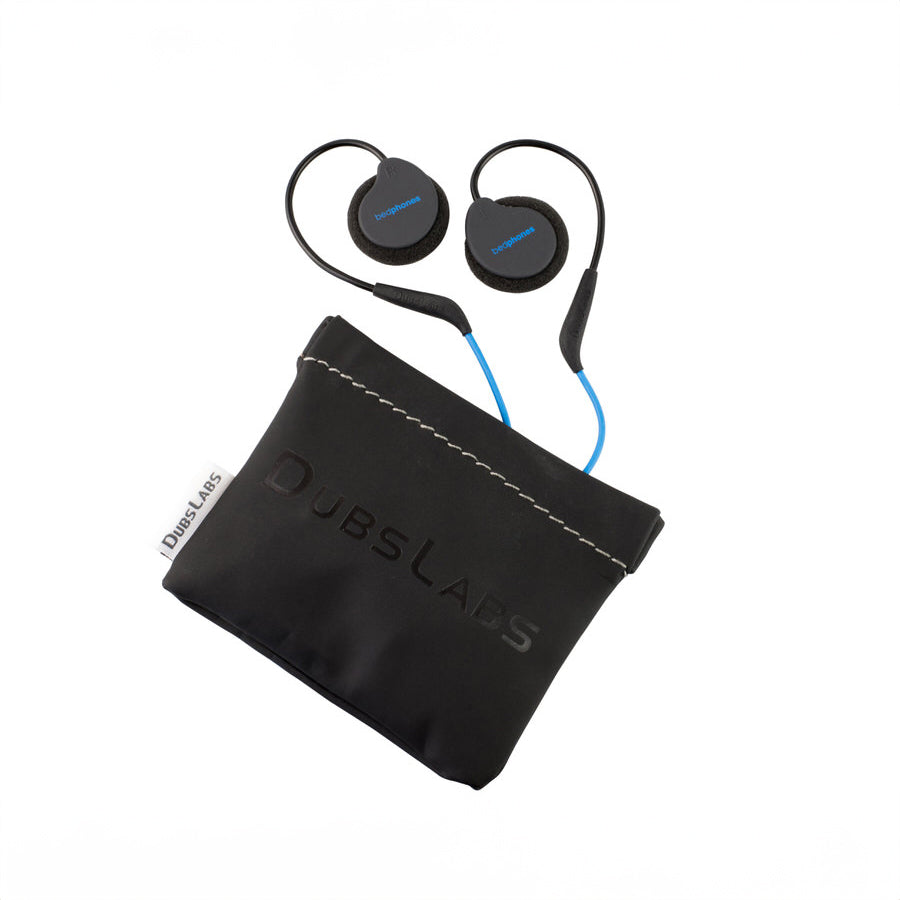
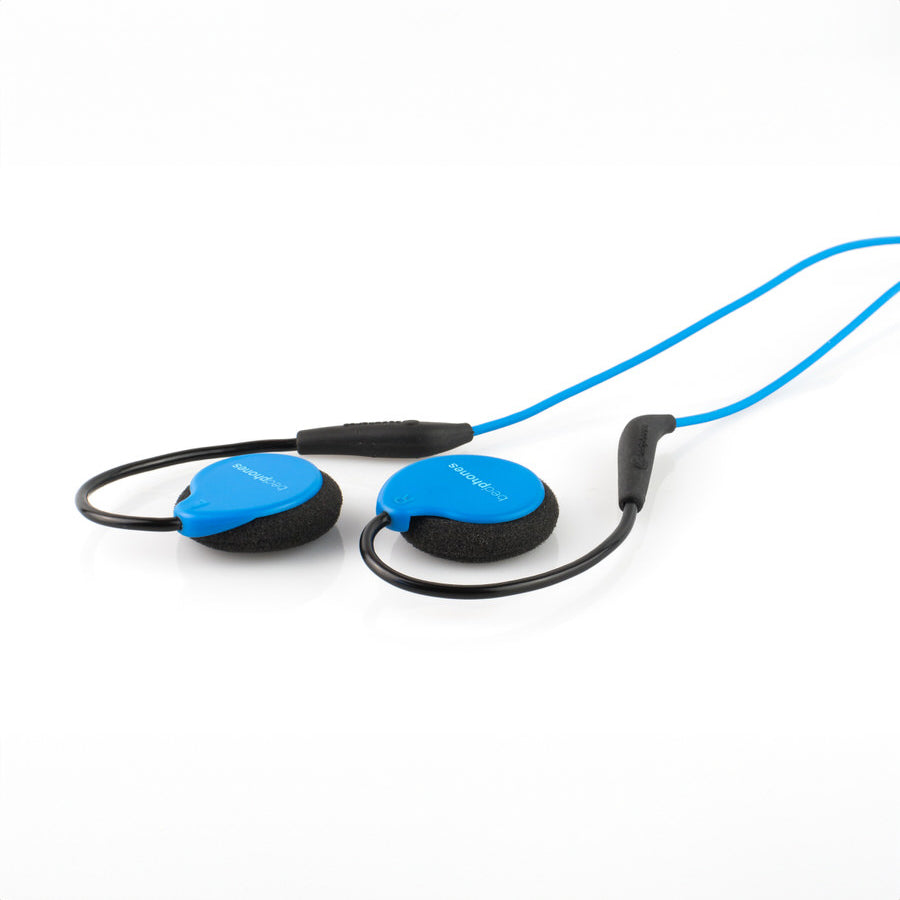
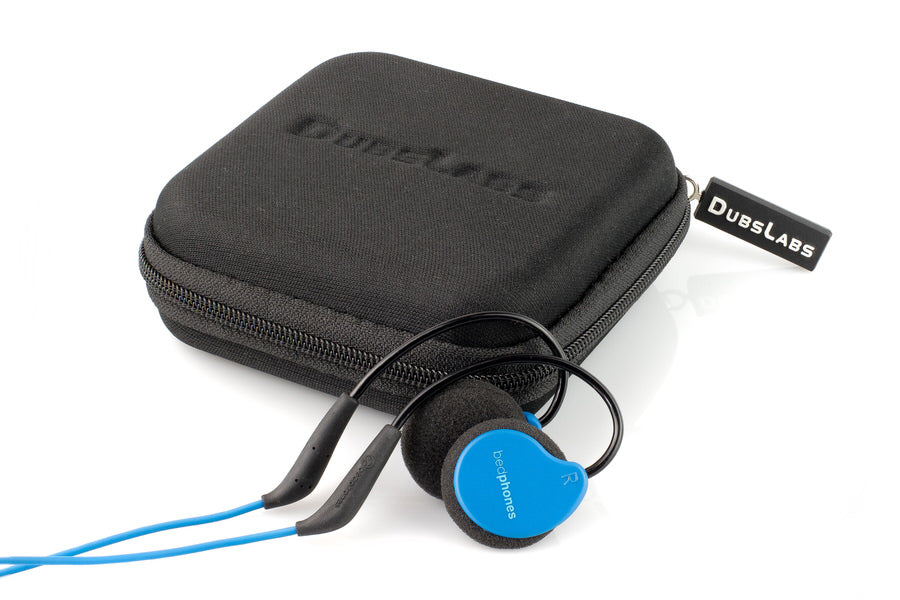
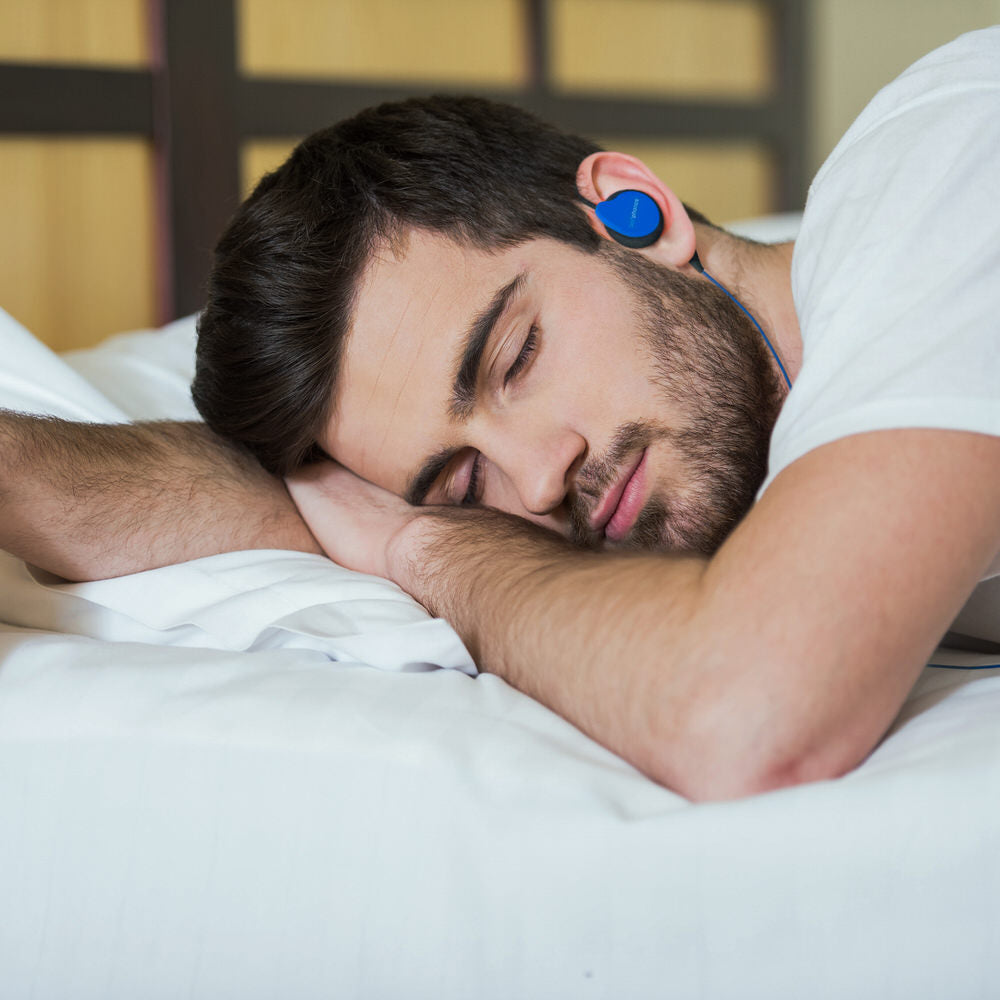
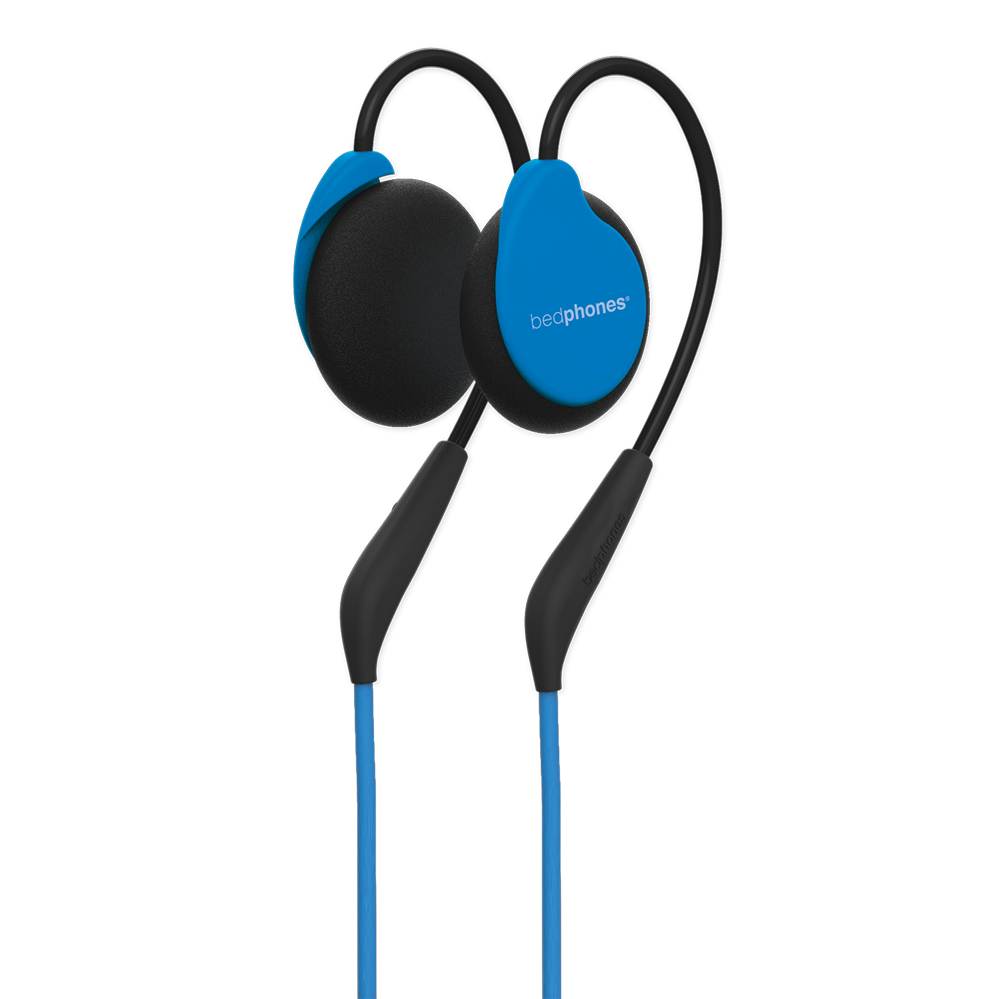
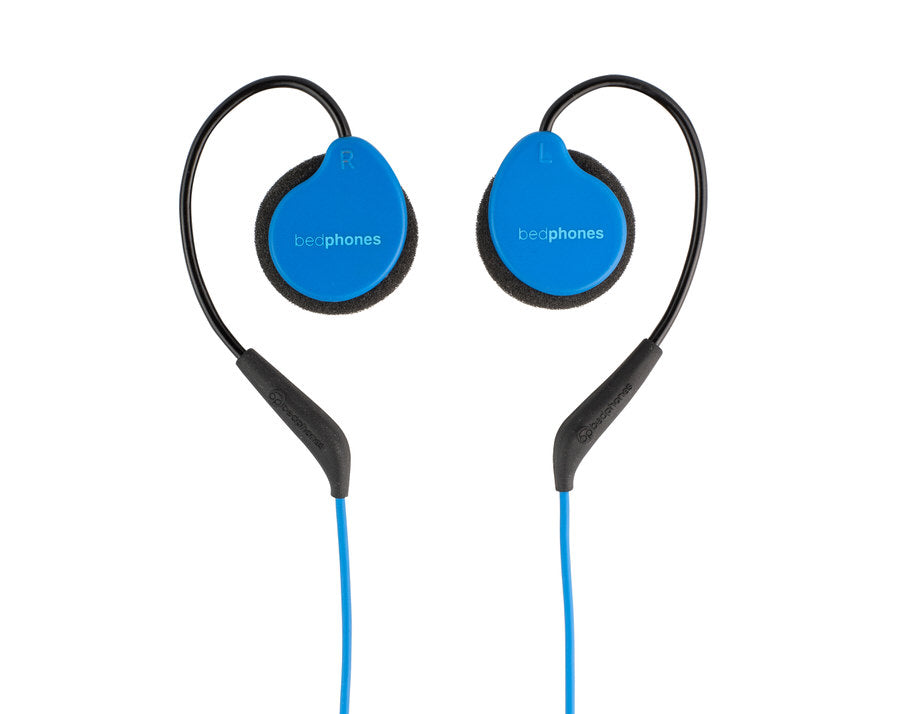
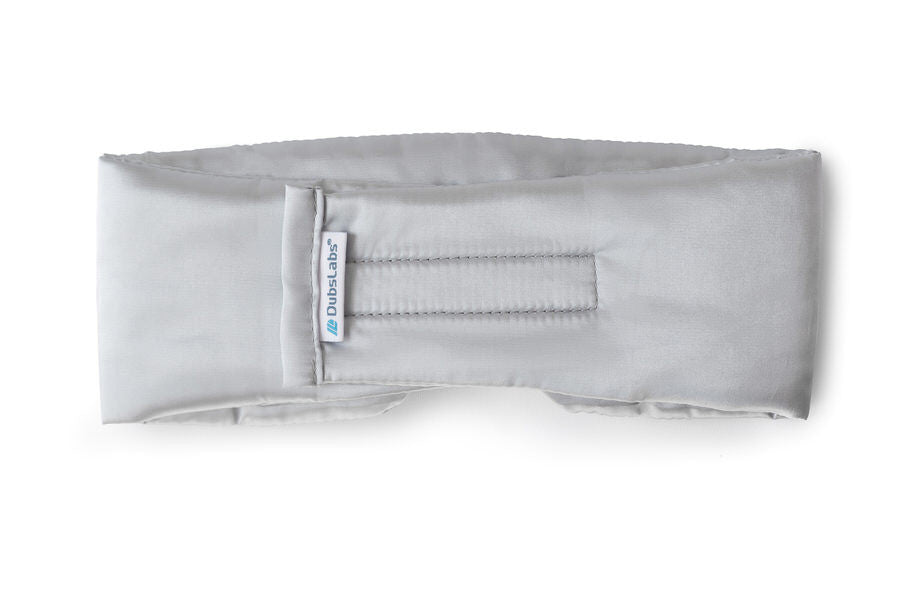
Ready to listen in bed without the pain and pressure of traditional earbuds? DubsLabs created Bedphones, the ultra-thin, ridiculously comfortable on-ear headphones designed specifically for sleep. They lie flat against your ear, so you can finally say goodbye to those painful pressure points. Discover a safer way to listen at DubsLabs.