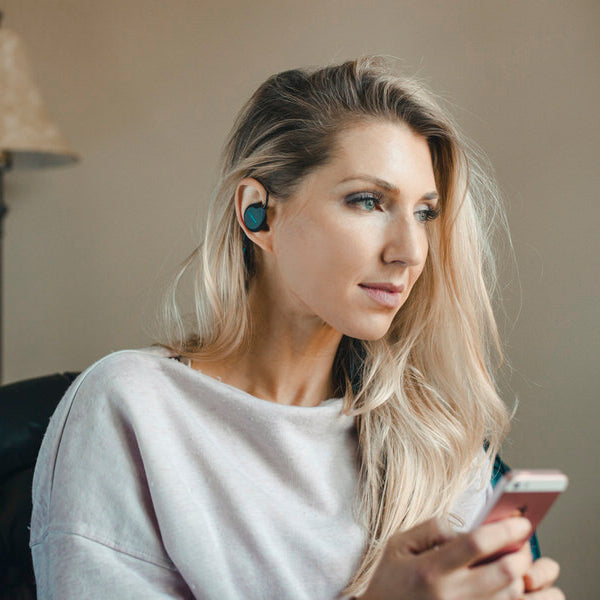
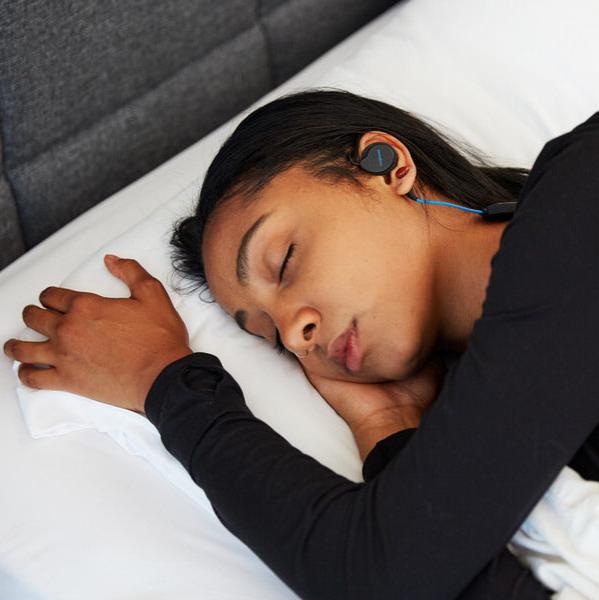
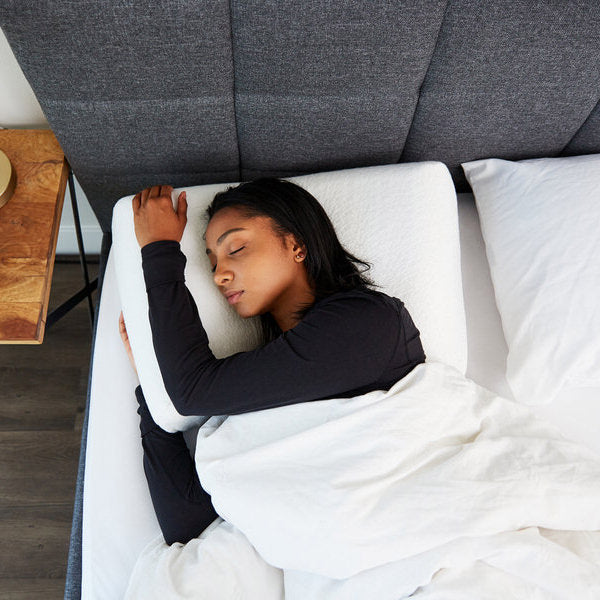
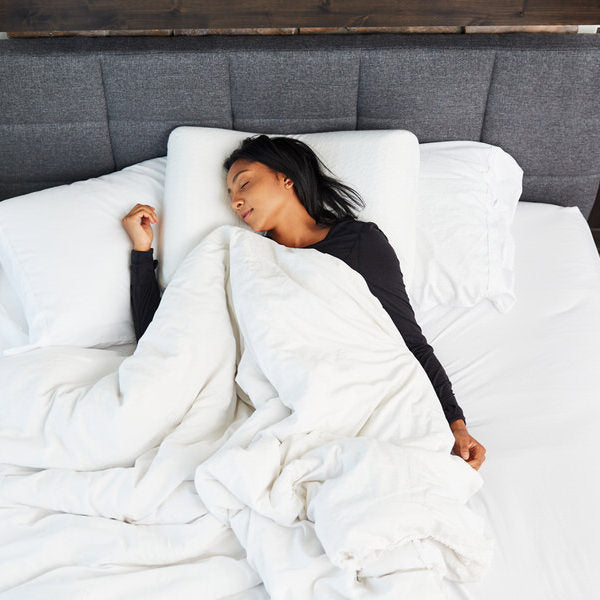
Let's be honest, trying to sleep with your everyday headphones is a special kind of torture. It feels impossible, especially if you’re a side sleeper. We’ve all been there—one earbud digging into your ear canal, the bulky cup of an over-ear set creating a painful pressure point the second you roll over.
The best wireless headphones for sleeping aren't just regular headphones with better marketing. They are a completely different animal, designed from the ground up to help you drift off without discomfort or a dead battery waking you up at 3 AM. This guide will help you sort through the options and find the perfect pair.
Why Your Regular Headphones Won't Cut It for Sleep
Using standard headphones for sleep is like trying to get comfortable on a lumpy, pokey mattress—it’s just a recipe for a restless night. Bulky over-ear cups are an immediate non-starter for anyone who doesn't sleep flat on their back like a vampire. Even traditional in-ear buds eventually cause soreness after hours of being pressed into your ear.
Sleep headphones are purpose-built to solve these exact problems. It’s better to think of them less as audio gear and more as a specialized sleep tool. Their main job isn't just to play sound; it's to deliver that sound so comfortably that you forget you're even wearing them.
And it's a tool more and more people are looking for. The global sleep headphones market was valued at USD 1,120 million and is on track to nearly double by 2030. That growth is fueled by the staggering 30% of adults around the world who are battling sleep disorders and searching for a solution. You can discover more insights about the sleep aid market to see just how big the need is.
What Makes a Great Sleep Headphone?
So, what actually separates a purpose-built sleep headphone from the one you use at the gym? It all boils down to a handful of critical features designed specifically for the unique environment of your bed.
When you're shopping around, it can be helpful to have a quick checklist of what really matters. We've put together a simple table that breaks down the most important features to look for.
Key Features of Great Sleep Headphones at a Glance
| Feature | Why It Matters for Sleep | What to Look For |
|---|---|---|
| Slim, Low-Profile Design | Prevents painful pressure points, especially for side sleepers. Comfort is king here. | Ultra-thin earpieces, soft materials like silicone or fabric, or headband-style designs. |
| All-Night Battery Life | Nothing worse than being woken up mid-dream by a "battery low" alert. | Look for at least 8-10 hours of continuous playback on a single charge. |
| Minimal Sound Leakage | Your podcast or white noise shouldn't become your partner's unwanted soundtrack. | Snug-fitting designs that direct sound into the ear canal without escaping. |
| Wireless Connectivity | Wires are a tangling hazard and can easily get pulled out as you move. | Reliable Bluetooth connection (Bluetooth 5.0 or higher is a good benchmark). |
| Breathable Materials | Prevents your ears from getting hot and sweaty during the night. | Look for fabric headbands or headphones with soft, breathable padding. |
This table gives you a solid starting point, but let's dive a little deeper into the non-negotiables.
The most important feature, without a doubt, is a slim, low-profile design. The headphones have to be thin enough to disappear between your ear and the pillow. Next up is all-night battery life; anything less than 8-10 hours of playback just won't make it through the night. Finally, minimal sound leakage is a must if you have a partner. Your audio should be for your ears only.
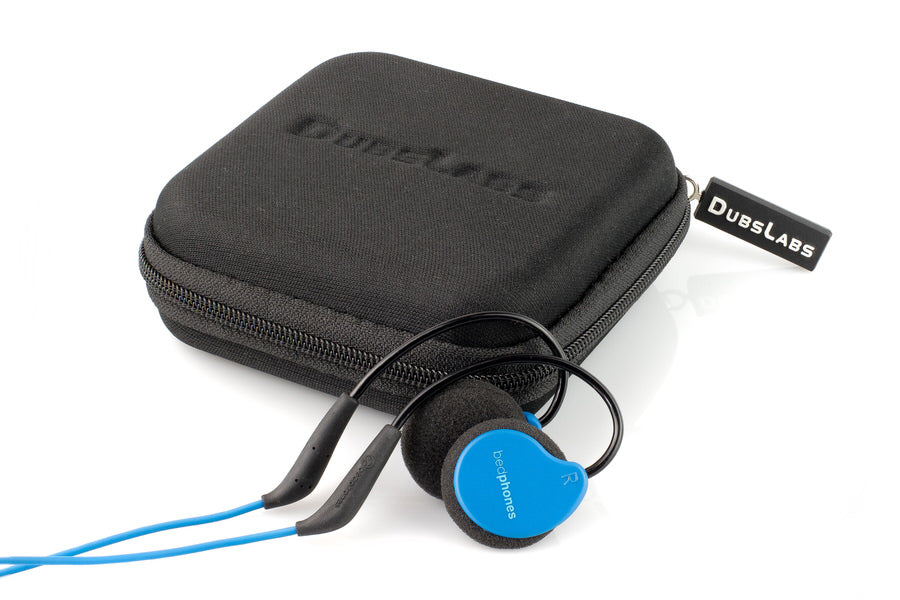
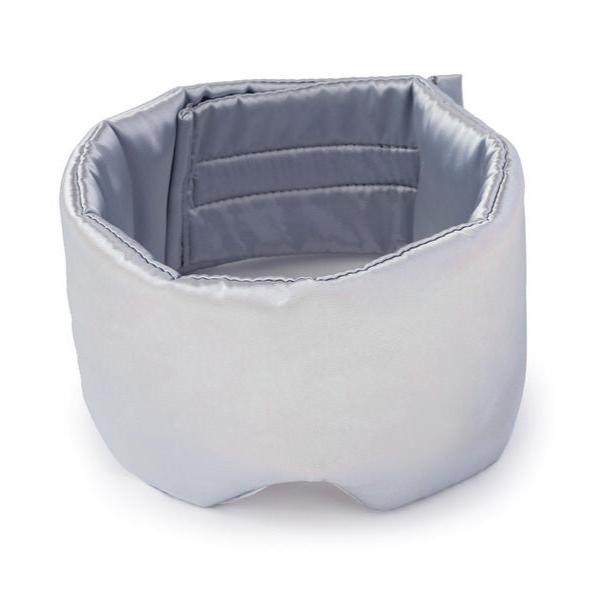
It's this focus on practical, sleep-centric needs that sets truly great products apart. Brands like DubsLabs Bedphones were born from these challenges, showing just how much thoughtful design can improve your quality of sleep.
What Truly Makes Headphones Great for Sleeping
Picking the right headphones for sleeping is a lot like finding the perfect pillow—what's a dream for one person might be a total nightmare for another. It goes way beyond just sound quality. A great pair of sleep headphones has to nail a delicate balance of comfort, performance, and practicality to earn a spot in your nightly routine.
Think about it this way: your everyday headphones are like a good pair of running shoes. They’re fantastic for what they're built for, but you'd never wear them to bed. Sleep headphones, on the other hand, are like a pair of soft, cozy slippers—designed for pure, unobtrusive comfort above everything else. That's the key difference.
All-Night Comfort Is Non-Negotiable
The single biggest deal-breaker is the physical design, or what we call the form factor. For most people, and especially for side sleepers, this is where a pair of headphones either wins or loses.
- Ultra-Thin Profile: Chunky over-ear cups or in-ear buds that stick out will create painful pressure points when your head hits the pillow. The best wireless headphones for sleeping have incredibly thin speakers, often less than a quarter-inch thick, that just disappear against your ear.
- Soft, Breathable Materials: You won't find any hard plastics here. Look for headphones made with soft fabrics, flexible silicone, and memory foam. These materials mold to the unique shape of your head and ears without making you feel irritated or hot.
The goal is to forget you're even wearing them. If you’re constantly fidgeting with your headphones or waking up with sore ears, they’ve failed their main job, no matter how amazing they sound.
The Technical Specs That Matter for Sleep
Beyond the physical feel, a few key technical specs make sure your audio experience actually helps you sleep instead of causing more frustration. These features work quietly in the background to keep you resting peacefully.
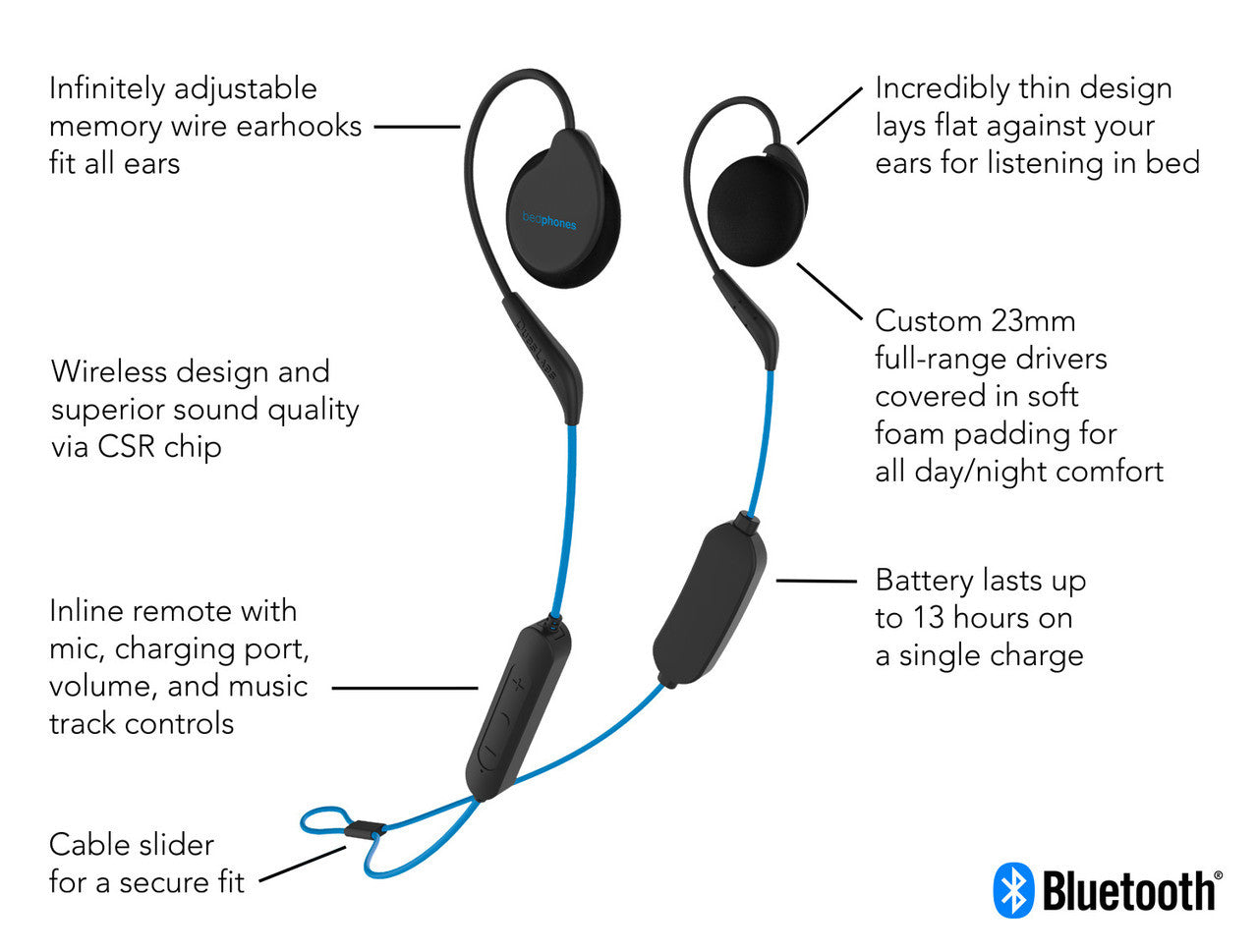
Battery Life for the Long Haul There's nothing worse than a "battery low" warning blasting in your ear at 3 a.m. It’s a guaranteed way to ruin a good night. Your headphones absolutely must last a full 8+ hours on a single charge. This ensures they can keep playing calming sounds, a podcast, or an audiobook from the moment your head hits the pillow until your morning alarm.
A Stable, Tangle-Free Connection Wires are a sleep-wrecker. They get tangled in your blankets, get yanked out when you roll over, and can even be a slight safety hazard. This is where wireless tech is a lifesaver. Wireless Bluetooth sleep headphones are the new standard for a reason—the market is projected to grow by 9.9% annually as more people choose untethered comfort. Modern Bluetooth 5.0 (and newer versions) gives you a solid connection that won't drop out, completely getting rid of the tangle risk. Learn more about the growth of wireless sleep technology.
Minimal Sound Leakage Finally, your late-night podcast is for your ears only. Sound leakage is what happens when the audio from your headphones is loud enough for someone nearby—like your partner—to hear it. Good sleep headphones are designed to funnel sound directly into your ear canal, keeping your audio private. This is crucial for maintaining a peaceful bedroom for everyone. When you combine this feature with the best sound to fall asleep to, you create your own personal sound sanctuary without disturbing anyone else.
Choosing Headphones for Your Unique Sleep Style
Just like you’d never pick a pillow without considering how you sleep, your sleeping position is the single biggest factor in finding the best wireless headphones for sleeping. What feels like a cloud for a back sleeper can quickly turn into a nightmare for someone on their side. The key to all-night comfort is matching the headphone style to your personal habits.
This simple decision tree can help you figure out what to look for based on how you sleep.
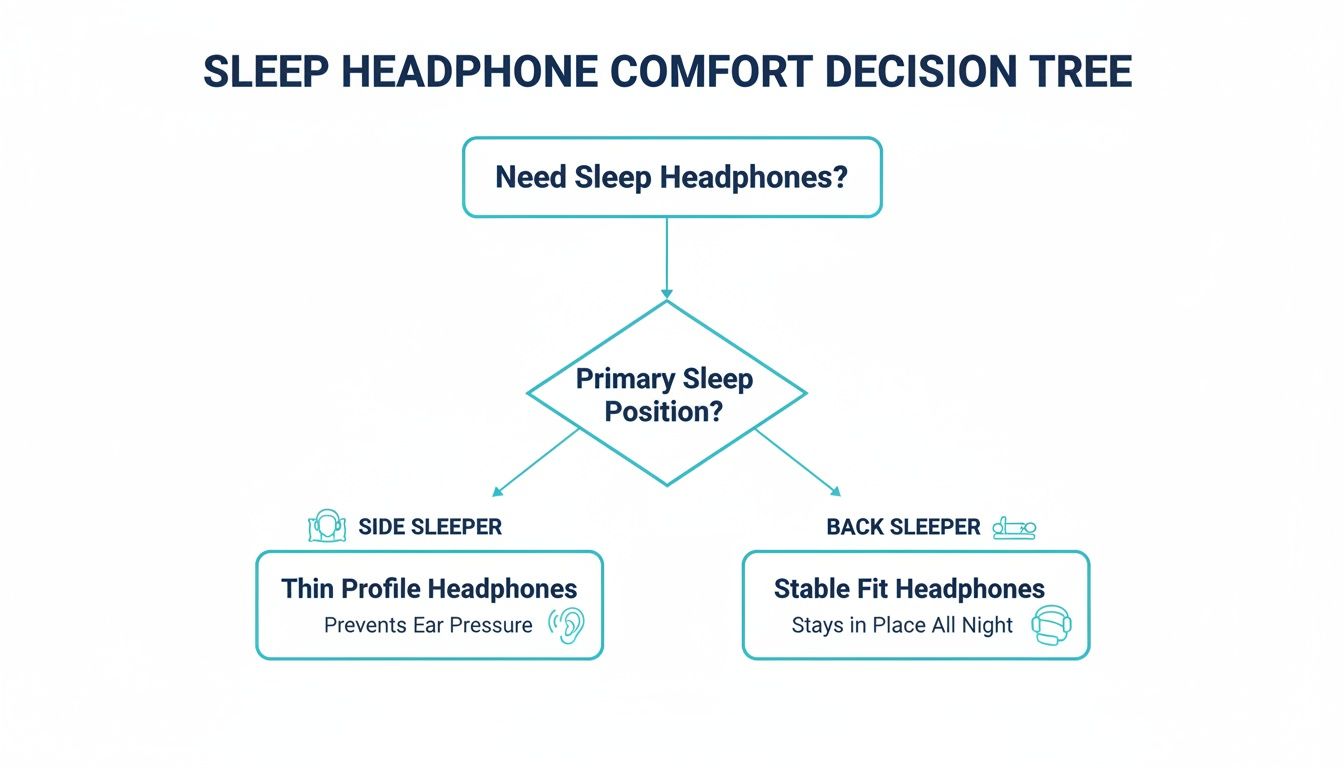
As you can see, it all starts with your sleep position. From there, you can zero in on the most critical design feature for your needs.
For the Side Sleepers
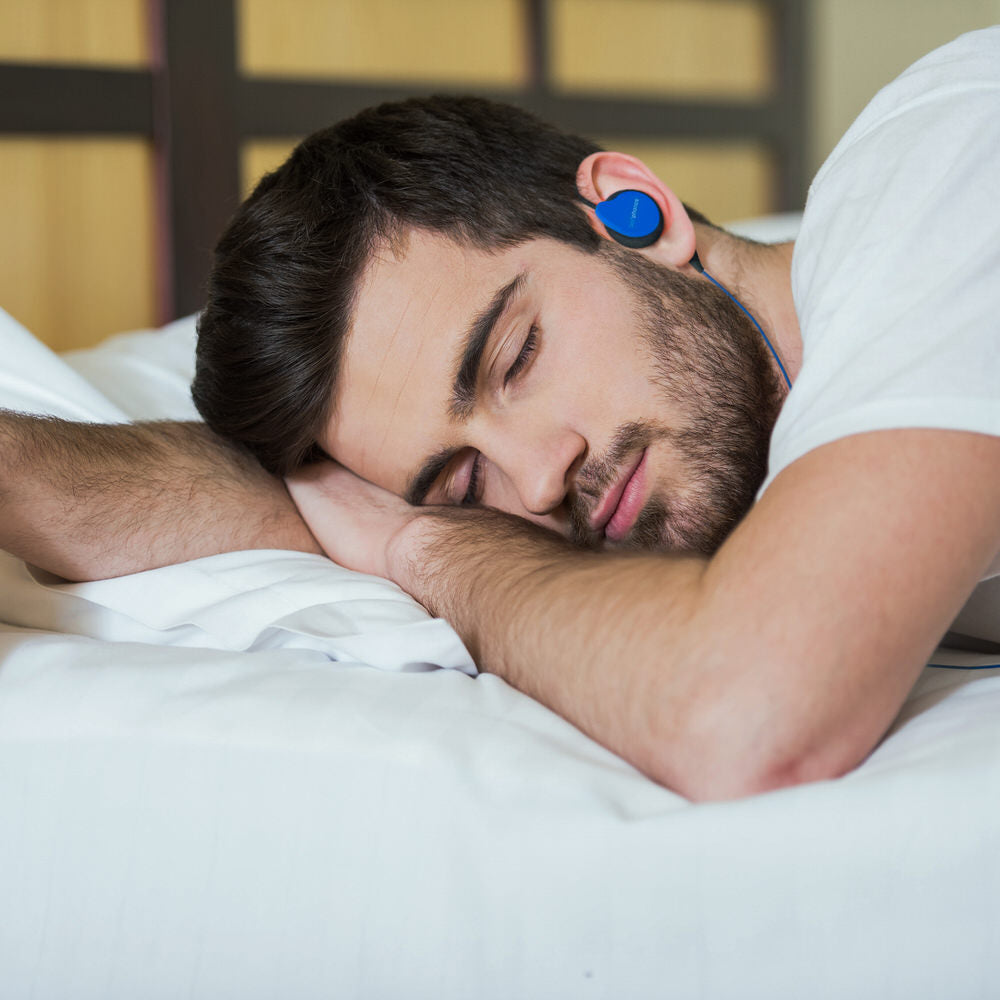
If you sleep on your side, you already know the enemy: pressure. Traditional earbuds feel like they’re drilling into your ear canal, while bulky over-ear headphones create an unbearable pressure point against the pillow. It’s not just uncomfortable—it can leave you sore and completely wreck your sleep.
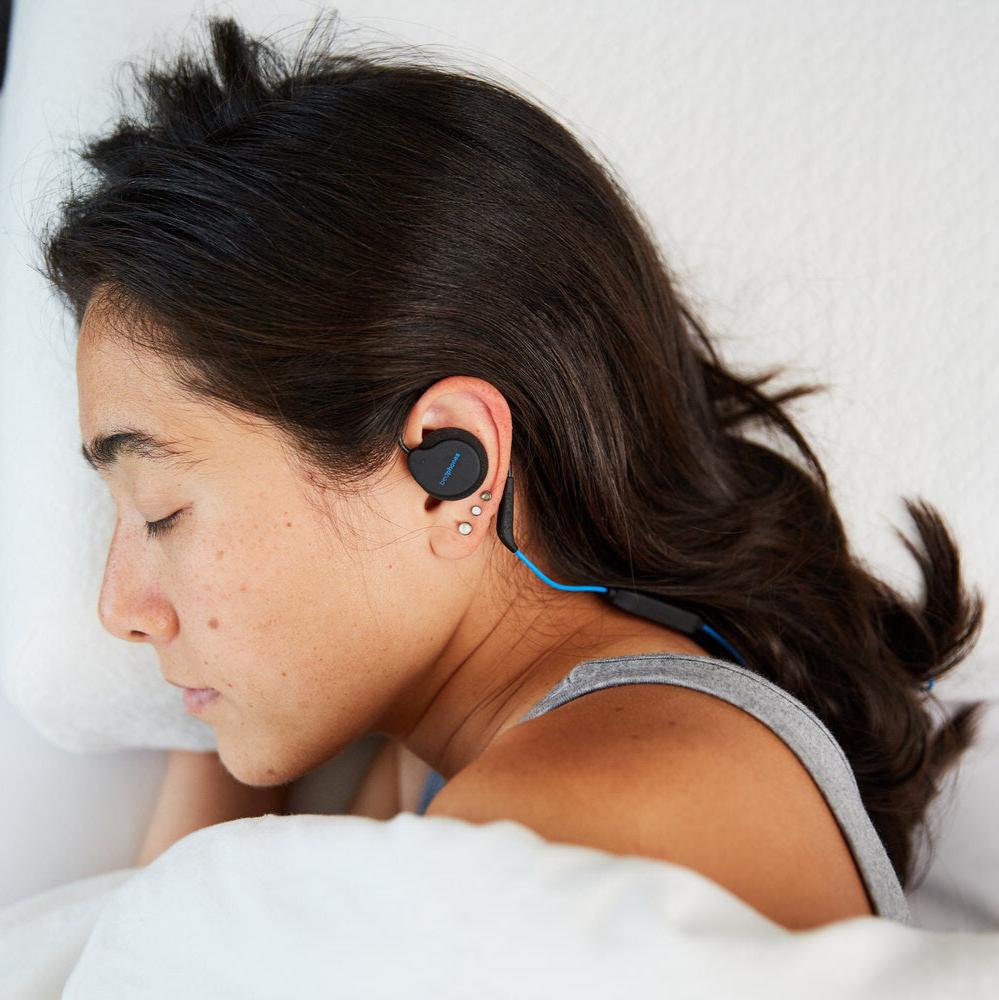
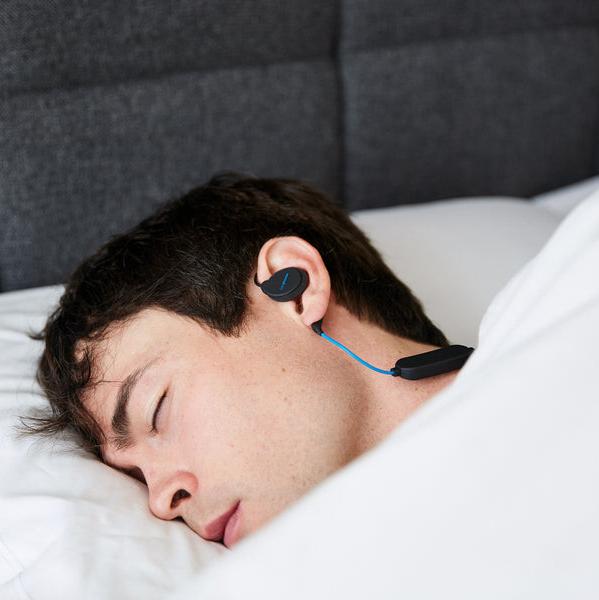
For side sleepers, the only real solution is an ultra-thin, low-profile design. The earpiece has to be so slim that it practically disappears between your ear and the pillow, getting rid of any painful pressure.
This is a non-negotiable feature and exactly why products like Bedphones were invented—to solve this specific, all-too-common problem. You'll want to look for on-ear speakers that are less than a quarter-inch thick.
For Back and Stomach Sleepers
Back and stomach sleepers have a bit more freedom since direct pressure on the ear isn't the main issue. For you, the biggest challenge is keeping the headphones in place. You need something that will stay put as you shift around during the night, without slipping off or needing constant fiddling.
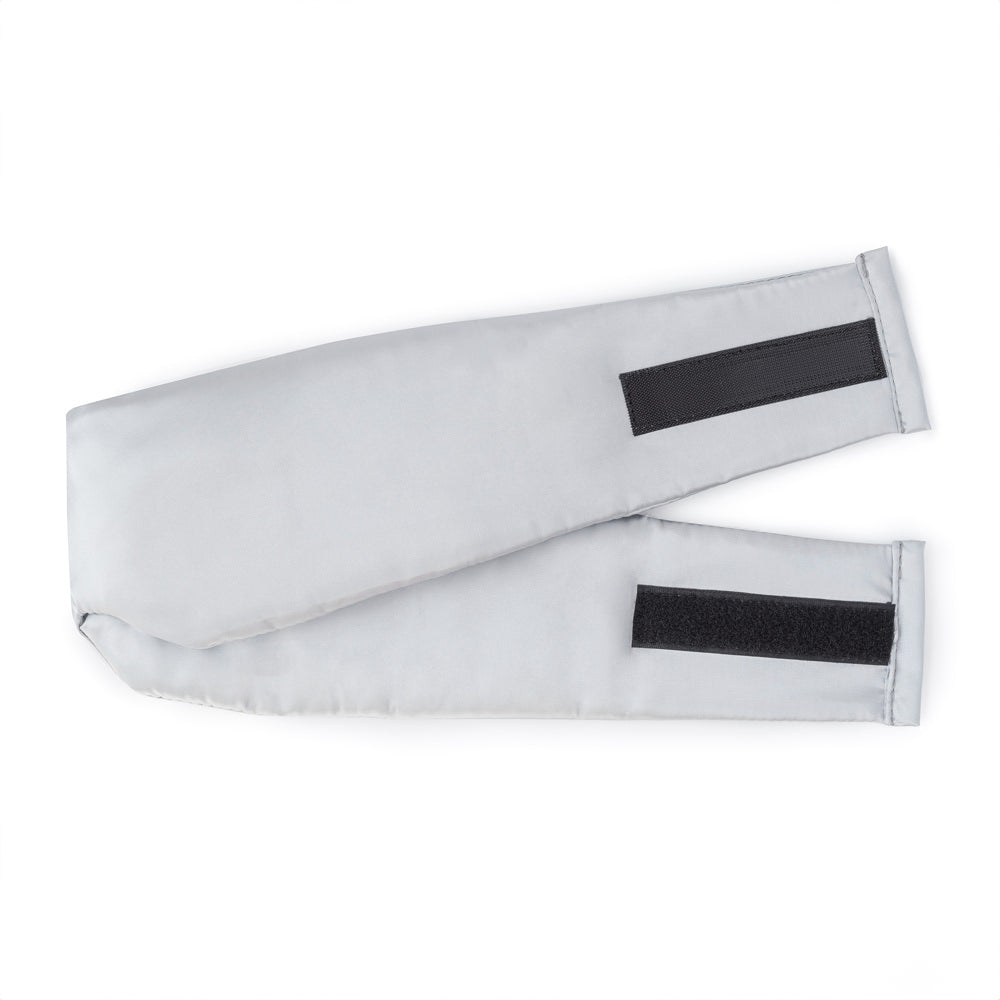
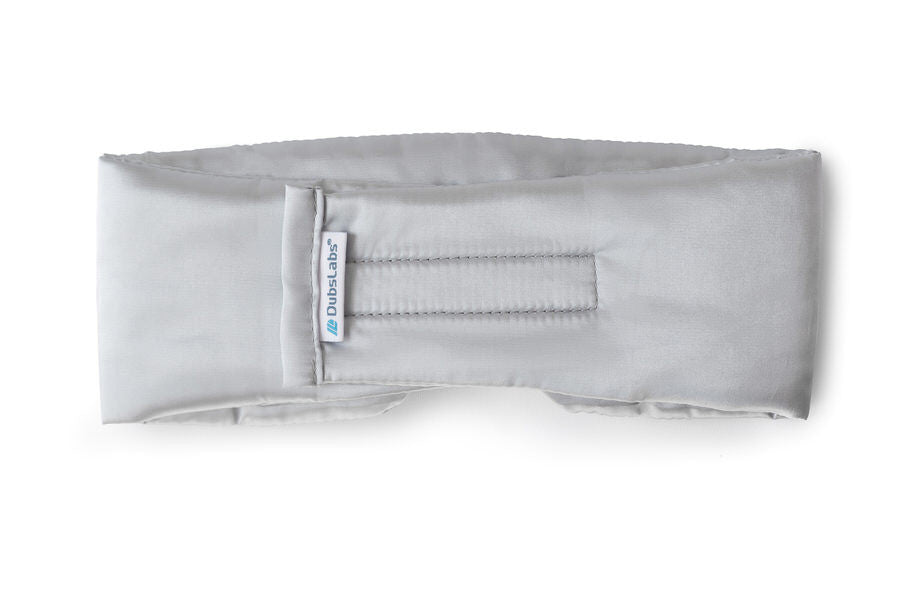
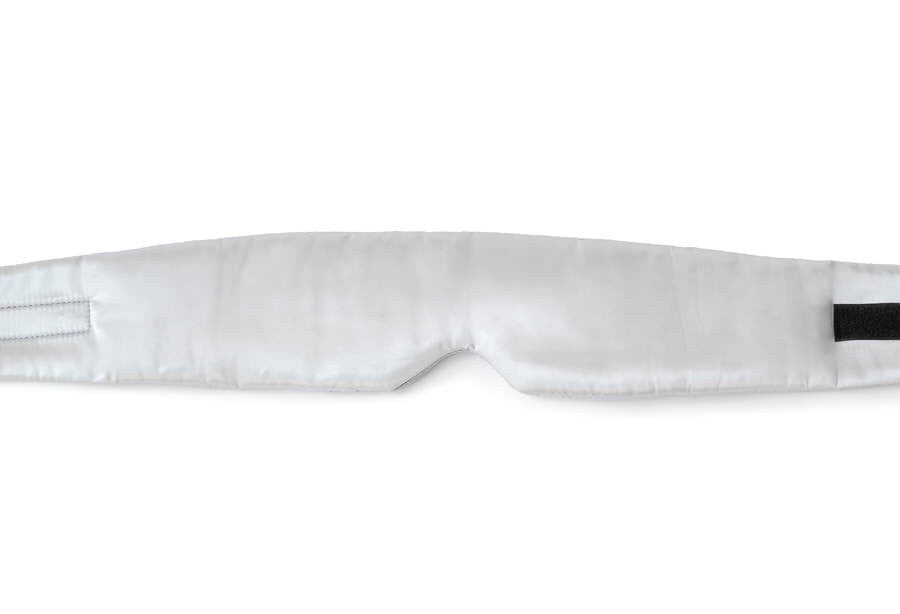
A soft, fabric headband-style headphone is often the perfect fit. These headbands gently hug your head, keeping the speakers perfectly positioned over your ears and moving with you as you sleep. They offer consistent sound without you having to worry about an earpiece falling out.
Addressing Specific Sleep Challenges
Beyond just your sleeping position, think about why you're reaching for headphones in the first place. Are you hoping to drift off faster, or just block out the world?
- Blocking Out a Snoring Partner: If the goal is to create a cone of silence, look for headphones with a snug fit. While they won't offer true noise cancellation, a good seal can dramatically muffle ambient sounds. This lets your chosen audio—be it music or white noise—create a peaceful bubble just for you.
- Calming Anxiety or a Racing Mind: For anyone using audio to quiet an anxious mind, comfort is everything. You need headphones that feel gentle and non-intrusive. Pairing a soft, cozy design with calming sounds like ambient music, white noise, or guided meditations can be a powerful tool for relaxation, helping you finally drift off.
To help you quickly identify the best type of sleep headphone for your needs, we've put together this handy comparison table. It breaks down which styles work best for different sleepers and what features you should prioritize.
Comparing Headphone Types for Different Sleepers
| Sleeper Type | Best Headphone Style | Key Feature to Prioritize | Example Use Case |
|---|---|---|---|
| Side Sleeper | On-ear thin speakers | Ultra-low profile (less than 1/4" thick) | Listening to podcasts without painful ear pressure. |
| Back Sleeper | Headband | Stability and secure fit | Enjoying an audiobook without the headphones shifting. |
| Stomach Sleeper | Headband | Comfort and minimal bulk | Drifting off to ambient music without wires tangling. |
| Active/Restless Sleeper | Headband | A snug, yet gentle grip | Keeping white noise playing consistently all night. |
| Noise-Sensitive Sleeper | On-ear thin speakers or Headband | Snug fit for passive noise isolation | Masking the sound of a snoring partner or city traffic. |
| Anxiety/Stress Sleeper | Any comfortable style | Soft, non-intrusive materials | Using guided meditation to calm a racing mind before bed. |
Ultimately, the right choice will feel so natural that you'll forget you're even wearing it. By starting with your sleep style and considering your unique challenges, you can find the perfect pair to help you get the rest you deserve.
A Closer Look at DubsLabs Bedphones
It’s one thing to talk about what makes a great pair of sleep headphones in theory, but it’s another thing entirely to see those ideas brought to life. The story of DubsLabs Bedphones isn't about slapping a brand on another gadget; it’s about solving a frustrating, real-world problem that keeps millions of people—especially side sleepers—up at night.
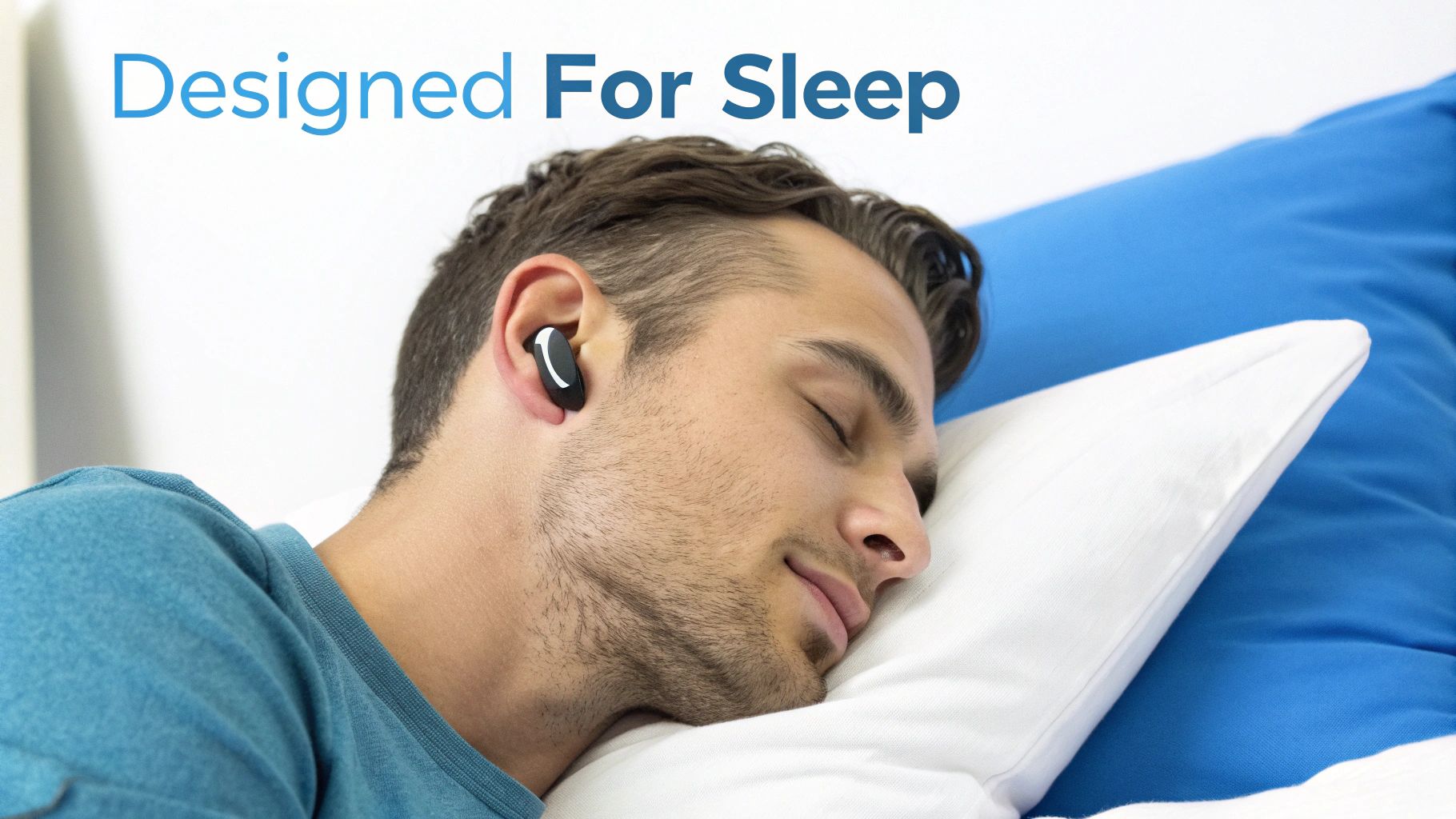
The whole idea started with the founder's own painful quest. He was just looking for a pair of headphones that wouldn't make his ears ache when he laid on his side. Standard earbuds dug in too deep, and big over-ear cans were just impossibly bulky. That personal struggle kicked off a design process focused laser-tight on one thing: getting rid of the pressure.
Engineered for Unobtrusive Comfort
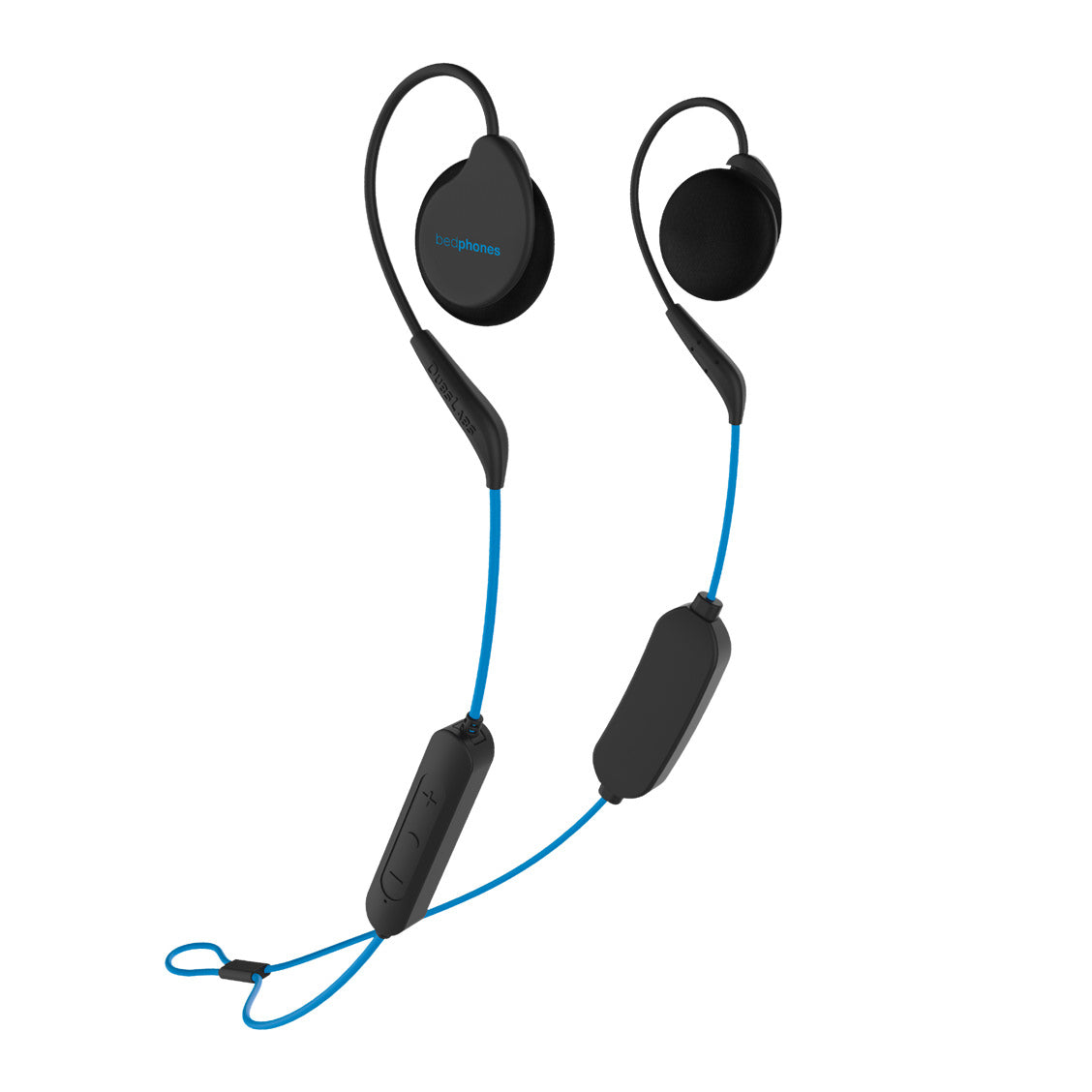
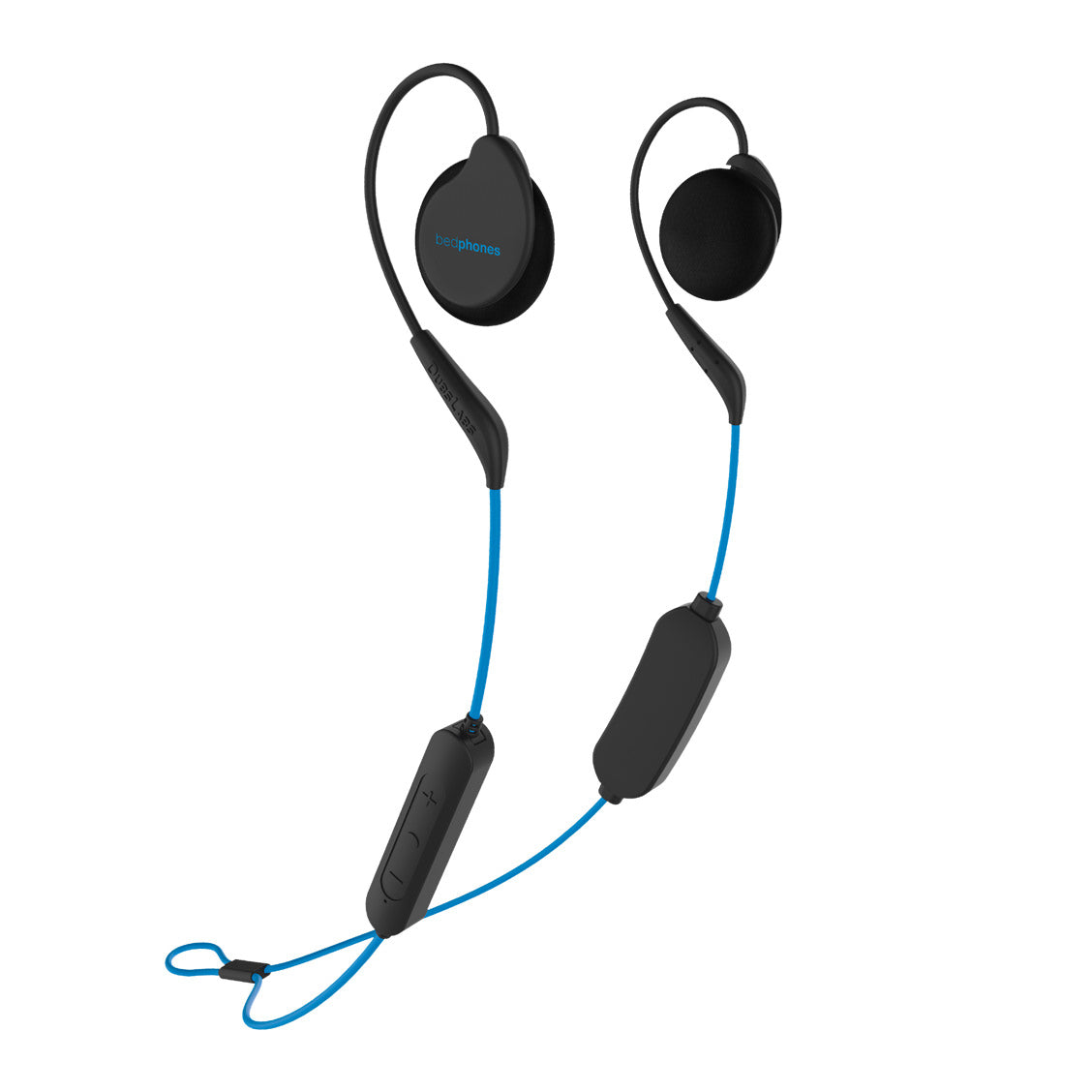
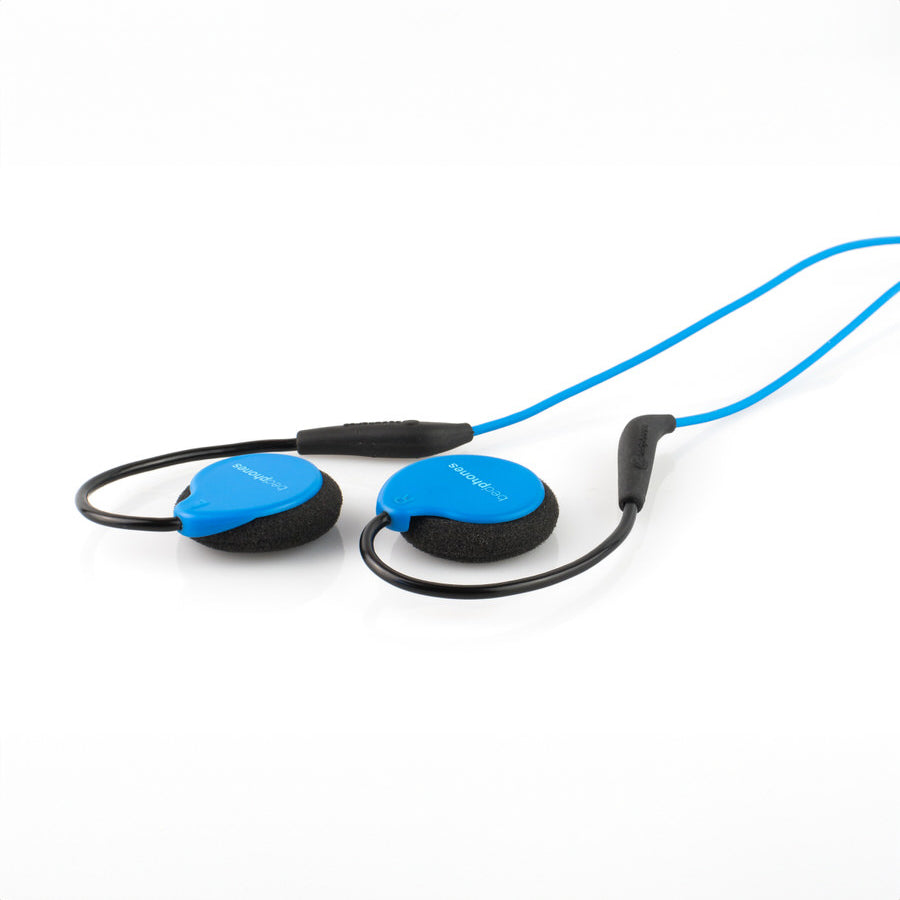
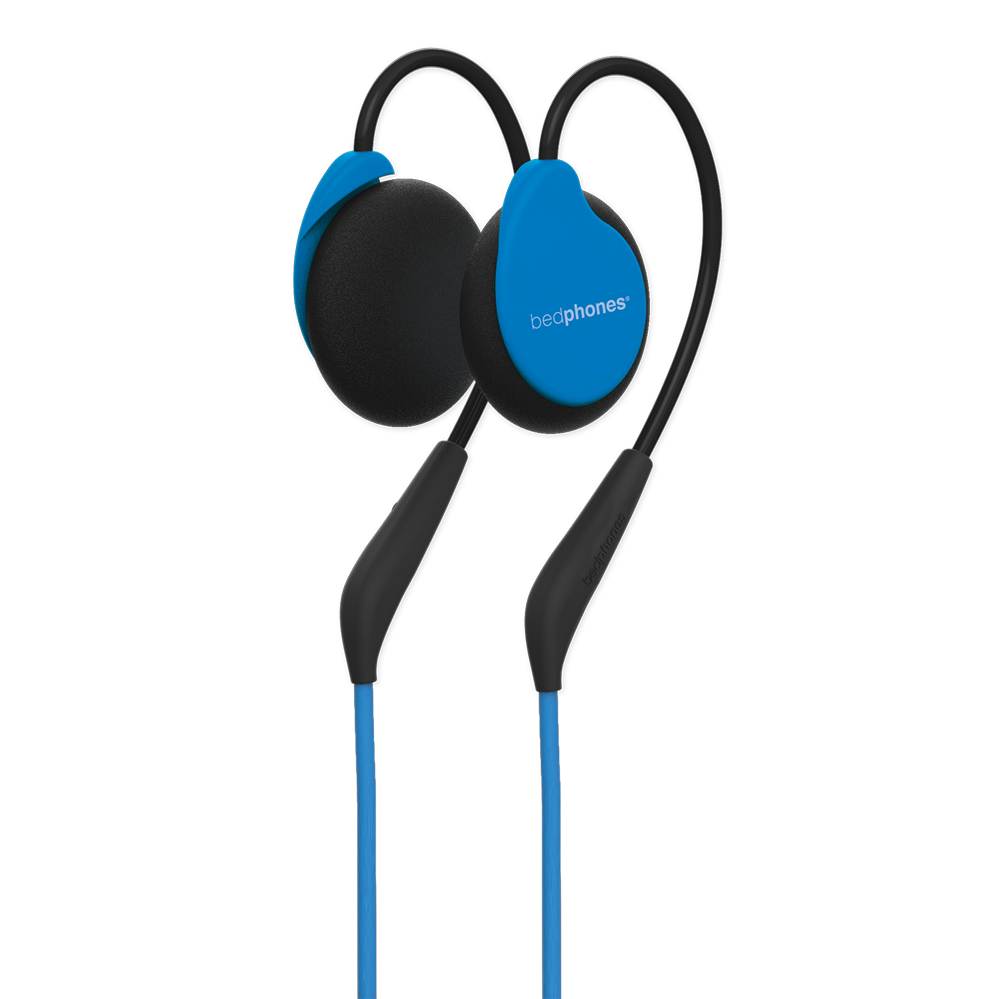
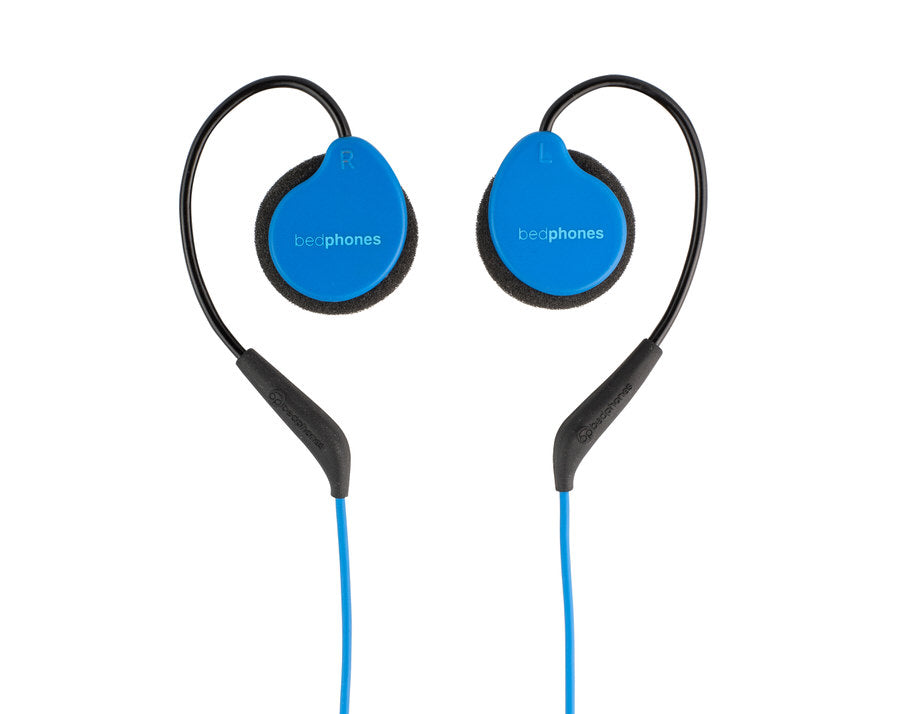
The secret sauce behind Bedphones is the incredibly slim on-ear speaker. At less than 1/4 inch thick, they’re designed to lie flat against your ear, basically vanishing between your head and the pillow. This isn't just a happy accident; it’s the direct answer to the number one complaint from every side sleeper out there.
The core principle is simple but powerful: If you can’t feel the headphones, they can’t disrupt your sleep. This focus on a minimal physical footprint is what makes them a game-changer.
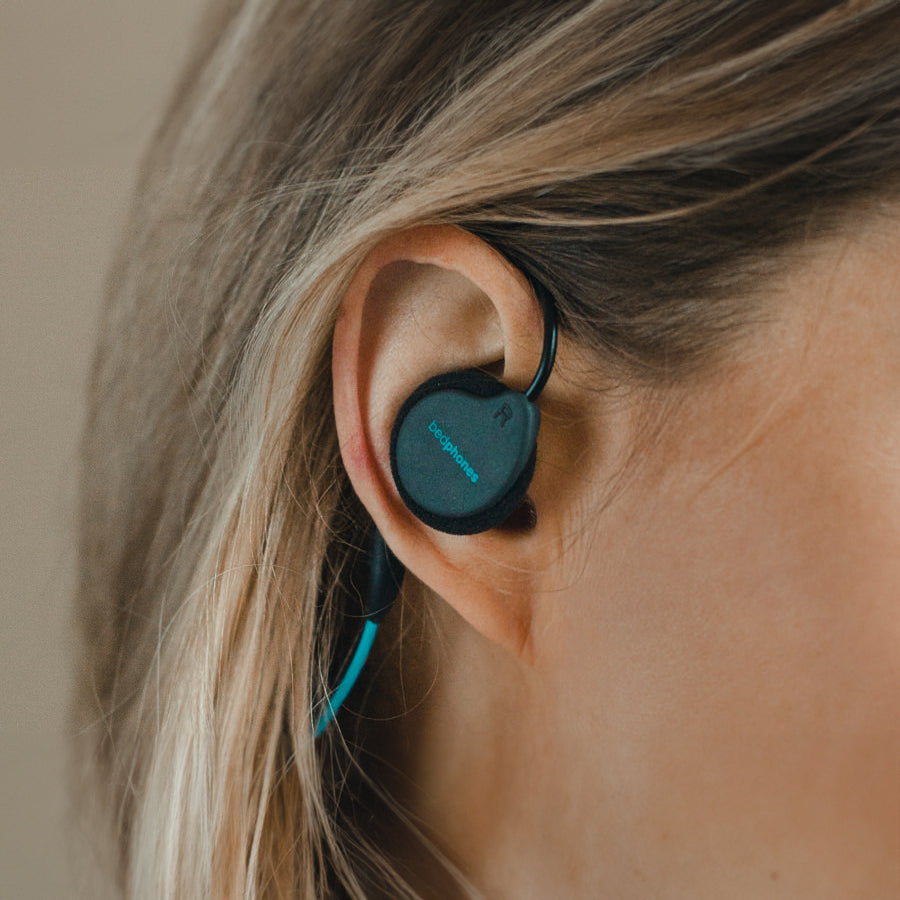
Unlike earbuds that plug up your ear canal or bulky cups that create hotspots, Bedphones just rest gently on the ear. This approach gives you clear audio without the soreness or overheating, making them perfect for listening all night long.
A Design That Adapts to You
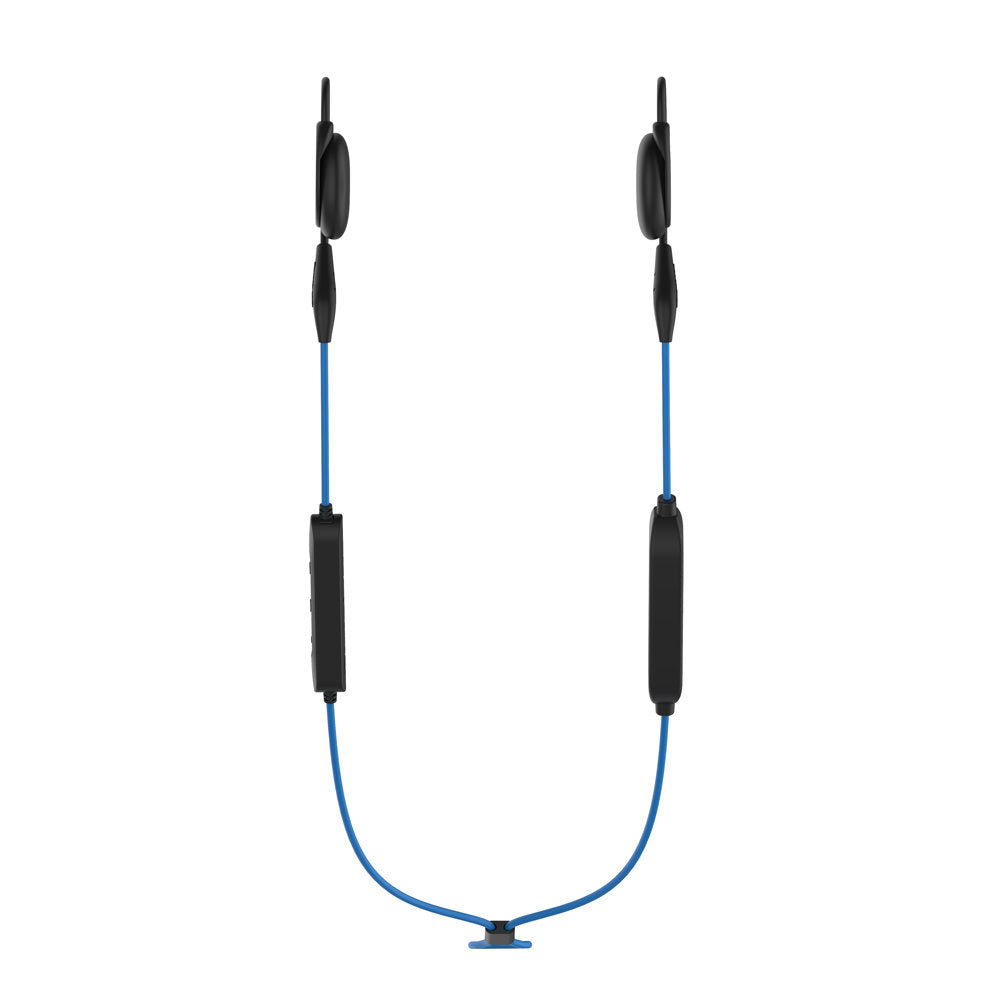
It's not just about the thin speakers; the entire build is made for sleep. The adjustable, rubber-coated memory wire is a clever touch—it molds to the exact shape of your ear, giving you a secure fit that’s still light and gentle. It stays put, even if you toss and turn.
This thoughtful design ticks all the boxes we’ve been talking about:
- Pressure-Free Design: The ultra-thin speakers get rid of those agonizing pressure points that make sleeping with normal headphones a non-starter for side sleepers.
- Stable and Secure Fit: That memory wire means the headphones stay comfortably in place all night, so you’re not constantly waking up to fix them.
- All-Night Wearability: With soft materials and an open, on-ear style, they don’t cause irritation or make your ears sweat. You get hours of comfortable listening.
By starting with a universal problem and engineering a purpose-built solution, DubsLabs ended up with more than just a product. They created a genuine sleep tool. You can check out the design of these wireless sleeping headphones yourself to see how every little detail works toward a better night's rest. That commitment is what separates a decent product from the best wireless headphones for sleeping.
Building Your Ultimate Sleep Sanctuary
Getting truly restorative sleep is about more than just blocking out noise. While a great pair of wireless sleep headphones is a game-changer, they become even more powerful when you think of them as one piece of a complete sleep ecosystem.
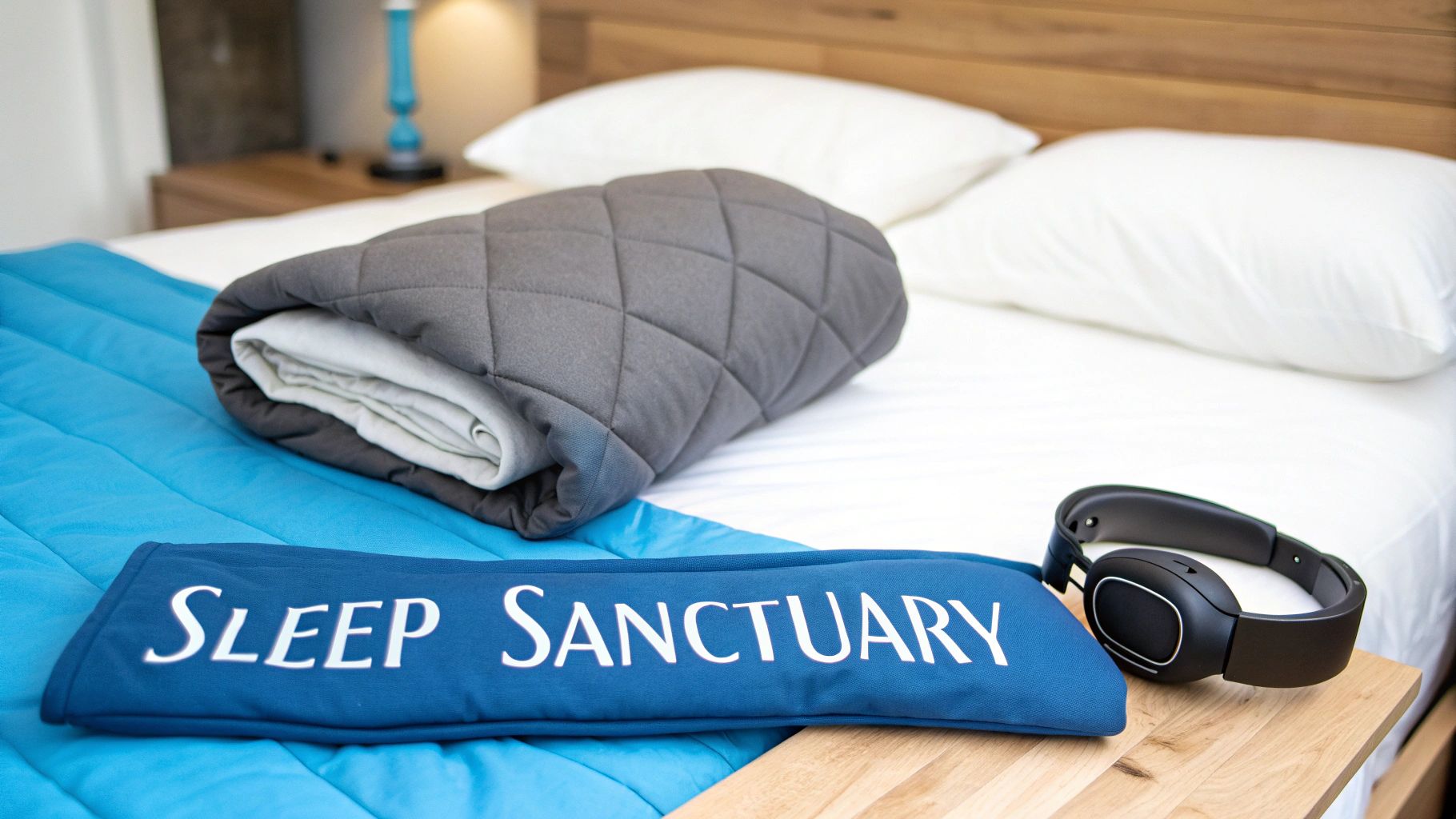
It’s time to stop thinking of your bedroom as just a place to crash and start treating it as a sanctuary built for total relaxation. This means looking beyond sound and considering all your senses. Your headphones have the auditory part covered, but what about touch and sight? When you pair a great audio experience with other sensory tools, you create a powerful effect that signals to your entire body that it's time to shut down and rest.
Synergistic Sleep Tools
A perfect sleep setup has to address comfort from every angle. It’s all about creating an optimal environment, or 'sleep sanctuary,' which goes way beyond sound. It also means thinking about personal comfort, like finding the best breathable pajamas for hot sleepers to keep you from overheating.
Here are a few key components that work beautifully alongside your sleep headphones:
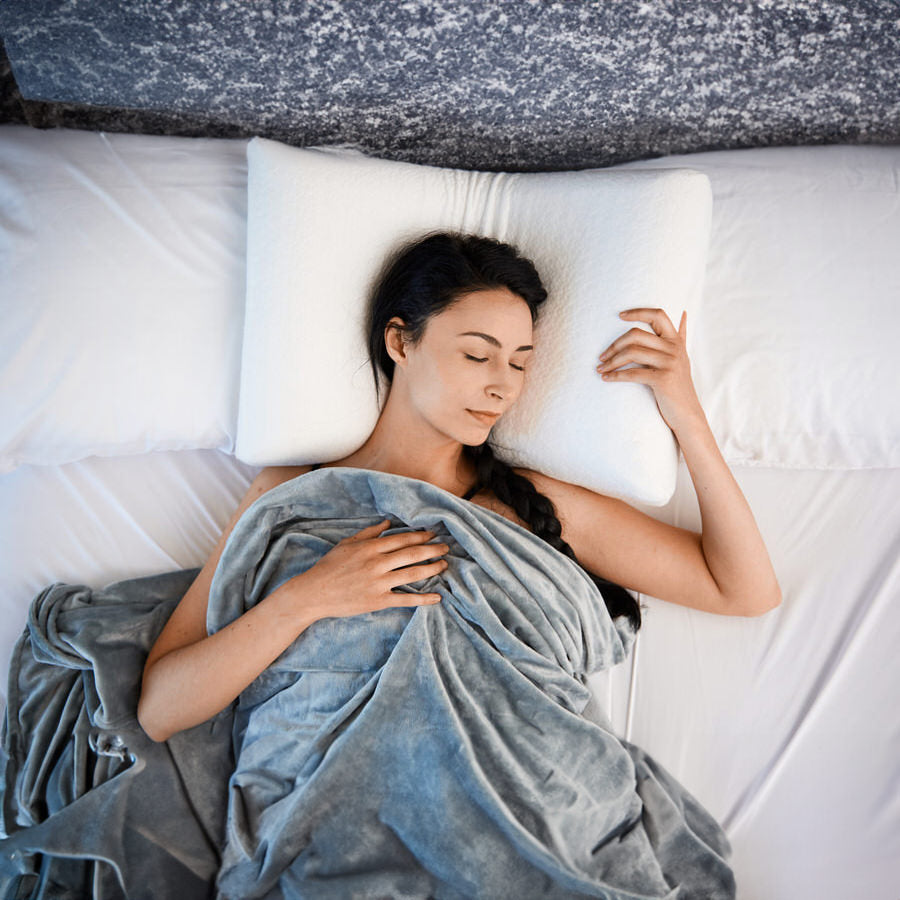
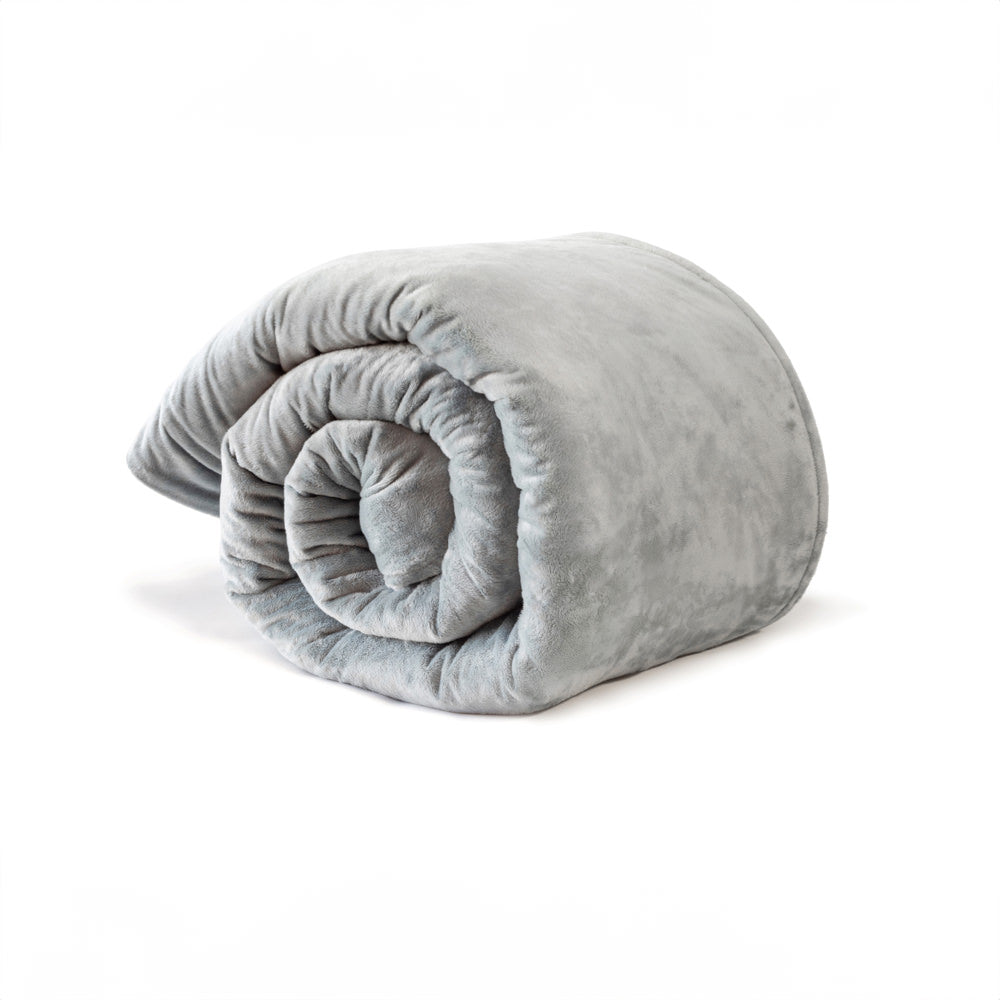
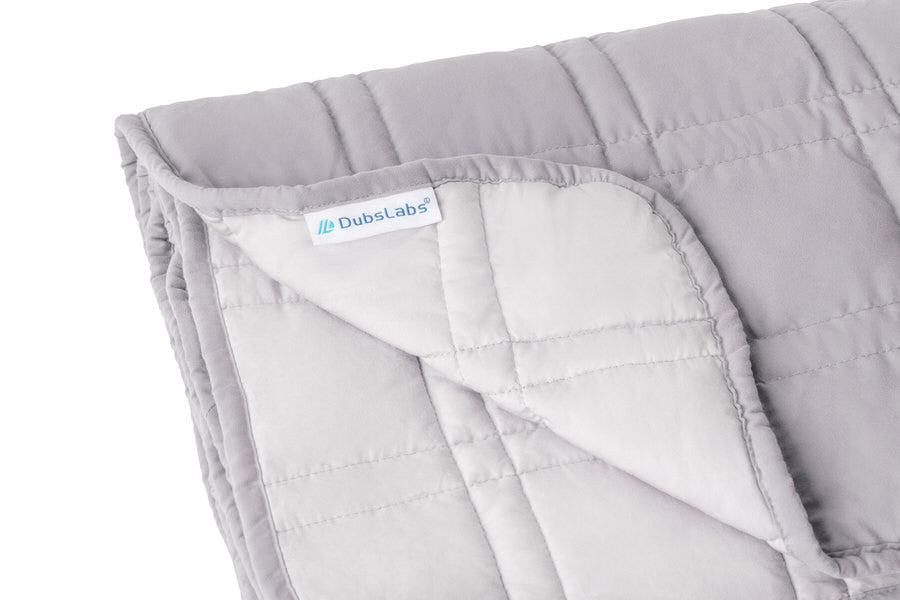
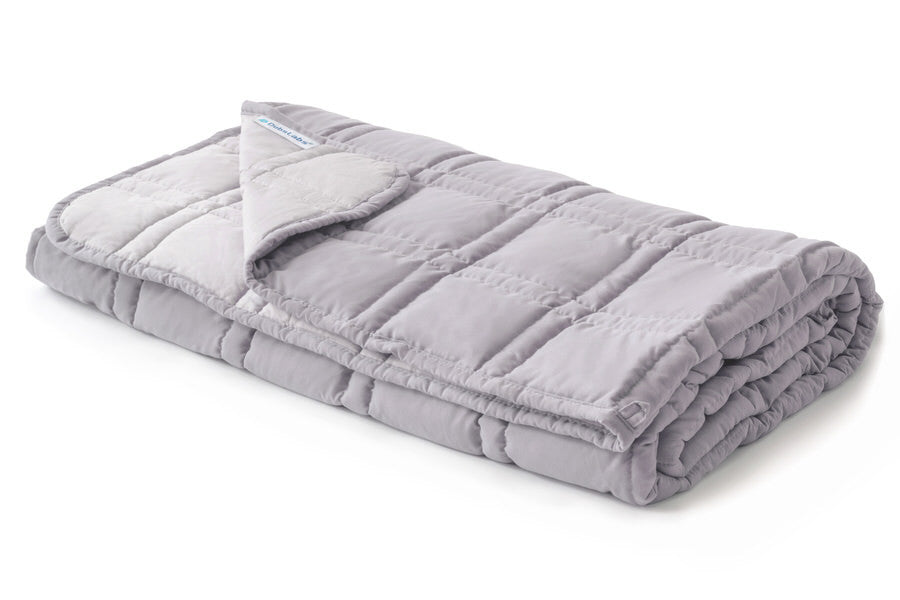
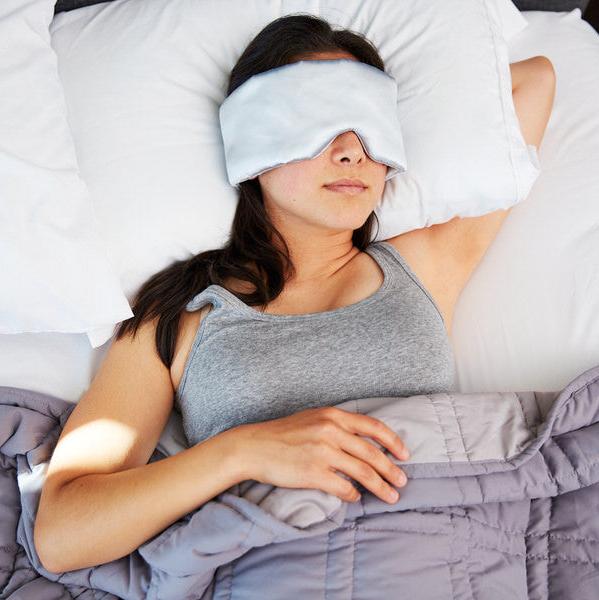
- Weighted Blankets: These blankets use what's called "deep pressure stimulation" to calm your nervous system, kind of like a long, comforting hug. When you combine that physical sensation with calming audio from your Bedphones, you can seriously reduce anxiety and feel more grounded.
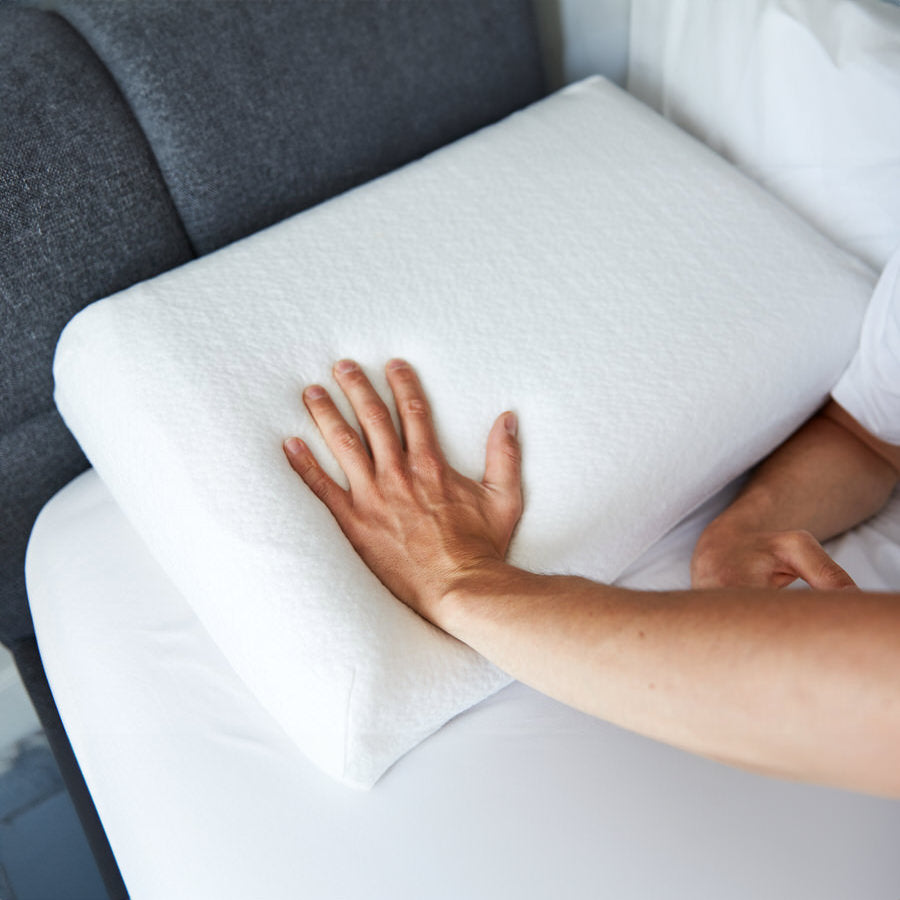
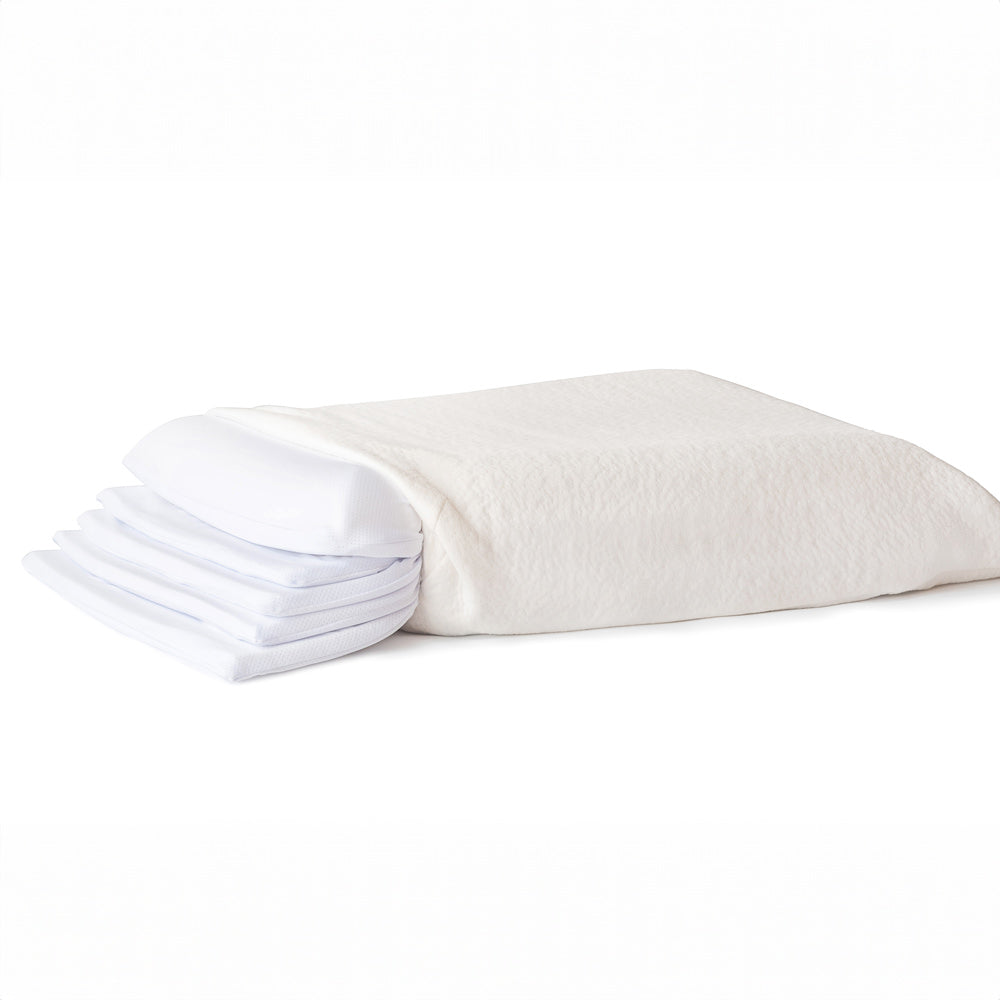
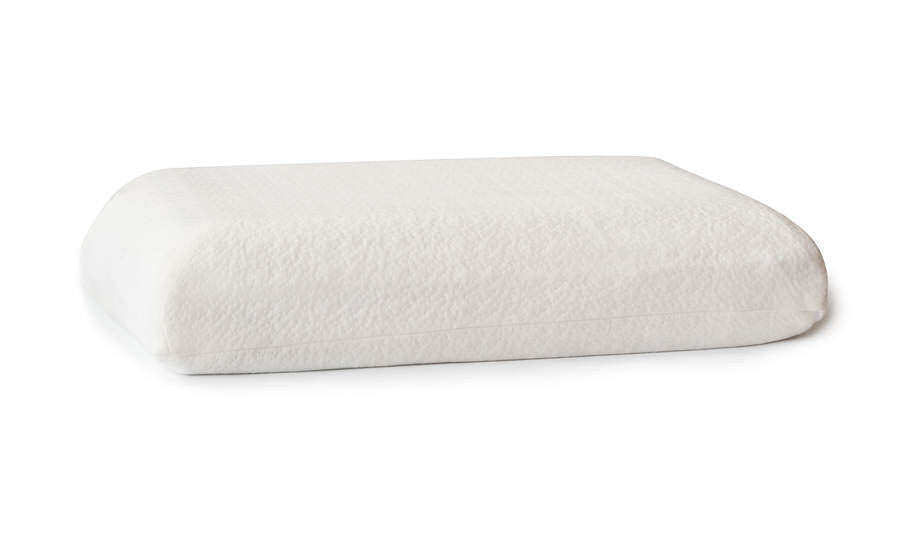
- Adjustable Memory Pillows: You can’t underestimate the importance of proper neck and head support. An adjustable pillow keeps your spine aligned, which stops you from waking up stiff and sore. A good pillow also ensures your sleep headphones stay comfortably in place all night long.
- Total-Darkness Sleep Masks: Light is a massive sleep disruptor. A high-quality sleep mask blocks out every last bit of ambient light, working with the sound isolation from your headphones to create a true sensory-deprivation cocoon that practically forces your body into a deep state of rest.
By layering these sensory tools, you're not just using one product—you're creating a powerful, multi-faceted system for better sleep. Each element makes the others more effective, transforming your bed into a true haven for recovery.
And people are catching on. The demand for integrated sleep solutions is growing fast. Projections show the sleep headphones market could hit USD 3.8 billion by 2032, with a huge 60% of sales driven by personal wellness and stress reduction.
This is where Bedphones really shine. Their ultra-thin speakers are the perfect companion to these other tools, especially weighted blankets, which have been shown to help users fall asleep up to 70% faster.
Getting the Most from Your Sleep Headphones
So, you've found the perfect pair of headphones for sleeping. That's the first step. Now, a few simple habits will make sure you get a great experience, night after night. Taking proper care of your headphones—and your ears—is the key to long-term comfort and safety.
First things first, let’s get the fit just right. For on-ear styles like our Bedphones, take a moment to gently bend the adjustable memory wire around each ear. The goal is a snug, secure fit that doesn't feel tight or apply any pressure. You want them to feel like they've disappeared once you lie down.
Next up, pairing. This part is a breeze. Most wireless sleep headphones pop into pairing mode automatically the first time you turn them on. Just open your phone or tablet's Bluetooth settings, pick the headphones from the list, and you're good to go. After that initial setup, they'll connect automatically every time.
Practicing Safe and Smart Listening
Listening to audio all night isn’t the same as jamming out on your commute. Your hearing is precious, and protecting it while you rest is non-negotiable. Think of these next two tips as your golden rules for overnight listening.
1. Keep the Volume Low Your audio is there to gently mask distracting noises, not to blast them into oblivion. Think of it as a background whisper, not front-row seats at a concert. A low, consistent volume is all you need to create a calming sound bubble, and it completely minimizes any risk of hearing damage from hours of exposure.
2. Use a Sleep Timer This one is a game-changer. Almost every podcast, music, or audiobook app has a built-in sleep timer. Setting your audio to automatically switch off after 30, 60, or 90 minutes is a fantastic habit to get into.
This simple step does two things: it saves your headphone's battery and, more importantly, gives your ears a break for the rest of the night. You'll wake up feeling refreshed, without having been exposed to sound for eight straight hours.
Finally, a little housekeeping. Keep your gear clean by gently wiping down the earpieces with a soft, dry cloth every so often. This simple bit of maintenance keeps them hygienic and ensures they'll perform perfectly for years to come.
Common Questions About Sleeping with Headphones
Deciding to try a pair of sleep headphones almost always comes with a few nagging questions. It’s totally normal to wonder about the little details—safety, practicality, and just general comfort—before you commit. Let's tackle some of the most common concerns people have, so you can feel confident you're making the right call.
One of the biggest questions is about safety. Is it okay to wear a wireless device so close to your head all night? The good news is that modern Bluetooth devices operate on an extremely low power level. They emit non-ionizing radiation that's widely considered safe for everyday use. The energy they put out is just a tiny fraction of what a cell phone does, making it a very low-risk way to drift off to your favorite sounds.
Another frequent worry is missing your alarm in the morning. That’s a valid point! But most sleep headphones are designed for passive noise isolation, not active noise cancellation. This just means they muffle ambient sounds but don't completely silence the world around you. You'll still be able to hear important things like a smoke detector or your alarm, especially if you have it set to a reasonable volume.
Practical Care and Comfort Concerns
What happens if they don't feel quite right at first, or how do you keep them clean? These practical questions are just as important as the technical ones.
- Cleaning Your Headphones: Keeping your headphones hygienic is simple. For fabric headbands, you can usually hand-wash them after popping out the electronic parts. For on-ear styles like our Bedphones, a quick wipe with a soft, dry cloth is typically all you need to keep them fresh.
- Ensuring the Right Fit: If the headphones feel a bit strange on the first night, don't give up just yet. Sometimes it takes a night or two for your ears to get used to the new sensation. Many designs are adjustable, so take a moment to gently mold them to your ears to get that perfect, pressure-free fit.
At the end of the day, the best wireless headphones for sleeping should solve more problems than they create. If you're still figuring out how to make them a seamless part of your routine, check out our detailed guide on how to sleep with headphones for even more tips.
Ready to feel the difference a truly comfortable pair of sleep headphones can make? DubsLabs offers a risk-free trial on our Bedphones, designed from the ground up to solve the comfort challenges that keep so many people up at night. Explore Bedphones now and build your perfect sleep sanctuary.